



Community hub
Recent from talks
Knowledge base stats:
Talk channels stats:
Members stats:
La Polla Records
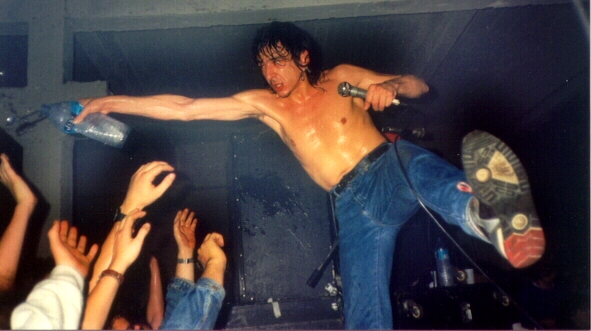
La Polla Records was a punk rock band from the Basque Country, formed in 1979 in Salvatierra/Agurain, a small town in Álava, Spain. Its founders were Evaristo Páramos "Evaristo" on vocals, Maleguin on bass, Fernandito on drums and Txarly and Sumé on guitars. The name was somewhat controversial because in Spanish, "polla" is vulgarly slang for "cock, penis". The lyrics of the band harshly criticized fascism, militarism, capitalism, and catholicism. La Polla Records has been very influential in the Spanish-language punk scene.
La Polla Records was a band that was known as a symbol of rebellion against everything, to the point of them being called "anti-everything". As a result of this they faced several major obstacles throughout their career, primarily threats and repression. The band members even faced jail time during a concert with Eskorbuto, another Basque punk band. In 2019, they announced a comeback and released an album after 16 years off-stage as a band. In 2021 they disbanded again.
On 9 December 1979, inspired by the British punk movement, La Polla Records did their first gig at the only pub from Salvatierra, with all the town's people at the show, in words of Evaristo: "to see what the fools of the village made".
In 1981, the band performed and recorded their first demo called Banco Vaticano, never released officially. During this time, the band performed some shows in Basque Country and the rest of the Spain territories, although the group's popularity was low because they had yet to embrace punk on the level seen in the UK.
The band recorded their first EP called ¿Y ahora qué? ("So Now What?") in 1983, containing four songs, under the indie label Oihuka, where they managed to draw the attention of producer Marino Goñi.
By 1984, La Polla Records began frequently playing large shows, also releasing their first LP Salve, to Oihuka label and produced by Marino Goñi. The album was certified Gold, but the group rejected the disc. The following years they recorded Revolución (1985), with Abel Murua replacing Maleguin on the bass in this album. That same year played in the Euskal Rock festival at Barcelona, along with Kortatu, RIP and Cicatriz.
In early 1986, La Polla Records played at the San Isidro Festival in Madrid, attended by a big audience. However, riots almost erupted between the police and the fans. La Polla Records began to stage performances on their own, but one of them ended up in an incident in which Txarly was seriously injured, forcing the band to play with just one guitar until early 1988. In 1987, under their own label, Txaca Records, they released No somos nada, but did not come in for good reviews. Following this release, La Polla got back to record label Oihuka with Donde se habla to critical and public acclaim (1988), boosting their sales again. In 1989 their first live LP album ensued, En directo, to celebrate the band's 10th Anniversary.
The 1990s began with a new album: Ellos dicen mierda, nosotros amén ("They say shit, we say Amen") in 1990, which was played in Europe and Latin America for the first time, in Mexico as the only leg. At year-end, released Los jubilados, and in 1991 the second EP Barman. In 1992, published the seventh album Negro, although was roughly divided among the fans, and Hoy es el futuro ("Today is the Future") in 1993, which was better received, and toured by Argentina, Chile, and Uruguay.
Hub AI
La Polla Records AI simulator
(@La Polla Records_simulator)
La Polla Records
La Polla Records was a punk rock band from the Basque Country, formed in 1979 in Salvatierra/Agurain, a small town in Álava, Spain. Its founders were Evaristo Páramos "Evaristo" on vocals, Maleguin on bass, Fernandito on drums and Txarly and Sumé on guitars. The name was somewhat controversial because in Spanish, "polla" is vulgarly slang for "cock, penis". The lyrics of the band harshly criticized fascism, militarism, capitalism, and catholicism. La Polla Records has been very influential in the Spanish-language punk scene.
La Polla Records was a band that was known as a symbol of rebellion against everything, to the point of them being called "anti-everything". As a result of this they faced several major obstacles throughout their career, primarily threats and repression. The band members even faced jail time during a concert with Eskorbuto, another Basque punk band. In 2019, they announced a comeback and released an album after 16 years off-stage as a band. In 2021 they disbanded again.
On 9 December 1979, inspired by the British punk movement, La Polla Records did their first gig at the only pub from Salvatierra, with all the town's people at the show, in words of Evaristo: "to see what the fools of the village made".
In 1981, the band performed and recorded their first demo called Banco Vaticano, never released officially. During this time, the band performed some shows in Basque Country and the rest of the Spain territories, although the group's popularity was low because they had yet to embrace punk on the level seen in the UK.
The band recorded their first EP called ¿Y ahora qué? ("So Now What?") in 1983, containing four songs, under the indie label Oihuka, where they managed to draw the attention of producer Marino Goñi.
By 1984, La Polla Records began frequently playing large shows, also releasing their first LP Salve, to Oihuka label and produced by Marino Goñi. The album was certified Gold, but the group rejected the disc. The following years they recorded Revolución (1985), with Abel Murua replacing Maleguin on the bass in this album. That same year played in the Euskal Rock festival at Barcelona, along with Kortatu, RIP and Cicatriz.
In early 1986, La Polla Records played at the San Isidro Festival in Madrid, attended by a big audience. However, riots almost erupted between the police and the fans. La Polla Records began to stage performances on their own, but one of them ended up in an incident in which Txarly was seriously injured, forcing the band to play with just one guitar until early 1988. In 1987, under their own label, Txaca Records, they released No somos nada, but did not come in for good reviews. Following this release, La Polla got back to record label Oihuka with Donde se habla to critical and public acclaim (1988), boosting their sales again. In 1989 their first live LP album ensued, En directo, to celebrate the band's 10th Anniversary.
The 1990s began with a new album: Ellos dicen mierda, nosotros amén ("They say shit, we say Amen") in 1990, which was played in Europe and Latin America for the first time, in Mexico as the only leg. At year-end, released Los jubilados, and in 1991 the second EP Barman. In 1992, published the seventh album Negro, although was roughly divided among the fans, and Hoy es el futuro ("Today is the Future") in 1993, which was better received, and toured by Argentina, Chile, and Uruguay.