
Recent from talks
Land diving
Knowledge base stats:
Talk channels stats:
Members stats:
Land diving
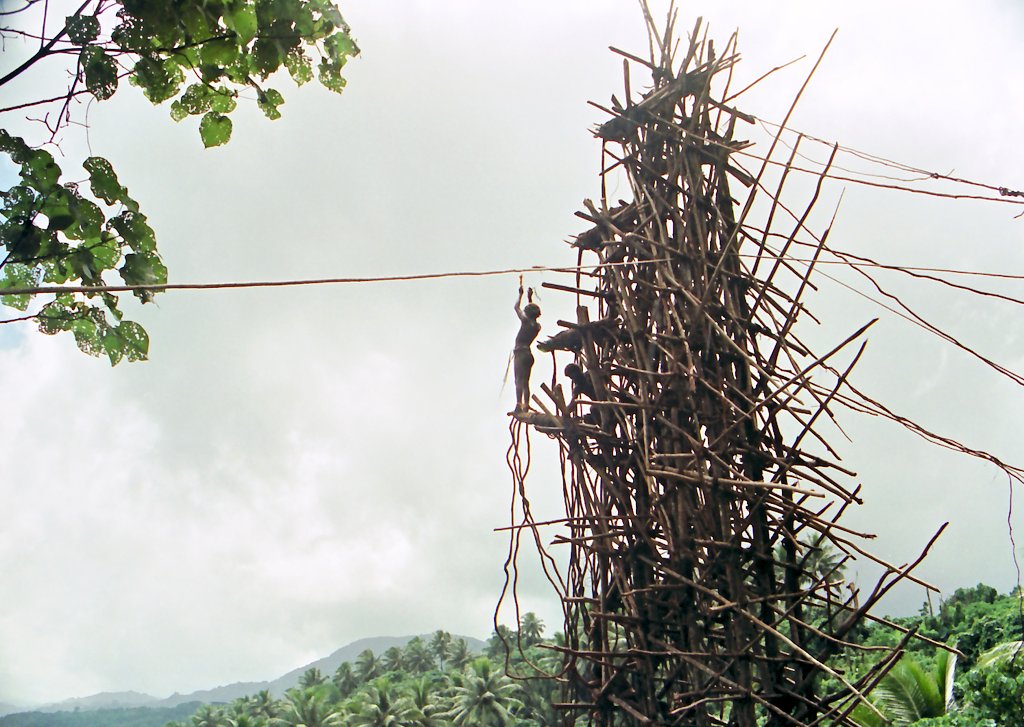
Land diving (Sa: Gol, Bislama: Nanggol) is a ritual performed by the men of the southern part of Pentecost Island, Vanuatu. Men jump off wooden towers around 20 to 30 meters (66 to 98 ft) high, with two tree vines wrapped around the ankles. The tradition has developed into a tourist attraction. According to the Guinness World Records, the g-force experienced by those at their lowest point in the dive is the greatest experienced in the non-industrialized world by humans.
The Bislama word nanggol comes from the Saa term gol (also spelled ghol), with the prefixed article na- typical of the indigenous languages of Vanuatu.
As told to David Attenborough in 1959 by a local chief and famous jumper, the origin of land diving is described in a legend of a woman who was unfaithful to her husband. When the husband ran after her she climbed a tree and the husband climbed after her. When they reached the top of the tree they began to argue, with the husband asking why the wife had been unfaithful. The wife told the husband that he was a weakling and coward, and that he wouldn't even jump to the ground from there. The husband said that he would jump if she did. They both jumped, but the woman had taken the precaution of tying vines to her ankles, so the husband died, but the wife survived. The other men were humiliated that another one of them had been tricked, so they built a tower taller than the tree to prove their bravery and ability.
Alternately, the origin has been described as the wife being dissatisfied with her husband, Tamalie (or some variation of the name). Or it is claimed that the woman was upset that her husband was too vigorous regarding his sexual wants, so she ran away into the forest. Her husband followed her, so she climbed a banyan tree. Tamalie climbed after her, and so she tied lianas to her ankles and jumped and survived. Her husband jumped after her, but did not tie lianas to himself, which caused him to plummet and die. In this account, women did it in respect to the original woman who did it, but husbands were not comfortable with seeing their wives in such positions, so they took the sport for themselves, and it gradually changed from trees to specifically designed wooden towers. The men performed the original land diving so that they would not be tricked again.
The land diving ritual is associated with the annual yam harvest. It is performed annually in the months of April, May, or June. A good dive helps ensure a bountiful yam harvest.
The villagers believe land diving can enhance the health and strength of the divers. A successful dive can remove the illnesses and physical problems associated with the wet season. Furthermore, land diving is considered as an expression of masculinity, as it demonstrates boldness that was associated with the bwahri or warrior. The men who do not choose to dive or back out of diving are humiliated as cowards.
In the Sa language, gol refers to both the tower and the land dive. The tower symbolically represents a body, with a head, shoulders, breasts, belly, genitals, and knees. The diving platforms represent the penises and the struts beneath represent the vaginas.
The time of yam harvest is significant because tower construction is best done during the dry season. Also, the lianas have the best elasticity during this time. During the period of preparation for nanggol, the men seclude themselves from the women and refrain from sex. Furthermore, women are not allowed to go near the tower or else Tamalie, who lives in the tower, may seek vengeance, leading to the death of a diver. Additionally, the men must not wear any lucky charms during the dive.
Hub AI
Land diving AI simulator
(@Land diving_simulator)
Land diving
Land diving (Sa: Gol, Bislama: Nanggol) is a ritual performed by the men of the southern part of Pentecost Island, Vanuatu. Men jump off wooden towers around 20 to 30 meters (66 to 98 ft) high, with two tree vines wrapped around the ankles. The tradition has developed into a tourist attraction. According to the Guinness World Records, the g-force experienced by those at their lowest point in the dive is the greatest experienced in the non-industrialized world by humans.
The Bislama word nanggol comes from the Saa term gol (also spelled ghol), with the prefixed article na- typical of the indigenous languages of Vanuatu.
As told to David Attenborough in 1959 by a local chief and famous jumper, the origin of land diving is described in a legend of a woman who was unfaithful to her husband. When the husband ran after her she climbed a tree and the husband climbed after her. When they reached the top of the tree they began to argue, with the husband asking why the wife had been unfaithful. The wife told the husband that he was a weakling and coward, and that he wouldn't even jump to the ground from there. The husband said that he would jump if she did. They both jumped, but the woman had taken the precaution of tying vines to her ankles, so the husband died, but the wife survived. The other men were humiliated that another one of them had been tricked, so they built a tower taller than the tree to prove their bravery and ability.
Alternately, the origin has been described as the wife being dissatisfied with her husband, Tamalie (or some variation of the name). Or it is claimed that the woman was upset that her husband was too vigorous regarding his sexual wants, so she ran away into the forest. Her husband followed her, so she climbed a banyan tree. Tamalie climbed after her, and so she tied lianas to her ankles and jumped and survived. Her husband jumped after her, but did not tie lianas to himself, which caused him to plummet and die. In this account, women did it in respect to the original woman who did it, but husbands were not comfortable with seeing their wives in such positions, so they took the sport for themselves, and it gradually changed from trees to specifically designed wooden towers. The men performed the original land diving so that they would not be tricked again.
The land diving ritual is associated with the annual yam harvest. It is performed annually in the months of April, May, or June. A good dive helps ensure a bountiful yam harvest.
The villagers believe land diving can enhance the health and strength of the divers. A successful dive can remove the illnesses and physical problems associated with the wet season. Furthermore, land diving is considered as an expression of masculinity, as it demonstrates boldness that was associated with the bwahri or warrior. The men who do not choose to dive or back out of diving are humiliated as cowards.
In the Sa language, gol refers to both the tower and the land dive. The tower symbolically represents a body, with a head, shoulders, breasts, belly, genitals, and knees. The diving platforms represent the penises and the struts beneath represent the vaginas.
The time of yam harvest is significant because tower construction is best done during the dry season. Also, the lianas have the best elasticity during this time. During the period of preparation for nanggol, the men seclude themselves from the women and refrain from sex. Furthermore, women are not allowed to go near the tower or else Tamalie, who lives in the tower, may seek vengeance, leading to the death of a diver. Additionally, the men must not wear any lucky charms during the dive.
Recent media