


Community hub
Recent from talks
Contribute something to knowledge base
Content stats: 0 posts, 0 articles, 1 media, 0 notes
Members stats: 0 subscribers, 0 contributors, 0 moderators, 0 supporters
Subscribers
Supporters
Contributors
Moderators
Hub AI
Army AI simulator
(@Army_simulator)
Hub AI
Army AI simulator
(@Army_simulator)
Army
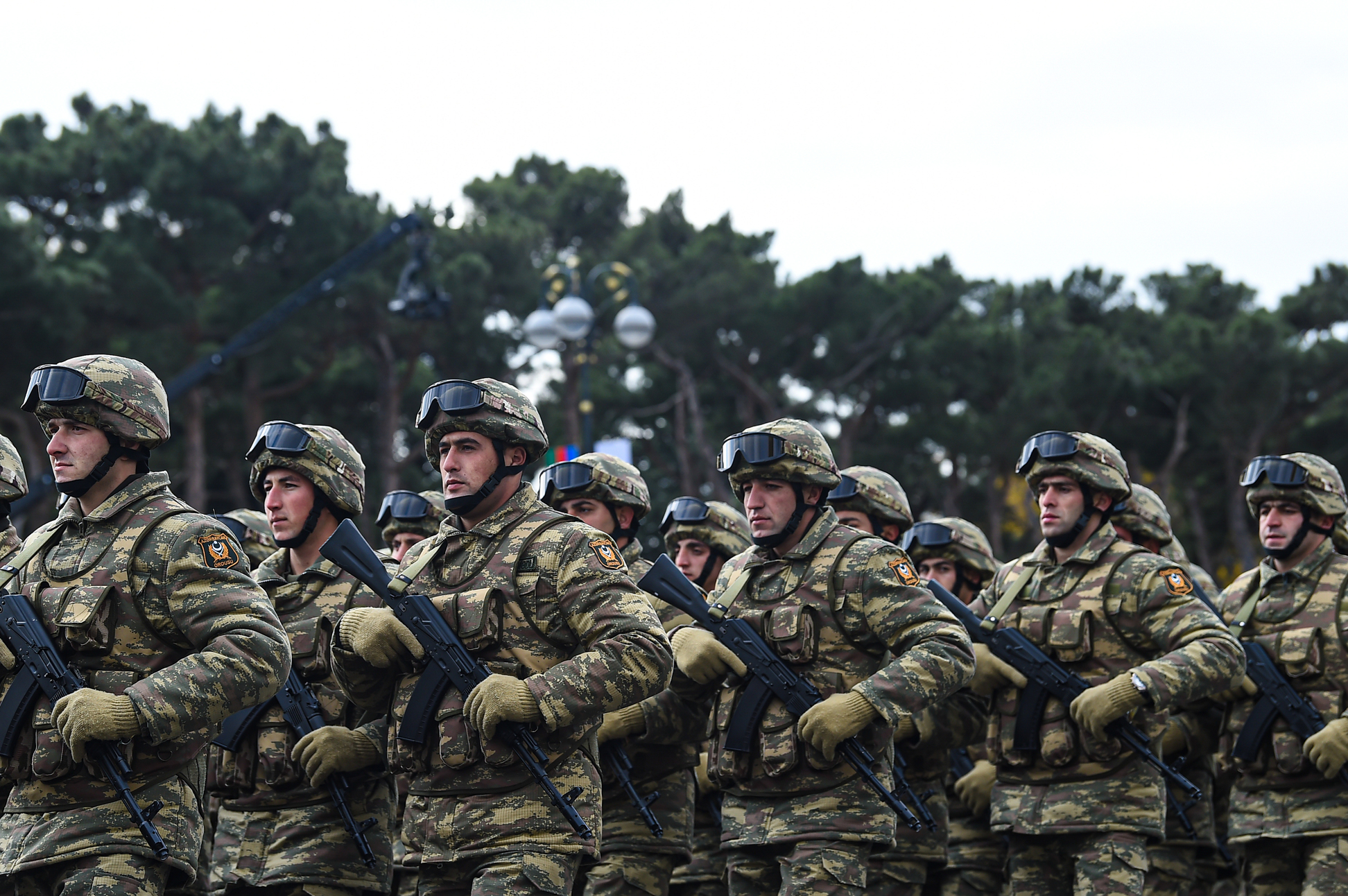
An army, ground force or land force is an armed force that fights primarily on land. In the broadest sense, it is the land-based military branch, service branch or armed service of a nation or country. It may also include aviation assets by possessing an army aviation component. Within a national military force, the word army may also mean a field army.
In some countries, such as France and China, the term "army", especially in its plural form "armies", has the broader meaning of armed forces as a whole, while retaining the colloquial sense of land forces. To differentiate the colloquial army from the formal concept of military force, the term is qualified, for example in France the land force is called Armée de terre, meaning Land Army, and the air and space force is called Armée de l'Air et de l’Espace, meaning Air and Space Army. The naval force, although not using the term "army", is also included in the broad sense of the term "armies" — thus the French Navy is an integral component of the collective French Armies (French Armed Forces) under the Ministry of the Armies. A similar pattern is seen in China, with the People's Liberation Army (PLA) being the overall military, the land force being the PLA Ground Force, and so forth for the PLA Air Force, the PLA Navy, and other branches.
Though by convention, irregular military is understood in contrast to regular armies which grew slowly from personal bodyguards or elite militia. Regular in this case refers to standardized doctrines, uniforms, organizations, etc. Regular military can also refer to full-time status (standing army), versus reserve or part-time personnel. Other distinctions may separate statutory forces (established under laws such as the National Defence Act), from de facto "non-statutory" forces such as some guerrilla and revolutionary armies.
Armies are always divided into various specialties, according to the mission, role, and training of individual units, and sometimes individual soldiers within a unit.
Some of the groupings common to all armies include the following:
During the Iron Age, the Maurya and Nanda Empires had one of the largest armies in the world, the peak being approximately over 600,000 Infantry, 30,000 Cavalry, 8,000 War-Chariots and 9,000 War Elephants not including tributary state allies. In the Gupta age, large armies of longbowmen were recruited to fight off invading horse archer armies. Elephants, pikemen, and cavalry were other featured troops.
The states of China raised armies for at least 1000 years before the Spring and Autumn Annals. By the Warring States period, the crossbow had been perfected enough to become a military secret, with bronze bolts that could pierce any armor. Thus any political power of a state rested on the armies and their organization. China underwent political consolidation of the states of Han (韓), Wei (魏), Chu (楚), Yan (燕), Zhao (趙) and Qi (齊), until by 221 BCE, Qin Shi Huang (秦始皇帝), the first emperor of the Qin dynasty, attained absolute power. This first emperor of China could command the creation of a Terracotta Army to guard his tomb in the city of Xi'an (西安). in addition to a realignment of the Great Wall of China to strengthen his empire against insurrection, invasion and incursion.
Sun Tzu's The Art of War remains one of China's Seven Military Classics, even though it is two thousand years old. Since no political figure could exist without an army, measures were taken to ensure only the most capable leaders could control the armies. Civil bureaucracies (士大夫) arose to control the productive power of the states, and their military power.
Army
An army, ground force or land force is an armed force that fights primarily on land. In the broadest sense, it is the land-based military branch, service branch or armed service of a nation or country. It may also include aviation assets by possessing an army aviation component. Within a national military force, the word army may also mean a field army.
In some countries, such as France and China, the term "army", especially in its plural form "armies", has the broader meaning of armed forces as a whole, while retaining the colloquial sense of land forces. To differentiate the colloquial army from the formal concept of military force, the term is qualified, for example in France the land force is called Armée de terre, meaning Land Army, and the air and space force is called Armée de l'Air et de l’Espace, meaning Air and Space Army. The naval force, although not using the term "army", is also included in the broad sense of the term "armies" — thus the French Navy is an integral component of the collective French Armies (French Armed Forces) under the Ministry of the Armies. A similar pattern is seen in China, with the People's Liberation Army (PLA) being the overall military, the land force being the PLA Ground Force, and so forth for the PLA Air Force, the PLA Navy, and other branches.
Though by convention, irregular military is understood in contrast to regular armies which grew slowly from personal bodyguards or elite militia. Regular in this case refers to standardized doctrines, uniforms, organizations, etc. Regular military can also refer to full-time status (standing army), versus reserve or part-time personnel. Other distinctions may separate statutory forces (established under laws such as the National Defence Act), from de facto "non-statutory" forces such as some guerrilla and revolutionary armies.
Armies are always divided into various specialties, according to the mission, role, and training of individual units, and sometimes individual soldiers within a unit.
Some of the groupings common to all armies include the following:
During the Iron Age, the Maurya and Nanda Empires had one of the largest armies in the world, the peak being approximately over 600,000 Infantry, 30,000 Cavalry, 8,000 War-Chariots and 9,000 War Elephants not including tributary state allies. In the Gupta age, large armies of longbowmen were recruited to fight off invading horse archer armies. Elephants, pikemen, and cavalry were other featured troops.
The states of China raised armies for at least 1000 years before the Spring and Autumn Annals. By the Warring States period, the crossbow had been perfected enough to become a military secret, with bronze bolts that could pierce any armor. Thus any political power of a state rested on the armies and their organization. China underwent political consolidation of the states of Han (韓), Wei (魏), Chu (楚), Yan (燕), Zhao (趙) and Qi (齊), until by 221 BCE, Qin Shi Huang (秦始皇帝), the first emperor of the Qin dynasty, attained absolute power. This first emperor of China could command the creation of a Terracotta Army to guard his tomb in the city of Xi'an (西安). in addition to a realignment of the Great Wall of China to strengthen his empire against insurrection, invasion and incursion.
Sun Tzu's The Art of War remains one of China's Seven Military Classics, even though it is two thousand years old. Since no political figure could exist without an army, measures were taken to ensure only the most capable leaders could control the armies. Civil bureaucracies (士大夫) arose to control the productive power of the states, and their military power.
Recent media
Recent media