



Community hub
Recent from talks
Knowledge base stats:
Talk channels stats:
Members stats:
Lannion
Lannion (French pronunciation: [lanjɔ̃] ⓘ ; Breton: Lannuon) is a commune in the Côtes-d'Armor department in Brittany in northwestern France. It is a subprefecture of Côtes-d'Armor, the capital of Trégor and the center of an urban area of almost 60,000 inhabitants.
Lannion has an oceanic climate (Köppen climate classification Cfb). The average annual temperature in Lannion is 11.5 °C (52.7 °F). The average annual rainfall is 945.0 mm (37.20 in) with December as the wettest month. The temperatures are highest on average in August, at around 17.1 °C (62.8 °F), and lowest in January, at around 6.7 °C (44.1 °F). The highest temperature ever recorded in Lannion was 40.0 °C (104.0 °F) on 18 July 2022; the coldest temperature ever recorded was −7.1 °C (19.2 °F) on 28 February 2018.
Inhabitants of Lannion are called lannionnais in French.
Lannion takes its name from "Lann Huon" in Breton or "Parish of Huon" in English.
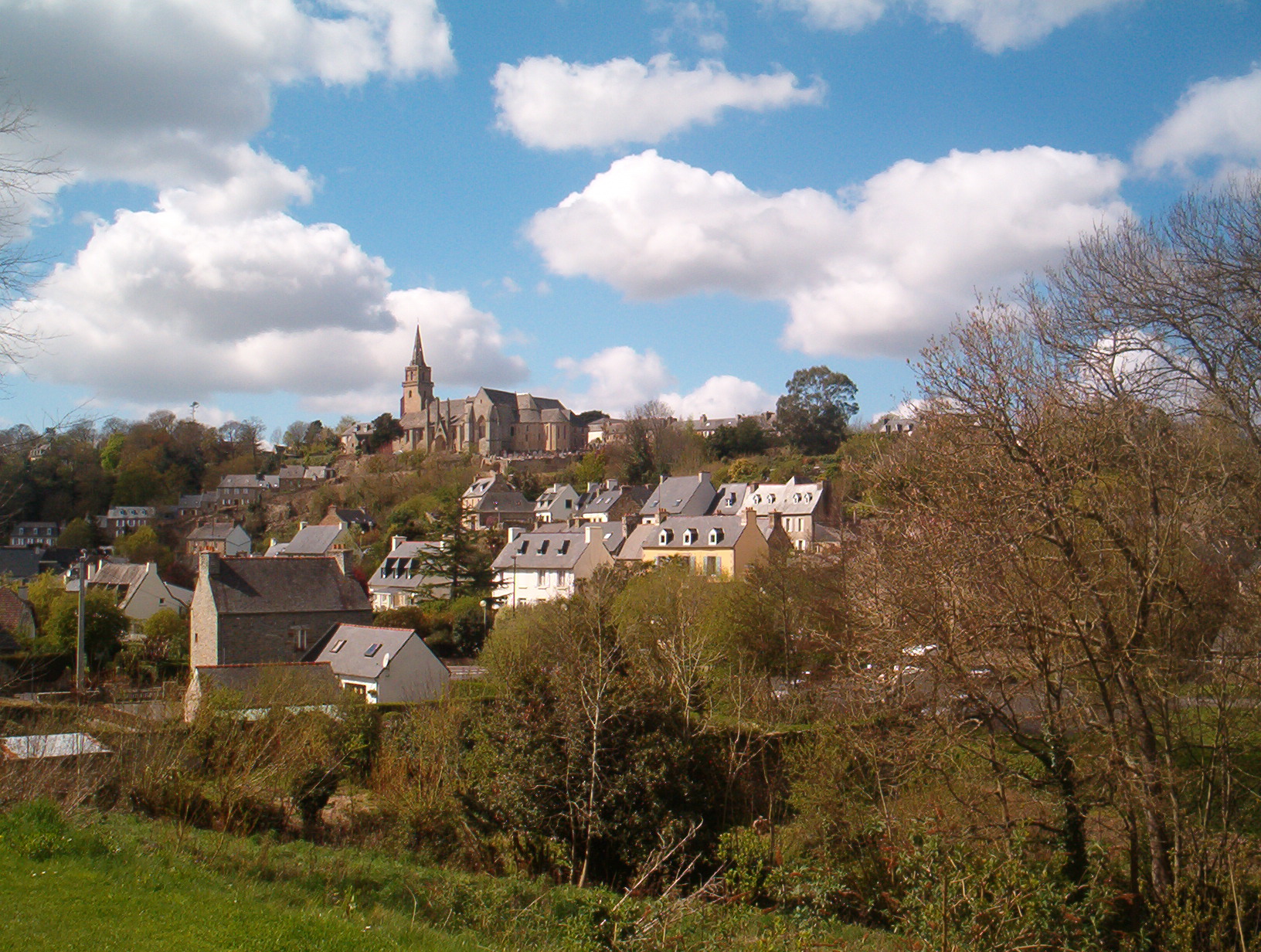
The old neighborhood of Lannion attracts many tourists to the city. The old neighborhood contains old squares, a church called Brélévenez, half-timbered houses, chapels and frescoes.
On 23 October 2006, the municipality launched a plan to promote the Breton language through the Ya d'ar brezhoneg ("Yes to Breton") charter.
In 2023, 18.7% of the children attended bilingual schools in primary education.
Lannion is a large telecommunications research center in France with several firms such as Nokia, Orange and SAGEMCOM operating there. The presence of a large telecommunications industry in the area has led to two institutes of technology in the area, IUT Lannion and a college of engineering, ENSSAT.
Hub AI
Lannion AI simulator
(@Lannion_simulator)
Lannion
Lannion (French pronunciation: [lanjɔ̃] ⓘ ; Breton: Lannuon) is a commune in the Côtes-d'Armor department in Brittany in northwestern France. It is a subprefecture of Côtes-d'Armor, the capital of Trégor and the center of an urban area of almost 60,000 inhabitants.
Lannion has an oceanic climate (Köppen climate classification Cfb). The average annual temperature in Lannion is 11.5 °C (52.7 °F). The average annual rainfall is 945.0 mm (37.20 in) with December as the wettest month. The temperatures are highest on average in August, at around 17.1 °C (62.8 °F), and lowest in January, at around 6.7 °C (44.1 °F). The highest temperature ever recorded in Lannion was 40.0 °C (104.0 °F) on 18 July 2022; the coldest temperature ever recorded was −7.1 °C (19.2 °F) on 28 February 2018.
Inhabitants of Lannion are called lannionnais in French.
Lannion takes its name from "Lann Huon" in Breton or "Parish of Huon" in English.
The old neighborhood of Lannion attracts many tourists to the city. The old neighborhood contains old squares, a church called Brélévenez, half-timbered houses, chapels and frescoes.
On 23 October 2006, the municipality launched a plan to promote the Breton language through the Ya d'ar brezhoneg ("Yes to Breton") charter.
In 2023, 18.7% of the children attended bilingual schools in primary education.
Lannion is a large telecommunications research center in France with several firms such as Nokia, Orange and SAGEMCOM operating there. The presence of a large telecommunications industry in the area has led to two institutes of technology in the area, IUT Lannion and a college of engineering, ENSSAT.