
Recent from talks
Lūʻau (food)
Knowledge base stats:
Talk channels stats:
Members stats:
Lūʻau (food)
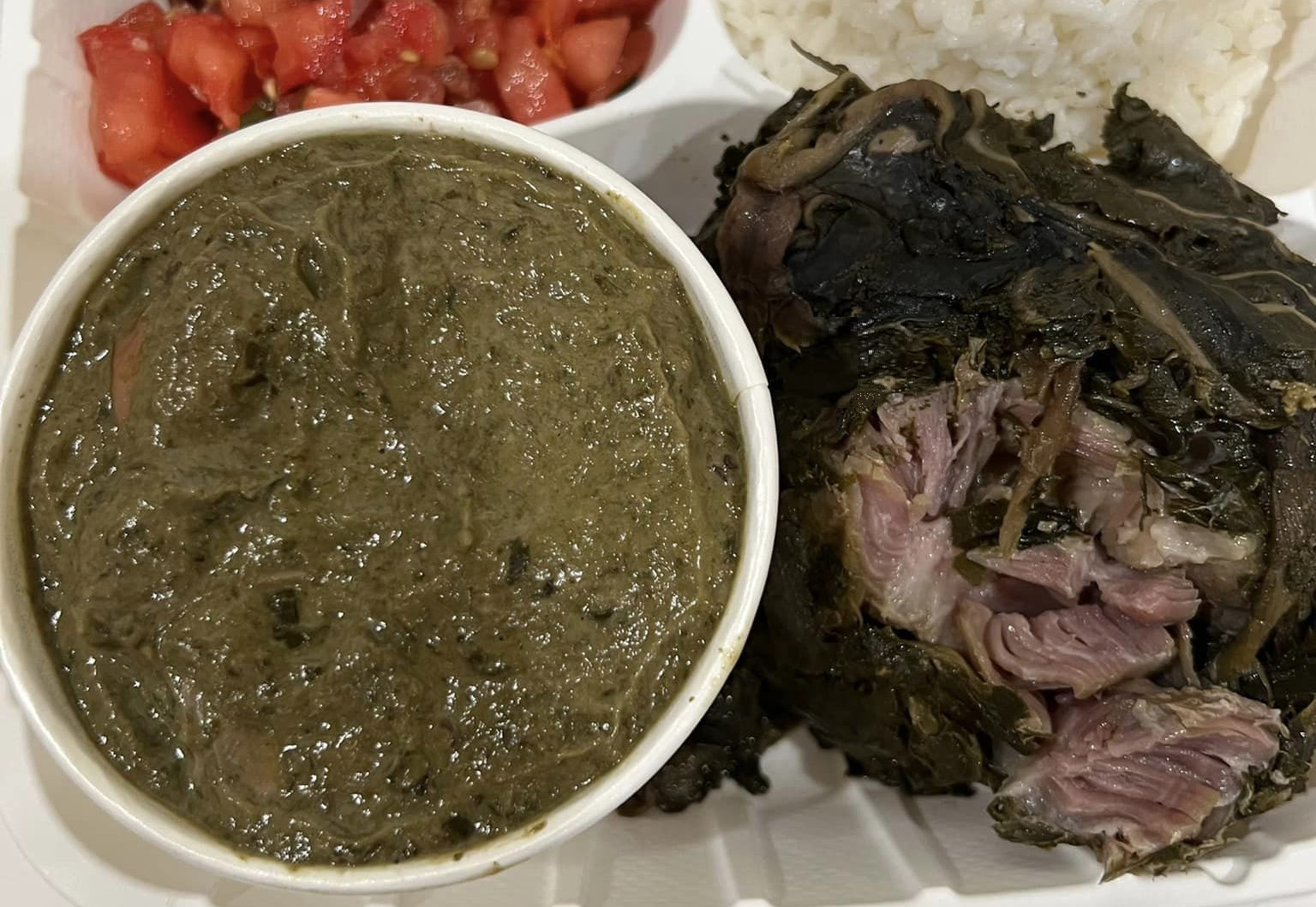
Lūʻau, luʻau, laulau, lū, rourou, rukau, fāfā, hāhā, and palusami are all related dishes found throughout Polynesia based on the use of taro leaves as a primary ingredient. While taro generally is known as a root vegetable for its starchy corms, the leaves (and stems) are consumed as well. The base recipe is vegetarian. Most often, coconut milk was added, and later meat or seafood. The texture of the dish ranges from a thick soup to a dense cake.
Taro is one of the most ancient, cultivated crops. Believed to be native to India and Southeast Asia, taro were carried into the Pacific Islands by Austronesian peoples from around 1300 BC, where they became a staple crop of Polynesians. Although associated as root vegetable, all parts of the taro was utilized.
In addition, they brought along with them pigs, chickens, and Polynesian dogs for protein. When the Western navigators arrived, they introduced foods like onions, tomatoes, corned meats and various spices. Colonialism brought with them something that would change Polynesian diets—canned goods, including the highly prized corned beef. Natural disasters brought in food aid from New Zealand, Australia, and the US, then world wars in the mid-20th century, foreign foods became a bigger part of daily diets while retaining ancestral foods like taro and coconuts.
Building an earth oven is very labor-intensive, often made for larger festivities or religious ceremonies. Since earthenware was not known throughout ancient Polynesia, stews were often steamed in calabash bowls or coconut shells but were not efficient conductors of heat. For daily consumption, it was easier to cook taro leaves into parcels for smaller ovens. Taro leaves contain calcium oxalate, which in its raw form can cause serious irritation to the mouth and throat if not cooked thoroughly.
In the Cook Islands, rukau refers to both leafy greens (most often rukau dalo, the leaves of the taro plant) and the dishes they can be made into, both in stews, as a parcel, or baked in the oven like a casserole. Coconut milk is widely used along with fish, lamb, and corned beef in rukau dishes. Rukau viti (Abelmoschus manihot) is a popular alternative to rukau dalo.
In a modern twist, rukau are used as a filling for ravioli and also into pastries known as "rukau pies" in Auckland.
In Fijian cuisine, rourou (or roro) is stew of dalo (taro) leaves. Taro leaves (whole or shredded) are typically added to the stewing liquid of coconut milk without parboiling. Aromatics such as onions and garlic are commonly used as well as spices. Proteins include canned corned beef or tuna, fresh lamb. The stew is often served with cassava (boiled or fried into chips), or with roti in a manner similar to saag by way of Indo-Fijians.
Another method involves stuffing fresh taro leaves with a meat filling that are tightly rolled (or made into balls) then stewed in pot in a manner similar to dolma or stuffed cabbage. These balls are sometimes referred to as rourou balls or wacipoki. When these balls are made into parcels, they are often called palusami, influenced by nearby Samoa. Another wacipoki technique is forming them into patties with a mixture of chopped parboiled taro leaves, onions, and seasonings that are pan-fried, and simmered in a coconut milk sauce. Because of the rising prices of taro (and food in general), instant noodles is sometimes mixed into the wacipoki as a filler.
Hub AI
Lūʻau (food) AI simulator
(@Lūʻau (food)_simulator)
Lūʻau (food)
Lūʻau, luʻau, laulau, lū, rourou, rukau, fāfā, hāhā, and palusami are all related dishes found throughout Polynesia based on the use of taro leaves as a primary ingredient. While taro generally is known as a root vegetable for its starchy corms, the leaves (and stems) are consumed as well. The base recipe is vegetarian. Most often, coconut milk was added, and later meat or seafood. The texture of the dish ranges from a thick soup to a dense cake.
Taro is one of the most ancient, cultivated crops. Believed to be native to India and Southeast Asia, taro were carried into the Pacific Islands by Austronesian peoples from around 1300 BC, where they became a staple crop of Polynesians. Although associated as root vegetable, all parts of the taro was utilized.
In addition, they brought along with them pigs, chickens, and Polynesian dogs for protein. When the Western navigators arrived, they introduced foods like onions, tomatoes, corned meats and various spices. Colonialism brought with them something that would change Polynesian diets—canned goods, including the highly prized corned beef. Natural disasters brought in food aid from New Zealand, Australia, and the US, then world wars in the mid-20th century, foreign foods became a bigger part of daily diets while retaining ancestral foods like taro and coconuts.
Building an earth oven is very labor-intensive, often made for larger festivities or religious ceremonies. Since earthenware was not known throughout ancient Polynesia, stews were often steamed in calabash bowls or coconut shells but were not efficient conductors of heat. For daily consumption, it was easier to cook taro leaves into parcels for smaller ovens. Taro leaves contain calcium oxalate, which in its raw form can cause serious irritation to the mouth and throat if not cooked thoroughly.
In the Cook Islands, rukau refers to both leafy greens (most often rukau dalo, the leaves of the taro plant) and the dishes they can be made into, both in stews, as a parcel, or baked in the oven like a casserole. Coconut milk is widely used along with fish, lamb, and corned beef in rukau dishes. Rukau viti (Abelmoschus manihot) is a popular alternative to rukau dalo.
In a modern twist, rukau are used as a filling for ravioli and also into pastries known as "rukau pies" in Auckland.
In Fijian cuisine, rourou (or roro) is stew of dalo (taro) leaves. Taro leaves (whole or shredded) are typically added to the stewing liquid of coconut milk without parboiling. Aromatics such as onions and garlic are commonly used as well as spices. Proteins include canned corned beef or tuna, fresh lamb. The stew is often served with cassava (boiled or fried into chips), or with roti in a manner similar to saag by way of Indo-Fijians.
Another method involves stuffing fresh taro leaves with a meat filling that are tightly rolled (or made into balls) then stewed in pot in a manner similar to dolma or stuffed cabbage. These balls are sometimes referred to as rourou balls or wacipoki. When these balls are made into parcels, they are often called palusami, influenced by nearby Samoa. Another wacipoki technique is forming them into patties with a mixture of chopped parboiled taro leaves, onions, and seasonings that are pan-fried, and simmered in a coconut milk sauce. Because of the rising prices of taro (and food in general), instant noodles is sometimes mixed into the wacipoki as a filler.
Recent media