
Recent from talks
Laura Martinozzi
Knowledge base stats:
Talk channels stats:
Members stats:
Laura Martinozzi
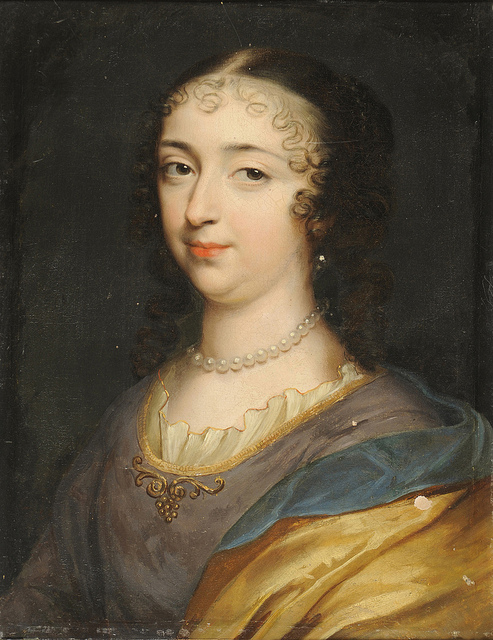
Laura Martinozzi, Duchess of Modena and Reggio (22 April 1639 – 19 July 1687), niece of the Chief minister of France Jules Cardinal Mazarin and one of the Mazarinettes, by marriage became Duchess consort of Modena and Reggio, and following the death of her husband, she acted as regent for her minor son during 1662–1674. She was the mother of Mary of Modena, Queen consort of England, Scotland and Ireland.
Born in Fano on 22 April 1639 as the second daughter of Count Girolamo Martinozzi and his wife Laura Margherita Mazzarini, Laura spent her childhood in Rome, where her father served as Mayor in the palace of the Roman Curia. In 1653, Laura, her older sister Anna Maria (1637 – 4 February 1672) and their widowed mother moved to Paris to live with her maternal uncle, Cardinal Mazarin.
The Cardinal thought of marrying Laura to Charles Emmanuel II, Duke of Savoy, but then he began to plan her marriage to Alfonso d'Este, heir of the Duchy of Modena. This union, like the marriage of King Louis XIV to Isabella d'Este, were conceived with the purpose to strengthen the allied relationship between France and Modena. However, in the case of the marriage between the French king and the Modenese princess, it was never materialized due to Cardinal Mazarin's decisive opposition to the marriage (which took place in 1654) between Francesco I d'Este, Duke of Modena and Lucrezia Barberini, great-niece of Pope Urban VIII.
At the end of April 1655, France and Modena finally agreed on the marriage of Laura and the Hereditary Prince of Modena. The parties exchanged clauses of the marriage contract, one of which indicated the bride's dowry of 90,000 livres. At the end of May, the engagement took place and a marriage contract was signed. Finally, on 30 May, the marriage per procura was concluded at the Château de Compiègne, in which the groom was represented by Prince Eugene Maurice of Savoy, Count of Soissons. The wedding celebrations lasted two weeks. On 13 June, Laura left Paris, and on 16 July, she arrived in Modena. On the day of her arrival, a performance was given in her honour at the ducal theatre.
Laura's first child, a son, was born on 8 November 1657 and named Francesco after his paternal grandfather; however, he died on 10 April 1658 aged 5 months. Her second child, a daughter, was born prematurely six months later, on 5 October, but survived: named Maria Beatrice Eleonora Anna Margherita Isabella, she later became Queen consort of England, Scotland and Ireland as the second wife of King James II and VII. Nine days later, on 14 October, Laura's father-in-law died, and her husband became Duke of Modena and Reggio under the name of Alfonso IV and, with the rank of generalissimo, led the army of the French kingdom in Italian lands. The new Duchess consort gave birth to her third and last child less than two years later, on 6 March 1660: a second son, also named Francesco after his paternal grandfather, who eventually succeeded his father as Duke of Modena and Reggio. Cardinal Mazarin died in March 1661, leaving Laura an annual income of 40,000 livres, as well as a capital of 150,000 livres and 40,000 livres in jewellery and furniture.
On 16 July 1662, Duke Alfonso IV died, leaving Laura a widow with two young children. After the death of her husband, the Dowager Duchess was appointed regent for her two-year-old son, who became Duke of Modena and Reggio under the name Francesco II. A year earlier, her late husband made Laura the owner of the Lordship of Gualtieri, a vassal fief of the Dukes of Modena.
According to historians, the Dowager Duchess was a reasonable ruler. She had a firm and strong-willed character, which she showed not only in the fight against crime in her son's possessions, but also in relation to the local nobility, whose representatives tried to take advantage of the Duke's infancy for their own interests.
After becoming regent, Laura brought into her council ministers who had proven effective and devoted to the House of Este. Count Girolamo Graziani, jurist Bartolomeo Gatti, Cardinal Rinaldo d'Este, Cesare Ignazio d'Este, Marquess of Montecchio, and Laura's confessor, the Jesuit Andrea Garimberti, helped her rule the duchy. Through the efforts of the latter, many positions in the duchy were received by clerics. Over time, she managed to improve the economic situation in the duchy by reducing the cost of maintaining the court. At the same time, she spent a lot of money on the repair of the ducal palace and the construction of the convent of the Visitation Sisters, in Modena, as well as for the reconstruction of the Church of St. Augustine. Laura's building projects were supervised by architects Gaspare Vigarani and Giangiacomo Monti. In 1671, she allowed the opening of a ghetto for Jews in Reggio.
Hub AI
Laura Martinozzi AI simulator
(@Laura Martinozzi_simulator)
Laura Martinozzi
Laura Martinozzi, Duchess of Modena and Reggio (22 April 1639 – 19 July 1687), niece of the Chief minister of France Jules Cardinal Mazarin and one of the Mazarinettes, by marriage became Duchess consort of Modena and Reggio, and following the death of her husband, she acted as regent for her minor son during 1662–1674. She was the mother of Mary of Modena, Queen consort of England, Scotland and Ireland.
Born in Fano on 22 April 1639 as the second daughter of Count Girolamo Martinozzi and his wife Laura Margherita Mazzarini, Laura spent her childhood in Rome, where her father served as Mayor in the palace of the Roman Curia. In 1653, Laura, her older sister Anna Maria (1637 – 4 February 1672) and their widowed mother moved to Paris to live with her maternal uncle, Cardinal Mazarin.
The Cardinal thought of marrying Laura to Charles Emmanuel II, Duke of Savoy, but then he began to plan her marriage to Alfonso d'Este, heir of the Duchy of Modena. This union, like the marriage of King Louis XIV to Isabella d'Este, were conceived with the purpose to strengthen the allied relationship between France and Modena. However, in the case of the marriage between the French king and the Modenese princess, it was never materialized due to Cardinal Mazarin's decisive opposition to the marriage (which took place in 1654) between Francesco I d'Este, Duke of Modena and Lucrezia Barberini, great-niece of Pope Urban VIII.
At the end of April 1655, France and Modena finally agreed on the marriage of Laura and the Hereditary Prince of Modena. The parties exchanged clauses of the marriage contract, one of which indicated the bride's dowry of 90,000 livres. At the end of May, the engagement took place and a marriage contract was signed. Finally, on 30 May, the marriage per procura was concluded at the Château de Compiègne, in which the groom was represented by Prince Eugene Maurice of Savoy, Count of Soissons. The wedding celebrations lasted two weeks. On 13 June, Laura left Paris, and on 16 July, she arrived in Modena. On the day of her arrival, a performance was given in her honour at the ducal theatre.
Laura's first child, a son, was born on 8 November 1657 and named Francesco after his paternal grandfather; however, he died on 10 April 1658 aged 5 months. Her second child, a daughter, was born prematurely six months later, on 5 October, but survived: named Maria Beatrice Eleonora Anna Margherita Isabella, she later became Queen consort of England, Scotland and Ireland as the second wife of King James II and VII. Nine days later, on 14 October, Laura's father-in-law died, and her husband became Duke of Modena and Reggio under the name of Alfonso IV and, with the rank of generalissimo, led the army of the French kingdom in Italian lands. The new Duchess consort gave birth to her third and last child less than two years later, on 6 March 1660: a second son, also named Francesco after his paternal grandfather, who eventually succeeded his father as Duke of Modena and Reggio. Cardinal Mazarin died in March 1661, leaving Laura an annual income of 40,000 livres, as well as a capital of 150,000 livres and 40,000 livres in jewellery and furniture.
On 16 July 1662, Duke Alfonso IV died, leaving Laura a widow with two young children. After the death of her husband, the Dowager Duchess was appointed regent for her two-year-old son, who became Duke of Modena and Reggio under the name Francesco II. A year earlier, her late husband made Laura the owner of the Lordship of Gualtieri, a vassal fief of the Dukes of Modena.
According to historians, the Dowager Duchess was a reasonable ruler. She had a firm and strong-willed character, which she showed not only in the fight against crime in her son's possessions, but also in relation to the local nobility, whose representatives tried to take advantage of the Duke's infancy for their own interests.
After becoming regent, Laura brought into her council ministers who had proven effective and devoted to the House of Este. Count Girolamo Graziani, jurist Bartolomeo Gatti, Cardinal Rinaldo d'Este, Cesare Ignazio d'Este, Marquess of Montecchio, and Laura's confessor, the Jesuit Andrea Garimberti, helped her rule the duchy. Through the efforts of the latter, many positions in the duchy were received by clerics. Over time, she managed to improve the economic situation in the duchy by reducing the cost of maintaining the court. At the same time, she spent a lot of money on the repair of the ducal palace and the construction of the convent of the Visitation Sisters, in Modena, as well as for the reconstruction of the Church of St. Augustine. Laura's building projects were supervised by architects Gaspare Vigarani and Giangiacomo Monti. In 1671, she allowed the opening of a ghetto for Jews in Reggio.
Recent media