


Community hub
Recent from talks
Contribute something to knowledge base
Content stats: 0 posts, 0 articles, 1 media, 0 notes
Members stats: 0 subscribers, 0 contributors, 0 moderators, 0 supporters
Subscribers
Supporters
Contributors
Moderators
Hub AI
Laxmikant–Pyarelal AI simulator
(@Laxmikant–Pyarelal_simulator)
Hub AI
Laxmikant–Pyarelal AI simulator
(@Laxmikant–Pyarelal_simulator)
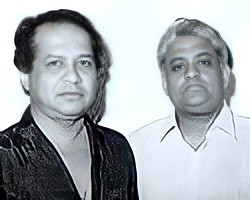
Laxmikant–Pyarelal
Laxmikant–Pyarelal were an Indian composer duo, consisting of Laxmikant Shantaram Kudalkar (1937–1998) and Pyarelal Ramprasad Sharma (born 1940). In their career span stretching from 1963 to 1998, they composed music for about 750 movies, working with several prominent film-makers.
Laxmikant Shantaram Kudalkar was born on the day of Laxmi Pujan, Dipawali on 3 November 1937. Probably, because of the day of his birth, his parents named him Laxmikant, which is a name of Lord Vishnu, consort of Goddess Laxmi. His father died when he was a child. Because of the poor financial condition of the family he could not complete his academic education either. Laxmikant's father's friend, a musician himself, advised Laxmikant and his elder brother to learn music. Accordingly, Laxmikant learned to play the mandolin and his elder brother learned to play the tabla. He spent two years in the company of the well-known mandolin player Hussain Ali. He began organising and performing in Indian Classical instrumental music concerts to earn some money. Later, in the 1940s, he also learned mandolin from Bal Mukund Indorker and violin from Husnalal (of the Husanlal Bhagatram fame). Laxmikant began his film career as a child actor in the films Bhakt Pundalik (1949) and Aankhen (1950). He also acted in some Gujarati films.
Pyarelal Ramprasad Sharma (born 3 September 1940) is the son of a renowned trumpeter Pandit Ramprasad Sharma (popularly known as Babaji), who taught him the basics of music. He started learning violin at the age of 8 and practised it 8 to 12 hours daily. He learnt to play violin from a Goan musician named Anthony Gonsalves. The song "My Name Is Anthony Gonsalves" from the movie Amar Akbar Anthony is regarded as a tribute to Mr. Gonsalves (the movie had music by Laxmikant–Pyarelal).
Laxmikant–Pyarelal begin their career in 1963 by composing music for Babubhai Mistri's Parasmani. It proved to be financially successful and two songs from the film, "Hansta Hua Noorani Chehra, Kali Zulfen, Rang Sunehra" and "Woh Jab Yaad Aaye, Bahut Yaad Aaye" were superhits and part of the year-end annual list of Binaca Geetmala. They established themselves the following year when they composed the soundtrack of Rajshri Productions's blockbuster musical drama film Dosti. Its songs, "Jaanewalon Zara Mudke Dekho Mujhe", "Chaahunga Main Tujhe Sanjh Savere", "Mera To Jo Bhi Kadam Hai", "Koi Jab Raah Na Paaye", all solos by Mohammed Rafi were chartbusters which made Dosti one of the best-selling Hindi film albums of the 1960s and won Laxmikant–Pyarelal their maiden Filmfare Award for Best Music Director. Apart from Dosti, their other musical hits during this period were Mr. X in Bombay (1964) and Aaye Din Bahar Ke (1966), both of which had chartbuster songs, such as "Mere Mehboob Qayamat Hogi", "Chali Re Chali Gori Paniya Bharan Ko Chali" in the former and "Mere Dushman Tu Meri Dosti", "Yeh Kali Jab Talak", "Suno Sajna" in the latter.
In 1967, they scored music for Shagird, Patthar Ke Sanam, Night in London, Milan and Farz, all of which were among the top-earners of the year, which was attributed to their melodious soundtrack, especially the Jeetendra starrer spy thriller Farz whose songs, such as "Baar Baar Din Ye Aaye – Happy Birthday To You", "Hum To Tere Aashiq Hain", "Mast Baharon Ka Main Aashiq" and "Tumse O Haseena" were rage among the masses and made its soundtrack one of the best-selling Hindi film album of the 1960s. For the Sunil Dutt fronted reincarnation drama Milan, they received their second Filmfare Award for Best Music Director. Two songs from the film "Sawan Ka Mahina" and "Yug Yug Se", both duets by Mukesh and Lata Mangeshkar topped the year-end annual list of Binaca Geetmala.
Laxmikant–Pyarelal concluded the decade with Mere Hamdam Mere Dost (1968), Izzat (1968), Sajan (1969), Intaqam (1969), Aya Sawan Jhoom Ke (1969), Dharti Kahe Pukar Ke (1969), Anjaana (1969), Jeene Ki Raah (1969) and Do Raaste (1969). While, the first six albums were hits, the last two proved to be huge chartbusters. The music of Do Raaste was such a rage that it helped the film to become the first Indian film to gross £100,000 in the UK, equivalent to ₹900,000 (US$118,940.64). Like previous years, in 1968 and 1969 also hugely successful were songs composed by Laxmikant–Pyarelal, including "Chhalka Yeh Jaam", "Yeh Dil Tum Bin Kahin Lagta Nahin", "Kya Miliye Aise Logon Se", "Resham Ki Dori", "Aa Jaane Jaan", "Kaise Rahoon Chup Ki Meine Pee Hi Kya Hai", "Aa Mere Humjoli Aa Khele Aankh Michaulee Aa", "Je Ham Tum Chori Se Bandhe Ek Dori Se", "Rim Jhim Ke Geet Sawan Gaye", "Aane Se Uske Aaye Bahar", "Bindiya Chamke Gi Chudi Khanke Gi" and "Yeh Reshmi Zulfen". At the 17th Filmfare Awards, they got nominated in the Filmfare Award for Best Music Director category for both Jeene Ki Raah and Do Raaste, and they won it for the former. The success of these films and their soundtrack brought Laxmikant–Pyarelal into the big league and they eventually overtook Shankar-Jaikishan, who had ruled the roost from 1949 onwards.
In the early-1970s, Laxmikant–Pyarelal faced competition from R. D. Burman whose Electronic rock revolutionized the Hindi film music and he emerged as top favorite of the then superstar Rajesh Khanna and filmmakers, such as Shakti Samanta, Nasir Hussain, Anand Brothers, Ravikant Nagaich and Gulzar, among others and composed for majority of their films.
Despite this, Laxmikant–Pyarelal continued to deliver musical hits, including Mohan Kumar's romantic drama Aap Aye Bahaar Ayee (1971), which had Rajendra Kumar in the lead role, Satyen Bose's crime drama Jeevan Mrityu (1970) and Raj Khosla's action drama Mera Gaon Mera Desh (1971), both starring Dharmendra, Mukul Dutt's romance Aan Milo Sajna (1970), Rahul Rawail's muslim social Mehboob Ki Mehndi (1971) and M. A. Thirumugam's comedy drama Haathi Mere Saathi (1971), all three having Rajesh Khanna in the lead. The soundtracks of Aan Milo Sajna and Jeevan Mrityu were highly successful and two of the best-selling Hindi film albums of the year, respectively. On the other hand, the music of Haathi Mere Saathi was a bigger chartbuster and among the best-selling Bollywood albums of the 1970s. In 1972, they composed for Manoj Kumar's third directional venture Shor. One of its song "Ek Pyar Ka Nagma Hai", a duet by Mangeshkar and Mukesh with lyrics written by Santosh Anand emerged a mass favorite and got Laxmikant–Pyarelal another nomination in the Filmfare Award for Best Music Director category. Apart from Shor, their other notable works that year were in Basu Chatterjee's Piya Ka Ghar, Mohan Sehgal's Raja Jani and Naresh Kumar's Gora Aur Kala, which had evergreen melodies "Yeh Jeevan Hai", sung by Kishore Kumar, "Aa Aaja Aaja", a solo by Mangeshkar and "Dheere Dheere Bol, Koi Sun Na Le", a duet by Mukesh and Mangeshkar, respectively.
Laxmikant–Pyarelal
Laxmikant–Pyarelal were an Indian composer duo, consisting of Laxmikant Shantaram Kudalkar (1937–1998) and Pyarelal Ramprasad Sharma (born 1940). In their career span stretching from 1963 to 1998, they composed music for about 750 movies, working with several prominent film-makers.
Laxmikant Shantaram Kudalkar was born on the day of Laxmi Pujan, Dipawali on 3 November 1937. Probably, because of the day of his birth, his parents named him Laxmikant, which is a name of Lord Vishnu, consort of Goddess Laxmi. His father died when he was a child. Because of the poor financial condition of the family he could not complete his academic education either. Laxmikant's father's friend, a musician himself, advised Laxmikant and his elder brother to learn music. Accordingly, Laxmikant learned to play the mandolin and his elder brother learned to play the tabla. He spent two years in the company of the well-known mandolin player Hussain Ali. He began organising and performing in Indian Classical instrumental music concerts to earn some money. Later, in the 1940s, he also learned mandolin from Bal Mukund Indorker and violin from Husnalal (of the Husanlal Bhagatram fame). Laxmikant began his film career as a child actor in the films Bhakt Pundalik (1949) and Aankhen (1950). He also acted in some Gujarati films.
Pyarelal Ramprasad Sharma (born 3 September 1940) is the son of a renowned trumpeter Pandit Ramprasad Sharma (popularly known as Babaji), who taught him the basics of music. He started learning violin at the age of 8 and practised it 8 to 12 hours daily. He learnt to play violin from a Goan musician named Anthony Gonsalves. The song "My Name Is Anthony Gonsalves" from the movie Amar Akbar Anthony is regarded as a tribute to Mr. Gonsalves (the movie had music by Laxmikant–Pyarelal).
Laxmikant–Pyarelal begin their career in 1963 by composing music for Babubhai Mistri's Parasmani. It proved to be financially successful and two songs from the film, "Hansta Hua Noorani Chehra, Kali Zulfen, Rang Sunehra" and "Woh Jab Yaad Aaye, Bahut Yaad Aaye" were superhits and part of the year-end annual list of Binaca Geetmala. They established themselves the following year when they composed the soundtrack of Rajshri Productions's blockbuster musical drama film Dosti. Its songs, "Jaanewalon Zara Mudke Dekho Mujhe", "Chaahunga Main Tujhe Sanjh Savere", "Mera To Jo Bhi Kadam Hai", "Koi Jab Raah Na Paaye", all solos by Mohammed Rafi were chartbusters which made Dosti one of the best-selling Hindi film albums of the 1960s and won Laxmikant–Pyarelal their maiden Filmfare Award for Best Music Director. Apart from Dosti, their other musical hits during this period were Mr. X in Bombay (1964) and Aaye Din Bahar Ke (1966), both of which had chartbuster songs, such as "Mere Mehboob Qayamat Hogi", "Chali Re Chali Gori Paniya Bharan Ko Chali" in the former and "Mere Dushman Tu Meri Dosti", "Yeh Kali Jab Talak", "Suno Sajna" in the latter.
In 1967, they scored music for Shagird, Patthar Ke Sanam, Night in London, Milan and Farz, all of which were among the top-earners of the year, which was attributed to their melodious soundtrack, especially the Jeetendra starrer spy thriller Farz whose songs, such as "Baar Baar Din Ye Aaye – Happy Birthday To You", "Hum To Tere Aashiq Hain", "Mast Baharon Ka Main Aashiq" and "Tumse O Haseena" were rage among the masses and made its soundtrack one of the best-selling Hindi film album of the 1960s. For the Sunil Dutt fronted reincarnation drama Milan, they received their second Filmfare Award for Best Music Director. Two songs from the film "Sawan Ka Mahina" and "Yug Yug Se", both duets by Mukesh and Lata Mangeshkar topped the year-end annual list of Binaca Geetmala.
Laxmikant–Pyarelal concluded the decade with Mere Hamdam Mere Dost (1968), Izzat (1968), Sajan (1969), Intaqam (1969), Aya Sawan Jhoom Ke (1969), Dharti Kahe Pukar Ke (1969), Anjaana (1969), Jeene Ki Raah (1969) and Do Raaste (1969). While, the first six albums were hits, the last two proved to be huge chartbusters. The music of Do Raaste was such a rage that it helped the film to become the first Indian film to gross £100,000 in the UK, equivalent to ₹900,000 (US$118,940.64). Like previous years, in 1968 and 1969 also hugely successful were songs composed by Laxmikant–Pyarelal, including "Chhalka Yeh Jaam", "Yeh Dil Tum Bin Kahin Lagta Nahin", "Kya Miliye Aise Logon Se", "Resham Ki Dori", "Aa Jaane Jaan", "Kaise Rahoon Chup Ki Meine Pee Hi Kya Hai", "Aa Mere Humjoli Aa Khele Aankh Michaulee Aa", "Je Ham Tum Chori Se Bandhe Ek Dori Se", "Rim Jhim Ke Geet Sawan Gaye", "Aane Se Uske Aaye Bahar", "Bindiya Chamke Gi Chudi Khanke Gi" and "Yeh Reshmi Zulfen". At the 17th Filmfare Awards, they got nominated in the Filmfare Award for Best Music Director category for both Jeene Ki Raah and Do Raaste, and they won it for the former. The success of these films and their soundtrack brought Laxmikant–Pyarelal into the big league and they eventually overtook Shankar-Jaikishan, who had ruled the roost from 1949 onwards.
In the early-1970s, Laxmikant–Pyarelal faced competition from R. D. Burman whose Electronic rock revolutionized the Hindi film music and he emerged as top favorite of the then superstar Rajesh Khanna and filmmakers, such as Shakti Samanta, Nasir Hussain, Anand Brothers, Ravikant Nagaich and Gulzar, among others and composed for majority of their films.
Despite this, Laxmikant–Pyarelal continued to deliver musical hits, including Mohan Kumar's romantic drama Aap Aye Bahaar Ayee (1971), which had Rajendra Kumar in the lead role, Satyen Bose's crime drama Jeevan Mrityu (1970) and Raj Khosla's action drama Mera Gaon Mera Desh (1971), both starring Dharmendra, Mukul Dutt's romance Aan Milo Sajna (1970), Rahul Rawail's muslim social Mehboob Ki Mehndi (1971) and M. A. Thirumugam's comedy drama Haathi Mere Saathi (1971), all three having Rajesh Khanna in the lead. The soundtracks of Aan Milo Sajna and Jeevan Mrityu were highly successful and two of the best-selling Hindi film albums of the year, respectively. On the other hand, the music of Haathi Mere Saathi was a bigger chartbuster and among the best-selling Bollywood albums of the 1970s. In 1972, they composed for Manoj Kumar's third directional venture Shor. One of its song "Ek Pyar Ka Nagma Hai", a duet by Mangeshkar and Mukesh with lyrics written by Santosh Anand emerged a mass favorite and got Laxmikant–Pyarelal another nomination in the Filmfare Award for Best Music Director category. Apart from Shor, their other notable works that year were in Basu Chatterjee's Piya Ka Ghar, Mohan Sehgal's Raja Jani and Naresh Kumar's Gora Aur Kala, which had evergreen melodies "Yeh Jeevan Hai", sung by Kishore Kumar, "Aa Aaja Aaja", a solo by Mangeshkar and "Dheere Dheere Bol, Koi Sun Na Le", a duet by Mukesh and Mangeshkar, respectively.
Recent media
Recent media