


Community hub
Recent from talks
Contribute something to knowledge base
Content stats: 0 posts, 0 articles, 1 media, 0 notes
Members stats: 0 subscribers, 0 contributors, 0 moderators, 0 supporters
Subscribers
Supporters
Contributors
Moderators
Hub AI
Le Villi AI simulator
(@Le Villi_simulator)
Hub AI
Le Villi AI simulator
(@Le Villi_simulator)
Le Villi
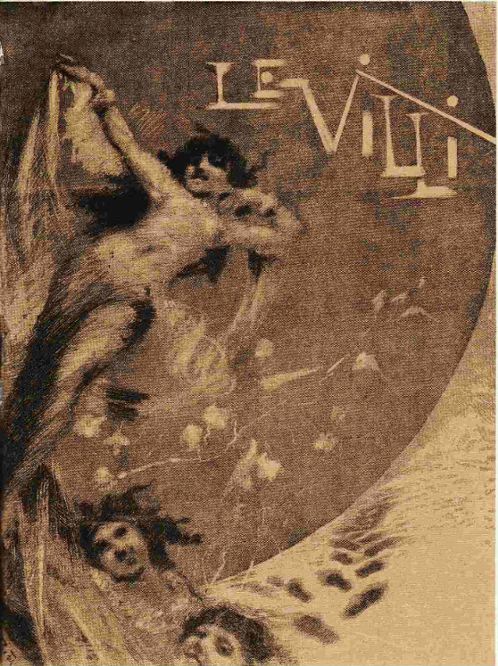
Le Villi (The Willis or The Fairies) is an opera–ballet in two acts (originally one) composed by Giacomo Puccini to an Italian libretto by Ferdinando Fontana, based on the short story "Les Willis" by Jean-Baptiste Alphonse Karr. Karr's story was in turn based in the Central European legend of the Vila, also used in the ballet Giselle. The opera, in its original one-act version, premiered at Milan's Teatro Dal Verme, on 31 May 1884.
A performance typically lasts 64 minutes.
Le Villi is Puccini's first stage work. It was written for Casa Musicale Sonzogno's first of four musical competitions, advertised in April 1883, for a new, unperformed opera "inspired by the best traditions of Italian opera", which could be "idyllic, serious, or comic", to be judged by a panel including Amintore Galli and Amilcare Ponchielli. Puccini's submission was disqualified because its manuscript was illegible.
Puccini's supporters, who included Arrigo Boito, funded the first production, whose favorable reception led to publication by Giulio Ricordi. Puccini's mother received the following telegram on the night of premiere at the Teatro dal Verme on 31 May 1884: "Theatre packed, immense success; anticipations exceeded; eighteen calls; finale of first act encored thrice"'. Ricordi urged the composer to expand the work, and Puccini did, producing a new version later that year, which was followed by modifications in 1885, and the final version in 1889.
In the libretto, each part of the symphonic intermezzo between acts 1 and 2 – L'Abbandono (The Desertion) and La tregenda (The Spectre) – is preceded by explanatory verses recounting the intervening events. Michele Girardi, citing a letter from Fontana to Puccini on 3 September 1884, has pointed out that the librettist intended for these to be read by the audience but not actually recited by a narrator. But according to Mosco Carner, Puccini had intended for the verses to be read out to the audience, although he notes there is no mention of this having actually happened in contemporary reviews of the first production. Likewise, there is no record of a narrator having been used at the first performance of Le Villi at the Metropolitan Opera in 1908. Nevertheless, a narrator is used in some modern productions of the opera, such as the September 2004 production at the Teatro Dal Verme with Leo Nucci as the narrator, and the August 1994 production at the Festival della Valle d'Itria in Martina Franca with Massimo Foschi as narrator. A narrator (Tito Gobbi) is also used in the Sony 1981 studio recording of the work.
A revised, two-act version was performed in at the Teatro Regio, Turin, on 26 December 1884. Le Villi was also performed at the Teatro San Carlo in Naples on 15 January 1888. However, on that occasion it was not viewed favourably by either the audience or the critics who characterized it as "simply an imitation of Wagner". Puccini continued to revise the work up until its Hamburg premiere in 1892, conducted by Gustav Mahler.
The UK premiere, by the Carl Rosa Opera Company occurred on 24 September 1897 at the Comedy Theatre in Manchester, and the US premiere came on 17 December 1908 at the New York Metropolitan Opera conducted by Arturo Toscanini. Performed as a double bill with Mascagni's Cavalleria rusticana, the Met's production featured Frances Alda as Anna and Alessandro Bonci as Roberto. The work did not receive its premiere at the Vienna State Opera until 23 October 2005, when it was performed in a double bill with Leoš Janáček's Osud. Simone Young conducted the performance with Krassimira Stoyanova as Anna and José Cura as Roberto.
The UK premiere of the original version, and the first performance anywhere since the first performance on 31 May 1884, took place in London's Royal Festival Hall on 21 November 2018. It was given by the London Philharmonic Orchestra under Sir Mark Elder. The soloists were Ermonela Jaho, Brian Mulligan and Arsen Soghomonyan with the Opera Rara Chorus.[citation needed]
Le Villi
Le Villi (The Willis or The Fairies) is an opera–ballet in two acts (originally one) composed by Giacomo Puccini to an Italian libretto by Ferdinando Fontana, based on the short story "Les Willis" by Jean-Baptiste Alphonse Karr. Karr's story was in turn based in the Central European legend of the Vila, also used in the ballet Giselle. The opera, in its original one-act version, premiered at Milan's Teatro Dal Verme, on 31 May 1884.
A performance typically lasts 64 minutes.
Le Villi is Puccini's first stage work. It was written for Casa Musicale Sonzogno's first of four musical competitions, advertised in April 1883, for a new, unperformed opera "inspired by the best traditions of Italian opera", which could be "idyllic, serious, or comic", to be judged by a panel including Amintore Galli and Amilcare Ponchielli. Puccini's submission was disqualified because its manuscript was illegible.
Puccini's supporters, who included Arrigo Boito, funded the first production, whose favorable reception led to publication by Giulio Ricordi. Puccini's mother received the following telegram on the night of premiere at the Teatro dal Verme on 31 May 1884: "Theatre packed, immense success; anticipations exceeded; eighteen calls; finale of first act encored thrice"'. Ricordi urged the composer to expand the work, and Puccini did, producing a new version later that year, which was followed by modifications in 1885, and the final version in 1889.
In the libretto, each part of the symphonic intermezzo between acts 1 and 2 – L'Abbandono (The Desertion) and La tregenda (The Spectre) – is preceded by explanatory verses recounting the intervening events. Michele Girardi, citing a letter from Fontana to Puccini on 3 September 1884, has pointed out that the librettist intended for these to be read by the audience but not actually recited by a narrator. But according to Mosco Carner, Puccini had intended for the verses to be read out to the audience, although he notes there is no mention of this having actually happened in contemporary reviews of the first production. Likewise, there is no record of a narrator having been used at the first performance of Le Villi at the Metropolitan Opera in 1908. Nevertheless, a narrator is used in some modern productions of the opera, such as the September 2004 production at the Teatro Dal Verme with Leo Nucci as the narrator, and the August 1994 production at the Festival della Valle d'Itria in Martina Franca with Massimo Foschi as narrator. A narrator (Tito Gobbi) is also used in the Sony 1981 studio recording of the work.
A revised, two-act version was performed in at the Teatro Regio, Turin, on 26 December 1884. Le Villi was also performed at the Teatro San Carlo in Naples on 15 January 1888. However, on that occasion it was not viewed favourably by either the audience or the critics who characterized it as "simply an imitation of Wagner". Puccini continued to revise the work up until its Hamburg premiere in 1892, conducted by Gustav Mahler.
The UK premiere, by the Carl Rosa Opera Company occurred on 24 September 1897 at the Comedy Theatre in Manchester, and the US premiere came on 17 December 1908 at the New York Metropolitan Opera conducted by Arturo Toscanini. Performed as a double bill with Mascagni's Cavalleria rusticana, the Met's production featured Frances Alda as Anna and Alessandro Bonci as Roberto. The work did not receive its premiere at the Vienna State Opera until 23 October 2005, when it was performed in a double bill with Leoš Janáček's Osud. Simone Young conducted the performance with Krassimira Stoyanova as Anna and José Cura as Roberto.
The UK premiere of the original version, and the first performance anywhere since the first performance on 31 May 1884, took place in London's Royal Festival Hall on 21 November 2018. It was given by the London Philharmonic Orchestra under Sir Mark Elder. The soloists were Ermonela Jaho, Brian Mulligan and Arsen Soghomonyan with the Opera Rara Chorus.[citation needed]
Recent media
Recent media