


Community hub
Recent from talks
Contribute something to knowledge base
Content stats: 0 posts, 0 articles, 1 media, 0 notes
Members stats: 0 subscribers, 0 contributors, 0 moderators, 0 supporters
Subscribers
Supporters
Contributors
Moderators
Hub AI
Lee Kun-hee AI simulator
(@Lee Kun-hee_simulator)
Hub AI
Lee Kun-hee AI simulator
(@Lee Kun-hee_simulator)
Lee Kun-hee
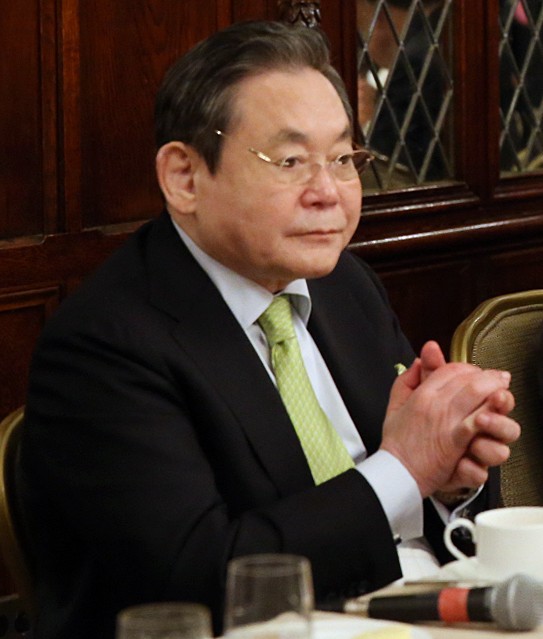
Lee Kun-hee (Korean: 이건희; 9 January 1942 – 25 October 2020) was a South Korean businessman who served as the chairman of Samsung from 1987 to 2008 and from 2010 to his death in 2020. He is also credited with the transformation of Samsung to one of the world's largest business entities that engages in semiconductors, smartphones, electronics, shipbuilding, construction, and other businesses. Since Lee became the chairman of Samsung, the company became the world's largest manufacturer of smartphones, memory chips, and appliances. He was the third son of Samsung founder Lee Byung-chul. With an estimated net worth of US$21 billion at the time of his death, he was the richest person in South Korea, a position that he had held since 2007.
He was convicted twice, once in 1996 and subsequently in 2008, for corruption and tax evasion charges, but was pardoned on both instances. In 2014, Lee was named the world's 35th most powerful person and the most powerful Korean by Forbes's list of the world's most powerful people along with his son, Lee Jae-yong.
Lee Kun-hee was born on 9 January 1942 in Daegu, during the Japanese occupation of Korea. His father, Lee Byung-chul, founded the Samsung Group, initially as an exporter of fruit and dried fish. Lee Kun-hee studied economics at Waseda University in Tokyo, and was later educated at the George Washington University in the United States.
Lee joined the Tongyang Broadcasting Company (then an affiliate of the Samsung Group) in 1966, and later went on to work for Samsung's construction and trading company.
He took over the chairmanship of the conglomerate on 24 December 1987, two weeks after the death of his father, Lee Byung-chul. In 1993, believing that Samsung Group was overly focused on producing large quantities of low-quality goods and was not prepared to compete in quality, Lee famously said, "Change everything except your wife and kids". This call was an attempt to drive innovation at the company and to face up to the competition at that time from rivals like Sony Corporation. In what is now known as the 'Frankfurt Declaration', he gathered his executives in the German city in 1993, and called for a change in the company's approach to quality, even if it meant lower sales. The company went on to become the largest manufacturer of televisions, outpacing Sony in 2006.
Lee was convicted for having paid bribes to president Roh Tae-woo in 1996. He was subsequently pardoned by president Kim Young-sam.
On 14 January 2008, Korean police raided Lee's home and office in an ongoing probe into accusations that Samsung was responsible for a slush fund used to bribe influential prosecutors, judges, and political figures in South Korea. On 4 April 2008, Lee denied allegations against him in the scandal. After a second round of questioning by the South Korean prosecutors, on 11 April 2008, Lee was quoted by reporters as saying, "I am responsible for everything. I will assume full moral and legal responsibility." On 21 April 2008, he resigned and stated: "We, including myself, have caused troubles to the nation with the special probe; I deeply apologize for that, and I'll take full responsibility for everything, both legally and morally."
On 16 July 2008, The New York Times reported the Seoul Central District Court had found Lee guilty on charges of financial wrongdoing and tax evasion. Prosecutors requested that Lee be sentenced to seven years in prison and fined 350 billion won (approximately US$312 million). The court fined him 110 billion won (approximately US$98 million) and gave him a three-years suspended sentence. However, on 29 December 2009, South Korean president Lee Myung-bak pardoned Lee, stating that the intent of the pardon was to allow Lee to remain on the International Olympic Committee. In Lee Myung-bak's corruption trial, this pardon was revealed to have been in exchange for bribes; further bribery and other political corruption between former President Lee and Lee Kun-hee was also exposed.
Lee Kun-hee
Lee Kun-hee (Korean: 이건희; 9 January 1942 – 25 October 2020) was a South Korean businessman who served as the chairman of Samsung from 1987 to 2008 and from 2010 to his death in 2020. He is also credited with the transformation of Samsung to one of the world's largest business entities that engages in semiconductors, smartphones, electronics, shipbuilding, construction, and other businesses. Since Lee became the chairman of Samsung, the company became the world's largest manufacturer of smartphones, memory chips, and appliances. He was the third son of Samsung founder Lee Byung-chul. With an estimated net worth of US$21 billion at the time of his death, he was the richest person in South Korea, a position that he had held since 2007.
He was convicted twice, once in 1996 and subsequently in 2008, for corruption and tax evasion charges, but was pardoned on both instances. In 2014, Lee was named the world's 35th most powerful person and the most powerful Korean by Forbes's list of the world's most powerful people along with his son, Lee Jae-yong.
Lee Kun-hee was born on 9 January 1942 in Daegu, during the Japanese occupation of Korea. His father, Lee Byung-chul, founded the Samsung Group, initially as an exporter of fruit and dried fish. Lee Kun-hee studied economics at Waseda University in Tokyo, and was later educated at the George Washington University in the United States.
Lee joined the Tongyang Broadcasting Company (then an affiliate of the Samsung Group) in 1966, and later went on to work for Samsung's construction and trading company.
He took over the chairmanship of the conglomerate on 24 December 1987, two weeks after the death of his father, Lee Byung-chul. In 1993, believing that Samsung Group was overly focused on producing large quantities of low-quality goods and was not prepared to compete in quality, Lee famously said, "Change everything except your wife and kids". This call was an attempt to drive innovation at the company and to face up to the competition at that time from rivals like Sony Corporation. In what is now known as the 'Frankfurt Declaration', he gathered his executives in the German city in 1993, and called for a change in the company's approach to quality, even if it meant lower sales. The company went on to become the largest manufacturer of televisions, outpacing Sony in 2006.
Lee was convicted for having paid bribes to president Roh Tae-woo in 1996. He was subsequently pardoned by president Kim Young-sam.
On 14 January 2008, Korean police raided Lee's home and office in an ongoing probe into accusations that Samsung was responsible for a slush fund used to bribe influential prosecutors, judges, and political figures in South Korea. On 4 April 2008, Lee denied allegations against him in the scandal. After a second round of questioning by the South Korean prosecutors, on 11 April 2008, Lee was quoted by reporters as saying, "I am responsible for everything. I will assume full moral and legal responsibility." On 21 April 2008, he resigned and stated: "We, including myself, have caused troubles to the nation with the special probe; I deeply apologize for that, and I'll take full responsibility for everything, both legally and morally."
On 16 July 2008, The New York Times reported the Seoul Central District Court had found Lee guilty on charges of financial wrongdoing and tax evasion. Prosecutors requested that Lee be sentenced to seven years in prison and fined 350 billion won (approximately US$312 million). The court fined him 110 billion won (approximately US$98 million) and gave him a three-years suspended sentence. However, on 29 December 2009, South Korean president Lee Myung-bak pardoned Lee, stating that the intent of the pardon was to allow Lee to remain on the International Olympic Committee. In Lee Myung-bak's corruption trial, this pardon was revealed to have been in exchange for bribes; further bribery and other political corruption between former President Lee and Lee Kun-hee was also exposed.
Recent media
Recent media