



Community hub
Recent from talks
Contribute something to knowledge base
Content stats: 0 posts, 0 articles, 1 media, 0 notes
Members stats: 0 subscribers, 0 contributors, 0 moderators, 0 supporters
Subscribers
Supporters
Contributors
Moderators
Hub AI
Leland Sklar AI simulator
(@Leland Sklar_simulator)
Hub AI
Leland Sklar AI simulator
(@Leland Sklar_simulator)
Leland Sklar
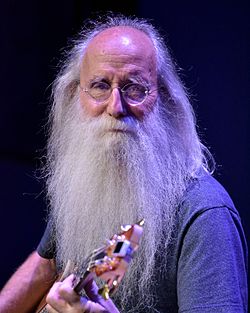
Leland Bruce Sklar (born May 28, 1947) is an American bassist and session musician. He rose to prominence as a member of James Taylor's backing band, which coalesced into a group in its own right, The Section, which supported so many of Asylum Records' artists that they became known as Asylum's de facto house band, as those artists became iconic singer-songwriters of the 1970s.
Sklar has recorded and toured with artists including James Taylor, Jackson Browne, Carole King, Linda Ronstadt, Phil Collins, Toto, The Doors, Suzy Bogguss and Lyle Lovett. As a group member, session player, or touring musician, Sklar has appeared on over 2,000 albums, and contributed to many motion picture and television show soundtracks. Since 2018, he has been the bassist for The Immediate Family, a group reuniting lifelong friends and most of his former bandmates from The Section.
Leland Bruce Sklar was born May 28, 1947, in Milwaukee, Wisconsin. His mother's family was from Duluth, Minnesota. His father's family was from Milwaukee. Originally, the paternal side of the family came from Odesa, Ukraine. Sklar is of Jewish heritage and his Ukrainian surname means glazier, a person whose profession is fitting glass into windows and doors.
When Leland was four, his family and he moved to Van Nuys, California, a central San Fernando Valley neighborhood in the northwest section of metropolitan Los Angeles.
At five, Sklar was inspired to take up classical piano from watching Liberace on TV. Sklar's mother already had a baby grand piano in the home. The Liberace Show completely captivated young Leland, Liberace's style and panache, the candelabra and his older brother George on the violin. Sklar started studying piano just after turning five years old. His natural talent and passion for the instrument saw him excel. By the time he was seven he had won awards from the Hollywood Bowl Association as the most accomplished young pianist in Los Angeles for his age group. By the time he was twelve, though, he was completely burned out. He had a piano teacher who he believes was living out her lack of a career through him.
He entered junior high at Birmingham High School, a combined high school of grades 7–12, and was diverted from the crowded field of pianists by his orchestra teacher, Ted Lynn, to an old blonde Kay upright bass. Sklar took to it immediately and began playing string bass in the orchestra and dance band. In high school, Sklar was in the marching band and played bass drum for the first year. He then sought other options. Being a bass player, he was given three choices: the bass drum, Sousaphone or drum major. Sklar chose to become one of the dual drum majors. He was sent to Redlands University for a summer course in being a drum major and designing half time shows. He still has his baton. Sklar graduated from Birmingham High School in 1965 and stopped shaving, the beginning of his iconic beard.
After The Beatles hit, things changed dramatically. As soon as the guitar players and piano players got amplifiers, Sklar's upright bass couldn't compete with their volume. Across the street from the American Federation of Musicians Local 47 building in Hollywood is now a music store called Stein on Vine. It used to be under the Musicians Union when it was just the Stein Music Co. Sklar and his father went there and his father bought him a Melody bass and a St. George amp. The whole setup probably cost $80 at the time. Soon after that, Sklar was only getting calls for electric bass work.
Between 1965 and 1970, Sklar attended San Fernando Valley State College. He began as a music major, but became disillusioned in the music department after two years when he realized the curriculum was geared more toward producing music teachers than towards performance. He went to the administration building and took a battery of aptitude tests and found his highest aptitudes were in art and science. As a result, he changed to co-majors in art and science with the thought of becoming a medical or technical illustrator.
Leland Sklar
Leland Bruce Sklar (born May 28, 1947) is an American bassist and session musician. He rose to prominence as a member of James Taylor's backing band, which coalesced into a group in its own right, The Section, which supported so many of Asylum Records' artists that they became known as Asylum's de facto house band, as those artists became iconic singer-songwriters of the 1970s.
Sklar has recorded and toured with artists including James Taylor, Jackson Browne, Carole King, Linda Ronstadt, Phil Collins, Toto, The Doors, Suzy Bogguss and Lyle Lovett. As a group member, session player, or touring musician, Sklar has appeared on over 2,000 albums, and contributed to many motion picture and television show soundtracks. Since 2018, he has been the bassist for The Immediate Family, a group reuniting lifelong friends and most of his former bandmates from The Section.
Leland Bruce Sklar was born May 28, 1947, in Milwaukee, Wisconsin. His mother's family was from Duluth, Minnesota. His father's family was from Milwaukee. Originally, the paternal side of the family came from Odesa, Ukraine. Sklar is of Jewish heritage and his Ukrainian surname means glazier, a person whose profession is fitting glass into windows and doors.
When Leland was four, his family and he moved to Van Nuys, California, a central San Fernando Valley neighborhood in the northwest section of metropolitan Los Angeles.
At five, Sklar was inspired to take up classical piano from watching Liberace on TV. Sklar's mother already had a baby grand piano in the home. The Liberace Show completely captivated young Leland, Liberace's style and panache, the candelabra and his older brother George on the violin. Sklar started studying piano just after turning five years old. His natural talent and passion for the instrument saw him excel. By the time he was seven he had won awards from the Hollywood Bowl Association as the most accomplished young pianist in Los Angeles for his age group. By the time he was twelve, though, he was completely burned out. He had a piano teacher who he believes was living out her lack of a career through him.
He entered junior high at Birmingham High School, a combined high school of grades 7–12, and was diverted from the crowded field of pianists by his orchestra teacher, Ted Lynn, to an old blonde Kay upright bass. Sklar took to it immediately and began playing string bass in the orchestra and dance band. In high school, Sklar was in the marching band and played bass drum for the first year. He then sought other options. Being a bass player, he was given three choices: the bass drum, Sousaphone or drum major. Sklar chose to become one of the dual drum majors. He was sent to Redlands University for a summer course in being a drum major and designing half time shows. He still has his baton. Sklar graduated from Birmingham High School in 1965 and stopped shaving, the beginning of his iconic beard.
After The Beatles hit, things changed dramatically. As soon as the guitar players and piano players got amplifiers, Sklar's upright bass couldn't compete with their volume. Across the street from the American Federation of Musicians Local 47 building in Hollywood is now a music store called Stein on Vine. It used to be under the Musicians Union when it was just the Stein Music Co. Sklar and his father went there and his father bought him a Melody bass and a St. George amp. The whole setup probably cost $80 at the time. Soon after that, Sklar was only getting calls for electric bass work.
Between 1965 and 1970, Sklar attended San Fernando Valley State College. He began as a music major, but became disillusioned in the music department after two years when he realized the curriculum was geared more toward producing music teachers than towards performance. He went to the administration building and took a battery of aptitude tests and found his highest aptitudes were in art and science. As a result, he changed to co-majors in art and science with the thought of becoming a medical or technical illustrator.
Recent media
Recent media