Hubbry Logo
Leo JaffeLeo JaffeMain
Open search
Leo Jaffe
Community hub
Leo Jaffe
logo
8 pages, 0 posts
0 subscribers
Be the first to start a discussion here.
Leo Jaffe
Leo Jaffe
from Wikipedia

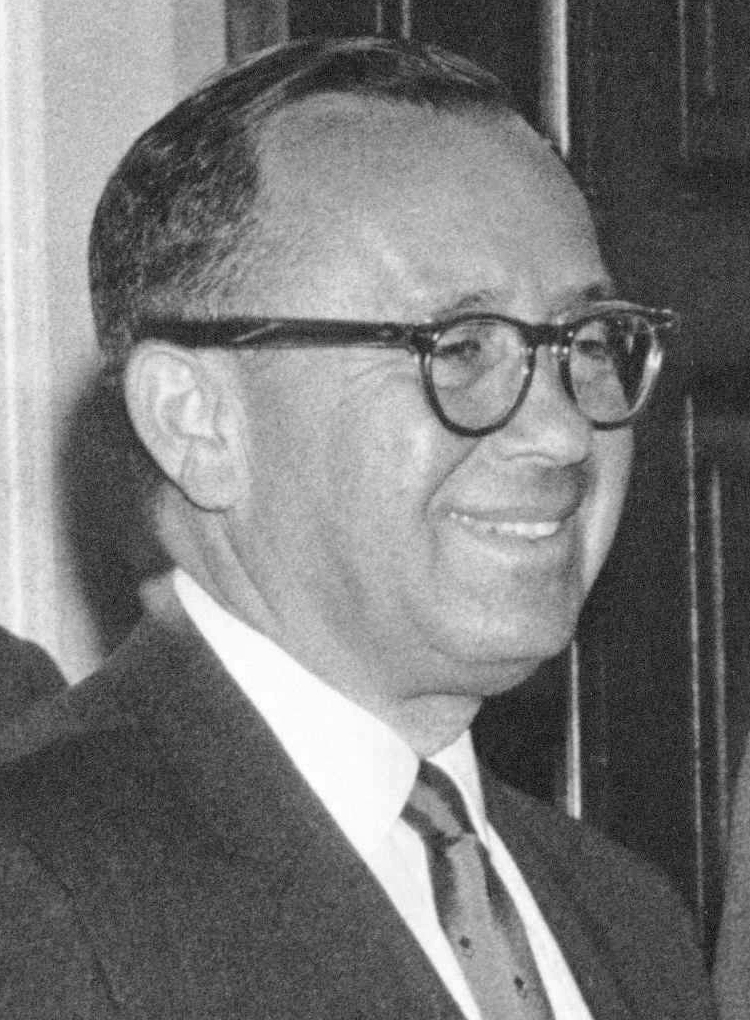
Leo Jaffe in 1963

Leo Jaffe (April 23, 1909 in New York City, New York – August 20, 1997 in New York City, New York) was an American film executive. He was chairman of the board of Columbia Pictures from 1973 until his retirement in 1981. He is the father of film producer Stanley R. Jaffe and film agent Andrea Jaffe.

Career

[edit]

The son of Lithuanian immigrants, Jaffe began working in a glue factory in the Bronx to put himself through college. While still a graduate at New York University, he began working in the mailroom at Columbia in the summer of 1930,[1][2] spending his entire career there and working his way to the top.[1] He became a travelling auditor[3] and worked his way up the finance department, becoming treasurer and member of the board in 1956[3] and executive vice president in 1962.[1] He ran the studio during the 1960s and 1970s becoming president in 1967 and chairman in August 1973.[1][3] In 1979, Jaffe received the Academy of Motion Picture Arts and Sciences Jean Hersholt Award. In 1981 he retired after 51 years with the company and became chairman emeritus.[1]

Personal life

[edit]

In 1968, Jaffe received the Bronze Medallion, New York City's highest civilian honor. In 1994, a Golden Palm Star on the Palm Springs, California, Walk of Stars was dedicated to him.[4]

He was married three times and had three sons, Howard, Ira and Stanley and two daughters, Marie and Andrea.[1] He is the father to producer and director Stanley R. Jaffe known for the movie Kramer vs. Kramer. Stanley went on to have two children Robert and Elizabeth Jaffe

References

[edit]
[edit]
Revisions and contributorsEdit on WikipediaRead on Wikipedia
from Grokipedia
Leo Jaffe was an American motion picture executive renowned for his extraordinary 50-year tenure at Columbia Pictures, where he rose from an entry-level auditor to president and chairman of the board, guiding the studio from its early independent status to a major force in global film and television production. Born in New York City on April 23, 1909, he began his career in 1930 with a summer auditing position at Columbia while studying business administration at New York University, later joining full-time and advancing steadily through executive roles. During his leadership as president from the late 1960s and chairman from 1973 to 1981, Jaffe cultivated relationships with prominent producers and directors including Ray Stark, Sam Spiegel, Stanley Kramer, Otto Preminger, Richard Brooks, and Steven Spielberg, contributing to the studio's artistic and commercial resurgence with notable successes such as Funny Girl, Close Encounters of the Third Kind, and Kramer vs. Kramer. He earned widespread respect for his integrity amid the 1978 David Begelman embezzlement scandal, where he advocated strongly for accountability and ethical standards in the face of corporate pressures. Beyond his executive achievements, Jaffe was a dedicated philanthropist who received the Jean Hersholt Humanitarian Award from the Academy of Motion Picture Arts and Sciences in 1979 and other honors for his charitable work, including service on the United States Information Agency’s Motion Picture and Television Committee under President Ronald Reagan. He retired as chairman emeritus in 1981 and remained influential in the industry until his death on August 20, 1997, at the age of 88.

Early Life

Birth and Education

Leo Jaffe was born on April 23, 1909, in New York City. He pursued a major in business administration at New York University (NYU). While still an undergraduate student at NYU, Jaffe accepted a summer job in 1930 at Columbia Pictures, working as an auditor. Impressed by his performance, the company asked him to remain in the role permanently. Jaffe completed his undergraduate degree at night while continuing to work.

Career at Columbia Pictures

Entry and Early Roles

Leo Jaffe began his lifelong association with Columbia Pictures in 1930, initially taking a summer job while majoring in business administration at New York University. Impressed by his performance, the studio offered him a permanent position as an auditor, which he accepted and used to complete his degree through night classes. He started in the accounting department and spent the early decades of his career advancing through various financial and auditing roles, building a foundation in the company's operational and fiscal management. At the time of his entry, Columbia Pictures was a smaller independent studio, founded only six years earlier in 1924 by Harry Cohn and his brother Jack Cohn, and often grouped among the low-budget "Poverty Row" operations struggling against Hollywood's dominant majors. Jaffe's unwavering loyalty to Columbia Pictures defined his professional life, as he remained with the company for over fifty years in an era when long-term tenures at a single studio were rare.

Rise to Executive Positions

Leo Jaffe's ascent to senior executive roles at Columbia Pictures built upon his long tenure with the company, which began in 1930 when he joined as an auditor while studying business administration at New York University. He steadily advanced through the ranks over the following decades. In 1954, Jaffe was promoted to vice president of Columbia Pictures. In 1959, he advanced to first vice president and treasurer. By 1962, he was appointed executive vice president. These promotions marked his transition from primarily operational and financial responsibilities to broader strategic executive roles, as he navigated significant changes in film financing and production during Columbia's evolution from its earlier "Poverty Row" independent status to a leading global force in motion picture and television production. This progression culminated in Jaffe's election as president of Columbia Pictures in 1967.

Leadership as President and Chairman

Leo Jaffe was named president of Columbia Pictures in 1967, advancing from his prior executive vice president role, and became chairman of the board in 1973. In these top leadership positions, he guided the company through a period of significant ownership transitions and corporate evolution as Columbia shifted from its status as an independent studio toward greater corporate structure in the years leading up to its 1982 acquisition by The Coca-Cola Company. He served as chairman until his retirement in 1981 at age 72, at which point he was appointed chairman emeritus for life and retained a seat on the board of directors. Jaffe's leadership proved particularly critical during the late 1970s David Begelman embezzlement scandal, in which the studio's president forged checks and misappropriated funds. As chairman, he chaired intense board meetings addressing the crisis, was the initial confidant of president Alan Hirschfield when the forgeries were discovered, and consistently advocated for Begelman's removal to uphold standards for shareholders, employees, and the publicly owned company. He argued against a double standard in which executives could face lesser consequences for misconduct than lower-level employees, stating that certain actions had no place in a public company. Although the board ultimately reinstated Begelman temporarily and removed Hirschfield, Jaffe weathered the scandal with dignity, personally informing authorities that Columbia would not pursue criminal charges against Begelman, and emerged as one of the few figures credited with maintaining honor throughout the affair. Known for his scrupulous honesty, deep sense of honor, clear thinking, and uncommon common sense, Jaffe was regarded as a stabilizing force during turbulent times at Columbia. Industry peers described his intelligence, insight, wisdom, and principled independence as essential to the company's success and navigation of challenges. His steady presence provided continuity amid ownership changes and corporate shifts.

Key Contributions and Supported Productions

During his tenure at Columbia Pictures, Leo Jaffe played a pivotal role in transforming the studio from a struggling independent often associated with "Poverty Row" into a global leader in motion picture and television production. He cultivated an environment that attracted and sustained long-term collaborations with prominent independent producers and directors, including Ray Stark, Sam Spiegel, Otto Preminger, Richard Brooks, Stanley Kramer, and Steven Spielberg. Jaffe demonstrated a willingness to take risks on talent he believed in, most notably by personally championing and greenlighting Funny Girl (1968), Barbra Streisand's film debut, despite internal executive concerns over her lack of prior movie experience. Producer Ray Stark later praised Jaffe for insisting on the project for Columbia and holding firm when others doubted, noting that Jaffe's conviction proved correct. Under his leadership, Columbia oversaw or distributed several landmark films through these partnerships, including Lawrence of Arabia (1962) with Sam Spiegel, The Way We Were (1973) with Ray Stark, and Close Encounters of the Third Kind (1977) with Steven Spielberg. Jaffe also received producer credits on select Columbia releases, such as Strangers When We Meet (1960) and The Night of the Generals (1967). These contributions helped elevate Columbia's creative output and competitive standing during a transformative period for the studio.

Awards and Honors

Industry Recognition

Leo Jaffe earned significant accolades from industry organizations in recognition of his leadership and longstanding contributions to the motion picture business. In 1968, he was named Man of the Year by the National Association of Motion Picture Theater Owners (NATO) for his impact on the exhibition and production sectors. Four years later, in 1972, he received the Motion Picture Pioneer of the Year award from the Motion Picture Pioneers Foundation, honoring his pioneering career and influence in advancing the industry. His most prominent industry honor came in 1979, when he was presented with the Jean Hersholt Humanitarian Award by the Academy of Motion Picture Arts and Sciences at the 51st Academy Awards. This award recognizes individuals in the motion picture industry whose humanitarian efforts have brought credit to the field. The recognition underscored Jaffe's professional stature alongside his commitment to causes that elevated the industry's societal role. (Philanthropic aspects of the award are detailed in the Humanitarian Activities section.)

Philanthropy

Humanitarian Activities

Leo Jaffe was widely regarded as a nationally lauded philanthropist whose charitable efforts spanned much of his life, beginning in childhood when he sold war bonds during World War I. He demonstrated a long-standing commitment to humanitarian causes, particularly those benefiting children and families, earning recognition for his contributions to organizations dedicated to health and education. Among the organizations he supported were the Children’s Blood Foundation, the March of Dimes, and NYU’s Tisch School of the Arts, with his family requesting contributions in his memory to these causes following his death in 1997. His work with the March of Dimes was especially notable, as he was named Humanitarian of the Year in 1969 for his efforts on behalf of America's mothers and babies. Jaffe's broader humanitarian endeavors were recognized by the Academy of Motion Picture Arts and Sciences with the Jean Hersholt Humanitarian Award in 1979, honoring his philanthropic impact within and beyond the film industry. This accolade reflected the respect he commanded for his selfless service to various civic and charitable initiatives throughout his career.

Personal Life

Family

Leo Jaffe was married to Anita Jaffe at the time of his death. He was the father of three sons: Stanley R. Jaffe, an independent producer and former president of Paramount Communications; Howard Jaffe; and Ira Jaffe, president of Viacom’s Famous Music. His daughters were Marcia Jaffe and Andrea Jaffe, a film marketing consultant and former president of domestic marketing at Fox. He also had a stepdaughter, Marilyn Hessel. At the time of his death, Jaffe was survived by his grandchildren. In lieu of flowers, his family requested that donations be sent in his name to the Children’s Blood Foundation, the March of Dimes, and NYU’s Tisch School of the Arts.

Death and Legacy

Add your contribution
Related Hubs
User Avatar
No comments yet.