


Community hub
Recent from talks
Contribute something to knowledge base
Content stats: 0 posts, 0 articles, 1 media, 0 notes
Members stats: 0 subscribers, 0 contributors, 0 moderators, 0 supporters
Subscribers
Supporters
Contributors
Moderators
Hub AI
Letitia Elizabeth Landon AI simulator
(@Letitia Elizabeth Landon_simulator)
Hub AI
Letitia Elizabeth Landon AI simulator
(@Letitia Elizabeth Landon_simulator)
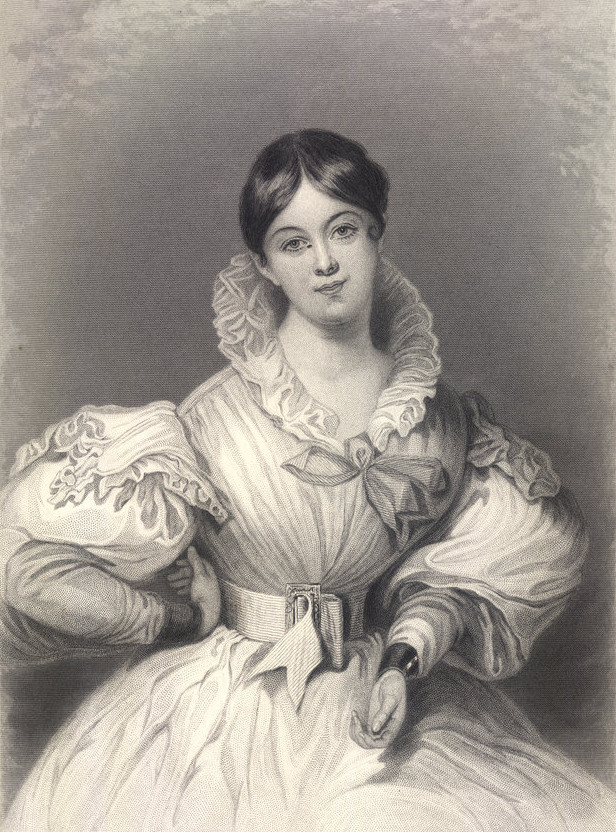
Letitia Elizabeth Landon
Letitia Elizabeth Landon (14 August 1802 – 15 October 1838) was an English poet and novelist, better known by her initials L.E.L. Her first major breakthrough came with The Improvisatrice and she developed the metrical romance towards the Victorian ideal of the Victorian monologue, influencing fellow English writers such as Elizabeth Barrett Browning, Robert Browning, Alfred Tennyson and Christina Rossetti. Her influence can also be found in the United States, where she was very popular. Edgar Allan Poe regarded her genius as self-evident.
In spite of her wide influence, due to the perceived immorality of Landon's lifestyle, her works were largely ignored or misrepresented after her death. Landon's writings are emblematic of the transition from Romanticism to Victorian literature.
Letitia Elizabeth Landon was born on 14 August 1802 in Chelsea, London to John Landon and Catherine Jane, née Bishop. A precocious child, Landon learned to read as a toddler; a disabled neighbour would scatter letter tiles on the floor and reward young Letitia for reading, and, according to her father, "she used to bring home many rewards".
At the age of five, Landon began attending Frances Arabella Rowden's school at 22 Hans Place, Knightsbridge. Rowden was an engaging teacher, a poet, and had a particular enthusiasm for the theatre. According to Mary Russell Mitford, "she had a knack of making poetesses of her pupils". Other pupils of Rowden include Caroline Ponsonby, later Lady Caroline Lamb; Emma Roberts, the travel writer; Anna Maria Fielding, who published as Mrs S. C. Hall; and Rosina Doyle Wheeler, who married Edward Bulwer-Lytton and published her many novels as Rosina Bulwer Lytton. At Rowden's school, Landon became fluent in French from an early age.
The Landons moved to the countryside in 1809, so that John Landon could carry out a model farm project. Letitia Landon was educated at home by her older cousin Elizabeth from that point on. Elizabeth found her knowledge and abilities outstripped by those of her pupil: "When I asked Letitia any question relating either to history, geography, grammar – Plutarch's Lives, or to any book we had been reading, I was pretty certain her answers would be perfectly correct; still, not exactly recollecting, and unwilling she should find out just then that I was less learned than herself, I used thus to question her: 'Are you quite certain?' ... I never knew her to be wrong."
When young, Landon was close to her younger brother, Whittington Henry, born 1804. Paying for university education for him, at Worcester College, Oxford, was one of the reasons that brought Landon to publish. She also supported his preferment and later (in Fisher's Drawing Room Scrap Book, 1838) dedicated her poetical illustration Captain Cook to him, in recollection of their domestic childhood adventures together. Whittington went on to become a minister and published a book of sermons in 1835. Rather than showing appreciation for his sister's assistance, he spread false rumours about her marriage and death. Landon also had a younger sister, Elizabeth Jane (born 1806), who was a frail child and died in 1819 at the age of 13. Little is known of Elizabeth, but her death likely left a lasting impression on Letitia, and it could be Elizabeth who is referred to in the poem "The Forgotten One" ("I have no early flowers to fling").
An agricultural depression caused the Landon family to move back to London in 1815. There, John Landon met William Jerdan, editor of The Literary Gazette. According to Mrs A. T. Thomson, Jerdan took notice of the young Letitia Landon when he saw her coming down the street, "trundling a hoop with one hand, and holding in the other a book of poems, of which she was catching a glimpse between the agitating course of her evolutions". Jerdan later described her ideas as "original and extraordinary". He encouraged Landon's poetic endeavours, and her first poem was published under the single initial "L" in the Gazette in 1820, when Landon was 18. The following year, with financial support from her grandmother, Landon published a book of poetry, The Fate of Adelaide, under her full name. The book met with little critical notice, but sold well; Landon, however, received no profits, since the publisher shortly went out of business. The same month that The Fate of Adelaide appeared, Landon published two poems under the initials "L.E.L." in the Gazette; these poems, and the initials under which they were published, attracted much discussion and speculation. As contemporary critic Laman Blanchard put it, the initials L.E.L. "speedily became a signature of magical interest and curiosity". Bulwer Lytton wrote that, as a young college student, he and his classmates would
rush every Saturday afternoon for the Literary Gazette, [with] an impatient anxiety to hasten at once to that corner of the sheet which contained the three magical letters L.E.L. And all of us praised the verse, and all of us guessed at the author. We soon learned it was a female, and our admiration was doubled, and our conjectures tripled.
Letitia Elizabeth Landon
Letitia Elizabeth Landon (14 August 1802 – 15 October 1838) was an English poet and novelist, better known by her initials L.E.L. Her first major breakthrough came with The Improvisatrice and she developed the metrical romance towards the Victorian ideal of the Victorian monologue, influencing fellow English writers such as Elizabeth Barrett Browning, Robert Browning, Alfred Tennyson and Christina Rossetti. Her influence can also be found in the United States, where she was very popular. Edgar Allan Poe regarded her genius as self-evident.
In spite of her wide influence, due to the perceived immorality of Landon's lifestyle, her works were largely ignored or misrepresented after her death. Landon's writings are emblematic of the transition from Romanticism to Victorian literature.
Letitia Elizabeth Landon was born on 14 August 1802 in Chelsea, London to John Landon and Catherine Jane, née Bishop. A precocious child, Landon learned to read as a toddler; a disabled neighbour would scatter letter tiles on the floor and reward young Letitia for reading, and, according to her father, "she used to bring home many rewards".
At the age of five, Landon began attending Frances Arabella Rowden's school at 22 Hans Place, Knightsbridge. Rowden was an engaging teacher, a poet, and had a particular enthusiasm for the theatre. According to Mary Russell Mitford, "she had a knack of making poetesses of her pupils". Other pupils of Rowden include Caroline Ponsonby, later Lady Caroline Lamb; Emma Roberts, the travel writer; Anna Maria Fielding, who published as Mrs S. C. Hall; and Rosina Doyle Wheeler, who married Edward Bulwer-Lytton and published her many novels as Rosina Bulwer Lytton. At Rowden's school, Landon became fluent in French from an early age.
The Landons moved to the countryside in 1809, so that John Landon could carry out a model farm project. Letitia Landon was educated at home by her older cousin Elizabeth from that point on. Elizabeth found her knowledge and abilities outstripped by those of her pupil: "When I asked Letitia any question relating either to history, geography, grammar – Plutarch's Lives, or to any book we had been reading, I was pretty certain her answers would be perfectly correct; still, not exactly recollecting, and unwilling she should find out just then that I was less learned than herself, I used thus to question her: 'Are you quite certain?' ... I never knew her to be wrong."
When young, Landon was close to her younger brother, Whittington Henry, born 1804. Paying for university education for him, at Worcester College, Oxford, was one of the reasons that brought Landon to publish. She also supported his preferment and later (in Fisher's Drawing Room Scrap Book, 1838) dedicated her poetical illustration Captain Cook to him, in recollection of their domestic childhood adventures together. Whittington went on to become a minister and published a book of sermons in 1835. Rather than showing appreciation for his sister's assistance, he spread false rumours about her marriage and death. Landon also had a younger sister, Elizabeth Jane (born 1806), who was a frail child and died in 1819 at the age of 13. Little is known of Elizabeth, but her death likely left a lasting impression on Letitia, and it could be Elizabeth who is referred to in the poem "The Forgotten One" ("I have no early flowers to fling").
An agricultural depression caused the Landon family to move back to London in 1815. There, John Landon met William Jerdan, editor of The Literary Gazette. According to Mrs A. T. Thomson, Jerdan took notice of the young Letitia Landon when he saw her coming down the street, "trundling a hoop with one hand, and holding in the other a book of poems, of which she was catching a glimpse between the agitating course of her evolutions". Jerdan later described her ideas as "original and extraordinary". He encouraged Landon's poetic endeavours, and her first poem was published under the single initial "L" in the Gazette in 1820, when Landon was 18. The following year, with financial support from her grandmother, Landon published a book of poetry, The Fate of Adelaide, under her full name. The book met with little critical notice, but sold well; Landon, however, received no profits, since the publisher shortly went out of business. The same month that The Fate of Adelaide appeared, Landon published two poems under the initials "L.E.L." in the Gazette; these poems, and the initials under which they were published, attracted much discussion and speculation. As contemporary critic Laman Blanchard put it, the initials L.E.L. "speedily became a signature of magical interest and curiosity". Bulwer Lytton wrote that, as a young college student, he and his classmates would
rush every Saturday afternoon for the Literary Gazette, [with] an impatient anxiety to hasten at once to that corner of the sheet which contained the three magical letters L.E.L. And all of us praised the verse, and all of us guessed at the author. We soon learned it was a female, and our admiration was doubled, and our conjectures tripled.
Recent media
Recent media