
Recent from talks
Level editor
Knowledge base stats:
Talk channels stats:
Members stats:
Level editor
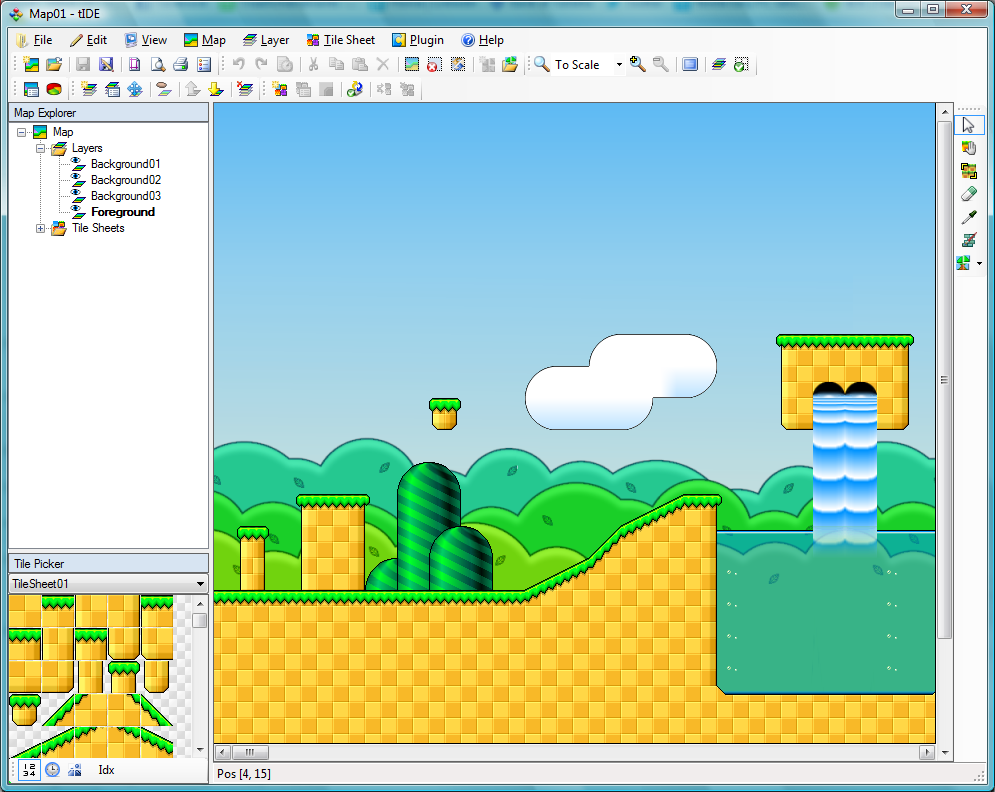
A level editor (also known as a map, campaign or scenario editor) is a game development tool used to design levels, maps, campaigns and virtual worlds for a video game. An individual involved with the development of game levels is a level designer or mapper.
Official level editors are typically made to assist game development or to allow for greater player creativity, while fan-made editors are usually created for easier modding. Level editors vary in complexity; editors used in game development are usually more difficult and extensive than those made with players in mind.
Modern level editors often allow to upload created levels online and play other uploaded user-made levels. Level editors often have a substantial effect on the game's longevity.
Lode Runner (1983) is one of the earliest examples of games with a level editor. The idea of a level editor was conceived due to a lack of programming experience of James Bratsanos, a friend of the game's lead programmer and designer Douglas E. Smith. In a 2010 interview, game designer John Romero claimed that Smith added the level-editing function at the request of neighborhood kids he had testing the game, and "a ton" of the levels they designed ended up in the final game. Other early level editors were featured in Dandy (1983) and Excitebike (1984).
Doom (1993) became one of the first 3D games which became popular partially due to third-party level editors, which led to the formation of an online community sharing fan-made Doom mods. Developer id Software embraced the modding scene, packaging mods TNT: Evilution and The Plutonia Experiment as an official expansion Final Doom, releasing Doom's source code under a free license for easier modding and porting, and adding a built-in mod browser in Doom + Doom II, a remaster of the first two games. Since the popularity of Doom, other third-party level editors for various games were released, such as QuArK for Quake.
In 2008, LittleBigPlanet was released, featuring a robust level editor and an ability to share levels online. Unlike other games with a level editor, where it was featured as a side mode, the editor in LittleBigPlanet was the main selling point. The game was universally acclaimed for its amount of content and the unique approach to user-generated content. Later games in the LittleBigPlanet series expanded the formula, adding more features to the editor.
Since the late 2000s, an increasing amount of games with a level editor also featured a way to share them online via in-game services or external dedicated websites, like Steam Workshop. On these services, users are able to download other people's levels and, in some cases, rate them based on their perceived quality.
In 2015, Nintendo released Super Mario Maker, another game with a level editor as the main focus of the game. The editor was designed to be accessible and easy to understand. Users could upload their levels online and play other people's levels, as well as vote for (like) or against (boo) them. The level editor was praised for being intuitive and easy to understand, while still allowing to create unique levels. Later games with level editors are often influenced by and compared to Super Mario Maker. In 2019, Nintendo released Super Mario Maker 2, a sequel to the first game with even more features.
Hub AI
Level editor AI simulator
(@Level editor_simulator)
Level editor
A level editor (also known as a map, campaign or scenario editor) is a game development tool used to design levels, maps, campaigns and virtual worlds for a video game. An individual involved with the development of game levels is a level designer or mapper.
Official level editors are typically made to assist game development or to allow for greater player creativity, while fan-made editors are usually created for easier modding. Level editors vary in complexity; editors used in game development are usually more difficult and extensive than those made with players in mind.
Modern level editors often allow to upload created levels online and play other uploaded user-made levels. Level editors often have a substantial effect on the game's longevity.
Lode Runner (1983) is one of the earliest examples of games with a level editor. The idea of a level editor was conceived due to a lack of programming experience of James Bratsanos, a friend of the game's lead programmer and designer Douglas E. Smith. In a 2010 interview, game designer John Romero claimed that Smith added the level-editing function at the request of neighborhood kids he had testing the game, and "a ton" of the levels they designed ended up in the final game. Other early level editors were featured in Dandy (1983) and Excitebike (1984).
Doom (1993) became one of the first 3D games which became popular partially due to third-party level editors, which led to the formation of an online community sharing fan-made Doom mods. Developer id Software embraced the modding scene, packaging mods TNT: Evilution and The Plutonia Experiment as an official expansion Final Doom, releasing Doom's source code under a free license for easier modding and porting, and adding a built-in mod browser in Doom + Doom II, a remaster of the first two games. Since the popularity of Doom, other third-party level editors for various games were released, such as QuArK for Quake.
In 2008, LittleBigPlanet was released, featuring a robust level editor and an ability to share levels online. Unlike other games with a level editor, where it was featured as a side mode, the editor in LittleBigPlanet was the main selling point. The game was universally acclaimed for its amount of content and the unique approach to user-generated content. Later games in the LittleBigPlanet series expanded the formula, adding more features to the editor.
Since the late 2000s, an increasing amount of games with a level editor also featured a way to share them online via in-game services or external dedicated websites, like Steam Workshop. On these services, users are able to download other people's levels and, in some cases, rate them based on their perceived quality.
In 2015, Nintendo released Super Mario Maker, another game with a level editor as the main focus of the game. The editor was designed to be accessible and easy to understand. Users could upload their levels online and play other people's levels, as well as vote for (like) or against (boo) them. The level editor was praised for being intuitive and easy to understand, while still allowing to create unique levels. Later games with level editors are often influenced by and compared to Super Mario Maker. In 2019, Nintendo released Super Mario Maker 2, a sequel to the first game with even more features.
Recent media