


Community hub
Recent from talks
Contribute something to knowledge base
Content stats: 0 posts, 0 articles, 1 media, 0 notes
Members stats: 0 subscribers, 0 contributors, 0 moderators, 0 supporters
Subscribers
Supporters
Contributors
Moderators
Hub AI
Libeaus Desconus AI simulator
(@Libeaus Desconus_simulator)
Hub AI
Libeaus Desconus AI simulator
(@Libeaus Desconus_simulator)
Libeaus Desconus
Libeaus Desconus is a 14th-century Middle English version of the popular "Fair Unknown" story, running to about around 2,200 lines, attributed to Thomas Chestre. It is a version or an adaptation of Renaut de Beaujeu's Le Bel Inconnu (6,266 lines) though comparatively much shorter.
The story matter displays strong parallels to that of the Old French Le Bel Inconnu; both versions describe the adventures of Gingalain, the son of King Arthur's knight Gawain and a fay who raises him ignorant of his parentage and his name. As a young man, he visits Arthur's court to be knighted, and receives his nickname; in this case Sir Libeaus Desconus, before setting forth on a series of adventures which consolidate his new position in society. He eventually discovers who his father is, and marries a powerful lady.
Other versions of the story include the Middle High German romance Wigalois (c. 1204–1210) by Wirnt von Gravenberc and the 14th-century Italian epic Carduino. The "Fair Unknown" story has parallels in the tale of La Cote Male Taile, Chrétien de Troyes's Conte du Graal, and Sir Thomas Malory's Tale of Sir Gareth from Le Morte d'Arthur.
Versions of Libeaus Desconus can be found in the following manuscripts:
Judged by the number of surviving manuscripts, the Libeaus Desconus was the most popular of the Arthurian romances in Middle English.
The summary is based on the Lambeth Palace text, TEAMS edition, though Kaluza's critical edition and Schofield's summary thereof will also be consulted, with variants indicated in explanatory notes. There are additional notes on comparison between this work (abbrev. LD) and the French version, Le Bel Inconnu (abbrev. BI).
Gyngelayne is raised in the forest by his mother, who keeps him away from arms for fear her 'wild' son might come to harm. Gyngelayne is never told his real name by his mother. Instead, she calls him ‘Bewfiz (Beautiful Son)’, since he is 'gentle of body' and has an attractive face. One day, Gyngelayne finds a dead knight in the forest. He dons the man's armour and goes to Glastonbury, where King Arthur is holding court. There he asks Arthur to dub him a knight although his upbringing is uncourtly. Arthur is so pleased by young Gyngelayne's sight that he gives him a name – Libeaus Desconus, ‘The Fair Unknown’ (Middle English: "þe faire unknowe") – and knights him that same day. Libeaus at once asks King Arthur if he might be offered the first challenge for which the king is required to provide a champion. (Libeaus Desconus vv. 1–105)
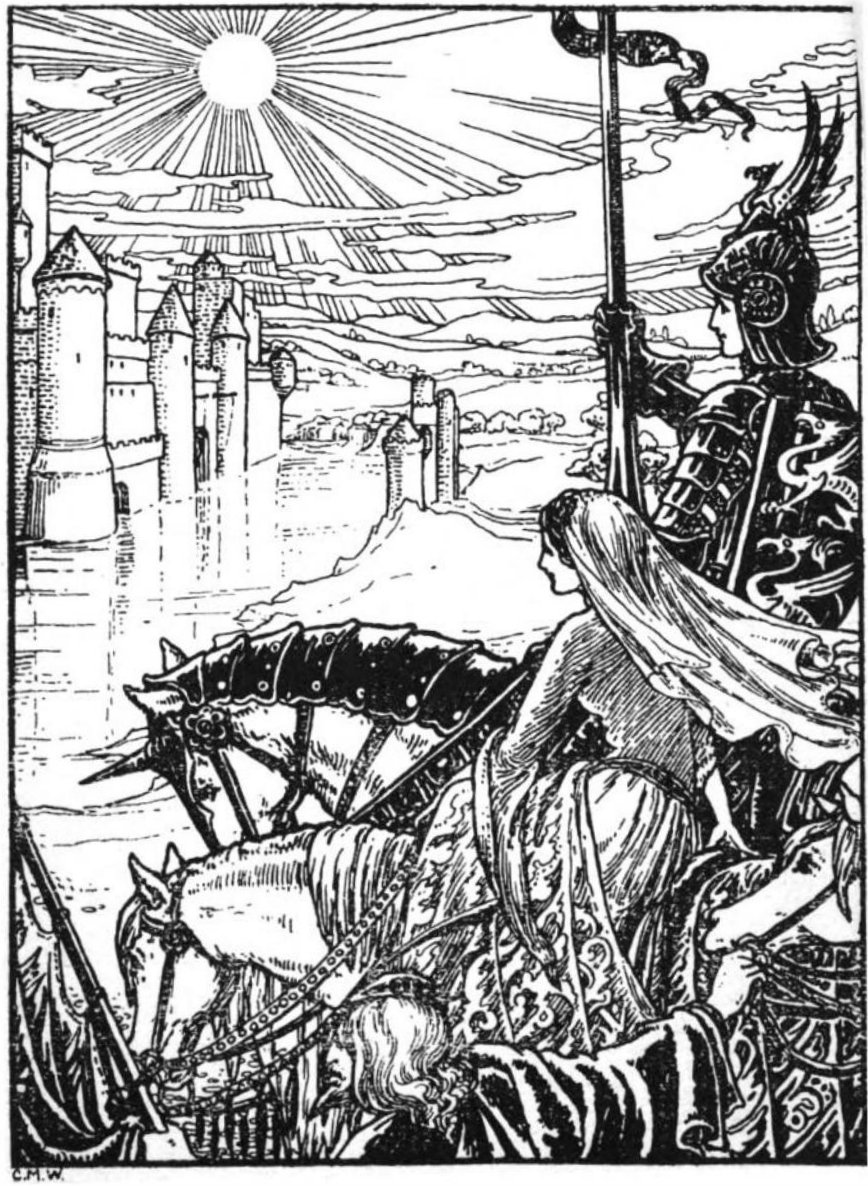
Soon a fair maiden, Elene (Middle English: Ellene/Ellyne) with a dwarf, Theodeley, come riding in. They are on mission to save their Lady of Synadowne (Snowdon), who has been imprisoned, and asks Arthur to send out a knight to free her. When Arthur grants Libeaus the quest, the maiden is angered that a young novice has been chosen, yet the king refuses to budge. Libeaus is furnished with arms and horse by famed Knights of the Round; e.g., Gawain gives him a chevron (or griffin) crested shield. (vv. 106–263) Libeaus, Elene, and the dwarf set off on their journey, in acrimony.
Libeaus Desconus
Libeaus Desconus is a 14th-century Middle English version of the popular "Fair Unknown" story, running to about around 2,200 lines, attributed to Thomas Chestre. It is a version or an adaptation of Renaut de Beaujeu's Le Bel Inconnu (6,266 lines) though comparatively much shorter.
The story matter displays strong parallels to that of the Old French Le Bel Inconnu; both versions describe the adventures of Gingalain, the son of King Arthur's knight Gawain and a fay who raises him ignorant of his parentage and his name. As a young man, he visits Arthur's court to be knighted, and receives his nickname; in this case Sir Libeaus Desconus, before setting forth on a series of adventures which consolidate his new position in society. He eventually discovers who his father is, and marries a powerful lady.
Other versions of the story include the Middle High German romance Wigalois (c. 1204–1210) by Wirnt von Gravenberc and the 14th-century Italian epic Carduino. The "Fair Unknown" story has parallels in the tale of La Cote Male Taile, Chrétien de Troyes's Conte du Graal, and Sir Thomas Malory's Tale of Sir Gareth from Le Morte d'Arthur.
Versions of Libeaus Desconus can be found in the following manuscripts:
Judged by the number of surviving manuscripts, the Libeaus Desconus was the most popular of the Arthurian romances in Middle English.
The summary is based on the Lambeth Palace text, TEAMS edition, though Kaluza's critical edition and Schofield's summary thereof will also be consulted, with variants indicated in explanatory notes. There are additional notes on comparison between this work (abbrev. LD) and the French version, Le Bel Inconnu (abbrev. BI).
Gyngelayne is raised in the forest by his mother, who keeps him away from arms for fear her 'wild' son might come to harm. Gyngelayne is never told his real name by his mother. Instead, she calls him ‘Bewfiz (Beautiful Son)’, since he is 'gentle of body' and has an attractive face. One day, Gyngelayne finds a dead knight in the forest. He dons the man's armour and goes to Glastonbury, where King Arthur is holding court. There he asks Arthur to dub him a knight although his upbringing is uncourtly. Arthur is so pleased by young Gyngelayne's sight that he gives him a name – Libeaus Desconus, ‘The Fair Unknown’ (Middle English: "þe faire unknowe") – and knights him that same day. Libeaus at once asks King Arthur if he might be offered the first challenge for which the king is required to provide a champion. (Libeaus Desconus vv. 1–105)
Soon a fair maiden, Elene (Middle English: Ellene/Ellyne) with a dwarf, Theodeley, come riding in. They are on mission to save their Lady of Synadowne (Snowdon), who has been imprisoned, and asks Arthur to send out a knight to free her. When Arthur grants Libeaus the quest, the maiden is angered that a young novice has been chosen, yet the king refuses to budge. Libeaus is furnished with arms and horse by famed Knights of the Round; e.g., Gawain gives him a chevron (or griffin) crested shield. (vv. 106–263) Libeaus, Elene, and the dwarf set off on their journey, in acrimony.
Recent media
Recent media