


Community hub
Recent from talks
Contribute something to knowledge base
Content stats: 0 posts, 0 articles, 1 media, 0 notes
Members stats: 0 subscribers, 0 contributors, 0 moderators, 0 supporters
Subscribers
Supporters
Contributors
Moderators
Hub AI
King Arthur AI simulator
(@King Arthur_simulator)
Hub AI
King Arthur AI simulator
(@King Arthur_simulator)
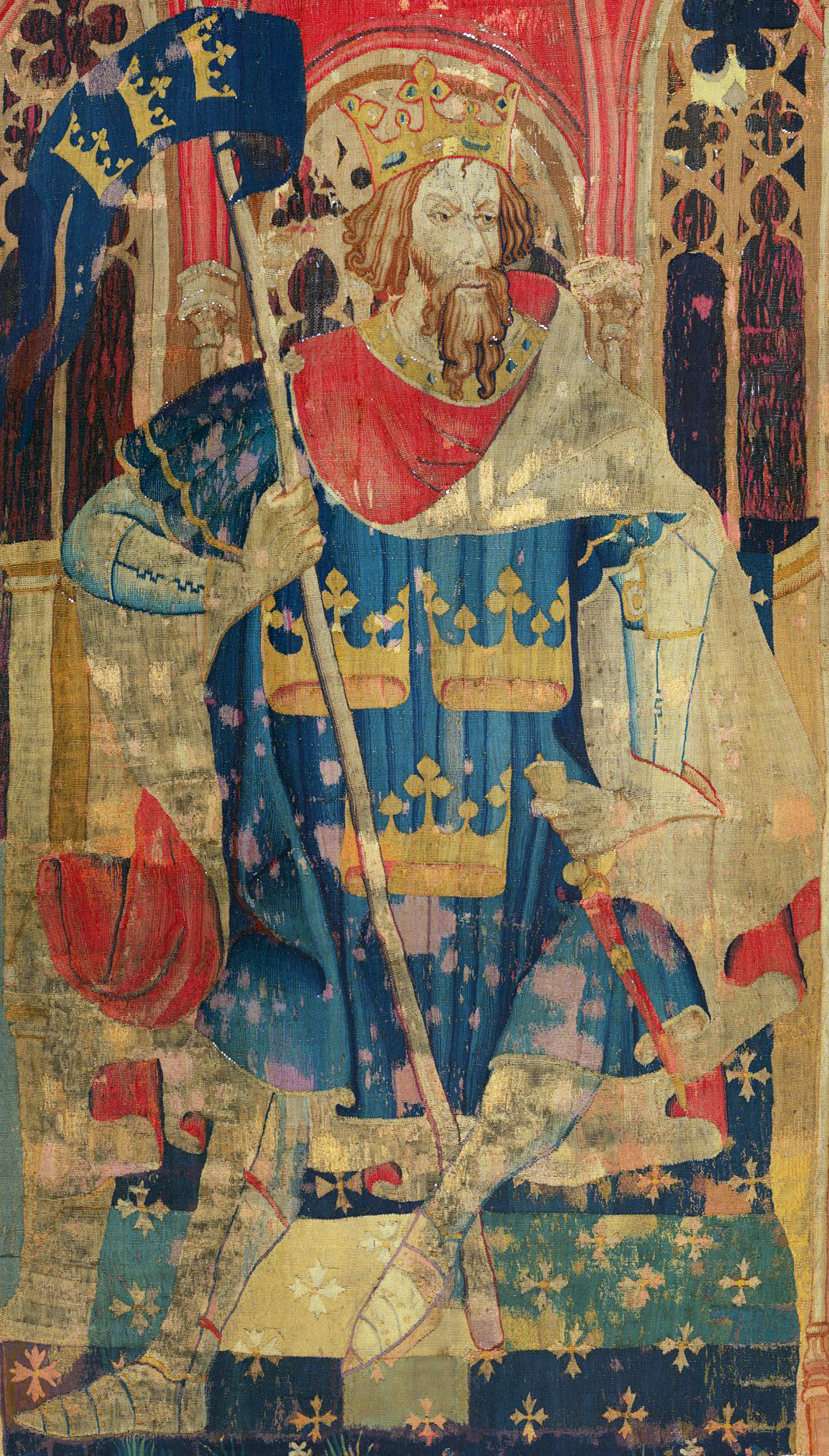
King Arthur
King Arthur (Welsh: Brenin Arthur; Cornish: Arthur Gernow; Breton: Roue Arzhur; French: Roi Arthur) was a legendary king of Britain. He is a folk hero and a central figure in the medieval literary tradition known as the Matter of Britain.
In Welsh sources, Arthur is portrayed as a leader of the post-Roman Britons in battles against the Anglo-Saxons in the late-5th and early-6th centuries. He first appears in two early medieval historical sources, the Annales Cambriae and the Historia Brittonum, but these date to 300 years after he is supposed to have lived, and most historians who study the period do not consider him a historical figure. His name also occurs in early Welsh poetic sources, such as Y Gododdin. The character developed through Welsh mythology, appearing either as a great warrior defending Britain from human and supernatural enemies or as a magical figure of folklore, and was sometimes associated with the Welsh otherworld Annwn.
The legendary Arthur developed as a figure of international interest largely through the popularity of Geoffrey of Monmouth's fanciful and imaginative 12th-century Historia Regum Britanniae (History of the Kings of Britain). Geoffrey depicted Arthur as a king of Britain who defeated the Saxons and established a vast empire. Many elements and incidents that are now an integral part of the Arthurian story appear in Geoffrey's Historia, including Arthur's father Uther Pendragon, the magician Merlin, Arthur's wife Guinevere, the sword Excalibur, Arthur's conception at Tintagel, his final battle against Mordred at Camlann, and his final rest in Avalon. Chrétien de Troyes, the 12th-century French writer who added Lancelot and the Holy Grail to the story, began the genre of Arthurian romance, which in turn became a significant strand of medieval literature. In these French stories, the narrative focus often shifts from King Arthur himself to other characters, such as various Knights of the Round Table. The themes, events and characters of the Arthurian legend vary widely from text to text, and there is no one canonical version. Arthurian literature thrived during the Middle Ages but waned in the following centuries until it experienced a major resurgence in the 19th century. In the 21st century the legend continues to have prominence, not only in literature but also in adaptations for theatre, film, television, comics and other media.
King Arthur was traditionally accepted as a historic person. He was originally thought to have been an ancient British war commander and, at least from the early 12th century, a king. There was, however, much discussion regarding his various deeds, and contemporary scholars and clerics generally refuted the popular medieval belief in his extreme longevity and future return. From the eighteenth century onwards, there has been academic debate about the historicity of Arthur. Details of Arthur's story are mainly composed of Welsh mythology, English folklore and literary invention, and most modern historians writing about the period do not think that he was a historical figure.
One school of thought, citing entries in the Historia Brittonum (History of the Britons) and Annales Cambriae (Welsh Annals), saw Arthur as a genuine historical Romano-British leader who fought against the invading Anglo-Saxons sometime in the late-5th to early-6th century.
The Historia Brittonum, a 9th-century Latin historical compilation attributed in some late manuscripts to a Welsh cleric called Nennius, contains the first datable mention of King Arthur, listing twelve battles that Arthur fought. These culminate in the Battle of Badon, where he is said to have single-handedly killed 960 men. Recent studies question the reliability of the Historia Brittonum.
Archaeological evidence in the Low Countries and what was to become England shows that early Anglo-Saxon migration to Great Britain reversed between 500 and 550, concurring with Frankish chronicles. John Davies notes this as consistent with the British victory at Badon Hill, attributed to Arthur by Nennius. The monks of Glastonbury are also said to have discovered the grave of Arthur in 1180.
The other text that seems to support the case for Arthur's historical existence is the 10th-century Annales Cambriae, which also links Arthur with the Battle of Badon. The Annales date this battle to 516–518 and also mention the Battle of Camlann, in which Arthur and Medraut (Mordred) were both killed, dated to 537–539. These details have often been used to bolster confidence in the Historia's account and confirm that Arthur fought at Badon.
King Arthur
King Arthur (Welsh: Brenin Arthur; Cornish: Arthur Gernow; Breton: Roue Arzhur; French: Roi Arthur) was a legendary king of Britain. He is a folk hero and a central figure in the medieval literary tradition known as the Matter of Britain.
In Welsh sources, Arthur is portrayed as a leader of the post-Roman Britons in battles against the Anglo-Saxons in the late-5th and early-6th centuries. He first appears in two early medieval historical sources, the Annales Cambriae and the Historia Brittonum, but these date to 300 years after he is supposed to have lived, and most historians who study the period do not consider him a historical figure. His name also occurs in early Welsh poetic sources, such as Y Gododdin. The character developed through Welsh mythology, appearing either as a great warrior defending Britain from human and supernatural enemies or as a magical figure of folklore, and was sometimes associated with the Welsh otherworld Annwn.
The legendary Arthur developed as a figure of international interest largely through the popularity of Geoffrey of Monmouth's fanciful and imaginative 12th-century Historia Regum Britanniae (History of the Kings of Britain). Geoffrey depicted Arthur as a king of Britain who defeated the Saxons and established a vast empire. Many elements and incidents that are now an integral part of the Arthurian story appear in Geoffrey's Historia, including Arthur's father Uther Pendragon, the magician Merlin, Arthur's wife Guinevere, the sword Excalibur, Arthur's conception at Tintagel, his final battle against Mordred at Camlann, and his final rest in Avalon. Chrétien de Troyes, the 12th-century French writer who added Lancelot and the Holy Grail to the story, began the genre of Arthurian romance, which in turn became a significant strand of medieval literature. In these French stories, the narrative focus often shifts from King Arthur himself to other characters, such as various Knights of the Round Table. The themes, events and characters of the Arthurian legend vary widely from text to text, and there is no one canonical version. Arthurian literature thrived during the Middle Ages but waned in the following centuries until it experienced a major resurgence in the 19th century. In the 21st century the legend continues to have prominence, not only in literature but also in adaptations for theatre, film, television, comics and other media.
King Arthur was traditionally accepted as a historic person. He was originally thought to have been an ancient British war commander and, at least from the early 12th century, a king. There was, however, much discussion regarding his various deeds, and contemporary scholars and clerics generally refuted the popular medieval belief in his extreme longevity and future return. From the eighteenth century onwards, there has been academic debate about the historicity of Arthur. Details of Arthur's story are mainly composed of Welsh mythology, English folklore and literary invention, and most modern historians writing about the period do not think that he was a historical figure.
One school of thought, citing entries in the Historia Brittonum (History of the Britons) and Annales Cambriae (Welsh Annals), saw Arthur as a genuine historical Romano-British leader who fought against the invading Anglo-Saxons sometime in the late-5th to early-6th century.
The Historia Brittonum, a 9th-century Latin historical compilation attributed in some late manuscripts to a Welsh cleric called Nennius, contains the first datable mention of King Arthur, listing twelve battles that Arthur fought. These culminate in the Battle of Badon, where he is said to have single-handedly killed 960 men. Recent studies question the reliability of the Historia Brittonum.
Archaeological evidence in the Low Countries and what was to become England shows that early Anglo-Saxon migration to Great Britain reversed between 500 and 550, concurring with Frankish chronicles. John Davies notes this as consistent with the British victory at Badon Hill, attributed to Arthur by Nennius. The monks of Glastonbury are also said to have discovered the grave of Arthur in 1180.
The other text that seems to support the case for Arthur's historical existence is the 10th-century Annales Cambriae, which also links Arthur with the Battle of Badon. The Annales date this battle to 516–518 and also mention the Battle of Camlann, in which Arthur and Medraut (Mordred) were both killed, dated to 537–539. These details have often been used to bolster confidence in the Historia's account and confirm that Arthur fought at Badon.
Recent media
Recent media