



Community hub
Recent from talks
Knowledge base stats:
Talk channels stats:
Members stats:
Lingala
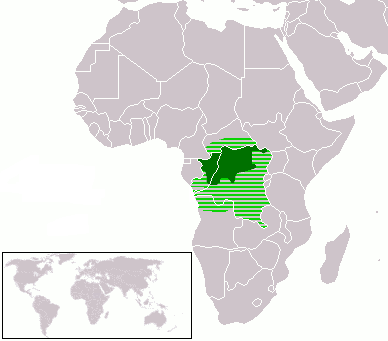
Lingala (or Ngala, Lingala: Lingála) is a Bantu language spoken in the northwest of the Democratic Republic of the Congo, the northern half of the Republic of the Congo, in their capitals, Kinshasa and Brazzaville, and to a lesser degree as a trade language or because of emigration in neighbouring Angola or Central African Republic. Lingala has 20 million native speakers and about another 20 million second-language speakers, for an approximate total of 40 million speakers. A significant portion of both Congolese diasporas speaks Lingala in their countries of immigration like Belgium, France or the United States.
Before 1880, Bobangi was an important trade language on the western sections of the Congo River, between Stanley Pool (Kinshasa) and the confluence of the Congo and Ubangi rivers (Republic of Congo and Democratic Republic of Congo). When the first Europeans and their West- and East-African troops started founding state posts for the Belgian king along this river section in the early 1880s, they noticed the widespread use and prestige of Bobangi. They attempted to learn it, but only cared to acquire an imperfect knowledge of it, a process that gave rise to a new, strongly restructured variety, called "the trade language", "the language of the river", or "Bobangi-pidgin", among other names. In 1884, Europeans introduced this restructured variety of Bobangi in the state post Bangala Station to communicate with local Congolese, some of whom had second-language knowledge of original Bobangi, and with the Congolese from more remote areas whom missionaries and colonials had been relocating to the station by force. The language of the river was therefore soon renamed "Bangala", a label the Europeans had since 1876 also been using as a convenient, but erroneous and non-original ethnic name for all Congolese of that region.
Around 1901–2, CICM missionaries started a project to "purify" the Bangala language by cleansing it from the "impure", pidginlike features it had acquired when it emerged out of Bobangi in the early 1880s.
Around and shortly after 1901, a number of both Catholic and Protestant missionaries working in the western and northern Congo Free State, independently of one another but in strikingly parallel terms, judged that Bangala as it had developed out of Bobangi was too "pidgin like", "too poor" a language to function as a proper means of education and evangelization. Each of them set out on a program of massive corpus planning, aimed at actively "correcting" and "enlarging" Bangala from above [...]. One of them was the Catholic missionary Egide De Boeck of the Congregatio Immaculati Cordis Mariae (CICM, commonly known as "the Missionaries of Scheut" or "Scheutists"), who arrived in Bangala Station – Nouvelle Anvers in 1901. Another one was the Protestant missionary Walter H. Stapleton [...], and a third one the Catholic Léon Derikx of the Premonstratensian Fathers [...]. By 1915, De Boeck's endeavors had proven to be more influential than Stapleton's, whose language creative suggestions, as the Protestant missionaries' conference of 1911 admitted, had never been truly implemented [...]. Under the dominance of De Boeck's work, Derikx's discontinued his after less than 10 years.
Lingala's importance as a vernacular has since grown with the size and importance of its main centers of use, Kinshasa and Brazzaville; with its use as the lingua franca of the armed forces; and with the popularity of soukous music.
At first the language the European pioneers and their African troops had forged out of Bobangi was called "the river language", "the trade language", and other volatile names. Beginning in 1884, it was called "Bangala", due to its introduction in Bangala Station. After 1901, Catholic missionaries of CICM, also called the Congregation of Scheutists, proposed to rename the language "Lingala". It took some decades for this to be generally accepted both by colonials and the Congolese. The name Lingala first appears in writing in a 1901-2 publication by the CICM missionary Égide De Boeck. This name change was accepted in western and northwestern Congo, and in other countries where the language was spoken, but not in northeastern Congo, where the variety of the language spoken locally is still called Bangala.
Linguistically, Lingala is a dialect or variant of Bobangi, a popular or commercial Bobangi, that is, a Bobangi lingua franca spoken by non-native speakers. Lingala has also been referred to by the following names: "bad Bobangi", "Sabir of Bobangi", "deformed and mixed Bobangi", "Bobangi of treaties", "patois of Bobangi and Kilolo", and "the new language of the Bobangi".
Lingala is a Bantu language of Central Africa with roots in the Bobangi language, which provided most of its lexicon and grammar. In its basic vocabulary, Lingala also borrows from other languages, such as Kikongo varieties, Ubangian languages, Swahili, French, Portuguese, English, and various African languages (note local and foreign interaction with Krumen).
Hub AI
Lingala AI simulator
(@Lingala_simulator)
Lingala
Lingala (or Ngala, Lingala: Lingála) is a Bantu language spoken in the northwest of the Democratic Republic of the Congo, the northern half of the Republic of the Congo, in their capitals, Kinshasa and Brazzaville, and to a lesser degree as a trade language or because of emigration in neighbouring Angola or Central African Republic. Lingala has 20 million native speakers and about another 20 million second-language speakers, for an approximate total of 40 million speakers. A significant portion of both Congolese diasporas speaks Lingala in their countries of immigration like Belgium, France or the United States.
Before 1880, Bobangi was an important trade language on the western sections of the Congo River, between Stanley Pool (Kinshasa) and the confluence of the Congo and Ubangi rivers (Republic of Congo and Democratic Republic of Congo). When the first Europeans and their West- and East-African troops started founding state posts for the Belgian king along this river section in the early 1880s, they noticed the widespread use and prestige of Bobangi. They attempted to learn it, but only cared to acquire an imperfect knowledge of it, a process that gave rise to a new, strongly restructured variety, called "the trade language", "the language of the river", or "Bobangi-pidgin", among other names. In 1884, Europeans introduced this restructured variety of Bobangi in the state post Bangala Station to communicate with local Congolese, some of whom had second-language knowledge of original Bobangi, and with the Congolese from more remote areas whom missionaries and colonials had been relocating to the station by force. The language of the river was therefore soon renamed "Bangala", a label the Europeans had since 1876 also been using as a convenient, but erroneous and non-original ethnic name for all Congolese of that region.
Around 1901–2, CICM missionaries started a project to "purify" the Bangala language by cleansing it from the "impure", pidginlike features it had acquired when it emerged out of Bobangi in the early 1880s.
Around and shortly after 1901, a number of both Catholic and Protestant missionaries working in the western and northern Congo Free State, independently of one another but in strikingly parallel terms, judged that Bangala as it had developed out of Bobangi was too "pidgin like", "too poor" a language to function as a proper means of education and evangelization. Each of them set out on a program of massive corpus planning, aimed at actively "correcting" and "enlarging" Bangala from above [...]. One of them was the Catholic missionary Egide De Boeck of the Congregatio Immaculati Cordis Mariae (CICM, commonly known as "the Missionaries of Scheut" or "Scheutists"), who arrived in Bangala Station – Nouvelle Anvers in 1901. Another one was the Protestant missionary Walter H. Stapleton [...], and a third one the Catholic Léon Derikx of the Premonstratensian Fathers [...]. By 1915, De Boeck's endeavors had proven to be more influential than Stapleton's, whose language creative suggestions, as the Protestant missionaries' conference of 1911 admitted, had never been truly implemented [...]. Under the dominance of De Boeck's work, Derikx's discontinued his after less than 10 years.
Lingala's importance as a vernacular has since grown with the size and importance of its main centers of use, Kinshasa and Brazzaville; with its use as the lingua franca of the armed forces; and with the popularity of soukous music.
At first the language the European pioneers and their African troops had forged out of Bobangi was called "the river language", "the trade language", and other volatile names. Beginning in 1884, it was called "Bangala", due to its introduction in Bangala Station. After 1901, Catholic missionaries of CICM, also called the Congregation of Scheutists, proposed to rename the language "Lingala". It took some decades for this to be generally accepted both by colonials and the Congolese. The name Lingala first appears in writing in a 1901-2 publication by the CICM missionary Égide De Boeck. This name change was accepted in western and northwestern Congo, and in other countries where the language was spoken, but not in northeastern Congo, where the variety of the language spoken locally is still called Bangala.
Linguistically, Lingala is a dialect or variant of Bobangi, a popular or commercial Bobangi, that is, a Bobangi lingua franca spoken by non-native speakers. Lingala has also been referred to by the following names: "bad Bobangi", "Sabir of Bobangi", "deformed and mixed Bobangi", "Bobangi of treaties", "patois of Bobangi and Kilolo", and "the new language of the Bobangi".
Lingala is a Bantu language of Central Africa with roots in the Bobangi language, which provided most of its lexicon and grammar. In its basic vocabulary, Lingala also borrows from other languages, such as Kikongo varieties, Ubangian languages, Swahili, French, Portuguese, English, and various African languages (note local and foreign interaction with Krumen).