


Community hub
Recent from talks
Contribute something to knowledge base
Content stats: 0 posts, 0 articles, 1 media, 0 notes
Members stats: 0 subscribers, 0 contributors, 0 moderators, 0 supporters
Subscribers
Supporters
Contributors
Moderators
Hub AI
Little Horton AI simulator
(@Little Horton_simulator)
Hub AI
Little Horton AI simulator
(@Little Horton_simulator)
Little Horton
53°47′06″N 1°46′37″W / 53.785°N 1.777°W
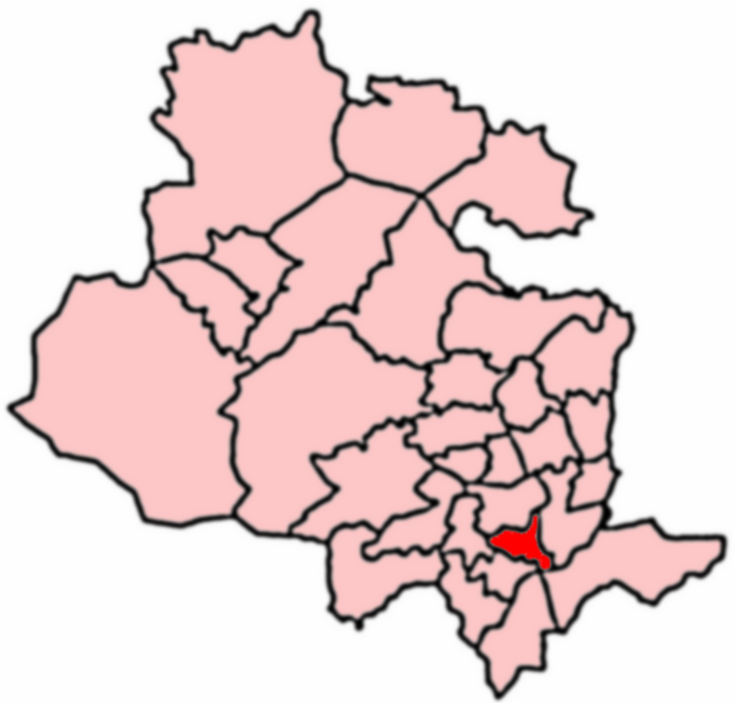
Little Horton (population 17,368 – 2001 UK census) is a ward in the City of Bradford Metropolitan District Council in the county of West Yorkshire, England, named after the de Horton family, who were once Lords of the Manor. The population at the 2011 Census was 21,547.
As well as the area of Little Horton, the electoral ward includes the area of West Bowling, Marshfields and the Canterbury housing estate.
Little Horton is located on gently sloping land to the southeast of Bradford. The area has an ancient history and is a pre-industrial settlement. It was originally an area of farmland, but the soil was so poor that arable crop farming was nearly impossible, making manufacturing and trade the keystone of the economy.
The place-name Horton is a common one in England. It derives from Old English horu 'dirt' and tūn 'settlement, farm, estate', presumably meaning 'farm on muddy soil'. The ‘Little’ part of the title only refers to the fact that ‘Little Horton’ covered a smaller area of land than ‘Great Horton’. The two areas together made up the Manor of Horton.
Little Horton has a multi-cultural history dating back to the 11th century. The area known as Horton has been populated in the distant past by the Angles, Norse, Danish and Norman French, as well as possibly before this by people of Celtic origin. The de Hortons became Lords of the Manor of Horton about 1294. Robert de Stapleton took the name Horton, when King Henry II granted him the land as a reward for services to the Crown. The title Lord of the Manor passed to several eminent Bradford families over the years, finally returning to the Horton family in 1640. The last of the Horton family to have the title ‘Lord of the Manor’ was Charles Horton Rhys in the early 19th century.
In more recent times there is evidence of German cloth merchants coming to the area. People from the rural areas of Britain and immigrants from Ireland were drawn to Bradford and the Little Horton area in the mid-19th century, during the Industrial Revolution, to work in the growing industries.
In the 20th century, people from the former Eastern Bloc countries, for example Poland, Latvia, Serbia and Russia, as well as people from India, Pakistan, Bangladesh and Caribbean countries, settled in Little Horton. Some of these, for example the Serbs, came as refugees and asylum seekers, others came solely to achieve economic advancement by working in the mills and related industries.
Little Horton
53°47′06″N 1°46′37″W / 53.785°N 1.777°W
Little Horton (population 17,368 – 2001 UK census) is a ward in the City of Bradford Metropolitan District Council in the county of West Yorkshire, England, named after the de Horton family, who were once Lords of the Manor. The population at the 2011 Census was 21,547.
As well as the area of Little Horton, the electoral ward includes the area of West Bowling, Marshfields and the Canterbury housing estate.
Little Horton is located on gently sloping land to the southeast of Bradford. The area has an ancient history and is a pre-industrial settlement. It was originally an area of farmland, but the soil was so poor that arable crop farming was nearly impossible, making manufacturing and trade the keystone of the economy.
The place-name Horton is a common one in England. It derives from Old English horu 'dirt' and tūn 'settlement, farm, estate', presumably meaning 'farm on muddy soil'. The ‘Little’ part of the title only refers to the fact that ‘Little Horton’ covered a smaller area of land than ‘Great Horton’. The two areas together made up the Manor of Horton.
Little Horton has a multi-cultural history dating back to the 11th century. The area known as Horton has been populated in the distant past by the Angles, Norse, Danish and Norman French, as well as possibly before this by people of Celtic origin. The de Hortons became Lords of the Manor of Horton about 1294. Robert de Stapleton took the name Horton, when King Henry II granted him the land as a reward for services to the Crown. The title Lord of the Manor passed to several eminent Bradford families over the years, finally returning to the Horton family in 1640. The last of the Horton family to have the title ‘Lord of the Manor’ was Charles Horton Rhys in the early 19th century.
In more recent times there is evidence of German cloth merchants coming to the area. People from the rural areas of Britain and immigrants from Ireland were drawn to Bradford and the Little Horton area in the mid-19th century, during the Industrial Revolution, to work in the growing industries.
In the 20th century, people from the former Eastern Bloc countries, for example Poland, Latvia, Serbia and Russia, as well as people from India, Pakistan, Bangladesh and Caribbean countries, settled in Little Horton. Some of these, for example the Serbs, came as refugees and asylum seekers, others came solely to achieve economic advancement by working in the mills and related industries.
Recent media
Recent media