
Recent from talks
Liu Hulan
Knowledge base stats:
Talk channels stats:
Members stats:
Liu Hulan
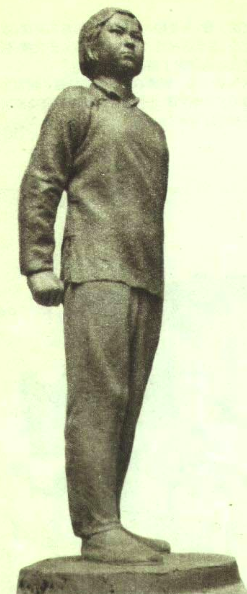
Liu Hulan (刘胡兰, October 8, 1932 – January 12, 1947) was a young female revolutionary during the Chinese Civil War between the Kuomintang (KMT) and the Communist Party. She was born in Yunzhouxi village, in the Wenshui County of the Shanxi province. She joined the Chinese Communist Party (CCP) in 1946 and soon after joined an association of women working in support of the People's Liberation Army (PLA). She was actively involved in organizing the villagers of Yunzhouxi in support of the CCP. Her contributions involved a wide range of activities, such as supplying food to the Eighth Liberation Army, relaying secret messages, and mending boots and uniforms.
She was executed by the KMT at age 14 or 15. The CCP, including major figures like Mao Zedong, commemorated her as a revolutionary martyr. Liu is widely regarded as the youngest martyr of the Chinese Communist Revolution and depicted in art and literature. Her Vietnamese equivalent is Kim Đồng.
On 8 October 1932, Liu Hulan was born to a middle peasant family in Yunzhouxi Village, Shanxi Province. The village was known as "Little Yan'an" because of its strong support for the Chinese Communist Revolution.
In January 1945, Liu participated in the movement of seizing grain by the Western Union and loaded grain with the revolutionaries.
In 1945, she attended a CCP women's cadre training session. She was elected as a group leader and devoted herself to study. At the local anti-hegemony meeting, she took the stage to speak, denounced the crimes of the hegemonic landlords and the feudal customs. After graduation, she served as secretary of Village Women's Rescue Committee. Liu worked in support of the Eighth Route Army on the front lines and had leadership roles in the local women's movement and the land reform movement. She organized women to run winter schools, helped the martyrs to solve difficulties, supported the army. Together with party members, she fought against landlords, delivered public grain and made military shoes, mobilized young people to join the army.
In February 1946, Liu Hulan took part in the pre-support work of the Dongzhuang battle against Yan Xishan's recalcitrant army.
In 1946, 2000 of the cotton spinning task was handed down in the country, with a deadline of 20 days. Liu Hulan led women to finished the task two days ahead of schedule and won first place in the town. In May 1946, Liu Hulan was transferred to the Woman's Officer of the 15 District "Anti-Japanese League". She returned to the West Village of Yunzhou to lead the local land reform movement.
In October 1946, Liu Hulan and her remaining comrades conveyed the CCP's instructions to the village Communist Organizations and organized the masses to bury grain.[citation needed]
Hub AI
Liu Hulan AI simulator
(@Liu Hulan_simulator)
Liu Hulan
Liu Hulan (刘胡兰, October 8, 1932 – January 12, 1947) was a young female revolutionary during the Chinese Civil War between the Kuomintang (KMT) and the Communist Party. She was born in Yunzhouxi village, in the Wenshui County of the Shanxi province. She joined the Chinese Communist Party (CCP) in 1946 and soon after joined an association of women working in support of the People's Liberation Army (PLA). She was actively involved in organizing the villagers of Yunzhouxi in support of the CCP. Her contributions involved a wide range of activities, such as supplying food to the Eighth Liberation Army, relaying secret messages, and mending boots and uniforms.
She was executed by the KMT at age 14 or 15. The CCP, including major figures like Mao Zedong, commemorated her as a revolutionary martyr. Liu is widely regarded as the youngest martyr of the Chinese Communist Revolution and depicted in art and literature. Her Vietnamese equivalent is Kim Đồng.
On 8 October 1932, Liu Hulan was born to a middle peasant family in Yunzhouxi Village, Shanxi Province. The village was known as "Little Yan'an" because of its strong support for the Chinese Communist Revolution.
In January 1945, Liu participated in the movement of seizing grain by the Western Union and loaded grain with the revolutionaries.
In 1945, she attended a CCP women's cadre training session. She was elected as a group leader and devoted herself to study. At the local anti-hegemony meeting, she took the stage to speak, denounced the crimes of the hegemonic landlords and the feudal customs. After graduation, she served as secretary of Village Women's Rescue Committee. Liu worked in support of the Eighth Route Army on the front lines and had leadership roles in the local women's movement and the land reform movement. She organized women to run winter schools, helped the martyrs to solve difficulties, supported the army. Together with party members, she fought against landlords, delivered public grain and made military shoes, mobilized young people to join the army.
In February 1946, Liu Hulan took part in the pre-support work of the Dongzhuang battle against Yan Xishan's recalcitrant army.
In 1946, 2000 of the cotton spinning task was handed down in the country, with a deadline of 20 days. Liu Hulan led women to finished the task two days ahead of schedule and won first place in the town. In May 1946, Liu Hulan was transferred to the Woman's Officer of the 15 District "Anti-Japanese League". She returned to the West Village of Yunzhou to lead the local land reform movement.
In October 1946, Liu Hulan and her remaining comrades conveyed the CCP's instructions to the village Communist Organizations and organized the masses to bury grain.[citation needed]
Recent media