
Recent from talks
Yan Xishan
Knowledge base stats:
Talk channels stats:
Members stats:
Yan Xishan
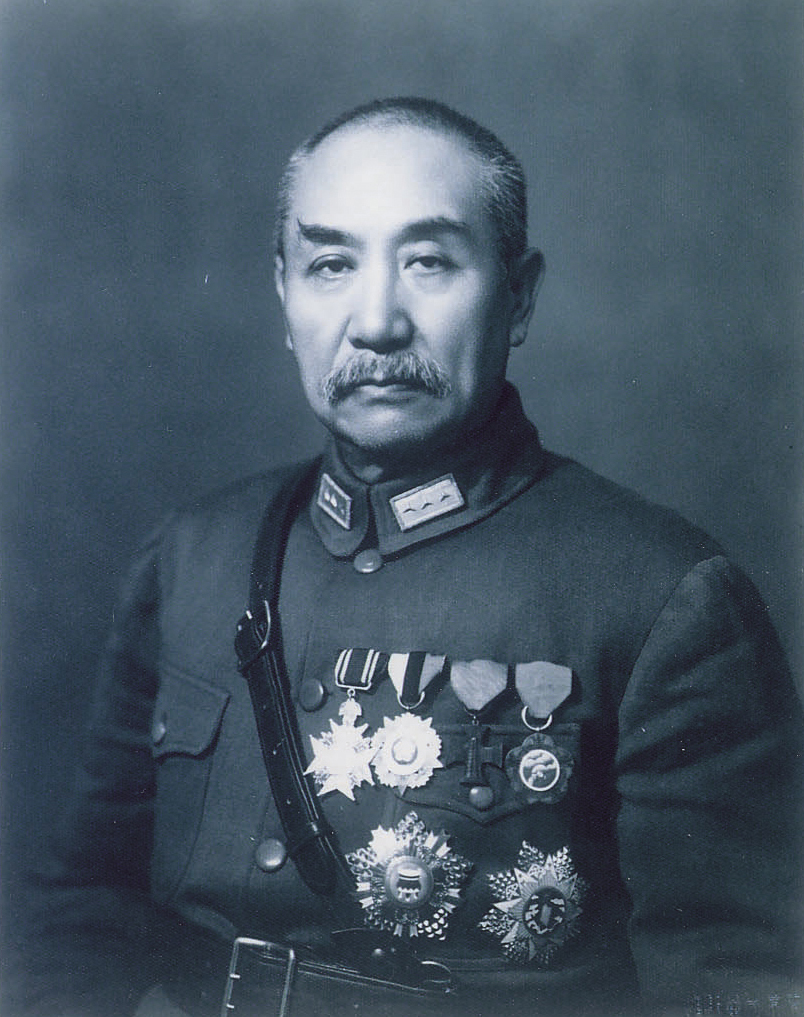
Yan Xishan (Chinese: 閻錫山; pinyin: Yán Xīshān; Wade–Giles: Yen2 Hsi1-shan1; 8 October 1883 – 23 May 1960; also romanized as Yen Hsi-shan) was a Chinese warlord who served in the government of the Republic of China from June 1949 to March 1950 as its last premier in mainland China and first premier in Taiwan. He effectively controlled the province of Shanxi from the 1911 Xinhai Revolution to the 1949 Communist victory in the Chinese Civil War. He maintained an ambivalent attitude towards the Communists until 1939, and participated in the Second United Front against the Japanese from 1937. He subsequently negotiated with the Japanese from 1940 to 1943, and allied himself with the Japanese against the Communists from 1944 until fleeing Shanxi in 1949. The resistance of his well-armed forces in Taiyuan posed a major obstacle to Communist victory in the Civil War.
As the leader of a relatively small and land-locked province, he survived Yuan Shikai, the Warlord Era, the Nationalist Era, the Japanese invasion of China and the subsequent civil war, being forced from office only when the Nationalist armies with which he was aligned had completely lost control of the Chinese mainland, isolating Shanxi from any source of economic or military supply.
Yan also joined an even more militant organization of Chinese revolutionaries, the "Dare-to-Die Corps."
When Yan returned to China in 1909, he was assigned as a division commander of the New Army in Shanxi but secretly worked to overthrow the Qing.
In 1911 Yan hoped to join forces with another prominent Shanxi revolutionary, Wu Luzhen, to undermine Yuan Shikai's control of north China, but the plans were aborted after Wu was assassinated. In 1917, shortly after Yuan Shikai's death, Yan solidified his control over Shanxi, ruling there uncontested. After Yuan's death in 1916, China descended into a period of warlordism.
Yan attempted to modernize the state of medicine in China by funding the Research Society for the Advancement of Chinese Medicine, based in Taiyuan, in 1921. One of less than twenty schools in China at the time, the school had a four-year curriculum and included courses in both Chinese and western medicine. Its courses were taught in English, German, and Japanese. Yan hoped that his support of the school would eventually lead to increased revenues in the domestic and international trade of Chinese drugs, improved public health, and improved public education.
Yan sent students from Shanxi to complete science and engineering degrees at Japanese, American and English universities. In 1936, he provided a scholarship for the future nuclear physicist He Zehui, the daughter of He Cheng, another early member of the Tongmenghui, to embark on a PhD in experimental ballistics at the Technische Universität Berlin.
Yan's assistance to Chiang was rewarded shortly afterwards by his being named minister of the interior and deputy commander-in chief of all Kuomintang armies.
Hub AI
Yan Xishan AI simulator
(@Yan Xishan_simulator)
Yan Xishan
Yan Xishan (Chinese: 閻錫山; pinyin: Yán Xīshān; Wade–Giles: Yen2 Hsi1-shan1; 8 October 1883 – 23 May 1960; also romanized as Yen Hsi-shan) was a Chinese warlord who served in the government of the Republic of China from June 1949 to March 1950 as its last premier in mainland China and first premier in Taiwan. He effectively controlled the province of Shanxi from the 1911 Xinhai Revolution to the 1949 Communist victory in the Chinese Civil War. He maintained an ambivalent attitude towards the Communists until 1939, and participated in the Second United Front against the Japanese from 1937. He subsequently negotiated with the Japanese from 1940 to 1943, and allied himself with the Japanese against the Communists from 1944 until fleeing Shanxi in 1949. The resistance of his well-armed forces in Taiyuan posed a major obstacle to Communist victory in the Civil War.
As the leader of a relatively small and land-locked province, he survived Yuan Shikai, the Warlord Era, the Nationalist Era, the Japanese invasion of China and the subsequent civil war, being forced from office only when the Nationalist armies with which he was aligned had completely lost control of the Chinese mainland, isolating Shanxi from any source of economic or military supply.
Yan also joined an even more militant organization of Chinese revolutionaries, the "Dare-to-Die Corps."
When Yan returned to China in 1909, he was assigned as a division commander of the New Army in Shanxi but secretly worked to overthrow the Qing.
In 1911 Yan hoped to join forces with another prominent Shanxi revolutionary, Wu Luzhen, to undermine Yuan Shikai's control of north China, but the plans were aborted after Wu was assassinated. In 1917, shortly after Yuan Shikai's death, Yan solidified his control over Shanxi, ruling there uncontested. After Yuan's death in 1916, China descended into a period of warlordism.
Yan attempted to modernize the state of medicine in China by funding the Research Society for the Advancement of Chinese Medicine, based in Taiyuan, in 1921. One of less than twenty schools in China at the time, the school had a four-year curriculum and included courses in both Chinese and western medicine. Its courses were taught in English, German, and Japanese. Yan hoped that his support of the school would eventually lead to increased revenues in the domestic and international trade of Chinese drugs, improved public health, and improved public education.
Yan sent students from Shanxi to complete science and engineering degrees at Japanese, American and English universities. In 1936, he provided a scholarship for the future nuclear physicist He Zehui, the daughter of He Cheng, another early member of the Tongmenghui, to embark on a PhD in experimental ballistics at the Technische Universität Berlin.
Yan's assistance to Chiang was rewarded shortly afterwards by his being named minister of the interior and deputy commander-in chief of all Kuomintang armies.
Recent media