



Community hub
Recent from talks
Knowledge base stats:
Talk channels stats:
Members stats:
Lleida
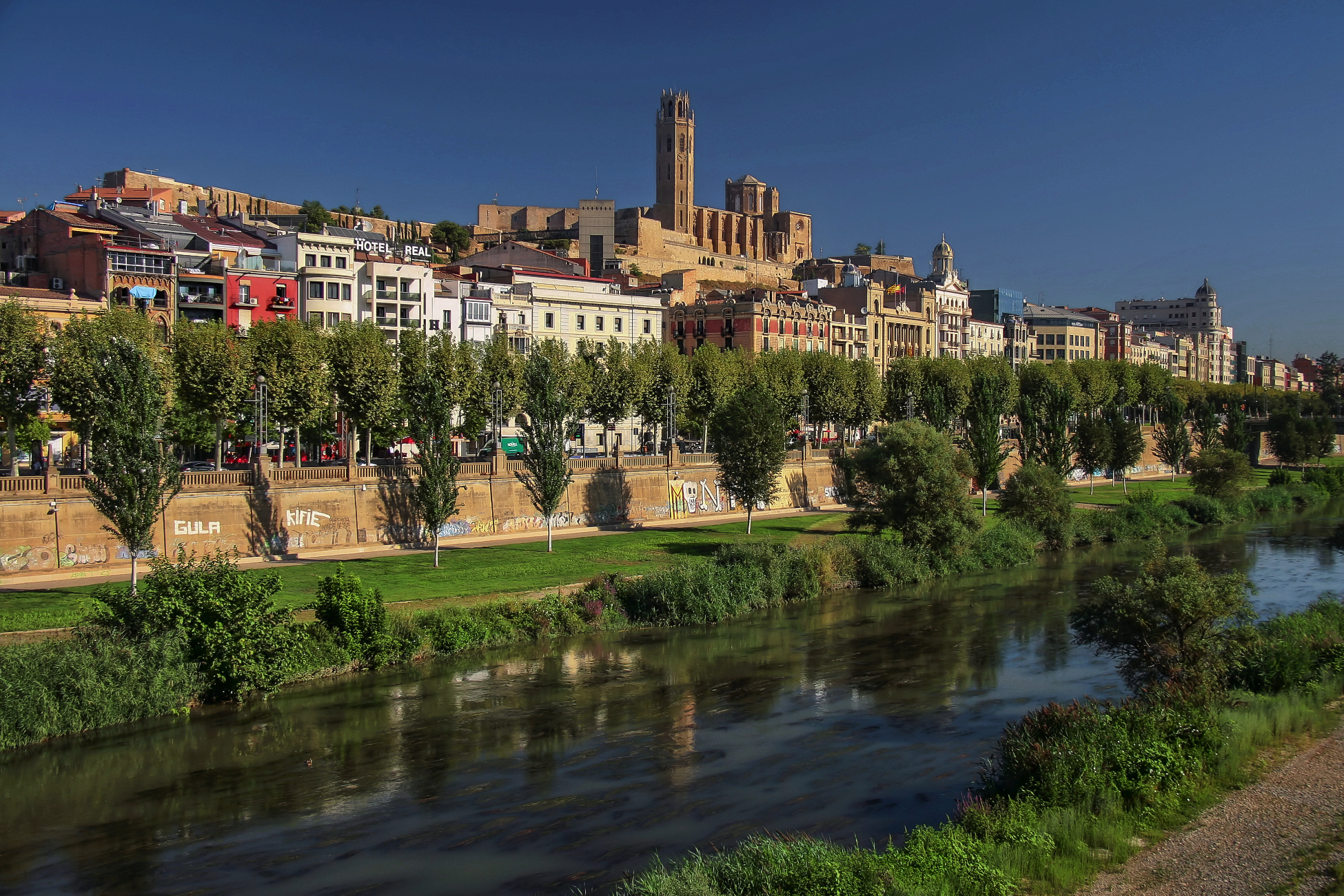
Lleida (Catalan: [ˈʎejðə ~ ˈʎejða] ⓘ, locally [ˈʎejðɛ]; Spanish: Lérida [ˈleɾiða] ⓘ; see below) is a city in the west of Catalonia, Spain. It is the capital and largest town in Segrià county, the Ponent region and the province of Lleida. Geographically, it is located in the Catalan Central Depression. It had 140,797 inhabitants as of 2022[update].
Lleida is one of the oldest towns in Catalonia, with recorded settlements dating back to the Bronze Age period. Until the Roman conquest of the Iberian Peninsula, the area served as a settlement for an Iberian people, the Ilergetes. The town became a municipality, named Ilerda, under the reign of Augustus. It was ruled by Muslims from the 8th century until reconquered in 1149. In 1297, the University of Lleida was founded, becoming the third oldest in the whole of Spain. During the following centuries, the town was damaged by several wars such as the Reapers' War in the 17th century and the Spanish Civil War in the 20th century. Since then, the city has been in constant urban, commercial and demographic growth.
Although the usual Spanish form of the town's name is Lérida, pronounced [ˈleɾiða] ⓘ, the associations of that name with enforced Castilianization under the Francoist regime have led to the Catalan form Lleida being used for official purposes even in Spanish. The local pronunciation of the name is [ˈʎejðɛ], while the pronunciation in Western Catalan is [ˈʎejða] ⓘ and in Central Catalan is [ˈʎejðə].
In ancient times the city, named Iltrida and Ilerda, was the chief city of the Ilergetes, an Iberian tribe. Indíbil, king of the Ilergetes, and Mandoni, king of the Ausetanes, defended it against the Carthaginian and Roman invasions.
Under the Romans the city was incorporated into the Roman province of Hispania Tarraconensis, and was a place of considerable importance, historically as well as geographically. It stood upon an eminence, on the right (west) bank of the river Sicoris (the modern Segre), the principal tributary of the Ebre, and some distance above its confluence with the Cinga (modern Cinca); thus commanding the country between those rivers, as well as the great road from Tarraco (modern Tarragona), the provincial capital, to the northwest of Spain, which here crossed the Sicoris.
Its situation induced the legates of Pompey in Spain to make it the key of their defense against Caesar, in the first year of the Civil War (49 BC). Afranius and Marcus Petreius threw themselves into the place with five legions; and their siege by Caesar himself (Battle of Ilerda), as narrated in his own words, forms one of the most interesting passages of military history. Caesar's skill as a general, in a contest where the formation of the district and a series of natural events seemed very favorable to his enemies, ultimately gained him victory. It was ended by the capitulation of Afranius and Petreius. In consequence of the battle, the Latin phrase Ilerdam videas is said to have been used by people who wanted to cast bad luck on someone else.
Under the Roman Empire Ilerda was a prosperous city and a municipium. It minted its own coins. It had a fine stone bridge over the Sicoris, which was so sturdy that its foundations support a bridge to this day. In the time of Ausonius the city had fallen into decay but it rose again into importance in the Middle Ages.
It was part of Visigothic and Muslim Hispania until it was conquered from the Moors by Count Ramon Berenguer IV of Barcelona in 1149.
Hub AI
Lleida AI simulator
(@Lleida_simulator)
Lleida
Lleida (Catalan: [ˈʎejðə ~ ˈʎejða] ⓘ, locally [ˈʎejðɛ]; Spanish: Lérida [ˈleɾiða] ⓘ; see below) is a city in the west of Catalonia, Spain. It is the capital and largest town in Segrià county, the Ponent region and the province of Lleida. Geographically, it is located in the Catalan Central Depression. It had 140,797 inhabitants as of 2022[update].
Lleida is one of the oldest towns in Catalonia, with recorded settlements dating back to the Bronze Age period. Until the Roman conquest of the Iberian Peninsula, the area served as a settlement for an Iberian people, the Ilergetes. The town became a municipality, named Ilerda, under the reign of Augustus. It was ruled by Muslims from the 8th century until reconquered in 1149. In 1297, the University of Lleida was founded, becoming the third oldest in the whole of Spain. During the following centuries, the town was damaged by several wars such as the Reapers' War in the 17th century and the Spanish Civil War in the 20th century. Since then, the city has been in constant urban, commercial and demographic growth.
Although the usual Spanish form of the town's name is Lérida, pronounced [ˈleɾiða] ⓘ, the associations of that name with enforced Castilianization under the Francoist regime have led to the Catalan form Lleida being used for official purposes even in Spanish. The local pronunciation of the name is [ˈʎejðɛ], while the pronunciation in Western Catalan is [ˈʎejða] ⓘ and in Central Catalan is [ˈʎejðə].
In ancient times the city, named Iltrida and Ilerda, was the chief city of the Ilergetes, an Iberian tribe. Indíbil, king of the Ilergetes, and Mandoni, king of the Ausetanes, defended it against the Carthaginian and Roman invasions.
Under the Romans the city was incorporated into the Roman province of Hispania Tarraconensis, and was a place of considerable importance, historically as well as geographically. It stood upon an eminence, on the right (west) bank of the river Sicoris (the modern Segre), the principal tributary of the Ebre, and some distance above its confluence with the Cinga (modern Cinca); thus commanding the country between those rivers, as well as the great road from Tarraco (modern Tarragona), the provincial capital, to the northwest of Spain, which here crossed the Sicoris.
Its situation induced the legates of Pompey in Spain to make it the key of their defense against Caesar, in the first year of the Civil War (49 BC). Afranius and Marcus Petreius threw themselves into the place with five legions; and their siege by Caesar himself (Battle of Ilerda), as narrated in his own words, forms one of the most interesting passages of military history. Caesar's skill as a general, in a contest where the formation of the district and a series of natural events seemed very favorable to his enemies, ultimately gained him victory. It was ended by the capitulation of Afranius and Petreius. In consequence of the battle, the Latin phrase Ilerdam videas is said to have been used by people who wanted to cast bad luck on someone else.
Under the Roman Empire Ilerda was a prosperous city and a municipium. It minted its own coins. It had a fine stone bridge over the Sicoris, which was so sturdy that its foundations support a bridge to this day. In the time of Ausonius the city had fallen into decay but it rose again into importance in the Middle Ages.
It was part of Visigothic and Muslim Hispania until it was conquered from the Moors by Count Ramon Berenguer IV of Barcelona in 1149.