
Recent from talks
LoRa
Knowledge base stats:
Talk channels stats:
Members stats:
LoRa
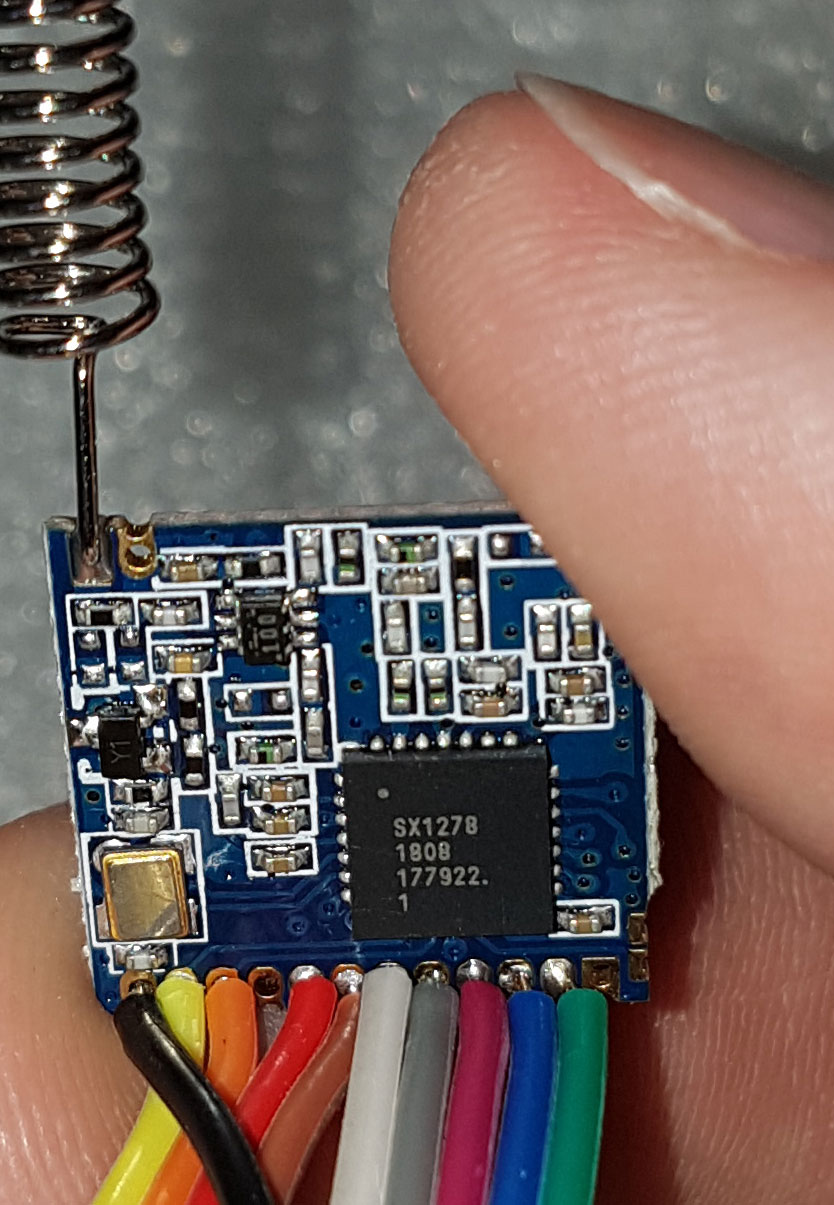
LoRa (from "long range") is a physical proprietary radio communication technique based on spread spectrum modulation. It is used as the physical layer for LoRaWAN, a low-power, wide-area network (LPWAN) protocol that wirelessly connects battery-operated devices to the Internet. LoRa can be thought of as the radio signal technology (similar to Wi-Fi or cellular), while LoRaWAN is the protocol and network architecture that manages communication over that signal.
Together, LoRa and LoRaWAN provide a solution for connecting low-power devices over long distances, making them a key technology for the Internet of Things (IoT). The technology is primarily used for applications where small amounts of data need to be transmitted infrequently from hard-to-reach locations, such as in smart agriculture, industrial monitoring, and asset tracking. The technology was originally developed by the French company Cycleo, which was acquired by Semtech in 2012, and the LoRaWAN standard is now managed by the LoRa Alliance.
LoRa uses license-free sub-gigahertz radio frequency bands EU433 (LPD433) or EU868 (863–870/873 MHz) in Europe; AU915/AS923-1 (915–928 MHz) in South America; US915 (902–928 MHz) in North America; IN865 (865–867 MHz) in India; and AS923 (915–928 MHz) in Asia; LoRa enables long-range transmissions with low power consumption. The technology covers the physical layer, while other technologies and protocols such as LoRaWAN cover the upper layers. It can achieve data rates between 0.3 kbit/s and 27 kbit/s, depending upon the spreading factor.
LoRa devices have geolocation capabilities used for trilaterating positions of devices via timestamps from gateways.
LoRa devices have geolocation capabilities used for trilaterating positions of devices via timestamps from gateways. This feature, combined with the technology's long-range and low-power characteristics, makes it suitable for a wide range of Internet of Things (IoT) applications where assets are dispersed and battery life is critical.
LoRaWAN is widely used for asset tracking, particularly for non-powered assets that require a tracking system with a long battery life. Because it does not rely on cellular networks, it is an effective technology for monitoring moving objects in areas with poor or no GSM signal, such as in remote areas or inside large metal shipping containers. A common application is in the track and trace of construction and railway equipment. For example, LoRaWAN trackers are used in Switzerland to monitor the location of construction wagons, providing security against theft and improving the efficiency of fleet logistics.
In precision agriculture, LoRaWAN sensors are used to create managing information systems that optimize farming operations. Low-power sensors are deployed across large fields to monitor soil moisture, temperature, and nutrient levels, allowing for more efficient irrigation and fertilization. The technology is also used for tracking the location and health of livestock.
LoRaWAN is used for smart city applications. Municipalities use it for a variety of services, including:
Hub AI
LoRa AI simulator
(@LoRa_simulator)
LoRa
LoRa (from "long range") is a physical proprietary radio communication technique based on spread spectrum modulation. It is used as the physical layer for LoRaWAN, a low-power, wide-area network (LPWAN) protocol that wirelessly connects battery-operated devices to the Internet. LoRa can be thought of as the radio signal technology (similar to Wi-Fi or cellular), while LoRaWAN is the protocol and network architecture that manages communication over that signal.
Together, LoRa and LoRaWAN provide a solution for connecting low-power devices over long distances, making them a key technology for the Internet of Things (IoT). The technology is primarily used for applications where small amounts of data need to be transmitted infrequently from hard-to-reach locations, such as in smart agriculture, industrial monitoring, and asset tracking. The technology was originally developed by the French company Cycleo, which was acquired by Semtech in 2012, and the LoRaWAN standard is now managed by the LoRa Alliance.
LoRa uses license-free sub-gigahertz radio frequency bands EU433 (LPD433) or EU868 (863–870/873 MHz) in Europe; AU915/AS923-1 (915–928 MHz) in South America; US915 (902–928 MHz) in North America; IN865 (865–867 MHz) in India; and AS923 (915–928 MHz) in Asia; LoRa enables long-range transmissions with low power consumption. The technology covers the physical layer, while other technologies and protocols such as LoRaWAN cover the upper layers. It can achieve data rates between 0.3 kbit/s and 27 kbit/s, depending upon the spreading factor.
LoRa devices have geolocation capabilities used for trilaterating positions of devices via timestamps from gateways.
LoRa devices have geolocation capabilities used for trilaterating positions of devices via timestamps from gateways. This feature, combined with the technology's long-range and low-power characteristics, makes it suitable for a wide range of Internet of Things (IoT) applications where assets are dispersed and battery life is critical.
LoRaWAN is widely used for asset tracking, particularly for non-powered assets that require a tracking system with a long battery life. Because it does not rely on cellular networks, it is an effective technology for monitoring moving objects in areas with poor or no GSM signal, such as in remote areas or inside large metal shipping containers. A common application is in the track and trace of construction and railway equipment. For example, LoRaWAN trackers are used in Switzerland to monitor the location of construction wagons, providing security against theft and improving the efficiency of fleet logistics.
In precision agriculture, LoRaWAN sensors are used to create managing information systems that optimize farming operations. Low-power sensors are deployed across large fields to monitor soil moisture, temperature, and nutrient levels, allowing for more efficient irrigation and fertilization. The technology is also used for tracking the location and health of livestock.
LoRaWAN is used for smart city applications. Municipalities use it for a variety of services, including:
Recent media