
Recent from talks
Lochaber
Knowledge base stats:
Talk channels stats:
Members stats:
Lochaber
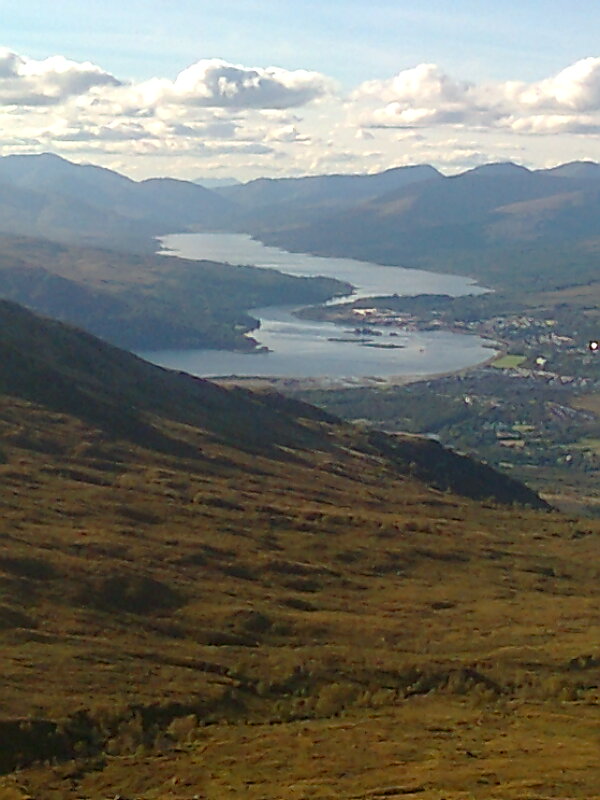
Lochaber (/lɒxˈɑːbər/ lokh-AH-bər; Scottish Gaelic: Loch Abar) is a name applied to a part of the Scottish Highlands. Historically, it was a provincial lordship consisting of the parishes of Kilmallie and Kilmonivaig. Lochaber once extended from the Northern shore of Loch Leven, a district called Nether Lochaber, to beyond Spean Bridge and Roybridge, which area is known as Brae Lochaber or Braigh Loch Abar in Gaelic. For local government purposes, the name was used for one of the landward districts of Inverness-shire from 1930 to 1975, and then for one of the districts of the Highland region from 1975 to 1996. Since 1996 the Highland Council has had a Lochaber area committee.
The main town of Lochaber is Fort William. Other moderate sized settlements in Lochaber include Mallaig, Ballachulish and Glencoe.
William Watson outlined two schools of thought on this topic. He favoured the idea that Abar came from the Pictish and Welsh for "river mouth" and that Loch Abar meant the confluence of the Lochy and the Nevis as they flowed into Loch Linnhe, an Linne Dhubh in Gaelic. He also conceded that abar might also come from the Gaelic eabar, meaning "mud" or "swampy place". Thus Lochaber could be the "loch of swamps", a historic water feature that existed on the Blàr Mòr, where the area's High School and Health Centre are situated today. Other experts favour the "swamp" derivation. A Lochaber person is called an Abrach.
Lochaber is first recorded in the Life of Columba written in c. 690 by Adomnán, the Abbot of Iona Abbey. Although there are no known Pictish stones within the area, Ardnamurchan Point is believed to have marked the boundary between the lands ruled by the Picts to the north and east, and those ruled by migrating Irish clans in Dál Riata to the south.
Archaeological evidence of earlier structures supports the tradition that Inverlochy Castle was built on the site of an earlier Pictish settlement, described by the historian Hector Boece in 1526 as a "city ... much frequented with merchants of France and Spain", but destroyed by the Vikings. Lochaber contains no early monastic locations, but the numerous placenames starting with the element "Kil-" or "Cille-" suggest early Christian sites dating from the period 600-900, while the placename element "annat" found near Corpach suggests the site of an early mother church. Placename evidence also suggests the presence of Viking settlements in the Morvern and Ballachulish areas, but nowhere north and east of Fort William.
Lochaber formed part of the Province of Moray from the early 12th century at the latest. It was first recorded as a provincial lordship at the end of the 13th century, but a "Steward of Lochaber" is recorded witnessing a charter sealed by Walter Comyn, Lord of Badenoch in 1234, suggesting that Lochaber had already been granted as a lordship by that date, and had probably, like Badenoch, been granted to Comyn by Alexander II in 1229.
It was therefore one of the seven lordships created within Moray by ca. 1230 that as well as Badenoch included The Aird, Glencarnie, Abernethy, Stratha'an and Strathbogie. The lordship was made up of the two parishes of Kilmallie and Kilmonivaig and had its caput at Inverlochy Castle.
Lochaber was one of the territories that King Robert the Bruce gave to his friend, Angus Òg Macdonald, Lord of the Isles, who fought by his side during the First Scottish War of Independence, including the successful Battle of Bannockburn in 1314. In turn, Angus Òg gave Ardnamurchan to his younger brother, Iain Sprangach MacDonald (first Chief of Clan MacDonald of Ardnamurchan), and he gave his illegitimate son, Iain Fraoch MacDonald the Chiefdom of Clan MacDonald of Glencoe. In 1376, King Robert II confirmed John of Islay, Lord of the Isles and son of Angus Òg MacDonald, control of Colonsay, Kintyre and Knapdale and granted Lochaber to John and his new wife Princess Margaret as a part of her dowry. In turn, John of Islay's son, Reginald, (first Chief of Clanranald and Glengarry), through his first marriage of Amie MacRuari, were given charter to the old lands of Clann Ruaidhrí in Lochaber. Jogn of Islay's other son, Donald of Islay, Lord of the Isles, gave the province to his brother, Alistair Carragh Macdonald, who became both the Lord of Lochaber and the 1st Chief of Clan MacDonald of Keppoch.
Hub AI
Lochaber AI simulator
(@Lochaber_simulator)
Lochaber
Lochaber (/lɒxˈɑːbər/ lokh-AH-bər; Scottish Gaelic: Loch Abar) is a name applied to a part of the Scottish Highlands. Historically, it was a provincial lordship consisting of the parishes of Kilmallie and Kilmonivaig. Lochaber once extended from the Northern shore of Loch Leven, a district called Nether Lochaber, to beyond Spean Bridge and Roybridge, which area is known as Brae Lochaber or Braigh Loch Abar in Gaelic. For local government purposes, the name was used for one of the landward districts of Inverness-shire from 1930 to 1975, and then for one of the districts of the Highland region from 1975 to 1996. Since 1996 the Highland Council has had a Lochaber area committee.
The main town of Lochaber is Fort William. Other moderate sized settlements in Lochaber include Mallaig, Ballachulish and Glencoe.
William Watson outlined two schools of thought on this topic. He favoured the idea that Abar came from the Pictish and Welsh for "river mouth" and that Loch Abar meant the confluence of the Lochy and the Nevis as they flowed into Loch Linnhe, an Linne Dhubh in Gaelic. He also conceded that abar might also come from the Gaelic eabar, meaning "mud" or "swampy place". Thus Lochaber could be the "loch of swamps", a historic water feature that existed on the Blàr Mòr, where the area's High School and Health Centre are situated today. Other experts favour the "swamp" derivation. A Lochaber person is called an Abrach.
Lochaber is first recorded in the Life of Columba written in c. 690 by Adomnán, the Abbot of Iona Abbey. Although there are no known Pictish stones within the area, Ardnamurchan Point is believed to have marked the boundary between the lands ruled by the Picts to the north and east, and those ruled by migrating Irish clans in Dál Riata to the south.
Archaeological evidence of earlier structures supports the tradition that Inverlochy Castle was built on the site of an earlier Pictish settlement, described by the historian Hector Boece in 1526 as a "city ... much frequented with merchants of France and Spain", but destroyed by the Vikings. Lochaber contains no early monastic locations, but the numerous placenames starting with the element "Kil-" or "Cille-" suggest early Christian sites dating from the period 600-900, while the placename element "annat" found near Corpach suggests the site of an early mother church. Placename evidence also suggests the presence of Viking settlements in the Morvern and Ballachulish areas, but nowhere north and east of Fort William.
Lochaber formed part of the Province of Moray from the early 12th century at the latest. It was first recorded as a provincial lordship at the end of the 13th century, but a "Steward of Lochaber" is recorded witnessing a charter sealed by Walter Comyn, Lord of Badenoch in 1234, suggesting that Lochaber had already been granted as a lordship by that date, and had probably, like Badenoch, been granted to Comyn by Alexander II in 1229.
It was therefore one of the seven lordships created within Moray by ca. 1230 that as well as Badenoch included The Aird, Glencarnie, Abernethy, Stratha'an and Strathbogie. The lordship was made up of the two parishes of Kilmallie and Kilmonivaig and had its caput at Inverlochy Castle.
Lochaber was one of the territories that King Robert the Bruce gave to his friend, Angus Òg Macdonald, Lord of the Isles, who fought by his side during the First Scottish War of Independence, including the successful Battle of Bannockburn in 1314. In turn, Angus Òg gave Ardnamurchan to his younger brother, Iain Sprangach MacDonald (first Chief of Clan MacDonald of Ardnamurchan), and he gave his illegitimate son, Iain Fraoch MacDonald the Chiefdom of Clan MacDonald of Glencoe. In 1376, King Robert II confirmed John of Islay, Lord of the Isles and son of Angus Òg MacDonald, control of Colonsay, Kintyre and Knapdale and granted Lochaber to John and his new wife Princess Margaret as a part of her dowry. In turn, John of Islay's son, Reginald, (first Chief of Clanranald and Glengarry), through his first marriage of Amie MacRuari, were given charter to the old lands of Clann Ruaidhrí in Lochaber. Jogn of Islay's other son, Donald of Islay, Lord of the Isles, gave the province to his brother, Alistair Carragh Macdonald, who became both the Lord of Lochaber and the 1st Chief of Clan MacDonald of Keppoch.
Recent media