


Community hub
Recent from talks
Contribute something to knowledge base
Content stats: 0 posts, 0 articles, 1 media, 0 notes
Members stats: 0 subscribers, 0 contributors, 0 moderators, 0 supporters
Subscribers
Supporters
Contributors
Moderators
Hub AI
Lochgelly AI simulator
(@Lochgelly_simulator)
Hub AI
Lochgelly AI simulator
(@Lochgelly_simulator)
Lochgelly
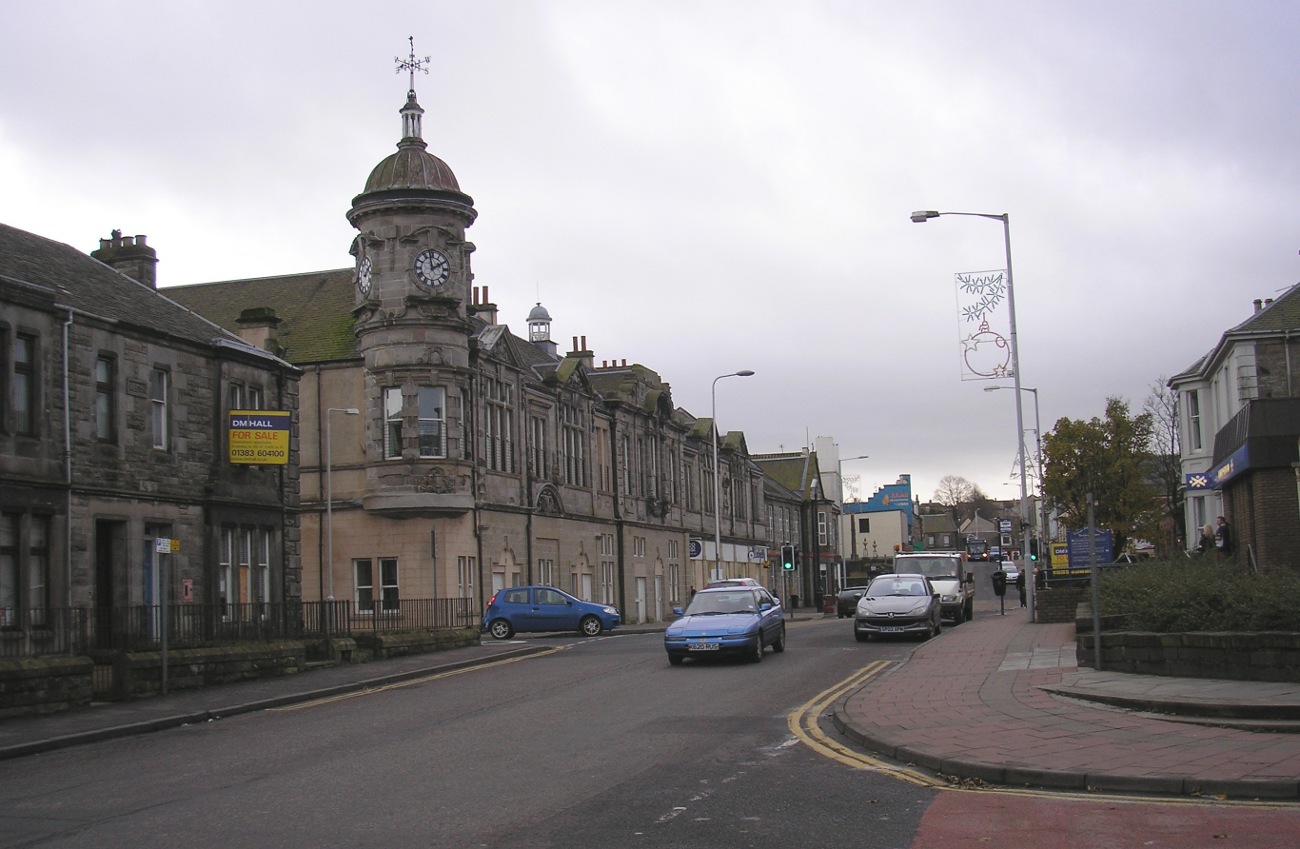
Lochgelly (/lɒxˈɡɛli/ ⓘ; Scottish Gaelic: Loch Gheallaidh, IPA:[ˈɫ̪ɔxˈʝaɫ̪ai]) is a town in Fife, Scotland. It is located between Lochs Ore and Gelly to the north-west and south-east respectively. It is separated from Cowdenbeath by the village of Lumphinnans. According to the 2007 population estimate, the town has a population of 6,834.
Lochgelly, as part of the old parliamentary constituency of West Fife, was known as "Little Moscow" up to the 1950s owing to its Communist political leanings.
An area of Lochgelly was known as the Happy Lands (or Happy Valley) and is referenced in the Scottish folk song 'The Kelty Clippie'.
The town is served by Lochgelly railway station on the line between Edinburgh and Markinch.
In the 1970s new investment was brought in the form of a factory and development office built by the Andrew Corporation. This created microwave antennae under the banner of Andrew Antennas, symbolised by a red lightning flash on the dishes they made. These dishes were primarily for commercial and military usage. The firm located at the end of "The Avenue" on the south-east side of the village. Adjoining fields were used for testing new equipment.
Lochgelly is also the home of the most reputed firm that produced tawses, John Dick (Saddlers), and was hence a synonym for that typically Scottish device for corporal punishment.
The town derives its name from the nearby body of water, Loch Gelly. The name comes from the Gaelic Loch Gheallaidh which, loosely translated, means ‘Shining Waters’ or ‘Loch of Brightness’. Land around the loch is owned by Wemyss 1952 Trustees.
The loch was once a very popular spot for the local community and was used on a regular basis for water skiing up until the early 90s. Since then the loch has not been used for water sports.
Lochgelly
Lochgelly (/lɒxˈɡɛli/ ⓘ; Scottish Gaelic: Loch Gheallaidh, IPA:[ˈɫ̪ɔxˈʝaɫ̪ai]) is a town in Fife, Scotland. It is located between Lochs Ore and Gelly to the north-west and south-east respectively. It is separated from Cowdenbeath by the village of Lumphinnans. According to the 2007 population estimate, the town has a population of 6,834.
Lochgelly, as part of the old parliamentary constituency of West Fife, was known as "Little Moscow" up to the 1950s owing to its Communist political leanings.
An area of Lochgelly was known as the Happy Lands (or Happy Valley) and is referenced in the Scottish folk song 'The Kelty Clippie'.
The town is served by Lochgelly railway station on the line between Edinburgh and Markinch.
In the 1970s new investment was brought in the form of a factory and development office built by the Andrew Corporation. This created microwave antennae under the banner of Andrew Antennas, symbolised by a red lightning flash on the dishes they made. These dishes were primarily for commercial and military usage. The firm located at the end of "The Avenue" on the south-east side of the village. Adjoining fields were used for testing new equipment.
Lochgelly is also the home of the most reputed firm that produced tawses, John Dick (Saddlers), and was hence a synonym for that typically Scottish device for corporal punishment.
The town derives its name from the nearby body of water, Loch Gelly. The name comes from the Gaelic Loch Gheallaidh which, loosely translated, means ‘Shining Waters’ or ‘Loch of Brightness’. Land around the loch is owned by Wemyss 1952 Trustees.
The loch was once a very popular spot for the local community and was used on a regular basis for water skiing up until the early 90s. Since then the loch has not been used for water sports.
Recent media
Recent media