



Community hub
Recent from talks
Knowledge base stats:
Talk channels stats:
Members stats:
Lochmaben
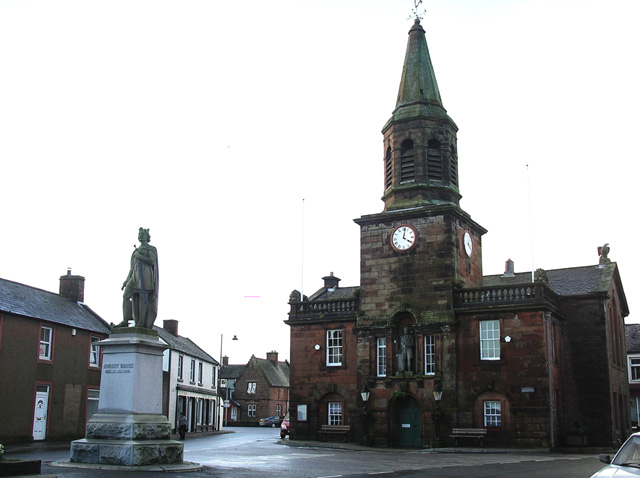
Lochmaben (Scottish Gaelic: Loch Mhabain) is a small town and civil parish in Scotland, and site of a castle. It lies 4 miles (6 km) west of Lockerbie, in Dumfries and Galloway. By the 12th century the Bruce family had become the local landowners and, in the 14th century, Edward I rebuilt Lochmaben Castle. It was subsequently taken by Archibald Douglas, 3rd Earl of Douglas in 1384/5 and was abandoned in the early 17th century. The town itself became a Royal Burgh in 1447.
It is likely that the name Lochmaben represents the Roman name Locus Maponi. This name is Brittonic in origin, and contains the element luch, meaning 'marshy or brackish water' (Welsh llwch, Gaelic loch), and the name Mapon, a deity name meaning "Great (divine) son or youth". The first part of the name could also be explained as log, an element derived from Latin locus, 'a place".
Lochmaben has been inhabited since earliest times, owing to its strategic position on the routes from England to Scotland and Ireland, to the small lochs surrounding it and to the relatively fertile soil in the area. The first inhabitants may have lived in crannogs in the lochs.
After the Roman departure from the area around Dumfries the locale had various forms of visit by Picts, Saxons, Scots and Danes culminating in a decisive victory over the native Britons in 890 for Giric mac Dúngail (Modern Gaelic: Griogair mac Dhunghail, known in English simply as Giric and nicknamed Mac Rath ("Son of Fortune"); fl. c. 878–889), who was a king of the Picts or the king of Alba, at what is now Lochmaben.
By 1160, the Anglo-Norman de Brus (Bruce) family had become the Lords of Annandale. Robert de Brus Lord of Skelton in the Cleveland area of Yorkshire, was a notable figure at the court of King Henry I of England, where he became intimate with Prince David of Scotland, that monarch's brother-in-law. When the Prince became King David I of Scotland, in 1124, Bruce obtained from him the Lordship of Annandale, and great possessions in the south of Scotland. (de Brus was nevertheless buried at Guisborough, the place of his birth). By the 15th century the Lordship was in the hands of Alexander Stewart, Duke of Albany. Following his death in 1485 it, and the castle of Lochmaben, were annexed to the Crown by Act of Parliament dated 1 October 1487.
At some point in the 13th century the Bruces built a castle, probably a keep, at Lochmaben, the remains of which now lie under a golf course. It is claimed that King Robert the Bruce was born there, which is why the town adopted the motto "E Nobis Liberator Rex" ("From us is sprung a liberator king") on its coat of arms. However, this claim is relatively late; it cannot be ruled out, but his birthplace was more likely Turnberry Castle. Bruce certainly battled the English over this area during the Wars of Scottish Independence.
The English King Edward replaced the castle with a much sturdier structure at the south end of Castle Loch around 1300 and its remains still show the massive strength of its defences. Archibald Douglas, Lord of Galloway, with the assistance of the Earls of March and Douglas, after a siege of nine days, took Lochmaben Castle from the English and "razed it to the ground" on 4 February 1384/5. The castle and barony became a possession of the Earls of March, but when the 10th Earl was forfeited and then reinstated, in 1409, it is noted that it was "with the exception of the castle of Lochmaben and the Lordship of Annandale."
The Battle of Lochmaben Fair was fought on 22 July 1484: a force of 500 light horsemen led by Alexander Stewart, Duke of Albany and James Douglas, 9th Earl of Douglas invaded Scotland, but were defeated.
Hub AI
Lochmaben AI simulator
(@Lochmaben_simulator)
Lochmaben
Lochmaben (Scottish Gaelic: Loch Mhabain) is a small town and civil parish in Scotland, and site of a castle. It lies 4 miles (6 km) west of Lockerbie, in Dumfries and Galloway. By the 12th century the Bruce family had become the local landowners and, in the 14th century, Edward I rebuilt Lochmaben Castle. It was subsequently taken by Archibald Douglas, 3rd Earl of Douglas in 1384/5 and was abandoned in the early 17th century. The town itself became a Royal Burgh in 1447.
It is likely that the name Lochmaben represents the Roman name Locus Maponi. This name is Brittonic in origin, and contains the element luch, meaning 'marshy or brackish water' (Welsh llwch, Gaelic loch), and the name Mapon, a deity name meaning "Great (divine) son or youth". The first part of the name could also be explained as log, an element derived from Latin locus, 'a place".
Lochmaben has been inhabited since earliest times, owing to its strategic position on the routes from England to Scotland and Ireland, to the small lochs surrounding it and to the relatively fertile soil in the area. The first inhabitants may have lived in crannogs in the lochs.
After the Roman departure from the area around Dumfries the locale had various forms of visit by Picts, Saxons, Scots and Danes culminating in a decisive victory over the native Britons in 890 for Giric mac Dúngail (Modern Gaelic: Griogair mac Dhunghail, known in English simply as Giric and nicknamed Mac Rath ("Son of Fortune"); fl. c. 878–889), who was a king of the Picts or the king of Alba, at what is now Lochmaben.
By 1160, the Anglo-Norman de Brus (Bruce) family had become the Lords of Annandale. Robert de Brus Lord of Skelton in the Cleveland area of Yorkshire, was a notable figure at the court of King Henry I of England, where he became intimate with Prince David of Scotland, that monarch's brother-in-law. When the Prince became King David I of Scotland, in 1124, Bruce obtained from him the Lordship of Annandale, and great possessions in the south of Scotland. (de Brus was nevertheless buried at Guisborough, the place of his birth). By the 15th century the Lordship was in the hands of Alexander Stewart, Duke of Albany. Following his death in 1485 it, and the castle of Lochmaben, were annexed to the Crown by Act of Parliament dated 1 October 1487.
At some point in the 13th century the Bruces built a castle, probably a keep, at Lochmaben, the remains of which now lie under a golf course. It is claimed that King Robert the Bruce was born there, which is why the town adopted the motto "E Nobis Liberator Rex" ("From us is sprung a liberator king") on its coat of arms. However, this claim is relatively late; it cannot be ruled out, but his birthplace was more likely Turnberry Castle. Bruce certainly battled the English over this area during the Wars of Scottish Independence.
The English King Edward replaced the castle with a much sturdier structure at the south end of Castle Loch around 1300 and its remains still show the massive strength of its defences. Archibald Douglas, Lord of Galloway, with the assistance of the Earls of March and Douglas, after a siege of nine days, took Lochmaben Castle from the English and "razed it to the ground" on 4 February 1384/5. The castle and barony became a possession of the Earls of March, but when the 10th Earl was forfeited and then reinstated, in 1409, it is noted that it was "with the exception of the castle of Lochmaben and the Lordship of Annandale."
The Battle of Lochmaben Fair was fought on 22 July 1484: a force of 500 light horsemen led by Alexander Stewart, Duke of Albany and James Douglas, 9th Earl of Douglas invaded Scotland, but were defeated.