
Recent from talks
Louis Comfort Tiffany
Knowledge base stats:
Talk channels stats:
Members stats:
Louis Comfort Tiffany
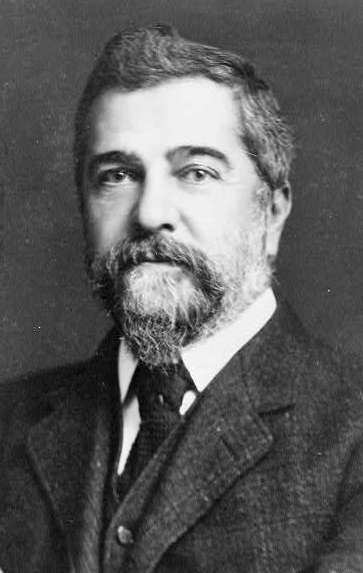
Louis Comfort Tiffany (February 18, 1848 – January 17, 1933) was an American artist and designer who worked in the decorative arts and is best known for his work in stained glass. He is associated with the art nouveau and aesthetic art movements. He was affiliated with a prestigious collaborative of designers known as the Associated Artists, which included Lockwood de Forest, Candace Wheeler, and Samuel Colman. Tiffany designed stained glass windows and lamps, glass mosaics, blown glass, ceramics, jewelry, enamels, and metalwork. He was the first design director at his family company, Tiffany & Co., founded by his father Charles Lewis Tiffany.
Tiffany was born in New York City, the son of Charles Lewis Tiffany, founder of Tiffany and Company, and Harriet Olivia Avery Young. He attended school at Pennsylvania Military Academy in Chester, Pennsylvania, and Eagleswood Military Academy in Perth Amboy, New Jersey.
Tiffany's first artistic training was as a painter, studying under George Inness in Eagleswood, New Jersey, and Samuel Colman in Irvington, New York. He also studied at the National Academy of Design in New York City in 1866 and 1867 and with salon painter Leon-Adolphe-Auguste Belly in 1868 and 1869. Belly's landscape paintings had a great influence on Tiffany. Although Tiffany started out as a painter, he became interested in glassmaking from about 1875 and worked at several glasshouses in Brooklyn until 1878. In 1879 he joined with Candace Wheeler, Samuel Colman, and Lockwood de Forest to form Louis Comfort Tiffany and Associated American Artists. The business lasted only four years. The group made designs for wallpaper, furniture, and textiles. In 1881, Tiffany did the interior design of the Mark Twain House in Hartford, Connecticut, which still remains.
After Tiffany had formed a partnership with Colman, Lockwood DeForest, and Candace Wheeler, and after having incorporated the interior decorating firm of L.C. Tiffany & Associated Artists, a desire to concentrate on art in glass led Tiffany to choose to establish his own glassmaking firm. The first Tiffany Glass Company was incorporated on December 1, 1885. It became the Tiffany Glass & Decorating Company in 1892, and the Tiffany Studios in 1900. He had used commercial glass houses for 19 years to supply his Manhattan showroom and clients, but wanted to be fully in charge of production and design security. Finally, in 1892 he founded his own glassworks, the Louis C. Tiffany Furnaces in Corona Queens. As a youth Tiffany had attended the Flushing Institute, on Roosevelt Avenue between Main and Union Streets, where Macy's department store now sits. Tiffany was keenly aware of the area's potential and for his furnaces to succeed, he needed to hire the town's pool of experienced immigrant workers, who were then mostly Italian, German, and Irish." Tiffany experimented with glass. Sand for glassmaking was abundantly available at nearby Oyster Bay. Tiffany would eventually oversee two hundred artisans. Among them, Clara Driscoll, whose dragonfly lamp won a prize in the 1900 Paris Exposition, was by 1904 one of the highest paid women in the world. Even some of Tiffany's artists were foreigners, such as Venetian-born Andrea Boldini, and both Englishmen Joseph Briggs and Arthur J. Nash.
With Tiffany later opening his own glass factory in Corona, New York, he was determined to provide designs that improved the quality of contemporary glass. The factory was the old Tiffany Studios in Corona, Queens, at the southwest corner of 43rd Avenue and 97th place, where it was used to cast art sculptures of bronze designs for sculptors, and bronze architectural elements such as floor registers, door jambs, window casings, lamps, and sconces, most notably for Tiffany. The building had undergone a metamorphosis of name changes, beginning with the Tiffany Glass and Decorating Company, in 1892. In 1893, Tiffany built a new factory called the Stourbridge Glass Company, later called Tiffany Glass Furnaces, which was located in Corona, Queens, hiring the Englishman Arthur J. Nash to oversee it. In 1893, his company also introduced the term Favrile in conjunction with his first production of blown glass at his new glass factory. Some early examples of his lamps were exhibited in the 1893 World's Fair in Chicago.
At the beginning of his career, Tiffany used cheap jelly jars and bottles because they had the mineral impurities that finer glass lacked. When he was unable to convince fine glassmakers to leave the impurities in, he began making his own glass. Tiffany used opalescent glass in a variety of colors and textures to create a unique style of stained glass. Tiffany acquired Stanford Bray's patent for the "copper foil" technique, which, by edging each piece of cut glass in copper foil and soldering the whole together to create his windows and lamps, made possible a level of detail previously unknown. This can be contrasted with the method of painting in enamels or glass paint on colorless glass, and then setting the glass pieces in lead channels, which had been the dominant method of creating stained glass for hundreds of years in Europe.
Tiffany trademarked Favrile (from the old French word for handmade) on November 13, 1894. He later used this word to apply to all of his glass, enamel and pottery. "Tiffany's favrile glass vases were based on Venetian glassmaking techniques mixed with ancient Egyptian and Near Eastern inspirations." Tiffany delved into glass-making with interest in Venetian glass-maker Antonio Salviati. Tiffany would study techniques from Salviati-trained glassmaker, Andrea Boldini. In 1902, Tiffany had been influenced by a Cypriote line of jewelry that his father, Charles Lewis Tiffany, had introduced earlier at the Turin World's Fair. He coined this particular line of favrile glass the Cypriote line.
Tiffany's first commercially produced lamps date from around 1895. Much of his company's production was in making stained glass windows and Tiffany lamps, but his company designed a complete range of interior decorations. At its peak, his factory employed more than 300 artisans. "Within this complex, Tiffany carried out experiments in glass colors and pottery glazing, perfected techniques of assembling stained glass windows." “By 1901, Tiffany was at the peak of his profession. "At his father's death in 1902, came into an inheritance equivalent today to more than $20 million. At age fifty-four, he was appointed the first design director and vice president of Tiffany & Co., taking on leading roles in the famous jewelry firm as well as continuing in his own enterprises. Also in 1902 Tiffany formally adopted the trademark Tiffany Studios for all works made in Corona, though the imprint had apparently been used earlier."
Hub AI
Louis Comfort Tiffany AI simulator
(@Louis Comfort Tiffany_simulator)
Louis Comfort Tiffany
Louis Comfort Tiffany (February 18, 1848 – January 17, 1933) was an American artist and designer who worked in the decorative arts and is best known for his work in stained glass. He is associated with the art nouveau and aesthetic art movements. He was affiliated with a prestigious collaborative of designers known as the Associated Artists, which included Lockwood de Forest, Candace Wheeler, and Samuel Colman. Tiffany designed stained glass windows and lamps, glass mosaics, blown glass, ceramics, jewelry, enamels, and metalwork. He was the first design director at his family company, Tiffany & Co., founded by his father Charles Lewis Tiffany.
Tiffany was born in New York City, the son of Charles Lewis Tiffany, founder of Tiffany and Company, and Harriet Olivia Avery Young. He attended school at Pennsylvania Military Academy in Chester, Pennsylvania, and Eagleswood Military Academy in Perth Amboy, New Jersey.
Tiffany's first artistic training was as a painter, studying under George Inness in Eagleswood, New Jersey, and Samuel Colman in Irvington, New York. He also studied at the National Academy of Design in New York City in 1866 and 1867 and with salon painter Leon-Adolphe-Auguste Belly in 1868 and 1869. Belly's landscape paintings had a great influence on Tiffany. Although Tiffany started out as a painter, he became interested in glassmaking from about 1875 and worked at several glasshouses in Brooklyn until 1878. In 1879 he joined with Candace Wheeler, Samuel Colman, and Lockwood de Forest to form Louis Comfort Tiffany and Associated American Artists. The business lasted only four years. The group made designs for wallpaper, furniture, and textiles. In 1881, Tiffany did the interior design of the Mark Twain House in Hartford, Connecticut, which still remains.
After Tiffany had formed a partnership with Colman, Lockwood DeForest, and Candace Wheeler, and after having incorporated the interior decorating firm of L.C. Tiffany & Associated Artists, a desire to concentrate on art in glass led Tiffany to choose to establish his own glassmaking firm. The first Tiffany Glass Company was incorporated on December 1, 1885. It became the Tiffany Glass & Decorating Company in 1892, and the Tiffany Studios in 1900. He had used commercial glass houses for 19 years to supply his Manhattan showroom and clients, but wanted to be fully in charge of production and design security. Finally, in 1892 he founded his own glassworks, the Louis C. Tiffany Furnaces in Corona Queens. As a youth Tiffany had attended the Flushing Institute, on Roosevelt Avenue between Main and Union Streets, where Macy's department store now sits. Tiffany was keenly aware of the area's potential and for his furnaces to succeed, he needed to hire the town's pool of experienced immigrant workers, who were then mostly Italian, German, and Irish." Tiffany experimented with glass. Sand for glassmaking was abundantly available at nearby Oyster Bay. Tiffany would eventually oversee two hundred artisans. Among them, Clara Driscoll, whose dragonfly lamp won a prize in the 1900 Paris Exposition, was by 1904 one of the highest paid women in the world. Even some of Tiffany's artists were foreigners, such as Venetian-born Andrea Boldini, and both Englishmen Joseph Briggs and Arthur J. Nash.
With Tiffany later opening his own glass factory in Corona, New York, he was determined to provide designs that improved the quality of contemporary glass. The factory was the old Tiffany Studios in Corona, Queens, at the southwest corner of 43rd Avenue and 97th place, where it was used to cast art sculptures of bronze designs for sculptors, and bronze architectural elements such as floor registers, door jambs, window casings, lamps, and sconces, most notably for Tiffany. The building had undergone a metamorphosis of name changes, beginning with the Tiffany Glass and Decorating Company, in 1892. In 1893, Tiffany built a new factory called the Stourbridge Glass Company, later called Tiffany Glass Furnaces, which was located in Corona, Queens, hiring the Englishman Arthur J. Nash to oversee it. In 1893, his company also introduced the term Favrile in conjunction with his first production of blown glass at his new glass factory. Some early examples of his lamps were exhibited in the 1893 World's Fair in Chicago.
At the beginning of his career, Tiffany used cheap jelly jars and bottles because they had the mineral impurities that finer glass lacked. When he was unable to convince fine glassmakers to leave the impurities in, he began making his own glass. Tiffany used opalescent glass in a variety of colors and textures to create a unique style of stained glass. Tiffany acquired Stanford Bray's patent for the "copper foil" technique, which, by edging each piece of cut glass in copper foil and soldering the whole together to create his windows and lamps, made possible a level of detail previously unknown. This can be contrasted with the method of painting in enamels or glass paint on colorless glass, and then setting the glass pieces in lead channels, which had been the dominant method of creating stained glass for hundreds of years in Europe.
Tiffany trademarked Favrile (from the old French word for handmade) on November 13, 1894. He later used this word to apply to all of his glass, enamel and pottery. "Tiffany's favrile glass vases were based on Venetian glassmaking techniques mixed with ancient Egyptian and Near Eastern inspirations." Tiffany delved into glass-making with interest in Venetian glass-maker Antonio Salviati. Tiffany would study techniques from Salviati-trained glassmaker, Andrea Boldini. In 1902, Tiffany had been influenced by a Cypriote line of jewelry that his father, Charles Lewis Tiffany, had introduced earlier at the Turin World's Fair. He coined this particular line of favrile glass the Cypriote line.
Tiffany's first commercially produced lamps date from around 1895. Much of his company's production was in making stained glass windows and Tiffany lamps, but his company designed a complete range of interior decorations. At its peak, his factory employed more than 300 artisans. "Within this complex, Tiffany carried out experiments in glass colors and pottery glazing, perfected techniques of assembling stained glass windows." “By 1901, Tiffany was at the peak of his profession. "At his father's death in 1902, came into an inheritance equivalent today to more than $20 million. At age fifty-four, he was appointed the first design director and vice president of Tiffany & Co., taking on leading roles in the famous jewelry firm as well as continuing in his own enterprises. Also in 1902 Tiffany formally adopted the trademark Tiffany Studios for all works made in Corona, though the imprint had apparently been used earlier."
Recent media