


Community hub
Recent from talks
Contribute something
Nothing was collected or created yet.
Brooklyn
View on Wikipedia
Brooklyn is the most populous of the five boroughs of New York City, coextensive with Kings County, in the U.S. state of New York. Located at the westernmost end of Long Island and formerly an independent city, Brooklyn shares a land border with the borough and county of Queens. It has several bridge and tunnel connections to the borough of Manhattan, across the East River, most famously, the architecturally significant Brooklyn Bridge, and is connected to Staten Island by way of the Verrazzano-Narrows Bridge.
Key Information


.jpg)
.jpg)
.jpg)


.svg)


The borough, as Kings County, at 37,339.9 inhabitants per square mile (14,417.0/km2), is the second most densely populated county in the U.S. after Manhattan (New York County), and the most populous county in the state, as of 2022.[7] In the 2020 United States census,[3] the population stood at 2,736,074.[8][9][10] Had Brooklyn remained an independent city on Long Island, it would now be the fourth most populous American city after the rest of New York City, Los Angeles, and Chicago, while ahead of Houston.[10] With a land area of 69.38 square miles (179.7 km2) and a water area of 27.48 square miles (71.2 km2), Kings County, one of the twelve original counties established under British rule in 1683 in the then-province of New York, is the state of New York's fourth-smallest county by land area and third smallest by total area.[11]
Brooklyn, named after the Dutch town of Breukelen in the Netherlands, was founded by the Dutch in the 17th century and grew into a busy port city on New York Harbor by the 19th century. On January 1, 1898, after a long political campaign and public-relations battle during the 1890s and despite opposition from Brooklyn residents, Brooklyn was consolidated in and annexed, along with other areas, to form the current five-borough structure of New York City in accordance to the new municipal charter of Greater New York.[12] The borough continues to maintain some distinct culture. Many Brooklyn neighborhoods are ethnic enclaves. With Jews forming around a fifth of its population, the borough has been described as one of the main global hubs for Jewish culture.[13] Brooklyn's official motto, displayed on the borough seal and flag, is Eendraght Maeckt Maght, which translates from early modern Dutch as 'Unity makes strength'.[14]
Educational institutions in Brooklyn include the City University of New York's Brooklyn College, Medgar Evers College, and College of Technology, as well as, Pratt Institute, Long Island University, and the New York University Tandon School of Engineering. In sports, basketball's Brooklyn Nets, and New York Liberty play at the Barclays Center. In the first decades of the 21st century, Brooklyn has experienced a renaissance as a destination for hipsters,[15] with concomitant gentrification, dramatic house-price increases, and a decrease in housing affordability.[16] Some new developments are required to include affordable housing units.[17] Since the 2010s, parts of Brooklyn have evolved into a hub of entrepreneurship, high-technology startup firms,[18][19] postmodern art,[20] and design.[19]
Toponymy
[edit]The name Brooklyn is derived from the original Dutch town of Breukelen. The oldest mention of the settlement in the Netherlands is in a charter of 953 by Holy Roman Emperor Otto I as Broecklede.[21] This form is made up of the words broeck, meaning bog or marshland, and lede, meaning small (dug) water stream, specifically in peat areas.[22] Breuckelen on the American continent was established in 1646, and the name first appeared in print in 1663.[23][24][25]
Over the past two millennia, the name of the ancient town in Holland has been Bracola, Broccke, Brocckede, Broiclede, Brocklandia, Broekclen, Broikelen, Breuckelen, and finally Breukelen.[26] The New Amsterdam settlement of Breuckelen also went through many spelling variations, including Breucklyn, Breuckland, Brucklyn, Broucklyn, Brookland, Brockland, Brocklin, and Brookline/Brook-line. There have been so many variations of the name that its origin has been debated; some have claimed breuckelen means "broken land".[27] The current name, however, is the one that best reflects its meaning.[28][29]
The county's name, Kings County, was named after King Charles II of England, who ruled from 1660 to 1685.
History
[edit]| Part of a series on |
| Long Island |
|---|
 |
| Topics |
| Regions |
| New Netherland series |
|---|
| Exploration |
| Fortifications: |
| Settlements: |
| The Patroon System |
|
| People of New Netherland |
| Flushing Remonstrance |
 |
The history of European settlement in Brooklyn spans more than 350 years. The settlement began in the 17th century as the small Dutch-founded town of "Breuckelen" on the East River shore of Long Island, grew to be a sizeable city in the 19th century and was consolidated in 1898 with New York City (then confined to Manhattan and the Bronx), the remaining rural areas of Kings County, and the largely rural areas of Queens and Staten Island, to form the modern City of New York.
Colonial era
[edit]New Netherland
[edit]The Dutch were the first Europeans to settle Long Island's western edge, which was then largely inhabited by the Lenape, an Algonquian-speaking American Indian tribe often referred to in European documents by a variation of the place name "Canarsie". Bands were associated with place names, but the colonists thought their names represented different tribes. The Breuckelen settlement was named after Breukelen in the Netherlands; it was part of New Netherland. The Dutch West India Company lost little time in chartering the six original parishes (listed here by their later English town names):[30]
- Gravesend: in 1645, settled under Dutch patent by English followers of Anabaptist Deborah Moody, named for 's-Gravenzande, Netherlands, or Gravesend, England;
- Brooklyn Heights: chartered as Breuckelen in 1646, after the town now spelled Breukelen, Netherlands. Breuckelen was along Fulton Street (now Fulton Mall) between Hoyt Street and Smith Street (according to H. Stiles and P. Ross). Brooklyn Heights, or Clover Hill, is where the village of Brooklyn was founded in 1816;
- Flatlands: chartered as Nieuw Amersfoort in 1647;
- Flatbush: chartered as Midwout in 1652;
- Nieuw Utrecht in 1652, named after the city of Utrecht, Netherlands; and
- Bushwick: chartered as Boswijck in 1661.

A dining table from the Dutch village of Brooklyn, c. 1664, in The Brooklyn Museum

The colony's capital of New Amsterdam, across the East River, obtained its charter in 1653. The neighborhood of Marine Park was home to North America's first tide mill. It was built by the Dutch, and the foundation can be seen today. But the area was not formally settled as a town. Many incidents and documents relating to this period are in Gabriel Furman's 1824 compilation.[31]
Province of New York
[edit]
Present-day Brooklyn left Dutch hands after the English conquest of New Netherland in 1664, which sparked the Second Anglo-Dutch War. New Netherland was taken in a naval action, and the English renamed the new capture for their naval commander, James, Duke of York, brother of the then monarch King Charles II and future king himself as King James II. Brooklyn became a part of the West Riding of York Shire in the Province of New York, one of the Middle Colonies in England's North American colonies.
On November 1, 1683, Kings County was partitioned from the West Riding of York Shire, containing the six old Dutch towns on southwestern Long Island,[32] as one of the "original twelve counties". This tract of land was recognized as a political entity for the first time, and the municipal groundwork was laid for a later expansive idea of a Brooklyn identity.
Lacking the patroon and tenant farmer system established along the Hudson River Valley, this agricultural county unusually came to have one of the highest percentages of slaves among the population in the "Original Thirteen Colonies" along the Atlantic Ocean eastern coast of North America.[33]
Revolutionary War
[edit]
On August 27, 1776, the Battle of Long Island (also known as the 'Battle of Brooklyn') was fought, the first major engagement fought in the American Revolutionary War after independence was declared, and the largest of the entire conflict. British troops forced the Continental Army under George Washington off the heights near the modern sites of Green-Wood Cemetery, Prospect Park, and Grand Army Plaza.[34]
Washington, viewing particularly fierce fighting at the Gowanus Creek and Old Stone House from atop a hill near the west end of present-day Atlantic Avenue, was reported to have emotionally exclaimed: "What brave men I must this day lose!".[34]
The fortified American positions at Brooklyn Heights consequently became untenable and were evacuated a few days later, leaving the British in control of New York Harbor. While Washington's defeat on the battlefield cast early doubts on his ability as the commander, the tactical withdrawal of all his troops and supplies across the East River in a single night is now seen by historians as one of his most brilliant triumphs.[34]
The British controlled the surrounding region for the duration of the war, as New York City was soon occupied and became their military and political base of operations in British-held North America for the remainder of the conflict. The Patriot residents largely fled or changed their political sentiments, and afterward the British generally enjoyed a dominant Loyalist sentiment from the residents in Kings County who did not evacuate, though the region was also the center of the fledgling—and largely successful—Patriot intelligence network, headed by Washington himself.
The British set up a system of prison ships off the coast of Brooklyn in Wallabout Bay. More American prisoners of war died on these prison ships than were killed in action on all the battlefield engagements of the war combined. One result of the Treaty of Paris in 1783 was the evacuation of the British from New York City, which was celebrated by New Yorkers into the 20th century.
Post-independence era
[edit]Urbanization
[edit]
The first half of the 19th century saw the beginning of the development of urban areas on the economically strategic East River shore of Kings County, facing the adolescent City of New York confined to Manhattan Island. The New York Navy Yard operated in Wallabout Bay (border between Fort Greene and Williamsburg) during the 19th century and two-thirds of the 20th century.
The first center of urbanization sprang up in the Town of Brooklyn, directly across from Lower Manhattan, which saw the incorporation of the Village of Brooklyn in 1816. Reliable steam ferry service across the East River to Fulton Landing converted Brooklyn Heights into a commuter town for Wall Street. Ferry Road to Jamaica Pass became Fulton Street to East New York. Town and Village were combined to form the first, kernel incarnation of the City of Brooklyn in 1834.
In a parallel development, the Town of Bushwick, farther up the river, saw the incorporation of the Village of Williamsburgh in 1827, which separated as the Town of Williamsburgh in 1840 and formed the short-lived City of Williamsburgh in 1851. Industrial deconcentration in the mid-century was bringing shipbuilding and other manufacturing to the northern part of the county. Each of the two cities and six towns in Kings County remained independent municipalities and purposely created non-aligning street grids with different naming systems.
However, the East River shore was growing too fast for the three-year-old infant City of Williamsburg; it, along with its Town of Bushwick hinterland, was subsumed within a greater City of Brooklyn in 1855, subsequently dropping the 'h' from its name.[35]
By 1841, with the appearance of The Brooklyn Eagle, and Kings County Democrat published by Alfred G. Stevens, the growing city across the East River from Manhattan was producing its own prominent newspaper.[36] It later became the most popular and highest circulation afternoon paper in America.[citation needed] The publisher changed to L. Van Anden on April 19, 1842,[37] and the paper was renamed The Brooklyn Daily Eagle and Kings County Democrat on June 1, 1846.[38] On May 14, 1849, the name was shortened to The Brooklyn Daily Eagle;[39] on September 5, 1938, it was further shortened to Brooklyn Eagle.[40] The establishment of the paper in the 1840s helped develop a separate identity for Brooklynites over the next century. The borough's soon-to-be-famous National League baseball team, the Brooklyn Dodgers, also assisted with this. Both major institutions were lost in the 1950s: the paper closed in 1955 after unsuccessful attempts at a sale following a reporters' strike, and the baseball team decamped for Los Angeles in a realignment of Major League Baseball in 1957.
Agitation against Southern slavery was stronger in Brooklyn than in New York,[41] and under Republican leadership, the city was fervent in the Union cause in the Civil War. After the war the Henry Ward Beecher Monument was built downtown to honor a famous local abolitionist. A great victory arch was built at what was then the south end of town to celebrate the armed forces; this place is now called Grand Army Plaza.
The number of people living in Brooklyn grew rapidly early in the 19th century. There were 4,402 by 1810, 7,175 in 1820 and 15,396 by 1830.[42] The city's population was 25,000 in 1834, but the police department comprised only 12 men on the day shift and another 12 on the night shift. Every time a rash of burglaries broke out, officials blamed burglars from New York City. Finally, in 1855, a modern police force was created, employing 150 men. Voters complained of inadequate protection and excessive costs. In 1857, the state legislature merged the Brooklyn force with that of New York City.[43]
Civil War
[edit]Fervent in the Union cause, the city of Brooklyn played a major role in supplying troops and materiel for the American Civil War. The best-known regiment to be sent off to war from the city was the 14th Brooklyn "Red Legged Devils". They fought from 1861 to 1864, wore red the entire war, and were the only regiment named after a city. President Abraham Lincoln called them into service, making them part of a handful of three-year enlisted soldiers in April 1861. Unlike other regiments during the American Civil War, the 14th wore a uniform inspired by the French Chasseurs, a light infantry used for quick assaults.
As a seaport and a manufacturing center, Brooklyn was well prepared to contribute to the Union's strengths in shipping and manufacturing. The two combined in shipbuilding; the ironclad Monitor was built in Brooklyn.
Twin city
[edit]Brooklyn is referred to as the twin city of New York in the 1883 poem, "The New Colossus" by Emma Lazarus, which appears on a plaque inside the Statue of Liberty. The poem calls New York Harbor "the air-bridged harbor that twin cities frame". As a twin city to New York, it played a role in national affairs that was later overshadowed by decades of subordination by its old partner and rival.
During this period, the affluent, contiguous districts of Fort Greene and Clinton Hill (then characterized collectively as The Hill) were home to such notable figures as Astral Oil Works founder Charles Pratt and his children, including local civic leader Charles Millard Pratt; Theosophical Society co-founder William Quan Judge; and Pfizer co-founders Charles Pfizer and Charles F. Erhart. Brooklyn Heights remained one of the New York metropolitan area's most august patrician redoubts into the early 20th century under the aegis of such figures as abolitionist clergyman Henry Ward Beecher, Congregationalist theologians Lyman Abbott and Newell Dwight Hillis (who followed Beecher as the second and third pastors of Plymouth Church, respectively), financier John Jay Pierrepont (a grandson of founding Heights resident Hezekiah Pierrepont), banker/art collector David Leavitt, educator/politician Seth Low, merchant/banker Horace Brigham Claflin, attorney William Cary Sanger (who served for two years as United States Assistant Secretary of War under Presidents William McKinley and Theodore Roosevelt) and publisher Alfred Smith Barnes. Contiguous to the Heights, the less exclusive South Brooklyn was home to longtime civic leader James S. T. Stranahan, who became known (often derisively) as the "Baron Haussmann of Brooklyn" for championing Prospect Park and other public works.
Economic growth continued, propelled by immigration and industrialization, and Brooklyn established itself as the third-most populous American city for much of the 19th century. The waterfront from Gowanus to Greenpoint was developed with piers and factories. Industrial access to the waterfront was improved by the Gowanus Canal and the canalized Newtown Creek. USS Monitor was the most famous product of the large and growing shipbuilding industry of Williamsburg. After the Civil War, trolley lines and other transport brought urban sprawl beyond Prospect Park (completed by Frederick Law Olmsted and Calvert Vaux in 1873 and widely heralded as an improvement upon the earlier Central Park) into the center of the county, as evinced by gradual settlement in the comparatively rustic villages of Windsor Terrace and Kensington in the Town of Flatbush. By century's end, Dean Alvord's Prospect Park South development (adjacent to the village of Flatbush) would serve as the template for contemporaneous "Victorian Flatbush" micro-neighborhoods and the post-consolidation emergence of outlying districts, such as Midwood and Marine Park. Along with Oak Park, Illinois, it also presaged the automobile and commuter rail-driven vogue for more remote prewar suburban communities, such as Garden City, New York and Montclair, New Jersey.

The rapidly growing population needed more water, so the City built centralized waterworks, including the Ridgewood Reservoir. The municipal Police Department, however, was abolished in 1854 in favor of a Metropolitan force covering also New York and Westchester Counties. In 1865 the Brooklyn Fire Department (BFD) also gave way to the new Metropolitan Fire District.
Throughout this period the peripheral towns of Kings County, far from Manhattan and even from urban Brooklyn, maintained their rustic independence. The only municipal change seen was the secession of the eastern section of the Town of Flatbush as the Town of New Lots in 1852. The building of rail links such as the Brighton Beach Line in 1878 heralded the end of this isolation.
Sports in Brooklyn became a business. The Brooklyn Bridegrooms played professional baseball at Washington Park in the convenient suburb of Park Slope and elsewhere. Early in the next century, under their new name of Brooklyn Dodgers, they brought baseball to Ebbets Field, beyond Prospect Park. Racetracks, amusement parks, and beach resorts opened in Brighton Beach, Coney Island, and elsewhere in the southern part of the county.

Toward the end of the 19th century, the City of Brooklyn experienced its final, explosive growth spurt. Park Slope was rapidly urbanized, with its eastern summit soon emerging as the city's third "Gold Coast" district alongside Brooklyn Heights and The Hill; notable residents of the era included American Chicle Company co-founder Thomas Adams Jr. and New York Central Railroad executive Clinton L. Rossiter. East of The Hill, Bedford-Stuyvesant coalesced as an upper middle class enclave for lawyers, shopkeepers, and merchants of German and Irish descent (notably exemplified by John C. Kelley, a water meter magnate and close friend of President Grover Cleveland), with nearby Crown Heights gradually fulfilling an analogous role for the city's Jewish population as development continued through the early 20th century. Northeast of Bedford-Stuyvesant, Bushwick (by now a working class, predominantly German district) established a considerable brewery industry; the so-called "Brewer's Row" encompassed 14 breweries operating in a 14-block area in 1890. On the southwestern waterfront of Kings County, railroads and industrialization spread to Sunset Park (then coterminous with the city's sprawling, sparsely populated Eighth Ward) and adjacent Bay Ridge (hitherto a resort-like subsection of the Town of New Utrecht). Within a decade, the city had annexed the Town of New Lots in 1886; the Towns of Flatbush, Gravesend and New Utrecht in 1894; and the Town of Flatlands in 1896. Brooklyn had reached its natural municipal boundaries at the ends of Kings County.
Seth Low as mayor
[edit]Low's time in office from 1882 to 1885 was marked by a number of reforms:[44]
- Secured a degree of "home rule" of the city. Previously, the State Government dictated city policies, hiring, salaries, and other affairs. Low managed to secure an unofficial veto over all Brooklyn bills in the State Assembly.
- Instituted a number of educational reforms. He was the first to integrate Brooklyn schools. He introduced free textbooks for all students, not just those who had taken a pauper's oath. He instituted a competitive examination for hiring teachers, instead of giving teaching jobs to pay political debts. He set aside $430,000 (equivalent to $14,010,586 in 2024) for the construction of new schools to accommodate 10,000 new students.
- Introduced Civil Service Code to all city employees, eliminating patronage jobs.
- German Americans wanted to enjoy their local beer gardens on the Sabbath, in violation of state "dry" laws and the demands of local puritanical clergy. Low's compromise solution was that saloons could stay open as long as they were orderly. At the first sign of rowdiness, they would be closed.
- Served as a member of the board of the New York Bridge Company, the company that built the Brooklyn Bridge, and led an unsuccessful effort to remove Washington Roebling as the chief engineer on that project.[45]
- Raised the tax rate from 2.33% of $100 assessed valuation in 1881 to 2.59% in 1883.[44] He also went after property owners who had not paid back taxes. This increase in city revenue enabled him to reduce the city's debt and increase services. However, raising taxes proved extremely unpopular.
Mayors of the City of Brooklyn
[edit]Brooklyn elected a mayor from 1834 until 1898, after which it was consolidated into the City of Greater New York, whose own second mayor (1902–1903), Seth Low, had been Mayor of Brooklyn from 1882 to 1885. Since 1898, Brooklyn has, in place of a separate mayor, elected a Borough President.
| Mayor | Start year | End year | ||
|---|---|---|---|---|
| George Hall | Democratic-Republican | 1834 | 1834 | |
| Jonathan Trotter | Democratic | 1835 | 1836 | |
| Jeremiah Johnson | Whig | 1837 | 1838 | |
| Cyrus P. Smith | Whig | 1839 | 1841 | |
| Henry C. Murphy | Democratic | 1842 | 1842 | |
| Joseph Sprague | Democratic | 1843 | 1844 | |
| Thomas G. Talmage | Democratic | 1845 | 1845 | |
| Francis B. Stryker | Whig | 1846 | 1848 | |
| Edward Copland | Whig | 1849 | 1849 | |
| Samuel Smith | Democratic | 1850 | 1850 | |
| Conklin Brush | Whig | 1851 | 1852 | |
| Edward A. Lambert | Democratic | 1853 | 1854 | |
| George Hall | Know Nothing | 1855 | 1856 | |
| Samuel S. Powell | Democratic | 1857 | 1860 | |
| Martin Kalbfleisch | Democratic | 1861 | 1863 | |
| Alfred M. Wood | Republican | 1864 | 1865 | |
| Samuel Booth | Republican | 1866 | 1867 | |
| Martin Kalbfleisch | Democratic | 1868 | 1871 | |
| Samuel S. Powell | Democratic | 1872 | 1873 | |
| John W. Hunter | Democratic | 1874 | 1875 | |
| Frederick A. Schroeder | Republican | 1876 | 1877 | |
| James Howell | Democratic | 1878 | 1881 | |
| Seth Low | Republican | 1882 | 1885 | |
| Daniel D. Whitney | Democratic | 1886 | 1887 | |
| Alfred C. Chapin | Democratic | 1888 | 1891 | |
| David A. Boody | Democratic | 1892 | 1893 | |
| Charles A. Schieren | Republican | 1894 | 1895 | |
| Frederick W. Wurster | Republican | 1896 | 1897 |
New York City borough
[edit]
In 1883, the Brooklyn Bridge was completed, transportation to Manhattan was no longer by water only, and the City of Brooklyn's ties to the City of New York were strengthened.
The question became whether Brooklyn was prepared to engage in the still-grander process of consolidation then developing throughout the region, whether to join with the county of Richmond and the western portion of Queens County, and the county of New York, which by then already included the Bronx, to form the five boroughs of a united City of New York. Andrew Haswell Green and other progressives said yes, and eventually, they prevailed against the Daily Eagle and other conservative forces. In 1894, residents of Brooklyn and the other counties voted by a slight majority to merge, effective in 1898.[47]
Kings County retained its status as one of New York State's counties, but the loss of Brooklyn's separate identity as a city was met with consternation by some residents at the time. Many newspapers of the day called the merger the "Great Mistake of 1898".[48]
Geography
[edit]

Brooklyn is 97 square miles (250 km2) in area, of which 71 square miles (180 km2) is land (73%), and 26 square miles (67 km2) is water (27%); the borough is the second-largest by land area among the New York City's boroughs. However, Kings County, coterminous with Brooklyn, is New York State's fourth-smallest county by land area and third-smallest by total area.[9] Brooklyn lies at the southwestern end of Long Island, and the borough's western border constitutes the island's western tip.
Brooklyn's water borders are extensive and varied, including Jamaica Bay; the Atlantic Ocean; The Narrows, separating Brooklyn from the borough of Staten Island in New York City and crossed by the Verrazzano-Narrows Bridge; Upper New York Bay, separating Brooklyn from Jersey City and Bayonne in the U.S. state of New Jersey; and the East River, separating Brooklyn from the borough of Manhattan in New York City and traversed by the Brooklyn-Battery Tunnel, the Brooklyn Bridge, the Manhattan Bridge, the Williamsburg Bridge, and numerous routes of the New York City Subway. To the east of Brooklyn lies the borough of Queens, which contains John F. Kennedy International Airport in that borough's Jamaica neighborhood, approximately two miles from the border of Brooklyn's East New York neighborhood.
Climate
[edit]Under the Köppen climate classification, Brooklyn experiences a humid subtropical climate (Cfa),[49] with partial shielding from the Appalachian Mountains and moderating influences from the Atlantic Ocean. Brooklyn receives plentiful precipitation all year round, with nearly 50 in (1,300 mm) yearly. The area averages 234 days with at least some sunshine annually, and averages 57% of possible sunshine annually, accumulating 2,535 hours of sunshine per annum.[50] Brooklyn lies in the USDA plant hardiness zone 7b.[51]
| Climate data for JFK Airport, New York (normals 1981–2010,[52] extremes 1948–present) | |||||||||||||
|---|---|---|---|---|---|---|---|---|---|---|---|---|---|
| Month | Jan | Feb | Mar | Apr | May | Jun | Jul | Aug | Sep | Oct | Nov | Dec | Year |
| Record high °F (°C) | 71 (22) |
71 (22) |
85 (29) |
90 (32) |
99 (37) |
99 (37) |
104 (40) |
101 (38) |
98 (37) |
90 (32) |
77 (25) |
75 (24) |
104 (40) |
| Mean maximum °F (°C) | 56.8 (13.8) |
57.9 (14.4) |
68.5 (20.3) |
78.1 (25.6) |
84.9 (29.4) |
92.1 (33.4) |
94.5 (34.7) |
92.7 (33.7) |
87.4 (30.8) |
78.0 (25.6) |
69.1 (20.6) |
60.1 (15.6) |
96.6 (35.9) |
| Mean daily maximum °F (°C) | 39.1 (3.9) |
41.8 (5.4) |
49.0 (9.4) |
59.0 (15.0) |
68.5 (20.3) |
78.0 (25.6) |
83.2 (28.4) |
81.9 (27.7) |
75.3 (24.1) |
64.5 (18.1) |
54.3 (12.4) |
44.0 (6.7) |
61.6 (16.4) |
| Mean daily minimum °F (°C) | 26.3 (−3.2) |
28.1 (−2.2) |
34.2 (1.2) |
43.5 (6.4) |
52.8 (11.6) |
62.8 (17.1) |
68.5 (20.3) |
67.8 (19.9) |
60.8 (16.0) |
49.6 (9.8) |
40.7 (4.8) |
31.5 (−0.3) |
47.3 (8.5) |
| Mean minimum °F (°C) | 9.8 (−12.3) |
13.4 (−10.3) |
19.1 (−7.2) |
32.6 (0.3) |
42.6 (5.9) |
52.7 (11.5) |
60.7 (15.9) |
58.6 (14.8) |
49.2 (9.6) |
37.6 (3.1) |
27.4 (−2.6) |
16.3 (−8.7) |
7.5 (−13.6) |
| Record low °F (°C) | −2 (−19) |
−2 (−19) |
4 (−16) |
20 (−7) |
34 (1) |
45 (7) |
55 (13) |
46 (8) |
40 (4) |
30 (−1) |
19 (−7) |
2 (−17) |
−2 (−19) |
| Average precipitation inches (mm) | 3.16 (80) |
2.59 (66) |
3.78 (96) |
3.87 (98) |
3.94 (100) |
3.86 (98) |
4.08 (104) |
3.68 (93) |
3.50 (89) |
3.62 (92) |
3.30 (84) |
3.39 (86) |
42.77 (1,086) |
| Average snowfall inches (cm) | 6.3 (16) |
8.3 (21) |
3.5 (8.9) |
0.8 (2.0) |
0 (0) |
0 (0) |
0 (0) |
0 (0) |
0 (0) |
0 (0) |
0.2 (0.51) |
4.7 (12) |
23.8 (60) |
| Average precipitation days (≥ 0.01 inch) | 10.5 | 9.6 | 11.0 | 11.4 | 11.5 | 10.7 | 9.4 | 8.7 | 8.1 | 8.5 | 9.4 | 10.6 | 119.4 |
| Average snowy days (≥ 0.1 inch) | 4.6 | 3.4 | 2.3 | 0.3 | 0 | 0 | 0 | 0 | 0 | 0 | 0.2 | 2.8 | 13.6 |
| Average relative humidity (%) | 64.9 | 64.4 | 63.4 | 64.1 | 69.5 | 71.5 | 71.4 | 71.7 | 71.9 | 69.1 | 67.9 | 66.3 | 68.0 |
| Source: NOAA (relative humidity 1961–1990)[53][54][55] | |||||||||||||
| Climate data for Brooklyn, New York City (Avenue V) | |||||||||||||
|---|---|---|---|---|---|---|---|---|---|---|---|---|---|
| Month | Jan | Feb | Mar | Apr | May | Jun | Jul | Aug | Sep | Oct | Nov | Dec | Year |
| Mean daily maximum °F (°C) | 39.7 (4.3) |
42.4 (5.8) |
49.7 (9.8) |
60.5 (15.8) |
70.5 (21.4) |
79.3 (26.3) |
84.8 (29.3) |
83.3 (28.5) |
76.5 (24.7) |
65.0 (18.3) |
54.3 (12.4) |
44.5 (6.9) |
62.5 (16.9) |
| Mean daily minimum °F (°C) | 27.5 (−2.5) |
29.1 (−1.6) |
35.2 (1.8) |
44.8 (7.1) |
54.4 (12.4) |
64.0 (17.8) |
70.3 (21.3) |
68.9 (20.5) |
62.4 (16.9) |
51.2 (10.7) |
41.4 (5.2) |
33.2 (0.7) |
48.5 (9.2) |
| Average precipitation inches (mm) | 3.53 (90) |
2.97 (75) |
4.37 (111) |
3.85 (98) |
4.03 (102) |
4.44 (113) |
4.85 (123) |
3.92 (100) |
3.92 (100) |
4.02 (102) |
3.23 (82) |
4.00 (102) |
47.13 (1,197) |
| Average snowfall inches (cm) | 6.5 (17) |
8.5 (22) |
4.4 (11) |
0.6 (1.5) |
0 (0) |
0 (0) |
0 (0) |
0 (0) |
0 (0) |
0 (0) |
0.2 (0.51) |
4.3 (11) |
24.5 (62) |
| Source: NOAA[56] | |||||||||||||
Boroughscape
[edit].jpg)

Neighborhoods
[edit]


Brooklyn's neighborhoods are dynamic in ethnic composition. For example, the early to mid-20th century, Brownsville had a majority of Jewish residents; since the 1970s it has been majority African American. Midwood during the early 20th century was filled with ethnic Irish, then filled with Jewish residents for nearly 50 years, and is slowly becoming a Pakistani enclave. Brooklyn's most populous racial group, white, declined from 97.2% in 1930 to 46.9% by 1990.[57]
The borough attracts people previously living in other cities in the United States. Of these, most come from Chicago, Detroit, San Francisco, Washington, D.C., Baltimore, Philadelphia, Boston, Cincinnati, and Seattle.[58][59][60][61][62][63][64]
Community diversity
[edit]
Given New York City's role as a crossroads for immigration from around the world, Brooklyn has evolved a globally cosmopolitan ambiance of its own, demonstrating a robust and growing demographic and cultural diversity with respect to metrics including nationality, religion, race, and domiciliary partnership. In 2010, 51.6% of the population was counted as members of religious congregations.[65] In 2014, there were 914 religious organizations in Brooklyn, the 10th most of all counties in the nation.[66] Brooklyn contains dozens of distinct neighborhoods representing many of the major culturally identified groups found within New York City. Among the most prominent are listed below:
Jewish American
[edit]
Over 600,000 Jews, particularly Orthodox and Hasidic Jews, have become concentrated in such historically Jewish areas as Borough Park, Williamsburg, and Midwood, where there are many yeshivas, synagogues, and kosher restaurants, as well as a variety of Jewish businesses. Adjacent to Borough Park, the Kensington area housed a significant population of Conservative Jews (under the aegis of such nationally prominent midcentury rabbis as Jacob Bosniak and Abraham Heller)[67] when it was still considered to be a subsection of Flatbush; many of their defunct facilities have been repurposed to serve extensions of the Borough Park Hasidic community. Other notable religious Jewish neighborhoods with a longstanding cultural lineage include Canarsie, Sea Gate, and Crown Heights, home to the Chabad world headquarters. Neighborhoods with largely defunct yet historically notable Jewish populations include central Flatbush, East Flatbush, Brownsville, East New York, Bensonhurst and Sheepshead Bay (particularly its Madison subsection). Many hospitals in Brooklyn were started by Jewish charities, including Maimonides Medical Center in Borough Park and Brookdale Hospital in East Flatbush.[68][69]
According to the American Jewish Population Project in 2020, Brooklyn was home to over 480,000 Jews.[70] In 2023, the UJA-Federation of New York estimated that Brooklyn is home to 462,000 Jews, a large decrease compared to the 561,000 estimated in 2011.[71]
The predominantly Jewish, Crown Heights (and later East Flatbush)-based Madison Democratic Club served as the borough's primary "clubhouse" political venue for decades until the ascendancy of Meade Esposito's rival, Canarsie-based Thomas Jefferson Democratic Club in the 1960s and 1970s, playing an integral role in the rise of such figures as Speaker of the New York State Assembly Irwin Steingut; his son, fellow Speaker Stanley Steingut; New York City Mayor Abraham Beame; real estate developer Fred Trump; Democratic district leader Beadie Markowitz; and political fixer Abraham "Bunny" Lindenbaum.
Many non-Orthodox Jews (ranging from observant members of various denominations to atheists of Jewish cultural heritage) are concentrated in Ditmas Park and Park Slope, with smaller observant and culturally Jewish populations in Brooklyn Heights, Cobble Hill, Brighton Beach, and Coney Island.
Chinese American
[edit]
Over 200,000 Chinese Americans live throughout the southern parts of Brooklyn, primarily concentrated in Sunset Park, Bensonhurst, Gravesend, and Homecrest. Brooklyn is the borough that is home to the highest number of Chinatowns in New York City. The largest concentration is in Sunset Park along 8th Avenue, which has become known for its Chinese culture since the opening of the now-defunct Winley Supermarket in 1986 spurred widespread settlement in the area. It is called "Brooklyn's Chinatown" and originally it was a small Chinese enclave with Cantonese speakers being the main Chinese population during the late 1980s and 1990s, but since the 2000s, the Chinese population in the area dramatically shifted to majority Fuzhounese Americans, which contributed immensely to expanding this Chinatown, and bestowing the nicknames "Fuzhou Town (福州埠), Brooklyn" or the "Little Fuzhou (小福州)" of Brooklyn. Many Chinese restaurants can be found throughout Sunset Park, and the area hosts a popular Chinese New Year celebration. Since the 2000s going forward, the growing concentration of the Cantonese speaking population in Brooklyn have dramatically shifted to Bensonhurst/Gravesend and Homecrest creating newer Chinatowns of Brooklyn and these newer Brooklyn Chinatowns are known as "Brooklyn's Little Hong Kong/Guangdong" due to their Chinese populations being overwhelmingly Cantonese populated.[72][73]
Caribbean and African American
[edit]
Brooklyn's African American and Caribbean communities are spread throughout much of Brooklyn. Brooklyn's West Indian community is concentrated in the Crown Heights, Flatbush, East Flatbush, Kensington, and Canarsie neighborhoods in central Brooklyn. Brooklyn is home to the largest community of West Indians outside of the Caribbean. Although the largest West Indian groups in Brooklyn are Jamaicans, Guyanese and Haitians, there are West Indian immigrants from nearly every part of the Caribbean. Crown Heights and Flatbush are home to many of Brooklyn's West Indian restaurants and bakeries. Brooklyn has an annual, celebrated Carnival in the tradition of pre-Lenten celebrations in the islands.[74] Started by natives of Trinidad and Tobago, the West Indian Labor Day Parade takes place every Labor Day on Eastern Parkway. The Brooklyn Academy of Music also holds the DanceAfrica festival in late May, featuring street vendors and dance performances showcasing food and culture from all parts of Africa.[75][76] Since the opening of the IND Fulton Street Line in 1936, Bedford-Stuyvesant has been home to one of the most famous African American communities in the United States. Working-class communities remain prevalent in Brownsville, East New York and Coney Island, while remnants of similar communities in Prospect Heights, Fort Greene and Clinton Hill have endured amid widespread gentrification.
Hispanic American
[edit]In the aftermath of World War II and subsequent urban renewal initiatives that decimated longtime Manhattan enclaves (most notably on the Upper West Side), Puerto Rican migrants began to settle in such waterfront industrial neighborhoods as Sunset Park, Red Hook and Gowanus, near the shipyards and factories where they worked. The borough's Hispanic population diversified after the 1965 Hart-Cellar Act loosened restrictions on immigration from elsewhere in Latin America.
Bushwick has since emerged as the largest hub of Brooklyn's Hispanic American community. Like other Hispanic neighborhoods in New York City, Bushwick has an established Puerto Rican presence, along with an influx of many Dominicans, South Americans, Central Americans and Mexicans. As nearly 80% of Bushwick's population is Hispanic, its residents have created many businesses to support their various national and distinct traditions in food and other items. Sunset Park's population is 42% Hispanic, made up of these various ethnic groups. Brooklyn's main Hispanic groups are Puerto Ricans, Mexicans, Dominicans and Ecuadorians; they are spread out throughout the borough. Puerto Ricans and Dominicans are predominant in Bushwick, Williamsburg's South Side and East New York. Mexicans (especially from the state of Puebla) now predominate alongside Chinese immigrants in Sunset Park, although remnants of the neighborhood's once-substantial postwar Puerto Rican and Dominican communities continue to reside below 39th Street. Save for Red Hook (which remained roughly one-fifth Hispanic American as of the 2010 Census), the South Side and Sunset Park, similar postwar communities in other waterfront neighborhoods—including western Park Slope, the north end of Greenpoint,[77] and Boerum Hill, long considered the northern subsection of Gowanus—largely disappeared by the turn of the century due to various factors, including deindustrialization, ensuing gentrification and suburbanization among more affluent Dominicans and Puerto Ricans. A Panamanian enclave exists in Crown Heights.
Russian and Ukrainian American
[edit]Brooklyn is also home to many Russians and Ukrainians, who are mainly concentrated in the areas of Brighton Beach and Sheepshead Bay. Brighton Beach features many Russian and Ukrainian businesses and has been nicknamed Little Russia and Little Odessa, respectively. In the 1970s, Soviet Jews won the right to immigrate, and many ended up in Brighton Beach. In recent years, the non-Jewish Russian and Ukrainian communities of Brighton Beach have grown, and the area is now home to a diverse collection of immigrants from across the former USSR. Smaller concentrations of Russian and Ukrainian Americans are scattered elsewhere in south Brooklyn, including Bay Ridge, Bensonhurst, Homecrest, Coney Island, and Mill Basin. A growing community of Uzbek Americans have settled alongside them in recent years due to their ability to speak Russian.[78][79]
Polish American
[edit]Brooklyn's Polish inhabitants are historically concentrated in Greenpoint, home to Little Poland. Other longstanding settlements in Borough Park and Sunset Park have endured, while more recent immigrants are scattered throughout the southern parts of Brooklyn alongside the Russian and Ukrainian American communities.
Italian American
[edit]Despite widespread migration to Staten Island and more suburban areas in metropolitan New York throughout the postwar era, notable concentrations of Italian Americans continue to reside in the neighborhoods of Bensonhurst, Dyker Heights, Bay Ridge, Bath Beach and Gravesend. Less perceptible remnants of older communities have persisted in Cobble Hill and Carroll Gardens, where the homes of the remaining Italian Americans can often be contrasted with more recent upper middle class residents through the display of small Madonna statues, the retention of plastic-metal stoop awnings and the use of Formstone in house cladding. All of the aforementioned neighborhoods have retained Italian restaurants, bakeries, delicatessens, pizzerias, cafes and social clubs.
Arab American & Muslim
[edit]In the early 20th century, many Lebanese and Syrian Christians settled around Atlantic Avenue west of Flatbush Avenue in Boerum Hill; more recently, this area has evolved into a Yemeni commercial district. More recent, predominantly Muslim Arab immigrants, especially Egyptians and Lebanese, have moved into the southwest portion of Brooklyn, particularly to Bay Ridge, where many Middle Eastern restaurants, hookah lounges, halal grocers, Islamic shops and mosques line the commercial thoroughfares of Fifth and Third Avenues below 86th Street. Brighton Beach is home to a growing Pakistani American community, while Midwood is home to Little Pakistan along Coney Island Avenue (recently co-named Muhammad Ali Jinnah Way). Pakistani Independence Day is celebrated every year with parades and parties on Coney Island Avenue. Just to the north, Kensington is one of New York's several emerging Bangladeshi enclaves.
Irish American
[edit]Third-, fourth- and fifth-generation Irish Americans can be found throughout Brooklyn, with moderate concentrations[clarification needed] enduring in the neighborhoods of Windsor Terrace, Park Slope, Bay Ridge, Marine Park and Gerritsen Beach. Historical communities also existed in Vinegar Hill and other waterfront industrial neighborhoods, such as Greenpoint and Sunset Park. Paralleling the Italian American community, many moved to Staten Island and suburban areas in the postwar era. Those that stayed engendered close-knit, stable working-to-middle class communities through employment in the civil service (especially in law enforcement, transportation, and the New York City Fire Department) and the building and construction trades, while others were subsumed by the professional-managerial class and largely shed the Irish American community's distinct cultural traditions (including continued worship in the Catholic Church and other social activities, such as Irish stepdance and frequenting Irish American bars).[citation needed]
South Asian American
[edit]While not as extensive as the Indian American population in Queens, younger professionals of Asian Indian origin are finding Brooklyn to be a convenient alternative to Manhattan to find housing. Nearly 30,000 Indian Americans call Brooklyn home.[citation needed]
Brighton Beach is home to a growing Pakistani American community, while Midwood is home to Little Pakistan along Coney Island Avenue recently renamed Muhammad Ali Jinnah way. Pakistan Independence Day is celebrated every year with parades and parties on Coney Island Avenue. Just to the north, Kensington is one of New York's several emerging Bangladeshi enclaves.
Greek American
[edit]Brooklyn's Greek Americans live throughout the borough. A historical concentration has endured in Bay Ridge and adjacent areas, where there is a noticeable cluster of Hellenic-focused schools, businesses and cultural institutions. Other businesses are situated in Downtown Brooklyn near Atlantic Avenue. As in much of the New York metropolitan area, Greek-owned diners are found throughout the borough.
LGBTQ community
[edit]Brooklyn is home to a large and growing number of same-sex couples. Same-sex marriages in New York were legalized on June 24, 2011, and were authorized to take place beginning 30 days thereafter.[80] The Park Slope neighborhood spearheaded the popularity of Brooklyn among lesbians, and Prospect Heights has an LGBT residential presence.[81] Numerous neighborhoods have since become home to LGBT communities. Brooklyn Liberation March, the largest transgender-rights demonstration in LGBTQ history, took place on June 14, 2020, stretching from Grand Army Plaza to Fort Greene, focused on supporting Black transgender lives, drawing an estimated 15,000 to 20,000 participants.[82][83]
Artists-in-residence
[edit]Brooklyn became a preferred site for artists and hipsters to set up live/work spaces after being priced out of the same types of living arrangements in Manhattan. Various neighborhoods in Brooklyn, including Williamsburg, DUMBO, Red Hook, and Park Slope evolved as popular neighborhoods for artists-in-residence. However, rents and costs of living have since increased dramatically in these same neighborhoods, forcing artists to move to somewhat less expensive neighborhoods in Brooklyn or across Upper New York Bay to locales in New Jersey, such as Jersey City or Hoboken.[84]
Demographics
[edit]| Year | Pop. | ±% |
|---|---|---|
| 1731 | 2,150 | — |
| 1756 | 2,707 | +25.9% |
| 1771 | 3,623 | +33.8% |
| 1786 | 3,966 | +9.5% |
| 1790 | 4,549 | +14.7% |
| 1800 | 5,740 | +26.2% |
| 1810 | 8,303 | +44.7% |
| 1820 | 11,187 | +34.7% |
| 1830 | 20,535 | +83.6% |
| 1840 | 47,613 | +131.9% |
| 1850 | 138,882 | +191.7% |
| 1860 | 279,122 | +101.0% |
| 1870 | 419,921 | +50.4% |
| 1880 | 599,495 | +42.8% |
| 1890 | 838,547 | +39.9% |
| 1900 | 1,166,582 | +39.1% |
| 1910 | 1,634,351 | +40.1% |
| 1920 | 2,018,356 | +23.5% |
| 1930 | 2,560,401 | +26.9% |
| 1940 | 2,698,285 | +5.4% |
| 1950 | 2,738,175 | +1.5% |
| 1960 | 2,627,319 | −4.0% |
| 1970 | 2,602,012 | −1.0% |
| 1980 | 2,230,936 | −14.3% |
| 1990 | 2,300,664 | +3.1% |
| 2000 | 2,465,326 | +7.2% |
| 2010 | 2,504,700 | +1.6% |
| 2020 | 2,736,074 | +9.2% |
| 2024 | 2,617,631 | −4.3% |
| 1731–1786[85] U.S. Decennial Census[86] 1790–1960[87] 1900–1990[88] 1990–2000[89] 2010[90] 2020[3] 2024[4] Source: U.S. Decennial Census[91] | ||
| Jurisdiction | Population | Land area | Density of population | GDP | ||||
|---|---|---|---|---|---|---|---|---|
| Borough | County | Census (2020) |
square miles |
square km |
people/ sq. mile |
people/ sq. km |
billions (2022 US$) 2 | |
Bronx
|
1,472,654 | 42.2 | 109.2 | 34,920 | 13,482 | 51.574 | ||
Kings
|
2,736,074 | 69.4 | 179.7 | 39,438 | 15,227 | 125.867 | ||
New York
|
1,694,251 | 22.7 | 58.7 | 74,781 | 28,872 | 885.652 | ||
Queens
|
2,405,464 | 108.7 | 281.6 | 22,125 | 8,542 | 122.288 | ||
Richmond
|
495,747 | 57.5 | 149.0 | 8,618 | 3,327 | 21.103 | ||
| 8,804,190 | 300.5 | 778.2 | 29,303 | 11,314 | 1,206.484 | |||
| 20,201,249 | 47,123.6 | 122,049.5 | 429 | 166 | 2,163.209 | |||
| Sources:[92][93][94][95] and see individual borough articles. | ||||||||
| Racial composition | 2020[96] | 2010[97] | 1990[57] | 1950[57] | 1900[57] |
|---|---|---|---|---|---|
| White | 37.6% | 42.8% | 46.9% | 92.2% | 98.3% |
| —Non-Hispanic | 35.4% | 35.7% | 40.1% | n/a | n/a |
| Black or African American | 26.7% | 34.3% | 37.9% | 7.6% | 1.6% |
| Hispanic or Latino (of any race) | 18.9% | 19.8% | 20.1% | n/a | n/a |
| Asian | 13.6% | 10.5% | 4.8% | 0.1% | 0.1% |
| Two or more races | 8.7% | 3.0% | n/a | n/a | n/a |
At the 2020 census, 2,736,074 people lived in Brooklyn. The United States Census Bureau had estimated Brooklyn's population increased by 2.2% to 2,559,903 between 2010 and 2019. Brooklyn's estimated population represented 30.7% of New York City's estimated population of 8,336,817; 33.5% of Long Island's population of 7,701,172; and 13.2% of New York State's population of 19,542,209.[98] In 2020, the government of New York City projected Brooklyn's population at 2,648,403.[99] The 2019 census estimates determined there were 958,567 households with an average of 2.66 persons per household.[100] There were 1,065,399 housing units in 2019 and a median gross rent of $1,426. Citing growth, Brooklyn gained 9,696 building permits at the 2019 census estimates program.

Ethnic groups
[edit]The 2020 American Community Survey estimated the racial and ethnic makeup of Brooklyn was 35.4% non-Hispanic white, 26.7% Black or African American, 0.9% American Indian or Alaska Native, 13.6% Asian, 0.1% Native Hawaiian and other Pacific Islander, 4.1% two or more races, and 18.9% Hispanic or Latin American of any race.[96] According to the 2010 United States census, Brooklyn's population was 42.8% White, including 35.7% non-Hispanic White; 34.3% Black, including 31.9% non-Hispanic black; 10.5% Asian; 0.5% Native American; 0.0% (rounded) Pacific Islander; 3.0% Multiracial American; and 8.8% from other races. Hispanics and Latinos made up 19.8% of Brooklyn's population.[104] In 2010, Brooklyn had some neighborhoods segregated based on race, ethnicity, and religion. Overall, the southwest half of Brooklyn is racially mixed although it contains few black residents; the northeast section is mostly black and Hispanic/Latino.[105]
Languages
[edit]Brooklyn has a high degree of linguistic diversity. As of 2010, 54.1% (1,240,416) of Brooklyn residents ages 5 and older spoke English at home as a primary language, while 17.2% (393,340) spoke Spanish, 6.5% (148,012) Chinese, 5.3% (121,607) Russian, 3.5% (79,469) Yiddish, 2.8% (63,019) French Creole, 1.4% (31,004) Italian, 1.2% (27,440) Hebrew, 1.0% (23,207) Polish, 1.0% (22,763) French, 1.0% (21,773) Arabic, 0.9% (19,388) various Indic languages, 0.7% (15,936) Urdu, and African languages were spoken as a main language by 0.5% (12,305) of the population over the age of five. In total, 45.9% (1,051,456) of Brooklyn's population ages 5 and older spoke a mother tongue other than English.[106]
Culture
[edit]


Brooklyn has played a major role in various aspects of American culture, including literature, cinema, and theater. Brooklyn's accent has often been portrayed as the "typical New Yorker accent" in American media, although this accent and its stereotypes are supposedly diminishing in currency.[107] Brooklyn's official colors are blue and gold.[108]
Cultural venues
[edit]Brooklyn hosts the world-renowned Brooklyn Academy of Music, the Brooklyn Philharmonic, and the second-largest public art collection in the United States, housed in the Brooklyn Museum.
The Brooklyn Museum, opened in 1897, is New York City's second-largest public art museum. It has in its permanent collection more than 1.5 million objects, from ancient Egyptian masterpieces to contemporary art. The Brooklyn Children's Museum, the world's first museum dedicated to children, opened in December 1899. The only such New York State institution accredited by the American Alliance of Museums, it is one of the few globally to have a permanent collection – over 30,000 cultural objects and natural history specimens.
The Brooklyn Academy of Music (BAM) includes a 2,109-seat opera house, an 874-seat theater, and the art-house BAM Rose Cinemas. Bargemusic and St. Ann's Warehouse are on the other side of Downtown Brooklyn in the DUMBO arts district. Brooklyn Technical High School has the second-largest auditorium in New York City (after Radio City Music Hall), with a seating capacity of over 3,000.[109]
Media
[edit]Local periodicals
[edit]Brooklyn has several local newspapers: The Brooklyn Daily Eagle, Bay Currents (Oceanfront Brooklyn), Brooklyn View, The Brooklyn Paper, and Courier-Life Publications. Courier-Life Publications, owned by Rupert Murdoch's News Corporation, is Brooklyn's largest chain of newspapers. Brooklyn is also served by the major New York dailies, including The New York Times, the New York Daily News, and the New York Post. Several others are now defunct, including the Brooklyn Union (1867–1937),[110][111] and the Brooklyn Times.[110]
The borough is home to the arts and politics monthly Brooklyn Rail, as well as the arts and cultural quarterly Cabinet. Hello Mr. is also published in Brooklyn.
Brooklyn Magazine is one of the few glossy magazines about Brooklyn. Several others are now defunct, including BKLYN Magazine (a bimonthly lifestyle book owned by Joseph McCarthy, that saw itself as a vehicle for high-end advertisers in Manhattan and was mailed to 80,000 high-income households), Brooklyn Bridge Magazine, The Brooklynite (a free, glossy quarterly edited by Daniel Treiman), and NRG (edited by Gail Johnson and originally marketed as a local periodical for Clinton Hill and Fort Greene, but expanded in scope to become the self-proclaimed "Pulse of Brooklyn" and then the "Pulse of New York").[112]
Ethnic press
[edit]Brooklyn has a thriving ethnic press. El Diario La Prensa, the largest and oldest Spanish-language daily newspaper in the United States, maintains its corporate headquarters at 1 MetroTech Center in Downtown Brooklyn.[113] Major ethnic publications include the Brooklyn–Queens Catholic paper The Tablet, Hamodia, an Orthodox Jewish daily, and The Jewish Press, an Orthodox Jewish weekly. Many nationally distributed ethnic newspapers are based in Brooklyn. Over 60 ethnic groups, writing in 42 languages, publish some 300 non-English language magazines and newspapers in New York City. Among them is the quarterly L'Idea, a bilingual magazine printed in Italian and English since 1974. In addition, many newspapers published abroad, such as The Daily Gleaner and The Star of Jamaica, are available in Brooklyn.[citation needed] Our Time Press, published weekly by DBG Media, covers the Village of Brooklyn with a motto of "The Local Paper with the Global View".
Television
[edit]The City of New York has an official television station, run by NYC Media, which features programming based in Brooklyn. Brooklyn Community Access Television is the borough's public access channel.[114] Its studios are at the BRIC Arts Media venue, called BRIC House, located on Fulton Street in the Fort Greene section of the borough.[115]
Events
[edit]- The annual Coney Island Mermaid Parade (mid-to-late June) is a costume-and-float parade.[116]
- Coney Island also hosts the annual Nathan's Hot Dog Eating Contest (July 4).[116]
- The annual Labor Day Carnival (also known as the Labor Day Parade or West Indian Day Parade) takes place along Eastern Parkway in Crown Heights.
- The Art of Brooklyn Film Festival runs annually around the second week of June.[117]
Economy
[edit]
Brooklyn's job market is driven by three main factors: the performance of the national and city economy, population flows and the borough's position as a convenient back office for New York's businesses.[118]
Forty-four percent of Brooklyn's employed population, or 410,000 people, work in the borough; more than half of the borough's residents work outside its boundaries. As a result, economic conditions in Manhattan are important to the borough's jobseekers. Strong international immigration to Brooklyn generates jobs in services, retailing and construction.[118]
Since the late 20th century, Brooklyn has benefited from a steady influx of financial back office operations from Manhattan, the rapid growth of a high-tech and entertainment economy in DUMBO, and strong growth in support services such as accounting, personal supply agencies, and computer services firms.[118]
Jobs in the borough were traditionally concentrated in manufacturing, but since 1975, Brooklyn has shifted from a manufacturing-based to a service-based economy. In 2004, 215,000 Brooklyn residents worked in the services sector, while 27,500 worked in manufacturing. Although manufacturing has declined, a substantial base has remained in apparel and niche manufacturing concerns such as furniture, fabricated metals, and food products.[119] The pharmaceutical company Pfizer was founded in Brooklyn in 1869 and had a manufacturing plant in the borough for many years that employed thousands of workers, but the plant shut down in 2008. However, new light-manufacturing concerns in packaging organic and high-end food have sprung up in the old plant.[120]
Established as a shipbuilding facility in 1801, the Brooklyn Navy Yard employed 70,000 people at its peak during World War II and was then the largest employer in the borough. The Missouri, the ship on which the Japanese formally surrendered, was built there, as was the Maine, whose sinking off Havana led to the start of the Spanish–American War. The iron-sided Civil War vessel the Monitor was built in Greenpoint. From 1968 to 1979 Seatrain Shipbuilding was the major employer.[121] Later tenants include industrial design firms, food processing businesses, artisans, and the film and television production industry. About 230 private-sector firms providing 4,000 jobs are at the Yard.
Construction and services are the fastest-growing sectors.[122] Most employers in Brooklyn are small businesses. In 2000, 91% of the approximately 38,704 business establishments in Brooklyn had fewer than 20 employees.[123] As of August 2008[update], the borough's unemployment rate was 5.9%.[124]
Brooklyn is also home to many banks and credit unions. According to the Federal Deposit Insurance Corporation, there were 37 banks and 26 credit unions operating in the borough in 2010.[125][126]
The rezoning of Downtown Brooklyn has generated over US$10 billion of private investment and $300 million in public improvements since 2004. Brooklyn is also attracting numerous high technology start-up companies, as Silicon Alley, the metonym for New York City's entrepreneurship ecosystem, has expanded from Lower Manhattan into Brooklyn.[127]
Parks and other attractions
[edit]

- Brooklyn Botanic Garden: adjacent to Prospect Park is the 52-acre (21 ha) botanical garden, which includes a cherry tree esplanade, a one-acre (0.4 ha) rose garden, a Japanese hill, and pond garden, a fragrance garden, a water lily pond esplanade, several conservatories, a rock garden, a native flora garden, a bonsai tree collection, and children's gardens and discovery exhibits.
- Coney Island developed as a playground for the rich in the early 1900s, but it grew as one of America's first amusement grounds and attracted crowds from all over New York. The Cyclone rollercoaster, built-in 1927, is on the National Register of Historic Places. The 1920 Wonder Wheel and other rides are still operational. Coney Island went into decline in the 1970s but has undergone a renaissance.[128]
- Floyd Bennett Field: the first municipal airport in New York City and long-closed for operations, is now part of the National Park System. Many of the historic hangars and runways are still extant. Nature trails and diverse habitats are found within the park, including salt marsh and a restored area of shortgrass prairie that was once widespread on the Hempstead Plains.
- Green-Wood Cemetery, founded by the social reformer Henry Evelyn Pierrepont in 1838,[129] is an early rural cemetery. It is the burial ground of many notable New Yorkers.
- Jamaica Bay Wildlife Refuge: a unique Federal wildlife refuge straddling the Brooklyn–Queens border, part of Gateway National Recreation Area
- New York Transit Museum displays historical artifacts of Greater New York's subway, commuter rail, and bus systems; it is at Court Street, a former Independent Subway System station in Brooklyn Heights on the Fulton Street Line.
- Prospect Park is a public park in central Brooklyn encompassing 585 acres (2.37 km2).[130] The park was designed by Frederick Law Olmsted and Calvert Vaux, who created Manhattan's Central Park. Attractions include the Long Meadow, a 90-acre (36 ha) meadow, the Picnic House, which houses offices and a hall that can accommodate parties with up to 175 guests; Litchfield Villa, Prospect Park Zoo, the Boathouse, housing a visitors center and the first urban Audubon Center;[131] Brooklyn's only lake, covering 60 acres (24 ha); the Prospect Park Bandshell that hosts free outdoor concerts in the summertime; and various sports and fitness activities including seven baseball fields. Prospect Park hosts a popular annual Halloween Parade.
- Fort Greene Park is a public park in the Fort Greene Neighborhood. The park contains the Prison Ship Martyrs' Monument, a monument to American prisoners during the Revolutionary War.
Sports
[edit]
Brooklyn's major professional sports team is the NBA's Brooklyn Nets. The Nets moved into the borough in 2012, and play their home games at Barclays Center in Prospect Heights. Previously, the Nets had played in Uniondale, New York and in New Jersey.[132] In April 2020, the New York Liberty of the WNBA were sold to the Nets' owners and moved their home venue from Madison Square Garden to the Barclays Center.
Barclays Center was also the home arena for the NHL's New York Islanders full-time from 2015 to 2018, then part-time from 2018 to 2020 (alternating with Nassau Coliseum in Uniondale). The Islanders had originally played at Nassau Coliseum full-time since their inception until 2015 when their lease at the venue expired and the team moved to Barclays Center. In 2020, the team returned to Nassau Coliseum full-time for one season before moving to the UBS Arena in Elmont, New York in 2021.
Brooklyn also has a storied sports history. It has been home to many famous sports figures such as Joe Paterno, Vince Lombardi, Mike Tyson, Zab Judah, Joe Torre, Sandy Koufax, Billy Cunningham and Vitas Gerulaitis. Basketball legend Michael Jordan was born in Brooklyn though he grew up in Wilmington, North Carolina.
In the earliest days of organized baseball, Brooklyn teams dominated the new game. The second recorded game of baseball was played near what is now Fort Greene Park on October 24, 1845. Brooklyn's Excelsiors, Atlantics and Eckfords were the leading teams from the mid-1850s through the Civil War, and there were dozens of local teams with neighborhood league play, such as at Mapleton Oval.[133] During this "Brooklyn era", baseball evolved into the modern game: the first fastball, first changeup, first batting average, first triple play, first pro baseball player, first enclosed ballpark, first scorecard, first known African-American team, first black championship game, first road trip, first gambling scandal, and first eight pennant winners were all in or from Brooklyn.[134]
Brooklyn's most famous historical team, the Brooklyn Dodgers, named for "trolley dodgers" played at Ebbets Field.[135] In 1947 Jackie Robinson was hired by the Dodgers as the first African-American player in Major League Baseball in the modern era. In 1955, the Dodgers, perennial National League pennant winners, won the only World Series for Brooklyn against their rival New York Yankees. The event was marked by mass euphoria and celebrations. Just two years later, the Dodgers moved to Los Angeles. Walter O'Malley, the team's owner at the time, is still vilified, even by Brooklynites too young to remember the Dodgers as Brooklyn's ball club.
After a 43-year hiatus, professional baseball returned to the borough in 2001 with the Brooklyn Cyclones, a minor league team that plays in MCU Park in Coney Island. They are an affiliate of the New York Mets.
The minor-league New York Cosmos soccer club played its home games at MCU Park in 2017.[136] A new Brooklyn FC will begin play in 2024, fielding a women's team in the first-division USL Super League and a men's team in the second-division USL Championship beginning in 2025.[137][138]
Brooklyn once had a National Football League team named the Brooklyn Lions in 1926, who played at Ebbets Field.[139]
In rugby union, Rugby United New York joined Major League Rugby in 2019 and played their home games at MCU Park through the 2021 season.
Brooklyn has one of the most active recreational fishing fleets in the United States. In addition to a large private fleet along Jamaica Bay, there is a substantial public fleet within Sheepshead Bay. Species caught include Black Fish, Porgy, Striped Bass, Black Sea Bass, Fluke, and Flounder.[140][141][142]
Government and politics
[edit]
Each of New York City's five counties, coterminous with each borough, has its own criminal court system and District Attorney, the chief public prosecutor who is directly elected by popular vote. Brooklyn has 16 City Council members, the largest number of any of the five boroughs. The Brooklyn Borough Government includes a borough government president and a court, library, borough government board, head of borough government, deputy head of borough government and deputy borough government president.
Brooklyn has 18 of the city's 59 community districts, each served by an unpaid community board with advisory powers under the city's Uniform Land Use Review Procedure. Each board has a paid district manager who acts as an interlocutor with city agencies. The Kings County Democratic County Committee (aka the Brooklyn Democratic Party) is the county committee of the Democratic Party in Brooklyn.
The United States Postal Service operates post offices in Brooklyn. The Brooklyn Main Post Office is located at 271 Cadman Plaza East in Downtown Brooklyn.[143]
| Year | Republican / Whig | Democratic | Third party(ies) | |||
|---|---|---|---|---|---|---|
| No. | % | No. | % | No. | % | |
| 2024 | 233,964 | 27.40% | 601,265 | 70.43% | 18,515 | 2.17% |
| 2020 | 202,772 | 22.14% | 703,310 | 76.78% | 9,927 | 1.08% |
| 2016 | 141,044 | 17.51% | 640,553 | 79.51% | 24,008 | 2.98% |
| 2012 | 124,551 | 16.90% | 604,443 | 82.02% | 7,988 | 1.08% |
| 2008 | 151,872 | 19.99% | 603,525 | 79.43% | 4,451 | 0.59% |
| 2004 | 167,149 | 24.30% | 514,973 | 74.86% | 5,762 | 0.84% |
| 2000 | 96,609 | 15.65% | 497,513 | 80.60% | 23,115 | 3.74% |
| 1996 | 81,406 | 15.08% | 432,232 | 80.07% | 26,195 | 4.85% |
| 1992 | 133,344 | 22.93% | 411,183 | 70.70% | 37,067 | 6.37% |
| 1988 | 178,961 | 32.60% | 363,916 | 66.28% | 6,142 | 1.12% |
| 1984 | 230,064 | 38.29% | 368,518 | 61.34% | 2,189 | 0.36% |
| 1980 | 200,306 | 38.44% | 288,893 | 55.44% | 31,893 | 6.12% |
| 1976 | 190,728 | 31.08% | 419,382 | 68.34% | 3,533 | 0.58% |
| 1972 | 373,903 | 48.96% | 387,768 | 50.78% | 1,949 | 0.26% |
| 1968 | 247,936 | 31.99% | 489,174 | 63.12% | 37,859 | 4.89% |
| 1964 | 229,291 | 25.05% | 684,839 | 74.80% | 1,373 | 0.15% |
| 1960 | 327,497 | 33.51% | 646,582 | 66.16% | 3,227 | 0.33% |
| 1956 | 460,456 | 45.23% | 557,655 | 54.77% | 0 | 0.00% |
| 1952 | 446,708 | 39.82% | 656,229 | 58.50% | 18,765 | 1.67% |
| 1948 | 330,494 | 30.49% | 579,922 | 53.51% | 173,401 | 16.00% |
| 1944 | 393,926 | 34.01% | 758,270 | 65.46% | 6,168 | 0.53% |
| 1940 | 394,534 | 34.44% | 742,668 | 64.83% | 8,365 | 0.73% |
| 1936 | 212,852 | 21.85% | 738,306 | 75.78% | 23,143 | 2.38% |
| 1932 | 192,536 | 25.04% | 514,172 | 66.86% | 62,300 | 8.10% |
| 1928 | 245,622 | 36.13% | 404,393 | 59.48% | 29,822 | 4.39% |
| 1924 | 236,877 | 47.50% | 158,907 | 31.87% | 102,903 | 20.63% |
| 1920 | 292,692 | 63.32% | 119,612 | 25.88% | 49,944 | 10.80% |
| 1916 | 120,752 | 46.90% | 125,625 | 48.79% | 11,080 | 4.30% |
| 1912 | 51,239 | 20.94% | 109,748 | 44.86% | 83,676 | 34.20% |
| 1908 | 119,789 | 50.64% | 96,756 | 40.90% | 20,025 | 8.46% |
| 1904 | 113,246 | 48.12% | 111,855 | 47.53% | 10,216 | 4.34% |
| 1900 | 108,977 | 49.57% | 106,232 | 48.32% | 4,639 | 2.11% |
| 1896 | 109,135 | 56.35% | 76,882 | 39.70% | 7,659 | 3.95% |
| 1892 | 70,505 | 39.97% | 100,160 | 56.78% | 5,720 | 3.24% |
| 1888 | 70,052 | 45.49% | 82,507 | 53.58% | 1,430 | 0.93% |
| 1884 | 53,516 | 42.37% | 69,264 | 54.83% | 3,541 | 2.80% |
| 1880 | 51,751 | 45.66% | 61,062 | 53.88% | 516 | 0.46% |
| 1876 | 39,066 | 40.41% | 57,556 | 59.53% | 62 | 0.06% |
| 1872 | 33,369 | 46.68% | 38,108 | 53.31% | 10 | 0.01% |
| 1868 | 27,707 | 41.02% | 39,838 | 58.98% | 0 | 0.00% |
| 1864 | 20,838 | 44.75% | 25,726 | 55.25% | 0 | 0.00% |
| 1860 | 15,883 | 43.56% | 20,583 | 56.44% | 0 | 0.00% |
| 1856 | 7,846 | 25.58% | 14,174 | 46.22% | 8,647 | 28.20% |
| 1852 | 8,496 | 43.97% | 10,628 | 55.00% | 199 | 1.03% |
| 1848 | 7,511 | 56.59% | 4,882 | 36.78% | 879 | 6.62% |
| 1844 | 5,107 | 51.94% | 4,648 | 47.27% | 77 | 0.78% |
| 1840 | 3,293 | 50.86% | 3,157 | 48.76% | 24 | 0.37% |
| 1836 | 1,868 | 44.59% | 2,321 | 55.41% | 0 | 0.00% |
| 1832 | 1,264 | 42.06% | 1,741 | 57.94% | 0 | 0.00% |
| 1828 | 1,053 | 43.84% | 1,349 | 56.16% | 0 | 0.00% |
As is the case with sister boroughs Manhattan and the Bronx, Brooklyn has not voted for a Republican in a national presidential election since Calvin Coolidge in 1924. In the 2008 presidential election, Democrat Barack Obama received 79.4% of the vote in Brooklyn while Republican John McCain received 20.0%. In 2012, Barack Obama increased his Democratic margin of victory in the borough, dominating Brooklyn with 82.0% of the vote to Republican Mitt Romney's 16.9%.[144]
In 2024, Republican Donald Trump reached 27% of the vote, and held Kamala Harris at just over 70%, a significant shift from Joe Biden's performance of over 76% in 2020. While still a decisive Democratic victory, this was the strongest Republican support in Brooklyn since 1988, and the largest number of raw Republican votes there since 1972.[144]
Federal representation
[edit]As of 2023, four Democrats and one Republican represented Brooklyn in the United States House of Representatives. One congressional district lies entirely within the borough.[147]
- Nydia Velázquez (first elected in 1992) represents New York's 7th congressional district, which includes the central-west Brooklyn neighborhoods of Boerum Hill, Brooklyn Heights, Bushwick, Carroll Gardens, Cobble Hill, Dumbo, East New York, East Williamsburg, Greenpoint, Gowanus, Red Hook, Sunset Park, and Williamsburg. The district also covers a small portion of Queens.[147]
- Hakeem Jeffries (first elected in 2012) represents New York's 8th congressional district, which includes the southern Brooklyn neighborhoods of Bedford-Stuyvesant, Bergen Beach, Brighton Beach, Brownsville, Canarsie, Clinton Hill, Coney Island, East Flatbush, East New York, Fort Greene, Gerritsen Beach, Marine Park, Mill Basin, Ocean Hill, Sheepshead Bay, and Spring Creek. The district also covers a small portion of Queens.[147]
- Yvette Clarke (first elected in 2006) represents New York's 9th congressional district, which includes the central and southern Brooklyn neighborhoods of Crown Heights, East Flatbush, Flatbush, Midwood, Park Slope, Prospect Heights, Prospect Lefferts Gardens, and Windsor Terrace.[147]
- Dan Goldman (first elected in 2022) represents New York's 10th congressional district, which includes the southwestern Brooklyn neighborhoods of Midwood, Red Hook, Sunset Park, Bensonhurst, Borough Park, Gravesend, Kensington, and Mapleton. The district also covers the West Side of Manhattan.[147]
- Nicole Malliotakis (first elected in 2020) represents New York's 11th congressional district, which includes the southwestern Brooklyn neighborhoods of Bensonhurst, Gravesend, Bath Beach, Bay Ridge, and Dyker Heights. The district also covers all of Staten Island.[147]
| Party | 2005 | 2004 | 2003 | 2002 | 2001 | 2000 | 1999 | 1998 | 1997 | 1996 |
|---|---|---|---|---|---|---|---|---|---|---|
| Democratic | 69.7 | 69.2 | 70.0 | 70.1 | 70.6 | 70.3 | 70.7 | 70.8 | 70.8 | 71.0 |
| Republican | 10.1 | 10.1 | 10.1 | 10.1 | 10.2 | 10.5 | 10.9 | 11.1 | 11.3 | 11.5 |
| Other | 3.7 | 3.9 | 3.8 | 3.6 | 2.9 | 2.8 | 2.5 | 2.8 | 2.3 | 2.3 |
| No affiliation | 16.5 | 16.9 | 16.1 | 16.2 | 16.3 | 16.5 | 15.9 | 15.5 | 15.4 | 15.2 |
Housing
[edit]Brooklyn offers a wide array of private housing, as well as public housing, which is administered by the New York City Housing Authority (NYCHA). Affordable rental and co-operative housing units throughout the borough were created under the Mitchell–Lama Housing Program.[148]
There were 1,101,441 housing units in 2022[90] at an average density of 15,876 units per square mile (6,130/km2). Public housing administered by NYCHA accounts for more than 100,000 residents in nearly 50,000 units in 2023.[149]
Education
[edit]


Education in Brooklyn is provided by a vast number of public and private institutions. Non-charter public schools in the borough are managed by the New York City Department of Education,[150] the largest public school system in the United States.
Brooklyn Technical High School, commonly called Brooklyn Tech, a New York City public high school, is the largest specialized high school for science, mathematics, and technology in the United States.[151] Brooklyn Tech opened in 1922. Brooklyn Tech is across the street from Fort Greene Park. This high school was built from 1930 to 1933 at a cost of about $6 million and is 12 stories high. It covers about half of a city block.[152] Brooklyn Tech is noted for its famous alumni[153] (including two Nobel Laureates), its academics, and a large number of graduates attending prestigious universities.
Higher education
[edit]Public colleges
[edit]Brooklyn College is a senior college of the City University of New York (CUNY), and was the first public coeducational liberal arts college in New York City. The college ranked in the top 10 nationally for the second consecutive year in Princeton Review's 2006 guidebook, America's Best Value Colleges. Many of its students are first and second-generation Americans. Founded in 1970, Medgar Evers College is a senior college of the City University of New York. The college offers programs at the baccalaureate and associate degree levels, as well as adult and continuing education classes for central Brooklyn residents, corporations, government agencies, and community organizations. Medgar Evers College is a few blocks east of Prospect Park in Crown Heights.
CUNY's New York City College of Technology (City Tech) of The City University of New York (Downtown Brooklyn/Brooklyn Heights) is the largest public college of technology in New York State and a national model for technological education. Established in 1946, City Tech can trace its roots to 1881 when the Technical Schools of the Metropolitan Museum of Art were renamed the New York Trade School. That institution—which became the Voorhees Technical Institute many decades later—was soon a model for the development of technical and vocational schools worldwide. In 1971, Voorhees was incorporated into City Tech.
SUNY Downstate College of Medicine, founded as the Long Island College Hospital in 1860, is the oldest hospital-based medical school in the United States. The Medical Center comprises the College of Medicine, College of Health Related Professions, College of Nursing, School of Public Health, School of Graduate Studies, and University Hospital of Brooklyn. The Nobel Prize winner Robert F. Furchgott was a member of its faculty. Half of the Medical Center's students are minorities or immigrants. The College of Medicine has the highest percentage of minority students of any medical school in New York State.
Private colleges
[edit]Adelphi University, based in Garden City, moved its Manhattan Campus in 2023 to a new location on Livingston Street in Downtown Brooklyn. The move marks a return to Brooklyn for the university, which originated on Adelphi Street with the Adelphi Academy. The facility is shared with St. Francis College, which has created a new campus at 179 Livingston Street.[154]
Brooklyn Law School was founded in 1901 and is notable for its diverse student body. Women and African Americans were enrolled in 1909. According to the Leiter Report, a compendium of law school rankings published by Brian Leiter, Brooklyn Law School places 31st nationally for the quality of students.[155]
Long Island University is a private university headquartered in Brookville on Long Island, with a campus in Downtown Brooklyn with 6,417 undergraduate students. The Brooklyn campus has strong science and medical technology programs, at the graduate and undergraduate levels.
Pratt Institute, in Clinton Hill, is a private college founded in 1887 with programs in engineering, architecture, and the arts. Some buildings in the school's Brooklyn campus are official landmarks. Pratt has over 4700 students, with most at its Brooklyn campus. Graduate programs include a library and information science, architecture, and urban planning. Undergraduate programs include architecture, construction management, writing, critical and visual studies, industrial design and fine arts, totaling over 25 programs in all.
The New York University Tandon School of Engineering, the United States' second oldest private institute of technology, founded in 1854, has its main campus in Downtown's MetroTech Center, a commercial, civic and educational redevelopment project of which it was a key sponsor. NYU-Tandon is one of the 18 schools and colleges that comprise New York University (NYU).[156][157][158][159]
St. Francis College is a Catholic college in Downtown Brooklyn founded in 1859 by Franciscan friars. Over 2,400 students attend the small liberal arts college. St. Francis is considered by The New York Times as one of the more diverse colleges, and was ranked one of the best baccalaureate colleges by Forbes magazine and U.S. News & World Report.[160][161][162]
Brooklyn also has smaller liberal arts institutions, such as Saint Joseph's College in Clinton Hill and Boricua College in Williamsburg.
Community colleges
[edit]Kingsborough Community College is a junior college in the City University of New York system in Manhattan Beach.
Public Colleges
[edit]New York City College of Technology(City Tech) is a public college in New York City. Founded in 1946, it is the City University of New York's college of technology. Its main urban campus is located in Downtown Brooklyn.
Brooklyn Public Library
[edit]
As an independent system, separate from the New York and Queens public library systems, the Brooklyn Public Library[163] offers thousands of public programs, millions of books, and use of more than 850 free Internet-accessible computers. It also has books and periodicals in all the major languages spoken in Brooklyn, including English, Russian, Chinese, Spanish, Hebrew, and Haitian Creole, as well as French, Yiddish, Hindi, Bengali, Polish, Italian, and Arabic. The Central Library is a landmarked building facing Grand Army Plaza.
There are 58 library branches, placing one within a half-mile of each Brooklyn resident. In addition to its specialized Business Library in Brooklyn Heights, the Library is preparing to construct its new Visual & Performing Arts Library (VPA) in the BAM Cultural District, which will focus on the link between new and emerging arts and technology and house traditional and digital collections. It will provide access and training to arts applications and technologies not widely available to the public. The collections will include the subjects of art, theater, dance, music, film, photography, and architecture. A special archive will house the records and history of Brooklyn's arts communities.
Transportation
[edit]Public transport
[edit]In 2015, about 57 percent of all households in Brooklyn were households without automobiles. The citywide rate is 55 percent in New York City.[164]


Brooklyn features extensive public transit. Nineteen New York City Subway services, including the Franklin Avenue Shuttle, traverse the borough. Approximately 92.8% of Brooklyn residents traveling to Manhattan use the subway, despite the fact some neighborhoods like Flatlands and Marine Park are poorly served by subway service. Major stations, out of the 170 currently in Brooklyn, include:
- Atlantic Avenue–Barclays Center
- Broadway Junction
- DeKalb Avenue
- Jay Street–MetroTech
- Coney Island–Stillwell Avenue[165]
Proposed New York City Subway lines never built include a line along Nostrand or Utica Avenues to Marine Park,[166] as well as a subway line to Spring Creek.[167][168]
Brooklyn was once served by an extensive network of streetcars, but many were replaced by the public bus network that covers the entire borough. There is also daily express bus service into Manhattan.[169] New York's famous yellow cabs also provide transportation in Brooklyn, although they are less numerous in the borough. There are three commuter rail stations in Brooklyn: East New York, Nostrand Avenue, and Atlantic Terminal, the terminus of the Atlantic Branch of the Long Island Rail Road. The terminal is near the Atlantic Avenue–Barclays Center subway station, with ten connecting subway services.
In February 2015, Mayor Bill de Blasio announced that the city government would begin a citywide ferry service called NYC Ferry to extend ferry transportation to communities in the city that have been traditionally underserved by public transit.[170][171] The ferry opened in May 2017,[172][173] with the Bay Ridge ferry serving southwestern Brooklyn and the East River Ferry serving northwestern Brooklyn. A third route, the Rockaway ferry, makes one stop in the borough at Brooklyn Army Terminal.[174]
A streetcar line, the Brooklyn–Queens Connector, was proposed by the city in February 2016,[175] with the planned timeline calling for service to begin around 2024.[176]
Roadways
[edit]_from_the_overpass_for_Sackett_Street_in_Brooklyn,_New_York_City,_New_York.jpg)


Most of the limited-access expressways and parkways are in the western and southern sections of Brooklyn, where the borough's two interstate highways are located; Interstate 278, which uses the Gowanus Expressway and the Brooklyn–Queens Expressway, traverses Sunset Park and Brooklyn Heights, while Interstate 478 is an unsigned route designation for the Brooklyn–Battery Tunnel, which connects to Manhattan.[177] Other prominent roadways are the Prospect Expressway (New York State Route 27), the Belt Parkway, and the Jackie Robinson Parkway (formerly the Interborough Parkway). Planned expressways that were never built include the Bushwick Expressway, an extension of I-78[178] and the Cross-Brooklyn Expressway, I-878.[179] Major thoroughfares include Atlantic Avenue, Fourth Avenue, 86th Street, Kings Highway, Bay Parkway, Ocean Parkway, Eastern Parkway, Linden Boulevard, McGuinness Boulevard, Flatbush Avenue, Pennsylvania Avenue, and Nostrand Avenue.
Much of Brooklyn has only named streets, but Park Slope, Bay Ridge, Sunset Park, Bensonhurst, and Borough Park and the other western sections have numbered streets running approximately northwest to southeast, and numbered avenues going approximately northeast to southwest. East of Dahill Road, lettered avenues (like Avenue M) run east and west, and numbered streets have the prefix "East". South of Avenue O, related numbered streets west of Dahill Road use the "West" designation.
This set of numbered streets ranges from West 37th Street to East 108 Street, and the avenues range from A–Z with names substituted for some of them in some neighborhoods (notably Albemarle, Beverley, Cortelyou, Dorchester, Ditmas, Foster, Farragut, Glenwood, Quentin). Numbered streets prefixed by "North" and "South" in Williamsburg, and "Bay", "Beach", "Brighton", "Plumb", "Paerdegat" or "Flatlands" along the southern and southwestern waterfront are loosely based on the old grids of the original towns of Kings County that eventually consolidated to form Brooklyn. These names often reflect the bodies of water or beaches around them, such as Plumb Beach or Paerdegat Basin.
Brooklyn is connected to Manhattan by three bridges, the Brooklyn, Manhattan, and Williamsburg Bridge; a vehicular tunnel, the Brooklyn–Battery Tunnel (also known as the Hugh L. Carey Tunnel); and several subway tunnels. The Verrazzano-Narrows Bridge links Brooklyn with the more suburban borough of Staten Island. Though much of its border is on land, Brooklyn shares several water crossings with Queens, including the Pulaski Bridge, the Greenpoint Avenue Bridge, the Kosciuszko Bridge (part of the Brooklyn–Queens Expressway), and the Grand Street Bridge, all of which carry traffic over Newtown Creek, and the Marine Parkway Bridge connecting Brooklyn to the Rockaway Peninsula.
Waterways
[edit]Brooklyn was long a major shipping port, especially at the Brooklyn Army Terminal and Bush Terminal in Sunset Park. Most container ship cargo operations have shifted to the New Jersey side of New York Harbor, while the Brooklyn Cruise Terminal in Red Hook is a focal point for New York's growing cruise industry. The Queen Mary 2, one of the world's largest ocean liners, was designed specifically to fit under the Verrazzano-Narrows Bridge, the longest suspension bridge in the United States. She makes regular ports of call at the Red Hook terminal on her transatlantic crossings from Southampton, England.[174] The Brooklyn waterfront formerly employed tens of thousands of borough residents and acted as an incubator for industries across the entire city, and the decline of the port exacerbated Brooklyn's decline in the second half of the 20th century.
In February 2015, Mayor Bill de Blasio announced that the city government would begin NYC Ferry to extend ferry transportation to traditionally underserved communities in the city.[170][171] The ferry opened in May 2017,[172][173] offering commuter services from the western shore of Brooklyn to Manhattan via three routes. The East River Ferry serves points in Lower Manhattan, Midtown, Long Island City, and northwestern Brooklyn via its East River route. The South Brooklyn and Rockaway routes serve southwestern Brooklyn before terminating in lower Manhattan. Ferries to Coney Island are also planned.[174]
NY Waterway offers tours and charters. SeaStreak also offers a weekday ferry service between the Brooklyn Army Terminal and the Manhattan ferry slips at Pier 11/Wall Street downtown and East 34th Street Ferry Landing in midtown. A Cross-Harbor Rail Tunnel, originally proposed in the 1920s as a core project for the then-new Port Authority of New York is again being studied and discussed as a way to ease freight movements across a large swath of the metropolitan area.

Partnerships with districts of foreign cities
[edit]- Anzio, Lazio, Italy (since 1990)
- Huế, Vietnam
- Gdynia, Poland (since 1991)[180]
- Beşiktaş, Istanbul Province, Turkey (since 2005)[181]
- Leopoldstadt, Vienna, Austria (since 2007)[182][183][184]
- London Borough of Lambeth, United Kingdom[185]
- Bnei Brak, Israel[186]
- Konak, İzmir, Turkey (since 2010)[187]
- Chaoyang District, Beijing, China (since 2014)[188]
- Yiwu, China (since 2014)[188]
- Üsküdar, Istanbul, Turkey (since 2015)[189]
Hospitals and healthcare
[edit]See also
[edit]
Notes
[edit]- ^ Mostly Multiracial American, other Asian or other European ancestry
References
[edit]- ^ Battle Hill
- ^ Moynihan, Colin. "F.Y.I.", The New York Times, September 19, 1999. Accessed December 17, 2019. "There are well-known names for inhabitants of four boroughs: Manhattanites, Brooklynites, Bronxites, and Staten Islanders. But what are residents of Queens called?"
- ^ a b c "2020 Census Demographic Data Map Viewer". US Census Bureau. Retrieved August 12, 2021.
- ^ a b c "QuickFacts Kings County, New York". United States Census Bureau. July 1, 2024. Retrieved July 10, 2025.
- ^ "Gross Domestic Product by County and Metropolitan Area, 2022" (PDF). www.bea.gov. Bureau of Economic Analysis.
- ^ "New Area Code Assignments Could Begin 4th Quarter of 2026", New York Department of Public Service, February 13, 2025. Accessed July 6, 2025. "The New York State Public Service Commission (Commission) announced today that residential, business and wireless customers within the existing area codes that serve the Bronx, Brooklyn, Queens, Staten Island, and the Marble Hill section of the New York City metropolitan area should begin to prepare for the introduction of a new area code — 465 — once the supply of central office codes under the existing area codes exhausts.... To meet the increasing demand for phone numbers, earlier this year, the Commission approved an overlay area code to be added to the current 347/718/917/929 area codes region that serves portions of the New York City metropolitan area."
- ^ Highest Density States, Counties and Cities (2022), United States Census Bureau. Accessed January 2, 2024.
- ^ Table 2: Population, Land Area, and Population Density by County, New York State - 2020, New York State Department of Health. Accessed January 2, 2024.
- ^ a b 2010 Gazetteer for New York State, United States Census Bureau. Accessed September 18, 2016.
- ^ a b Most Populaous States, Counties and Cities (2022), United States Census Bureau. Accessed January 2, 2024.
- ^ 2020 Census Gazetteer for New York State, United States Census Bureau. Accessed January 2, 2024.
- ^ Consolidation of the Five-Borough City: 1898, New York City Landmarks Preservation Commission. Accessed January 18, 2024. "On January 1, 1898, the separate jurisdictions of New York (Manhattan), Brooklyn, the Bronx, Queens, and Staten Island joined together to form a single metropolis: the City of Greater New York..... Resistance was strongest among residents of Brooklyn, who did not want to see their city’s independent identity smothered by New York and their Republican government swamped by the huge numbers of Democrats in Manhattan. The question was put to a public referendum and in the end, the Greater New York movement won by a razor thin margin – 64,744 votes for consolidation, 64,467 against."
- ^ Danailova, Hilary (January 2018). "Brooklyn, the Most Jewish Spot on Earth". Hadassah Magazine.
- ^ Sherman, John. "Why Is Brooklyn's Flag So Lame?", Brooklyn Magazine, August 6, 2014. Accessed January 18, 2024. "If you aren’t familiar, Brooklyn has a flag. And it’s a bummer. It’s plain white, first of all, with a sort of wonky blue oval shape at the center. Inside the oval is a bored-looking woman in a yellow robe, carrying a fasces, a symbol of unity. The oval is ringed with a motto, in Dutch, Een Draght Maekt Maght ('Unity Makes Strength'), and the words Borough of Brooklyn."
- ^ Henry Alford (May 1, 2013). "How I Became a Hipster". The New York Times. Archived from the original on May 2, 2013. Retrieved March 30, 2016.
- ^ Oshrat Carmiel (April 9, 2015). "Brooklyn Home Prices Jump 18% to Record as Buyers Compete". Bloomberg.com. Bloomberg, L.P. Retrieved July 27, 2020.
- ^ "Mandatory Inclusionary Housing- DCP". www.nyc.gov. Retrieved May 21, 2024.
- ^ "19 Reasons Why Brooklyn Is New York's New Start-Up Hotspot". CB Insights. October 19, 2015. Retrieved March 30, 2016.
- ^ a b Vanessa Friedman (April 30, 2016). "Brooklyn's Wearable Revolution". The New York Times. Retrieved April 30, 2016.
- ^ Alexandria Symonds (April 29, 2016). "One Celebrated Brooklyn Artist's Futuristic New Practice". The New York Times. Archived from the original on April 30, 2016. Retrieved April 29, 2016.
- ^ Manten, A. A. (June 19, 2020). "Hoe oud is Breukelen?". Tijdschrift Historische Kring Breukelen. 1983, volume 2: 72. hdl:1874/215105 – via Utrecht University.
- ^ Faber, Hans (June 19, 2020). "Attingahem Bridge". www.frisiacoasttrail.com.
- ^ Carroll, Maurice (September 16, 1971). "Historical District Named in Brooklyn". The New York Times. Retrieved July 16, 2017.
- ^ Dexter, Franklin B. (April 1885). "The History of Connecticut, as Illustrated by the Names of Her Towns". Proceedings of the American Antiquarian Society. American Antiquarian Society: 438.
- ^ Powell, Lyman Pierson (1899). Historic Towns of the Middle States. G. P. Putnam's sons. p. 216. Retrieved July 16, 2017.
- ^ Winter, J. M. Van (1998). Sources concerning the hospitallers of St John in the Netherlands: 14th–18th centuries. Brill. p. 765. ISBN 9004108033. Retrieved July 16, 2017.
- ^ Ellis, Edward Robb (2011). The Epic of New York City: A Narrative History. Basic Books. p. 42. ISBN 9780465030538. Retrieved July 16, 2017.
- ^ Rensselaer, Schuyler Van (1909). History of the City of New York in the Seventeenth Century: New York under the Stuarts. Macmillan. p. 149. Retrieved July 16, 2017.
- ^ Chisholm, Hugh, ed. (1911). . Encyclopædia Britannica. Vol. 4 (11th ed.). Cambridge University Press. pp. 647–649.
- ^ Brooklyn Daily Eagle Archived June 29, 2014, at the Wayback Machine, "Map of six townships"
- ^ Notes Geographical and Historical, relating to the Town of Brooklyn, in Kings County on Long-Island.
- ^ N.Y. Col. Laws, ch4/1:122
- ^ "Slavery Here. Right in Brooklyn and Out on Long Island". Brooklyn Daily Eagle. December 29, 1891. p. 2. Retrieved October 18, 2017.
- ^ a b c McCullough, David. 1776. Simon & Schuster. 2005. ISBN 978-0-7432-2671-4
- ^ "How Williamsburg Got Its Groove". The New York Times. June 19, 2005. p. 5 (section 14). Retrieved January 9, 2024.
- ^ "The Brooklyn Eagle and Kings County Democrat". October 26, 1841. Retrieved July 29, 2014 – via Newspapers.com.
- ^ "The Brooklyn Eagle and Kings County Democrat". October 26, 1841. Retrieved July 29, 2014 – via Newspapers.com.
- ^ "The Brooklyn Eagle and Kings County Democrat". bklyn.newspapers.com. Newspapers.com. October 26, 1841. Retrieved July 29, 2014.
- ^ "The Brooklyn Eagle and Kings County Democrat". October 26, 1841. Retrieved July 29, 2014 – via Newspapers.com.
- ^ "The Brooklyn Eagle and Kings County Democrat". Brooklyn Eagle. October 26, 1841. p. 1. Retrieved July 29, 2014 – via Newspapers.com.
- ^ "Abolitionist Brooklyn (1828–1849) | In Pursuit of Freedom". Retrieved February 1, 2019.
- ^ The National Cyclopaedia of Useful Knowledge, Vol. III, (1847), London, Charles Knight, p. 852
- ^ Jacob Judd, "Policing the City of Brooklyn in the 1840s and 1850s", Journal of Long Island History (1966) (6)2 pp. 13–22.
- ^ a b Gerald Kurland, Seth Low: the Reformer in an Urban and Industrial Age (Twayne, 1971) pp 25–49.. online
- ^ McCullough, David (1972). The Great Bridge. Simon & Schuster. ISBN 0-671-21213-3.
- ^ The Encyclopedia of New York City; (p. 149, 3rd Column.)
- ^ The 100 Year Anniversary of the Consolidation of the 5 Boroughs into New York City, City of New York, retrieved January 31, 2008
- ^ McCullough, David W; Kalett, Jim (1983). Brooklyn – and how it got that way. New York: Dial Press. p. 58. ISBN 0385274270. OCLC 8667213.
- ^ Peel, M. C.; Finlayson, B. L.; McMahon, T. A. "World Map of Köppen-Geiger climate classification". The University of Melbourne. Archived from the original on January 13, 2015. Retrieved March 29, 2016.
- ^ [1]. Retrieved March 29, 2016.
- ^ "USDA Plant Hardiness Zone Map". Agricultural Research Center, PRISM Climate Group Oregon State University. Archived from the original on February 27, 2014. Retrieved March 29, 2016.
- ^ Mean monthly maxima and minima (i.e. the expected highest and lowest temperature readings at any point during the year or given month) calculated based on data at said location from 1981 to 2010.
- ^ "NowData - NOAA Online Weather Data". National Oceanic and Atmospheric Administration. Archived from the original on May 27, 2015. Retrieved February 22, 2018.
- ^ "Station Name: NY NEW YORK JFK INTL AP". National Oceanic and Atmospheric Administration. Archived from the original on July 15, 2020. Retrieved September 11, 2016.
- ^ "NEW YORK/JFK, NY Climate Normals 1961−1990". NOAA (FTP). Retrieved March 23, 2014. (To view documents see Help:FTP)
- ^ "NOAA NCEI U.S. Climate Normals Quick Access". National Oceanic and Atmospheric Administration. Retrieved August 11, 2021.
- ^ a b c d Gibson, Campbell; and Jung, Kay. "Historical Census Statistics on Population Totals by Race, 1790 to 1990, and by Hispanic Origin, 1970 to 1990, for Large Cities and Other Urban Places in the United States" Archived August 12, 2012, at the Wayback Machine, United States Census Bureau, February 2005. Retrieved November 19, 2016.
- ^ "African Americans", Encyclopedia of Chicago. Retrieved March 1, 2008.
- ^ Gibson, Campbell (June 1998). Population of the 100 Largest Cities and Other Urban Places in the United States: 1790 to 1990, United States Census Bureau. Retrieved November 19, 2016.
- ^ Ritter, John (August 28, 2007). "San Francisco Hopes to Reverse Black Flight". USA Today. Retrieved October 24, 2010.
- ^ "Census Shows More Black Residents Are Leaving New York and Other Cities". The New York Times. September 12, 2007. Archived from the original on September 16, 2007.
- ^ "State & County QuickFacts: California". U.S. Census Bureau. Archived from the original on December 28, 2009. Retrieved February 11, 2007.
- ^ Brooklyn Economic Development Corporation. Comprehensive Economic Development Strategy Report, 2002. www.bedc.org. Archived February 1, 2015, at the Wayback Machine
- ^ Muhammad, Nisa Islam. "D.C. 'exodus' sparks district renewal efforts for Whites", The Final Call, June 21, 2007. Retrieved June 25, 2007.
- ^ This figure may be too small as members of historically African-American denominations were underrepresented due to incomplete information. "County Membership Report Kings County (New York)". The Association of Religion Data Archives. 2010. Archived from the original on July 27, 2020. Retrieved January 1, 2020.
- ^ "Social Capital Variables Spreadsheet for 2014". PennState College of Agricultural Sciences, Northeast Regional Center for Rural Development. December 8, 2017. Archived from the original on December 31, 2019. Retrieved December 30, 2019.
- ^ "Abraham Heller, Rabbi. Dies at 76". The New York Times. March 1, 1975. p. 28. Retrieved December 12, 2023.
- ^ "We Speak Your Language". maimonidesmed.org. Archived from the original on May 18, 2015. Retrieved May 16, 2015.
- ^ "'Scrubs' Near the D Train". The New York Times. May 11, 2008. Archived from the original on May 11, 2008.
- ^ "US Jewish Population Estimates 2020 - American Jewish Population Project". ajpp.brandeis.edu. Retrieved July 10, 2024.
- ^ Gergely, Julia (May 9, 2024). "Nearly 1 million Jews live in NYC, new study finds". Jewish Telegraphic Agency. Retrieved July 10, 2024.
- ^ Tuder, Stefanie (February 25, 2019). "Believe It or Not, New York City Has Nine Chinatowns". Eater. Archived from the original on February 26, 2019.
- ^ Robbins, Liz (April 15, 2015). "With an Influx of Newcomers, Little Chinatowns Dot a Changing Brooklyn". The New York Times. ISSN 0362-4331. Archived from the original on April 16, 2015.
- ^ Holger Henke, "The West Indian Americans," Greenwood Press: Westport (CT) 2001
- ^ "DanceAfrica 2019 Bazaar in New York at Brooklyn Academy of Music". donyc.com. Retrieved May 26, 2020.
- ^ Kourlas, Gia (May 23, 2019). "DanceAfrica Celebrates Rwanda and a 'Living Sense of Grace'". The New York Times. Archived from the original on May 23, 2019. Retrieved May 26, 2020.
- ^ "Puerto Ricans' Vibrant History in North Brooklyn". Greenpointers. November 2, 2018.
- ^ Kordunsky, Anna (September 17, 2012). "Changing Face of Brighton Beach". Forward. Retrieved August 16, 2021.
- ^ Lopez, Joseph (November 5, 2015). "Inside the Brooklyn Uzbek Community". NY Magazine. Retrieved August 16, 2021.
- ^ Nicholas Confessore & Michael Barbaro (June 24, 2011). "New York Allows Same-Sex Marriage, Becoming Largest State to Pass Law". The New York Times. Archived from the original on June 26, 2011. Retrieved September 4, 2016.
- ^ Rosenberg, Andrew and Martin Dunford. The Rough Guide to New York. Penguin Books, January 1, 2011. ISBN 184836590X, 9781848365902. p. 379.
- ^ Anushka Patil (June 15, 2020). "How a March for Black Trans Lives Became a Huge Event". The New York Times. Archived from the original on June 16, 2020. Retrieved June 28, 2020.
- ^ Shannon Keating (June 6, 2020). "Corporate Pride Events Can't Happen This Year. Let's Keep It That Way". BuzzFeed News. Retrieved June 28, 2020.
- ^ Michelle Higgins (August 22, 2014). "Life After Brooklyn – Moving Out of Brooklyn Because of High Prices". The New York Times. Archived from the original on August 24, 2014. Retrieved August 24, 2016.
- ^ Furman, Gabriel; Royster, Paul (March 21, 2006). ""Notes Geographical and Historical, relating to the Town of Brooklyn, i" by Gabriel Furman and Paul Royster (transcriber & depositor)". Faculty Publications, Unl Libraries. Digitalcommons.unl.edu. Retrieved December 22, 2010.
- ^ "U.S. Decennial Census". Census.gov. United States Census Bureau. Retrieved January 5, 2015.
- ^ "Historical Census Browser". University of Virginia Library. Archived from the original on August 11, 2012. Retrieved January 5, 2015.
- ^ "Population of Counties by Decennial Census: 1900 to 1990". United States Census Bureau. Retrieved January 5, 2015.
- ^ "Census 2000 PHC-T-4. Ranking Tables for Counties: 1990 and 2000" (PDF). United States Census Bureau. Archived (PDF) from the original on March 27, 2010. Retrieved January 5, 2015.
- ^ a b "QuickFacts for Kings County (Brooklyn Borough), New York". United States Census Bureau. Retrieved March 28, 2018.
- ^ "Census of Population and Housing". Census.gov. Retrieved June 4, 2016.
- ^ "A Story Map: 2020 Census Demographic Data Map Viewer". United States Census Bureau. Retrieved August 12, 2021.
- ^ "QuickFacts New York County, New York; Richmond County, New York; Kings County, New York; Queens County, New York; Bronx County, New York; New York city, New York". United States Census Bureau. Retrieved June 13, 2023.
- ^ "NYC Population: Current and Projected Populations". NYC.gov. Retrieved June 10, 2017.
- ^ "Gross Domestic Product by County and Metropolitan Area, 2022". Bureau of Economic Analysis.
- ^ a b "Key Population & Housing Characteristics; 2020 Census Results for New York City" (PDF). New York City Department of City Planning. August 2021. pp. 21, 25, 29, 33. Retrieved November 7, 2021.
- ^ "Kings County (Brooklyn Borough), New York". State & County QuickFacts. U.S. Census Bureau. Archived from the original on February 17, 2016.
- ^ "U.S. Census Bureau QuickFacts: New York; New York city, New York; Suffolk County, New York; Nassau County, New York; Queens County (Queens Borough), New York; Kings County (Brooklyn Borough), New York". U.S. Census Bureau. Retrieved October 15, 2019.
- ^ NYC Open Data. "2020 population: View based on Projected Population 2010-2040". data.cityofnewyork.us.
- ^ "2019 U.S. Census Bureau QuickFacts: Kings County (Brooklyn Borough), New York". U.S. Census Bureau. Archived from the original on May 14, 2021. Retrieved March 19, 2021.
- ^ U.S. Census Bureau (2018). People Reporting Ancestry American Community Survey 1-year estimates. Retrieved from https://censusreporter.org
- ^ U.S. Census Bureau (2014-2018). Asian Alone by Selected Groups American Community Survey 5-year estimates. Retrieved from https://censusreporter.org
- ^ U.S. Census Bureau (2018). Hispanic or Latino Origin by Specific Origin American Community Survey 1-year estimates. Retrieved from https://censusreporter.org
- ^ "Profile of General Population and Housing Characteristics: 2010 Demographic Profile Data". United States Census Bureau. Archived from the original on February 13, 2020. Retrieved April 1, 2016.
- ^ "The Racial Dot Map: One Dot Per Person for the Entire U.S." Archived from the original on September 21, 2013.
- ^ "Kings County, New York". Modern Language Association. Archived from the original on August 15, 2013. Retrieved August 10, 2013.
- ^ Sheila McClear (February 6, 2010). "Why the classic Noo Yawk accent is fading away". New York Post. Retrieved March 29, 2016.
- ^ Borough of Brooklyn.blue and gold Archived October 1, 2006, at the Wayback Machine
- ^ "Brooklyn Technical High School, K430, Borough of Brooklyn". Schools.nyc.gov. October 31, 2008. Retrieved October 24, 2010.
- ^ a b "Kings County (NY) newspapers on microfilm and paper at all New York State locations". New York State Newspapers. The New York State Library. Retrieved March 16, 2023.
- ^ "The Brooklyn Union". Newspapers.com. Retrieved March 15, 2023.
- ^ Leon Neykakh (July 5, 2006). "Latest Boom in Brooklyn is in Failures of Glossy Magazines". New York Sun. Archived from the original on June 5, 2013. Retrieved March 22, 2013.
- ^ "Contact Archived June 12, 2010, at the Wayback Machine." ImpreMedia. Retrieved June 1, 2010.
- ^ "BRIC: Brooklyn's Community Access Television | qptv.org". www.qptv.org. Archived from the original on December 25, 2019. Retrieved November 21, 2019.
- ^ admini, BRIC (March 9, 2016). "About BRIC". BRIC.
- ^ a b Ward, Nathan (August–September 2005). "Brooklyn Rising". American Heritage. Archived from the original on May 27, 2007.
- ^ "The Art of Brooklyn Film Festival". The Art of Bklyn. Retrieved June 30, 2017.
- ^ a b c Brooklyn Economic Development Corporation. "Dept of Labor Brookyn Report April 2006". Archived from the original on March 2, 2007.
- ^ New York City Economic Development Corporation, Brooklyn Borough Update March 2004. [2] Archived February 1, 2015, at the Wayback Machine
- ^ "Food Start-Ups Find a Home in Brooklyn". The New York Times. March 28, 2012. Archived from the original on March 28, 2012.
- ^ A Case Study of Seatrain Shipbuilding & the Brooklyn Navy Yard Archived May 3, 2016, at the Wayback Machine.
- ^ Brooklyn Economic Development Corporation. "Brooklyn Employment by Industry". Archived from the original on July 3, 2008.
- ^ Brooklyn Economic Development Corporation. "Brooklyn Firms by Number of Employees". Archived from the original on July 3, 2008.
- ^ "New York State Dept of Labor". Labor.state.ny.us. Archived from the original on October 5, 2008. Retrieved October 24, 2010.
- ^ "FDIC Office Directory". FDIC.gov. Archived from the original on May 10, 2000. Retrieved October 24, 2010.
- ^ "Credit Unions in Brooklyn, NY". Branchspot.com. November 9, 2015. Archived from the original on January 13, 2016. Retrieved November 9, 2015.
- ^ Maya Kosoff (February 5, 2015). "These are the 11 hottest tech startups in Brooklyn". Business Insider. Retrieved March 29, 2016.
- ^ "New park adds rides at Coney Island" Archived July 23, 2013, at the Wayback Machine. Reading Eagle. Retrieved June 29, 2010.
- ^ Act of Incorporation, 1838, Green-Wood Cemetery. Accessed July 6, 2025. "Henry Evelyn Pierrepont (1808-1888) conceived of the idea for Green-Wood Cemetery in the early 1830s, envisioning an area amid the picturesque hills of Brooklyn, to serve those in the New York City area with natural and serene burial space. By 1838, Pierrepont’s vision finally became a reality. On April 18, 1838, The New York State Legislature passed an Act of Incorporation, declaring that 'The Green-Wood Cemetery' was established 'for the purpose of establishing a public burial ground in the City of Brooklyn.'."
- ^ "About Prospect Park". Prospect Park Alliance: Official Web Site of Prospect Park. Prospect Park Alliance. 2008. Retrieved November 29, 2008.
- ^ "Audubon New York". National Audubon Society. 2008. Archived from the original on January 16, 2009. Retrieved November 29, 2008.
- ^ "Nets History Timeline: From 1967 to Today". Brooklyn Nets. Retrieved March 11, 2022.
- ^ "BrooklynBallParks.com - Other Parks". www.covehurst.net. Archived from the original on March 31, 2016.
- ^ "Rare Sport for Connoisseurs: How Baseball Was Born in Brooklyn". Oldbrooklynbaseball.com. Archived from the original on February 2, 2011. Retrieved October 24, 2010.
- ^ Ebbets Field Archived October 9, 2007, at the Wayback Machine. Retrieved October 10, 2007.
- ^ Elstein, Aaron. "Renowned Cosmos soccer team faces possible extinction sport's governing body has moved to relegate the team Pele once played for to a lower division", Crain's New York Business, September 11, 2017. Retrieved September 16, 2017. "In 2009 the NASL was revived, and the Cosmos reappeared soon after. But few attended games at Hofstra University on Long Island, and, after piling up about $30 million in losses, the Cosmos were about to shut down again last year when Commisso rescued the team and moved it to Coney Island's MCU Park, the 7,000-seat home of the Brooklyn Cyclones minor-league baseball team."
- ^ "USL Super League Awards Franchise to Brooklyn for 2024/25 Inaugural Season". uslsuperleague.com. United Soccer League. February 9, 2024. Retrieved April 13, 2024.
- ^ "Brooklyn FC Moves to USL Championship Ahead of Men's 2025 Inaugural Season". uslsoccer.com. United Soccer League. March 14, 2024. Retrieved April 13, 2024.
- ^ Ebbets Field History, Pro-Football-Reference.com. Retrieved September 16, 2017.
- ^ "Brooklyn Living: Brooklyn Fishing". brooklyn-living.com. Archived from the original on August 25, 2018.
- ^ Marilyn Jean IV. "Sheepshead Bay Brooklyn New York Party Charter Fishing Boat". mj2fishing.com.
- ^ "I FISH NY Saltwater Fishing Guide for New York City Area". dec.ny.gov. NYS Dept. of Environmental Conservation.
- ^ "NYC Post Offices to observe Presidents' Day Archived 2011-06-06 at the Wayback Machine." United States Postal Service. February 11, 2009. Retrieved on May 5, 2009.
- ^ a b c Leip, Dave. "Atlas of U.S. Presidential Elections". Retrieved May 18, 2025.
- ^ "Board of Elections in the City of New York 2020 Election Night Results President/Vice President". Archived from the original on November 7, 2020. Retrieved November 7, 2020.
- ^ "New York State Board of Elections, 2020 General Election Night Results". Archived from the original on November 20, 2018. Retrieved November 7, 2020.
- ^ a b c d e f "New York Senators, Representatives, and Congressional District Maps". GovTrack.us. May 21, 2018. Retrieved December 29, 2018.
- ^ Mitchell-Lama, New York City Department of Housing Preservation and Development. Accessed January 5, 2024.
- ^ NYCHA 2023 Fact Sheet, New York City Housing Authority, April 2023. Accessed January 5, 2024. Public Housing Borough Breakdown: Brooklyn: 79 developments with 49,427 apartments and 102,907 residents"
- ^ "2020 CENSUS - SCHOOL DISTRICT REFERENCE MAP: Kings County, NY" (PDF). U.S. Census Bureau. Archived (PDF) from the original on July 22, 2022. Retrieved July 22, 2022. - Text list
- ^ New York City School Reports 2006–07
- ^ "Brooklyn Technical High School". Bths.edu. Retrieved October 24, 2010.
- ^ Brooklyn Tech Alumni Foundation Hall of Fame
- ^ "Brooklyn Center | Adelphi University". Meet Adelphi. August 8, 2023. Retrieved August 19, 2023.
- ^ "Leiter's Law School Rankings". Leiterrankings.com. Retrieved October 24, 2010.
- ^ "About NYU". New York University. Retrieved October 19, 2012.
- ^ "Sam Pitroda to give inaugural address at NYU engineering school". Jagran Post. May 15, 2012. Retrieved October 19, 2012.
- ^ "8. Polytechnic Institute of New York University (NYU-Poly) – Colleges That Guarantee the Highest Salaries". Comcast.net. Archived from the original on July 24, 2013.
- ^ "Schools and Colleges". New York University. Retrieved October 19, 2012.
- ^ "Colleges of Many Colors". The New York Times. November 5, 2006. Archived from the original on May 23, 2013. Retrieved August 15, 2007.
- ^ "America's Best Colleges List". Forbes. August 5, 2009. Retrieved July 8, 2010.
- ^ "Baccalaureate Colleges (North) Rankings". U.S. News & World Report. 2009. Retrieved July 8, 2010.
- ^ "Brooklyn Public Library". Retrieved October 24, 2010.
- ^ Brooklyn. Tri-State Transportation Campaign and the Pratt Center for Community Development. Retrieved May 16, 2015.
- ^ "Subway Map" (PDF). Metropolitan Transportation Authority. April 2025. Retrieved April 2, 2025.
- ^ nycsubway.org—IND Second System 1929 Plan
- ^ "1968 NYCTA Expansion Plans (Picture)". Second Avenue Sagas. Retrieved December 6, 2013
- ^ Program for Action maps from thejoekorner.com
- ^ "Brooklyn Bus Map" (PDF). Metropolitan Transportation Authority. October 2020. Retrieved December 1, 2020.
- ^ a b McGeehan, Patrick (June 15, 2016). "De Blasio's $325 Million Ferry Push: Rides to 5 Boroughs, at Subway Price". The New York Times. ISSN 0362-4331. Archived from the original on June 15, 2016. Retrieved June 28, 2016.
- ^ a b "New York City's Ferry Service Set to Launch in 2017". NBC New York. March 16, 2016. Retrieved May 9, 2016.
- ^ a b "NYC launches ferry service with Queens, East River routes". Daily News. New York. Associated Press. May 1, 2017. Archived from the original on May 1, 2017. Retrieved May 1, 2017.
- ^ a b Levine, Alexandra S.; Wolfe, Jonathan (May 1, 2017). "New York Today: Our City's New Ferry". The New York Times. ISSN 0362-4331. Retrieved May 1, 2017.
- ^ a b c "Route Map" (PDF). NYC Ferry. 2017. Archived from the original (PDF) on June 28, 2017. Retrieved July 13, 2017.
- ^ "Citywide Ferry Service to Launch in June 2017, Official Says". DNAinfo New York. March 3, 2016. Archived from the original on September 23, 2016. Retrieved September 22, 2016.
- ^ Grynbaum, Michael M. (February 3, 2016). "Mayor de Blasio to Propose Streetcar Line Linking Brooklyn and Queens". The New York Times. Archived from the original on February 3, 2016. Retrieved February 4, 2016.
- ^ Shilling, Erik (January 1, 2018) "All (?) 52 Highways and Parkways in the New York City Area, Ranked", Jalopnik. Retrieved February 17, 2020.
- ^ "Bushwick Expressway (I-78, unbuilt)". Nycroads.com. Retrieved October 24, 2010.
- ^ "Cross Brooklyn Expressway (I-878, unbuilt)". Nycroads.com. Retrieved October 24, 2010.
- ^ "Gdynia: Twin Cities". Gdynia.pl. Archived from the original on January 21, 2016.
- ^ "Brooklyn Borough President". Brooklyn-usa.org. Archived from the original on May 25, 2011. Retrieved October 24, 2010.
- ^ "BP (Borough Pres.) Markowitz joins Vienna deputy mayor to announce new "district partnership" (March 05)". Brooklyn-usa.org. March 5, 2007. Archived from the original on May 25, 2011. Retrieved October 24, 2010.
- ^ "Vienna in New York 2007". Wieninternational.at. March 15, 2007. Archived from the original on July 6, 2011. Retrieved October 24, 2010.
- ^ "Brooklyn in Leopoldstadt". Wieninternational.at. July 5, 2007. Archived from the original on September 14, 2010. Retrieved October 24, 2010.
- ^ "International Center for Journalists". Archived from the original on September 10, 2014. Retrieved September 9, 2014.
- ^ McLaughlin, Mike (September 19, 2008). "Marty is in Israel! Beep says he's there for tourism business, not sightseeing". The Brooklyn Paper.
- ^ "Brooklyn Borough President" (PDF). Archived from the original (PDF) on December 13, 2010.
- ^ a b "Brooklyn Borough President". Archived from the original on September 10, 2014.
- ^ "Brooklyn-Üsküdar: Istanbul and New York's iconic districts join forces". Dailysabah.com. August 12, 2015. Retrieved May 16, 2018.
- ^ "General Information". The Brookdale University Hospital and Medical Center. Archived from the original on April 13, 2015.
Further reading
[edit]- Jackson, Kenneth A. ed. Encyclopedia of New York City (2nd Edition, 2010) online and can be downloaded
Published before 1941
[edit]- Howard, Henry Ward Beecher (1893). The Eagle and Brooklyn: the record of the progress of the Brooklyn Daily Eagle. Vol. 1. Brooklyn: The Brooklyn Daily Eagle.
- W. Williams (1850), "Brooklyn", Appleton's northern and eastern traveller's guide, New York: D. Appleton
- Henry Reed Stiles (1867), A history of the city of Brooklyn, Brooklyn: Pub. by subscription, OL 14012527M
- "Brooklyn", Appleton's Illustrated Hand-Book of American Cities, New York: D. Appleton and Company, 1876
- Brooklyn Daily Eagle (1898). Almanac: 1898 (2nd ed.). Brooklyn: [S.l. : s.n.], Brooklyn Daily Eagle).
- Harrington Putnam (1899), "Brooklyn", in Lyman P. Powell (ed.), Historic towns of the middle states, New York: G. P. Putnam's sons, OCLC 248109
- Ernest Ingersoll (1906), "Greater New York: Brooklyn", Rand, McNally & Co.'s handy guide to New York City, Brooklyn, Staten Island, and other districts included in the enlarged city (20th ed.), Chicago: Rand, McNally, OCLC 29277709
- Edward Hungerford (1913), "Across the East River", The Personality of American Cities, New York: McBride, Nast & Company
- Chisholm, Hugh, ed. (1911). . Encyclopædia Britannica. Vol. 4 (11th ed.). Cambridge University Press. pp. 647–649.
- Federal Writers' Project (1940). "New York City: Brooklyn". New York: a Guide to the Empire State. American Guide Series. New York: Oxford University Press. hdl:2027/mdp.39015008915889.
Published 1941–present
[edit]- Berner, Thomas F. The Brooklyn Navy Yard (Arcadia, 1999) online.
- Carbone, Tommy, Growing Up Greenpoint – A Kid's Life in 1970s Brooklyn. (Burnt Jacket Publishing, 2018).
- Carroll, James T. "Neighbors to the East of the River: Cast of Leaders in the Diocese of Brooklyn, 1920–1960." Catholic Historical Review 108.2 (2022): 267–286.
- Curran, Winifred. "Gentrification and the nature of work: exploring the links in Williamsburg, Brooklyn." Environment And Planning A. 36 (2004): 1243–1258.
- Curran, Winifred. "'From the Frying Pan to the Oven': Gentrification and the Experience of Industrial Displacement in Williamsburg, Brooklyn." Urban Studies (2007) 44#8 pp: 1427–1440.
- Edwards, Maurice. How music grew in Brooklyn: a biography of the Brooklyn Philharmonic Orchestra (Scarecrow Press, 2006).
- Gallagher, John J. Battle Of Brooklyn 1776 (Da Capo Press, 2009) online.
- Golenbock, Peter. Bums: An Oral History of the Brooklyn Dodgers (Courier, 2010) online
- Harris, Lynn. "Park Slope: Where Is the Love?" The New York Times May 18, 2008
- Haw, Richard. "American History/American Memory: Reevaluating Walt Whitman's Relationship with the Brooklyn Bridge." Journal of American Studies 38.1 (2004): 1-22.
- Henke, Holger, The West Indian Americans (Greenwood Press: 2001).
- Hughes, Evan. Literary Brooklyn: The writers of Brooklyn and the story of American city life (Holt, 2011).
- Kanakamedala, Prithi. Brooklynites: The Remarkable Story of the Free Black Communities that Shaped a Borough (Washington Mews Books/NYU Press, 2024)
- Kranzler, George. Hasidic Williamsburg: A contemporary American Hasidic community (Jason Aronson, 1995).
- Kurland, Gerald. Seth Low: The Reformer in an Urban and Industrial Age (Ardent Media, 1971); he was mayor of Brooklyn from 1881 to 1885.
- Livingston, E. H. President Lincoln's Third Largest City: Brooklyn and The Civil War (1994)
- McCullough, David W., and Jim Kalett. Brooklyn...and How It Got That Way (1983); guide to neighborhoods; many photos
- McCullough, David. The Great Bridge: The Epic Story of the Building of the Brooklyn Bridge (2001)
- McNamara, Patrick. " 'Catholic Journalism With Its Sleeves Rolled Up': Patrick F. Scanlan and the Brooklyn Tablet, 1917-1968." US Catholic Historian 25.3 (2007): 87–107. excerpt
- Ment, David. The Shaping of a City: A Brief History of Brooklyn (1979)
- Moore, Deborah Dash. At Home in America: Second Generation New York Jews (Columbia University Press, 1981).
- Podair, Jerald E. The Strike that Changed New York: Blacks, Whites, and the Ocean Hill-Brownsville Crisis (Yale University Press, 2003). online
- Pritchett, Wendell E. Brownsville, Brooklyn: Blacks, Jews, and the Changing Face of the Ghetto (University of Chicago Press, 2002) online.
- Robbins, Michael W., ed. Brooklyn: A State of Mind. (Workman Publishing, 2001).
- Shepard, Benjamin Heim / Noonan, Mark J.: Brooklyn Tides. The Fall and Rise of a Global Borough (transcript Verlag, 2018)
- Smith, Betty. A Tree Grows in Brooklyn (1943) a semi-autobiographical novel set in the Williamsburg slums of Brooklyn, from 1902 to 1919.
- Snyder-Grenier, Ellen M. Brooklyn!: An Illustrated History (Temple University Press, 2004)
- Sparr, Arnold. "Looking for Rosie: Women Defense Workers in the Brooklyn Navy Yard, 1942-1946." New York History 81.3 (2000): 313–340. online
- Trachtenberg, Alan. Brooklyn Bridge: Fact and Symbol (University of Chicago Press, 1979). online dissertation version
- Warf, Barney. "The reconstruction of social ecology and neighborhood change in Brooklyn." Environment and Planning D (1990) 8#1 pp: 73–96.
- Weld, Ralph Foster. Brooklyn is America (Columbia University Press, 1950). online
- Wellman, Judith. Brooklyn's Promised Land: The Free Black Community of Weeksville, New York (2014)
- Wilder, Craig Steven. A Covenant with Color: Race and Social Power in Brooklyn 1636–1990 (Columbia University Press, 2013)
External links
[edit] Media from Commons
 News from Wikinews
 Quotations from Wikiquote
 Texts from Wikisource
 Travel information from Wikivoyage


 Geographic data related to Brooklyn at OpenStreetMap
History
[edit]- Digital Public Library of America. Items related to Brooklyn, various dates.
- The Brooklyn Daily Eagle Online, 1841–1902 (from the Brooklyn Public Library)
- Crossing Brooklyn Ferry by Walt Whitman
- Notes Geographical and Historical, relating to the Town of Brooklyn, in Kings County on Long-Island. (1824) An Online Electronic Text Edition. by Gabriel Furman
- "Becoming Wards One By One" The Brooklyn Daily Eagle (May 4, 1894). p. 12.


| International | |
|---|---|
| National | |
| Geographic | |
| Other | |


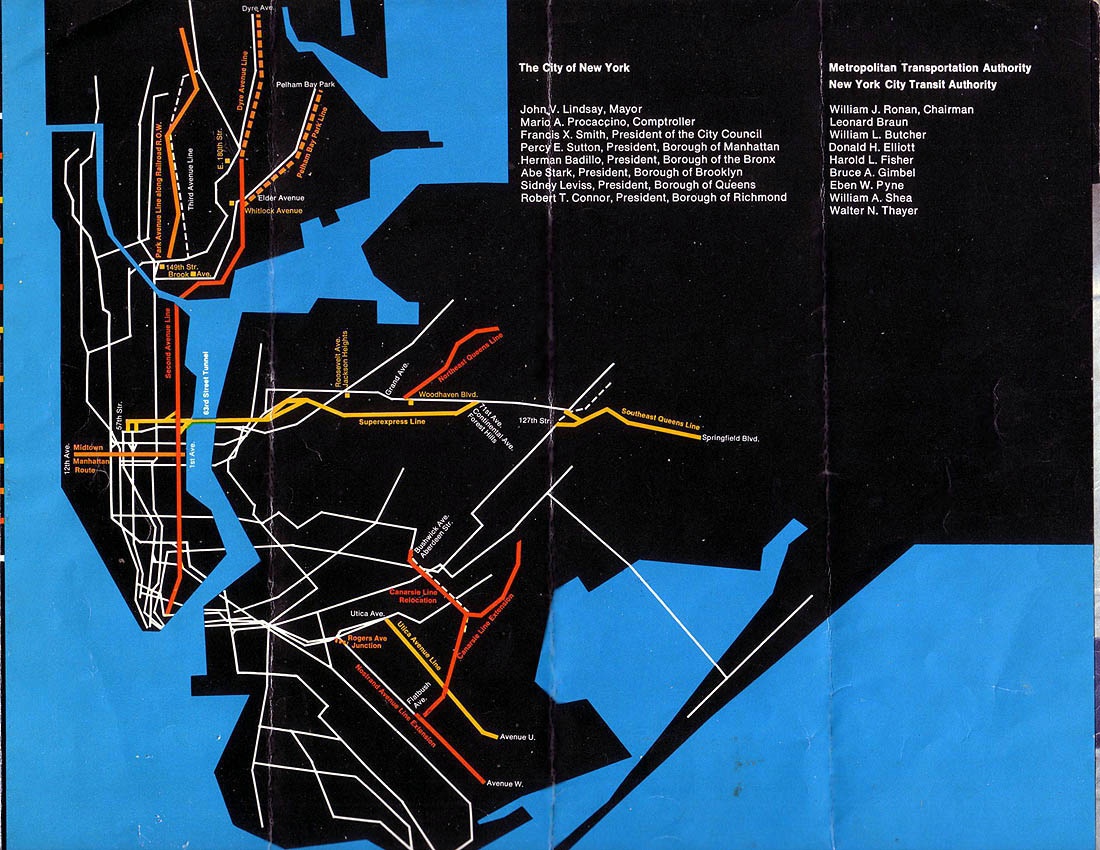
Brooklyn
View on GrokipediaEtymology
Name Origins and Evolution
The name Brooklyn originates from the Dutch colonial settlement of Breuckelen, established in 1646 on the southwestern shore of Long Island as a patroonship under the Dutch West India Company, deliberately named after the town of Breukelen in Utrecht province, Netherlands.[11][12] The Dutch town's name derives from Middle Dutch breuk or broek, connoting "broken land" or marshy terrain, reflecting the area's uneven, wetland-dominated topography suitable for early farming but prone to flooding.[13][14] This European nomenclature imposed by settlers supplanted indigenous Lenape (Delaware) geographic terms, such as those used by the Canarsee band for local waterways and hills, prioritizing colonial land patents over pre-existing tribal mappings and usage rights in a pattern common to New Netherland expansions.[15] Following the British conquest of New Netherland in 1664 and its renaming to New York, Breuckelen was anglicized to Brooklyn by the late 17th century, as evidenced in English colonial records and maps, though administrators briefly favored Kings County (established 1683) for the encompassing jurisdiction to honor Charles II.[11] The Dutch-derived name persisted due to entrenched local usage among mixed settler populations, resisting full replacement despite English governance, and appeared standardized as Brooklyn in legal documents by the early 18th century.[16] By the 19th century, as the Town of Brooklyn consolidated with adjacent Dutch hamlets into a chartered city in 1834, the name Brooklyn solidified in official contexts, including the 1894 referendum merging it into Greater New York, where it retained distinct borough status without alteration, underscoring the durability of colonial linguistic legacies over administrative redesignations.[12] This evolution highlights how place names in colonial contexts often encoded settler priorities, such as homage to metropolitan origins, while marginalizing native toponyms that encoded empirical observations of ecology and migration routes.[13]History
Pre-Colonial and Colonial Foundations
The territory comprising modern Brooklyn, part of Kings County on western Long Island, was originally inhabited by the Lenape people, particularly the Canarsee and Marechkawieck subgroups, who occupied the region for millennia prior to European arrival.[17] Archaeological findings, including shell middens and artifacts from excavations at sites such as Gerritsen's Creek, confirm indigenous presence in the area dating back at least 11,500 years, with evidence of seasonal camps and small-scale agriculture by the Late Archaic and Woodland periods.[18] [19] The Lenape practiced hunter-gatherer subsistence supplemented by slash-and-burn farming of the "Three Sisters" crops—maize, beans, and squash—while living in matrilineal clans without private land ownership, utilizing dome-shaped wigwams covered in tree bark for dwellings.[20] [21] Their trade and migration paths, which facilitated exchange of goods like wampum, later aligned with colonial roads such as Atlantic Avenue and Flatbush Avenue.[22] European colonization began with Dutch exploration under the New Netherland Company in the 1610s, followed by the Dutch West India Company's formal establishment of the New Netherland colony in 1621, with initial settlements like Fort Orange in 1624 and expansion to Long Island farms by the 1630s.[23] In the Brooklyn area, the village of Breuckelen was chartered as a township on November 1, 1646, by Director-General Willem Kieft, named after the Utrecht province town of Breukelen, and developed around patents granted to settlers like Joris Jansen Rapalje for tobacco and grain farming along the East River.[24] [25] This marked one of six Dutch towns in the region—Breuckelen, Flatbush, Flatlands, Gravesend, New Utrecht, and Bushwick—focused on agriculture and trade, with Breuckelen's early population centered on ferry crossings and fertile loamy soils supporting diverse crops.[23] Interactions with Lenape involved fur trade and land purchases, though often contentious due to differing concepts of ownership, leading to conflicts like Kieft's War (1640–1645).[26] The English seized New Netherland in 1664 during the Second Anglo-Dutch War, when Colonel Richard Nicolls's fleet arrived in New York Harbor on August 22, prompting Director-General Peter Stuyvesant to surrender New Amsterdam bloodlessly on September 8 without firing a shot, due to limited defenses and Dutch merchant reluctance for war.[27] The colony was renamed New York after James, Duke of York, brother to King Charles II, with the Articles of Capitulation guaranteeing Dutch settlers retention of property, religious tolerance, and existing customs, thus preserving land titles in Breuckelen and adjacent towns.[27] [28] Under English rule, Brooklyn's settlements evolved into townships with patroonship systems phased out in favor of fee-simple grants, while early fortifications like those at Gravesend reinforced defenses against Native American raids and potential French incursions by the mid-18th century.[29] This transition maintained agricultural foundations but shifted governance toward English common law, setting precedents for property disputes in the colonial era.[27]Revolutionary War and Early Republic
The Battle of Long Island, fought primarily on August 27, 1776, in the area now encompassing Brooklyn, marked the largest engagement of the Revolutionary War and the first major clash after the Declaration of Independence. Approximately 10,000 Continental Army troops under General George Washington defended against a British and Hessian force of comparable size commanded by General William Howe, who outmaneuvered the Americans through a flanking attack via Jamaica Pass. The resulting rout inflicted heavy losses on the Americans—estimated at 300 killed, 650 wounded, and about 1,100 captured or missing—while British casualties totaled roughly 400 killed or wounded. This defeat compelled Washington's forces to evacuate Brooklyn Heights under cover of night on August 29–30, preserving the army but ceding control of the region to the British.[30][31][32] The British victory secured New York Harbor as a strategic base, leading to the occupation of Brooklyn and surrounding Kings County towns until the Treaty of Paris in 1783. During this period, British forces fortified positions, requisitioned resources, and caused widespread property destruction through foraging and encampments, exacerbating economic disruption in an already agrarian area depleted by pre-war trade interruptions. Wallabout Bay in Brooklyn became notorious for prison ships, where disease and overcrowding claimed an estimated 11,000 American lives over the war, though exact local impacts on civilian property remain sparsely documented beyond general accounts of looting and infrastructure neglect. Loyalist refugees bolstered the occupying population temporarily, but the prolonged military presence stifled neutral trade and contributed to demographic shifts as Patriot families fled or suffered reprisals.[33][34] British evacuation on November 25, 1783, initiated recovery, with returning residents rebuilding farms and small-scale commerce amid New York's designation as the temporary national capital until 1790. Kings County, comprising towns like Brooklyn, Bushwick, and Flatbush, saw gradual repopulation, with the Village of Brooklyn incorporating under New York State law on April 12, 1816, to formalize local governance and infrastructure needs. Essential ferry links to Manhattan, evolving from oar-powered to steam propulsion with the Fulton Ferry's debut in 1814, facilitated commuter and market traffic, spurring residential expansion as Brooklyn positioned itself as a dormitory extension of the growing commercial hub across the East River. By the 1820s, these connections had catalyzed measurable growth, reflecting causal dependence on reliable water transit for economic viability in the Early Republic era.[33][35][36]19th Century Expansion and Industrial Boom
Brooklyn was incorporated as an independent city by charter in 1834, separating from the surrounding towns and spurring rapid urbanization amid growing trade and manufacturing.[37] [38] Its population expanded from approximately 24,000 in 1830 to 33,214 by 1840, 138,822 in 1850, and 266,661 in 1860, fueled by industries such as shipbuilding at private yards and the Brooklyn Navy Yard, sugar refining along the waterfront, and early railroads like the Brooklyn and Jamaica Railroad established in the 1830s.[39] [40] Sugar refining became dominant, with multiple refineries in Williamsburg processing vast quantities of imported raw sugar, while shipbuilding supported maritime commerce and naval needs.[40] These sectors attracted laborers, including Irish immigrants, transforming Brooklyn into a key industrial hub rivaling Manhattan.[41] During the Civil War, the Brooklyn Navy Yard emerged as a vital Union asset, constructing at least 15 warships and converting over 400 commercial vessels for blockade duties, while employing up to 6,200 workers by 1865.[42] This activity bolstered the local economy but also exacerbated social strains, evident in the 1863 draft riots that spilled over from Manhattan into Brooklyn on July 15, where mobs targeted symbols of conscription and African Americans, reflecting working-class resentment toward the war's burdens and the $300 commutation fee favoring the wealthy.[43] The violence underscored class tensions among immigrant laborers, who viewed the draft as inequitable amid economic hardships.[44] Infrastructure advancements accelerated integration with Manhattan, culminating in the Brooklyn Bridge's completion on May 24, 1883, as the world's longest suspension bridge at 1,595 feet, enabling efficient pedestrian, vehicular, and trolley traffic that boosted commerce and real estate development. This linkage presaged political unification, as Brooklyn's growth strained independent governance; on January 1, 1898, it consolidated with New York City, Manhattan, western Queens, and Staten Island to form the Greater City of New York, driven by desires for unified infrastructure, water supply, and economic scale amid fears of rival urban centers like Chicago.[5] The merger ended Brooklyn's autonomy but amplified its role in the metropolitan economy.[7]Early 20th Century Immigration and Urbanization
Brooklyn's population surged from 1,634,897 in 1910 to 2,560,401 by 1930, fueled primarily by waves of European immigrants seeking industrial employment in factories, shipyards, and ports.[45] Southern Italians, Eastern European Jews (particularly Russian and Polish), and continuing Irish inflows dominated this period, with immigrants comprising over 40% of the borough's residents by 1920; they clustered in ethnic enclaves such as Italian-dominated Bensonhurst and Bay Ridge, Jewish-heavy Brownsville and Williamsburg, and Irish pockets in Windsor Terrace.[46] These groups provided essential labor for Brooklyn's manufacturing boom, including garment production, food processing, and waterfront activities at the Erie Basin docks, where Italian stevedores and Jewish workers handled transatlantic cargo.[47] Subway expansions, including the Interborough Rapid Transit (IRT) lines into Brooklyn by 1908 and Brooklyn Rapid Transit (BRT) extensions through the 1920s, facilitated outward sprawl from dense core neighborhoods like Williamsburg to emerging suburbs in Flatbush and Sheepshead Bay, accommodating the influx while alleviating some central congestion.[48] The Brooklyn Navy Yard exemplified immigrant contributions during World War I, employing thousands in constructing battleships like the USS New Mexico (commissioned 1918), leveraging skilled Eastern European and Italian machinists for naval output critical to U.S. mobilization.[49][50] Rapid urbanization strained infrastructure, manifesting in acute overcrowding and sanitation challenges by the 1920s-1930s, with tenement densities exceeding 500 persons per acre in areas like East New York, exacerbating tuberculosis rates and prompting rent strikes from 1918-1920 amid housing shortages.[51] Garbage accumulation and inadequate sewage in immigrant quarters led to recurrent health crises, as immigrant-heavy blocks received inconsistent collections, highlighting causal links between unchecked density and public health decay despite municipal efforts.[52][53]Mid-20th Century Decline, White Flight, and Deindustrialization
Following World War II, Brooklyn experienced a marked population decline, dropping from approximately 2.74 million residents in 1950 to 2.23 million by 1980, driven primarily by suburban out-migration and the closure of manufacturing facilities.[45] This exodus was concentrated among white working-class families seeking better housing and schools in areas like Long Island and New Jersey, with census data showing a net loss of over 500,000 white residents citywide between 1960 and 1970, a trend acutely felt in Brooklyn neighborhoods such as Crown Heights, where the white population fell from 70% in 1960 to under 30% by 1970.[54] [55] Deindustrialization accelerated this downturn, as Brooklyn's factories—once employing hundreds of thousands in shipbuilding, apparel, and food processing—relocated to lower-cost regions or abroad, with manufacturing jobs halving between 1954 and 1990 and the Brooklyn Navy Yard closing in 1966, eliminating over 70,000 positions.[56] Policies like strict rent controls, in place since 1943 and expanded postwar, exacerbated housing decay by discouraging maintenance and investment, leading to widespread abandonment and arson in aging multifamily buildings, particularly in areas like Brownsville and East New York, where arson fires surged in the 1970s amid fiscal strain.[57] [58] The 1975 New York City fiscal crisis compounded these issues, as Brooklyn—bearing a disproportionate share of welfare rolls and municipal services—faced severe budget cuts after the city nearly defaulted on $14 billion in debt, resulting in layoffs of thousands of workers, reduced police presence, and deferred infrastructure repairs that fueled urban blight.[59] Crime rates escalated accordingly, with homicides in New York City doubling from under 5 per 100,000 in the early 1960s to over 10 by the mid-1970s, and Brooklyn precincts like the 75th in East New York recording some of the highest per capita murders amid rising street crime and gang activity.[60] School desegregation efforts, including busing mandates post-1968, further incentivized white flight by eroding neighborhood school quality and parental control, contributing to increased segregation and enrollment drops in public institutions as families prioritized suburban districts with higher academic standards.[61] [62] By the late 1970s, these intertwined factors had transformed swaths of Brooklyn into zones of high welfare dependency, with over 40% of residents in some districts relying on public assistance, underscoring failures in urban policy that prioritized redistribution over economic incentives.[59]Late 20th to Early 21st Century Revival and Gentrification Onset
In the 1980s and early 1990s, artists and musicians seeking affordable industrial lofts migrated to neglected Brooklyn neighborhoods such as Williamsburg and Bushwick, drawn by low rents in abandoned warehouses and factories abandoned after deindustrialization.[63] This influx contributed to informal revitalization by increasing foot traffic and informal surveillance, aligning with subsequent policing strategies that targeted minor disorders.[64] Under Mayor Rudy Giuliani's administration starting in 1994, the New York Police Department implemented broken windows policing, emphasizing enforcement of low-level offenses like vandalism and public intoxication, which correlated with a sharp decline in overall crime rates across New York City, including Brooklyn, where felony complaints dropped by over 60% from 1990 to 2000.[65] Empirical data from NYPD records attribute part of this reduction to increased misdemeanor arrests and quality-of-life initiatives, rather than solely demographic shifts or economic factors, though critics from academic circles often downplay policing's role in favor of broader national trends.[64] By the late 1990s, these dynamics spurred early gentrification, particularly in Williamsburg, where median household incomes rose from approximately 55,000 (in 2012 dollars) in 1990 to higher levels by the 2000s, driven by private real estate investment and demand from young professionals.[66] Average rents in Williamsburg increased 78.7% from 1990 to 2014, far outpacing the citywide 22.1% rise, reflecting market responses to scarcity and desirability rather than subsidized housing policies.[67] Property values followed suit, with community districts in northern Brooklyn seeing home prices appreciate over 200% in some areas during the 2000s, as assessed by Furman Center housing data, which prioritized empirical transaction records over narrative-driven displacement claims.[68] While some low-income residents faced displacement—evidenced by net out-migration in specific census tracts—borough-wide population grew from 2,465,326 in 2000 to 2,504,700 in 2010, indicating net influx and reduced vacancy rates.[45] The creative and tech sectors amplified this revival, with Brooklyn capturing 9.2% of New York City's tech startups by the late 2000s, up from 6.3% in 2000, fueled by venture capital and proximity to Manhattan's infrastructure without equivalent regulatory burdens.[69] Employment in creative industries expanded 155% over the decade, outstripping Manhattan's 16% growth, as firms leveraged underutilized spaces for media, design, and software development.[70] These shifts, rooted in voluntary economic migration and property market corrections, lowered concentrated poverty in revitalizing areas—Williamsburg's tract-level poverty rates fell from over 30% in 1990 to below 20% by 2010 per census analyses—countering narratives that overemphasize harm without accounting for absolute poverty reductions and population gains.[71] Government interventions, such as zoning variances, played a secondary role to private capital flows, as evidenced by sustained growth absent large-scale public subsidies.[72]Geography
Topography and Boroughscape
Brooklyn, coextensive with Kings County, encompasses 70.8 square miles of land area on the southwestern tip of Long Island.[73] Its topography is characterized by predominantly flat coastal plains with elevations averaging near sea level, interspersed with glacial hills formed by the Harbor Hill Moraine; notable elevations include Brooklyn Heights at approximately 85 feet above sea level and the borough's highest natural point at Battle Hill, reaching 216 feet.[74] [75] The borough's waterfronts extend along the East River to the northwest, separating it from Manhattan, and Upper New York Bay to the southwest, with southern exposure to the Atlantic Ocean via the Coney Island peninsula.[76] Land use zoning reflects a mix of residential dominance across much of the area, industrial concentrations in districts such as Sunset Park, and high-density commercial high-rises in Downtown Brooklyn, contributing to a varied urban fabric.[77] Prominent geographical landmarks include Prospect Park, a 526-acre greenspace in the central borough that preserves natural terrain contours, and the 2.7-mile-long Riegelmann Boardwalk at Coney Island, facilitating access to the sandy shoreline and coastal plain.[78][79]Climate and Environmental Factors
Brooklyn possesses a humid subtropical climate (Köppen Cfa), marked by hot, humid summers and cold, occasionally snowy winters, with moderating maritime influences from the Atlantic Ocean and New York Harbor. Annual precipitation averages 46 inches, distributed relatively evenly throughout the year, with April typically the wettest month at about 3.8 inches. Average high temperatures in summer reach 85°F in July, the warmest month, while winter lows dip to around 26°F in January. These patterns align closely with broader New York City meteorological records, though local variations arise from Brooklyn's coastal exposure and dense urbanization.[80][81] The urban heat island effect exacerbates summer temperatures in Brooklyn, where impervious surfaces like asphalt and concrete absorb and re-radiate heat, raising local air temperatures by several degrees compared to rural surroundings; studies indicate neighborhood-level differences of up to 10°F or more during heat waves, particularly in densely built areas lacking vegetation. Air quality faces pressures from industrial ports in neighborhoods such as Red Hook and Sunset Park, where diesel emissions from ships, trucks, and equipment contribute to elevated levels of fine particulate matter (PM2.5) and nitrogen oxides, with port-related sources accounting for significant portions of regional pollution inventories. Historical data show Brooklyn's air quality index fluctuating, often reaching moderate levels during high-traffic periods, though empirical monitoring reveals no consistent exceedance of federal standards outside episodic events.[82][83] Coastal flooding represents a primary environmental hazard, as demonstrated by Hurricane Sandy on October 29, 2012, which generated a storm surge flooding low-lying areas including Coney Island (up to 11 feet above ground) and Red Hook, inundating approximately 13% of Brooklyn's lots valued at $9.3 billion and disrupting power, transportation, and residences for weeks. Such events highlight vulnerabilities in waterfront zones at or near sea level, yet Brooklyn's topography offers empirical resilience inland, with elevations rising to 218 feet at Battle Hill in Green-Wood Cemetery—the borough's highest natural point—and rolling hills in areas like Prospect Park mitigating surge propagation compared to uniformly flat terrains. These variations have historically buffered higher-ground communities from full inundation during past storms, underscoring causal factors like topography in limiting flood extents beyond immediate coastal strips.[84][85][86][75]Demographics
Population Growth and Trends
The 2020 United States Census enumerated Brooklyn's population at 2,736,074 residents, marking a 9.3% increase of 231,374 people from the 2,504,700 recorded in 2010.[87][88] This decade-long expansion was predominantly fueled by natural increase, where births outpaced deaths by a wide margin, accounting for nearly all of New York City's overall population gain during the period, with net domestic and international migration providing supplementary inflows.[89] Brooklyn's population density reached approximately 37,000 persons per square mile in 2020, underscoring its status as one of the most densely settled urban areas in the United States, shaped by historical land constraints and high-rise development patterns.[90] Demographic trends reveal an aging cohort, with roughly 16% of residents aged 65 and older, juxtaposed against a notable proportion of younger individuals under 18, attributable to elevated birth rates in households with multiple children.[91] Projections from city planning estimates suggest Brooklyn's population will remain relatively stable through 2025, sustained by ongoing net in-migration that balances modest natural decrease and any residual domestic outflows.[92] The early COVID-19 pandemic triggered a temporary dip via heightened out-migration to less dense areas, but by 2023, inflows resumed, aligning with borough-wide growth rates exceeding those of other New York City districts and contributing to a broader rebound.[93][94]Ethnic and Racial Makeup
As of the 2023 American Community Survey estimates, Brooklyn's population of approximately 2.56 million residents exhibits a diverse racial and ethnic composition, with non-Hispanic Whites comprising 37.4%, Blacks or African Americans 28.4%, Hispanics or Latinos of any race 18.9%, Asians 12.3%, and other groups including multiracial and Native Americans accounting for the remainder.[95][96] This breakdown reflects the U.S. Census Bureau's mutually exclusive categories, where Hispanics are treated as an ethnic group overlapping with races.[97]| Racial/Ethnic Group | Percentage (2023 ACS) | Approximate Population |
|---|---|---|
| Non-Hispanic White | 37.4% | 958,000 |
| Black/African American | 28.4% | 728,000 |
| Hispanic/Latino (any race) | 18.9% | 484,000 |
| Asian | 12.3% | 315,000 |
| Other/Multiracial | 3.0% | ~77,000 |
Socioeconomic Indicators
Brooklyn's median household income in 2023 was $78,548, reflecting growth from $74,692 the prior year.[96] The borough's poverty rate in the same period was 19%, affecting approximately 481,891 residents.[100] Unemployment stood at 5.9% as of August 2025.[101]| Socioeconomic Indicator | Value (2023 unless noted) |
|---|---|
| Median Household Income | $78,548[96] |
| Poverty Rate | 19%[100] |
| Homeownership Rate | 29.7%[96] |
| Unemployment Rate | 5.9% (August 2025)[101] |
Immigration Patterns and Linguistic Diversity
Brooklyn has experienced significant immigration inflows since the 1980s, primarily from the Caribbean, Africa, and Asia, contributing to its foreign-born population reaching approximately 35.9% (919,663 individuals) as of recent American Community Survey estimates. Caribbean immigrants, including those from Jamaica, Haiti, and Trinidad, formed a major wave following the 1965 Immigration and Nationality Act amendments, with over 300,000 arriving in New York by 1980 and continued growth thereafter, often settling through family reunification chains that concentrated communities in areas like East Flatbush and Crown Heights. African immigrants, particularly from Nigeria and Ghana, increased post-1990, comprising a growing share of the black population, while Asian inflows, driven by skilled professionals from China, India, and South Korea, accelerated in the 2000s via employment and family visas, bolstering sectors like technology and healthcare.[100][105][106] The 2020s saw an acute surge in asylum seekers and irregular migrants, straining Brooklyn's resources with temporary shelters like Floyd Bennett Field housing thousands from Latin America and beyond, leading to operational pressures including capacity overloads and community tensions until closures began in late 2024. New York City managed over 228,700 asylum seekers passing through shelters by early 2025, with Brooklyn sites contributing to a reduction of about 10,000 beds amid declining arrivals and policy shifts. These patterns reflect chain migration dynamics, where initial entrants sponsor relatives, fostering ethnic enclaves that empirically correlate with slower socioeconomic integration, as immigrants remain tied to co-ethnic networks rather than dispersing into mainstream opportunities.[107][108][109] Linguistically, about half of Brooklyn households speak a non-English language at home, with Spanish predominant at roughly 15-20% and Chinese variants around 5%, per ACS data, reflecting the Dominican, Puerto Rican, and Mandarin/Cantonese-speaking populations. English proficiency stands at approximately 70% among residents aged five and older, though limited proficiency is higher among recent arrivals and enclave dwellers, hindering full labor market participation. This diversity underscores causal barriers to assimilation, as sustained non-English use in insulated communities—often perpetuated by chain migration—delays language acquisition and broader cultural adaptation compared to more dispersed settlement patterns observed historically.[100][96][110]Neighborhoods
Major Residential and Commercial Districts
Downtown Brooklyn serves as the borough's primary business hub and the third-largest central business district in New York City, encompassing over 16 million square feet of office space and supporting more than 90,000 private sector jobs as of recent assessments.[111] Zoned predominantly under C6 commercial districts, it facilitates high-density development with mixed commercial and residential uses, attracting corporate offices, financial services, and government entities. In the first half of 2025, the area saw the completion of over 3,700 new housing units, contributing to a surge in residential density amid ongoing urban revitalization efforts.[112] Williamsburg functions as a dynamic mixed-use district emphasizing arts, technology, and creative industries, with zoning that supports medium- to high-density residential towers alongside commercial spaces for startups and galleries.[113] Development here has evolved from industrial roots to a hub for innovation, drawing investments in tech firms and waterfront adaptive reuse projects that blend live-work environments.[114] Bay Ridge exemplifies a stable residential district characterized by low- to medium-density zoning, featuring detached and semi-attached single-family homes, row houses, and mid-rise apartments in R3 through R6 categories. Its development stage remains mature and suburban in character, with limited new construction focused on preserving waterfront proximity and green spaces rather than high-rise expansion.[115] Sunset Park operates as Brooklyn's key industrial zone, spanning 200 acres of waterfront with M1 and M2 manufacturing districts hosting campuses like Industry City and Brooklyn Army Terminal for logistics, warehousing, and light industry.[116] Investments prioritize job retention and adaptive reuse, including tech-enabled distribution centers, while resisting residential encroachment to maintain its role as a Southwest Brooklyn Industrial Business Zone anchor.[117] Commercial nodes such as Atlantic Terminal along Atlantic Avenue form retail anchors in Downtown Brooklyn, offering over 500,000 square feet of shopping and dining space integrated with transit hubs to serve daily commuters and local workers.[118] Gowanus, post-2021 rezoning, emerges as a transitional district with planned capacity for 8,500 housing units alongside mixed-use developments, shifting from legacy industrial uses toward innovation-focused investments.[119]Ethnic Enclaves and Community Dynamics
Brooklyn's ethnic enclaves exhibit varying degrees of persistence, driven by factors such as high fertility rates among insular groups and sustained immigration flows, though some face erosion from out-migration and demographic shifts. In Williamsburg, the Hasidic Jewish community, predominantly Satmar Hasidim, has maintained stability through rapid population growth; a 2021 UJA-Federation study reported 36,000 Jewish adults and 32,000 children across 21,000 households, totaling 76,000 residents, with the area registering as New York State's fastest-growing Assembly district due to internal expansion.[120][121] This growth stems from elevated fertility—ultra-Orthodox families often exceed six children per household—fostering cultural preservation via strict observance and community institutions, yet contributing to higher localized poverty rates linked to large family sizes and limited external workforce participation.[122] In Flatbush and East Flatbush, Caribbean immigrant enclaves, primarily from Jamaica, Haiti, and Trinidad, demonstrate resilience through chain migration established since the 1960s, forming a cultural hub that sustains traditions like Carnival celebrations and supports remittance economies tying households to home countries.[123][124] These communities, comprising over half a million West Indians in New York since 1965, exhibit low residential turnover due to affordable housing and ethnic networks, though integration challenges persist amid economic pressures like job instability and reliance on informal remittances, which buffer poverty but hinder broader assimilation.[125] Community dynamics reveal tensions from enclave expansions, particularly Hasidic incursions into formerly Black or Italian-dominated areas; in Brownsville, Chabad-Lubavitch families have relocated since the 2010s, displacing residual African American residents and eroding long-standing identities amid complaints over housing density and public resource strains.[126] Similarly, Bensonhurst's Italian population, once comprising 80% of residents, has declined sharply since the 1980s due to suburban out-migration and influxes of Chinese and Mexican immigrants, with census shifts showing Italians dropping below 20% by 2020, illustrating churn where cultural anchors weaken without replenishing immigration.[127][128] Empirically, persistent enclaves correlate with elevated poverty—Brooklyn's overall rate at 18.8% masks higher concentrations in Hasidic zones from family sizes outpacing incomes, and Caribbean areas from remittance-dependent households—yet enable cultural continuity via bloc voting and zoning advocacy that resists gentrification.[129][130] Integration hurdles, including language barriers and preference for co-ethnic networks, sustain these pockets but exacerbate isolation, as seen in limited inter-group intermarriage and service overlaps in expanding Orthodox territories.[131][132]Economy
Historical Industries and Shifts
In the 19th century, Brooklyn emerged as a major industrial hub, particularly in shipping and sugar refining, leveraging its waterfront access to the East River and Atlantic Ocean for trade and processing. By the late 1800s, the borough produced over half of the United States' refined sugar, with facilities like the Havemeyers & Elders refinery (later Domino Sugar) dominating operations along the waterfront; at its height, a dozen refineries processed raw cane from Caribbean plantations, employing thousands in labor-intensive melting, centrifuging, and packaging.[133] [134] Shipping complemented this, as Brooklyn's ports handled transatlantic cargo, including sugar imports, fostering ancillary industries like barrel-making and warehousing that supported a blue-collar workforce amid rapid urbanization post-Erie Canal completion in 1825. The Brooklyn Navy Yard exemplified industrial peak during World War II, shifting from merchant activities to wartime shipbuilding and repair, with employment surging to over 70,000 workers by 1943—many women and minorities entering via federal mobilization efforts—to construct vessels like battleships and carriers essential to Allied naval dominance.[135] This boom temporarily offset pre-war fluctuations but masked underlying vulnerabilities in labor-intensive sectors reliant on protectionist tariffs and domestic demand. Deindustrialization accelerated in the 1970s through 1990s, driven by globalization, offshoring to low-wage nations, and rising domestic production costs from stringent regulations and union-mandated wage premiums that eroded competitiveness against imports; Brooklyn's total employment dropped 12.1% from 1970 to 1980, mirroring the New York-New Jersey region's 51% manufacturing plunge between 1969 and 1999, as factories relocated or closed amid international competition in textiles, electronics, and food processing.[136] [137] By the late 1990s, manufacturing's share of Brooklyn's jobs had contracted to under 10%, reflecting causal pressures like tariff reductions under GATT agreements and firms' incentives to offshore amid U.S. labor costs averaging 5-10 times Asian equivalents, compounded by local policy rigidities that deterred reinvestment.[138] Post-2000, Brooklyn's economy pivoted toward service-oriented sectors, with finance and emerging technology clusters absorbing displaced labor through proximity to Manhattan's financial district and incentives like tax abatements; tech startups in the borough rose from 6.3% of New York City's total in 2000 to 9.2% by 2019, fueled by venture capital inflows and conversion of industrial spaces to offices, though this transition lagged manufacturing's collapse by decades and prioritized high-skill roles over broad blue-collar reemployment.[69]Current Sectors and Employment
Brooklyn's workforce is predominantly engaged in service-providing industries, with healthcare, education, and retail trade accounting for substantial employment shares amid the borough's shift toward knowledge-based and flexible work arrangements.[139] The unemployment rate in Kings County reached 5.9% in August 2025, reflecting a 0.3 percentage point decline from the prior year, though persistent challenges in low-wage sectors contribute to labor market volatility.[140] Entrepreneurship thrives through high small business density, evidenced by the addition of 3,600 new businesses in Brooklyn during the second quarter of 2024 alone, supporting job growth of nearly 6,000 in that period.[141] DUMBO serves as a key hub for tech startups, hosting dozens of innovative firms in software, fintech, and AI, with ongoing events like the 2025 Brooklyn Tech Expo underscoring the area's vibrancy.[142] [143] The gig economy represents a critical employment reality, particularly in delivery, ride-sharing, and freelance creative work, where approximately 20% of surveyed New Yorkers reported app-based gig participation in 2020, a pattern amplified in Brooklyn's diverse, urban labor pool.[144] Post-2020 remote work adoption has causally enhanced creative sectors by enabling geographic flexibility for freelancers and digital nomads, fostering hybrid models that sustain output in arts, media, and design despite office vacancies.[145] [146]Real Estate and Development Trends
In the first half of 2025, Brooklyn's real estate investment sales reached $3.25 billion across 453 transactions, reflecting a 4% increase in volume from the prior year despite broader New York City market volatility.[147] This activity was driven by multifamily and mixed-use properties, with $730 million in multifamily sales alone across 140 deals, up 28% year-over-year.[148] Median condominium sales prices hovered around $1 million, with resale condos at $1.025 million in the third quarter, underscoring sustained demand in premium segments.[149] [150] Average monthly rents averaged approximately $3,932 as of September 2025, following a 6% year-over-year rise amid limited inventory.[151] [152] Major development initiatives, such as the Gowanus neighborhood rezoning approved in 2021, aim to expand housing supply with an estimated 8,500 to 9,300 new residential units, including about 3,000 affordable ones, across 82 blocks.[153] The Brooklyn Borough President's 2025 Comprehensive Plan further prioritizes equitable growth, incorporating an Access to Opportunity Index to guide land-use decisions toward underserved areas.[154] However, empirical data reveals persistent supply constraints: while rezonings have boosted permitted units, overall affordability has declined, with median rents and sales prices escalating due to regulatory mandates like inclusionary zoning requirements that inflate development costs by mandating below-market units, thereby deterring broader construction.[155] Strict preservation rules and environmental reviews in non-rezoned zones exacerbate underbuilding, as evidenced by Brooklyn's housing vacancy rates remaining below 3% and price per square foot climbing to $1,050 on average.[149] These factors causally link regulatory barriers to heightened competition for existing stock, limiting net supply gains despite targeted expansions.Government and Politics
Borough Governance Structure
Brooklyn operates as one of New York City's five boroughs under the framework established by the New York City Charter, with governance centralized at the city level while borough offices provide advisory input on local matters.[156] The Borough President, elected borough-wide every four years concurrently with the mayor, holds a position that has been largely advisory since the 1989 Charter revision, which stripped executive powers previously held over functions like parks and sanitation.[157] Current duties include chairing the Borough Board, which reviews land-use applications under the Uniform Land Use Review Procedure (ULURP), advocating for borough priorities in the city budget process, and appointing members to community boards.[158] The borough maintains 18 community boards, each covering a designated district and comprising up to 50 appointed members who offer non-binding recommendations on zoning, service delivery, and capital projects.[159] These boards, chaired by the Borough President or a designee, conduct public hearings and submit annual statements of needs to city agencies, but lack enforcement authority, relying on coordination with the mayor's office and City Council.[159] Funding for the Brooklyn Borough President's office derives entirely from the city budget, with allocations for operations and discretionary capital grants totaling approximately $5.8 million in fiscal year 2022, excluding project-specific distributions.[160] The office has no independent taxing or borrowing powers, limiting its fiscal autonomy to recommendations within the city's $116 billion annual budget framework.[161] This structure fosters inefficiencies through jurisdictional overlaps between borough advisory bodies and citywide agencies, often resulting in protracted decision-making for local services like infrastructure repairs and permitting, as evidenced by criticisms of centralized control delaying outer-borough responses.[162] For instance, borough presidents' input on ULURP can extend timelines without resolving inter-agency coordination gaps in service delivery.[157]Electoral Politics and Representation
In presidential elections, Kings County (Brooklyn) has consistently delivered overwhelming majorities for Democratic candidates. In the 2020 election, Joe Biden received 703,310 votes (77.6%) compared to Donald Trump's 202,772 (22.4%).[163] This pattern reflects long-term Democratic dominance, with county-level support for Democrats exceeding 70% in multiple cycles, driven by dense urban demographics and high minority voter turnout favoring progressive platforms.[164] Brooklyn's federal representation is entirely Democratic, with its population spanning New York's 7th, 8th, 9th, and 10th congressional districts. The 7th District, covering parts of Williamsburg, Bushwick, and Sunset Park, is represented by Nydia Velázquez (D, since 1993); the 8th, including Crown Heights and East New York, by Hakeem Jeffries (D, since 2013); the 9th, encompassing Flatbush and Midwood, by Yvette Clarke (D, since 2007); and the 10th, spanning Park Slope and parts of Manhattan but significant Brooklyn areas, by Dan Goldman (D, since 2023).[165] These incumbents won reelection in 2024 with margins often exceeding 50 points in general elections, as Republican challengers garnered minimal support amid district lines drawn to consolidate Democratic voters. At the local level, Brooklyn's 21 New York City Council districts are all held by Democrats, reflecting the borough's voter enrollment where Democrats outnumber Republicans by over 6-to-1.[166] The Brooklyn Borough President, Antonio Reynoso (D, elected 2021), oversees county-level administration, while state legislative seats from Brooklyn are similarly Democratic-dominated. Post-2010s, primaries saw a leftward shift, with Democratic Socialists of America (DSA)-backed candidates winning seats like District 39 (Shahana Hanif, elected 2021) and influencing policy toward defunding police initiatives, often unopposed in generals due to low Republican participation.[167] This one-party entrenchment stems from New York's closed Democratic primaries, which decide outcomes in low-turnout contests favoring organized progressive factions, and congressional maps approved by Democratic legislative majorities that pack Republican-leaning voters into few districts while diluting opposition elsewhere.[168][169] Gerrymandering, as in the 2024 map modestly favoring Democrats by concentrating urban liberals, minimizes competitive general elections, reducing representative accountability as incumbents face scant pressure to address empirical policy failures like rising homelessness or business exodus, with internal party debates substituting for broader electoral scrutiny.[170]Policy Impacts on Local Issues
New York City's 2019 bail reform law, which eliminated cash bail for most misdemeanors and nonviolent felonies, correlated with a rise in recidivism for certain offenders following its implementation in 2020, particularly those with recent criminal histories, amid broader post-pandemic crime spikes including a 96% increase in murders from 2019 to 2021 citywide.[171][172] Subsequent legislative tweaks in 2020 and 2022, allowing judges greater discretion for cases involving repeat offenders, coincided with crime declines; by January 2025, major crimes fell by 1,700 compared to the prior year, with murders down 34.4% and shootings down 23.1% in the first quarter.[173][174] These patterns in Brooklyn, which accounts for about 30% of citywide incidents, reflect a reversal from "defund the police" initiatives that cut NYPD funding by roughly $1 billion in 2020, contributing to understaffing and delayed responses before restored budgets and proactive policing reduced murders by 39% from 2021 peaks through 2024.[175] As a sanctuary jurisdiction since 1989, with policies limiting local cooperation with federal immigration enforcement, New York City faced significant resource strains from an influx of over 210,000 migrants since spring 2022, many bused from Texas, projecting costs exceeding $12 billion through fiscal year 2025 for shelter, food, and services.[176][177] In Brooklyn, this pressure manifested in overcrowded emergency shelters and competition for public resources, exacerbating homelessness and prompting Mayor Eric Adams in 2023 to declare the city at capacity, with over 100,000 migrants housed at peak, diverting funds from local programs and leading to park encampments and hotel conversions that disrupted neighborhoods like Floyd Bennett Field.[178] By January 2025, arrivals surpassed 229,000, intensifying fiscal burdens without corresponding federal reimbursements, as sanctuary limits hindered deportations of criminal noncitizens despite a 400% spike in ICE detainers.[179][180] Rent stabilization and control policies, covering about 1 million Brooklyn units, have constrained housing supply by discouraging new construction and maintenance, contributing to a citywide rental vacancy rate of 1.4% as of the latest survey, far below the 5% threshold for a balanced market.[181] These regulations, which cap increases below inflation for eligible apartments, reduced available affordable units by incentivizing conversions to unregulated condos or abandonment, with over 14,000 low-income homes at risk of loss in New York State from 2023 to 2028 due to expiring subsidies amid regulatory rigidity.[182] Empirical data indicate higher market rents elsewhere—median new leases up 36% in Manhattan over four years—as supply shortages from controls and zoning barriers drive up costs, worsening overcrowding and disrepair in stabilized buildings while failing to address root shortages from underproduction.[183][57][184]Culture
Artistic and Cultural Institutions
The Brooklyn Museum, established in 1890, houses over 1.5 million works of art across diverse collections including ancient Egyptian artifacts, American art, and contemporary pieces, attracting more than 600,000 visitors annually as of 2024. Despite financial challenges prompting staff layoffs exceeding 40 employees in February 2025, attendance has increased, supported by rising private donations and endowment growth.[185][186] The Brooklyn Academy of Music (BAM), founded in 1861, serves as a premier venue for performing arts, hosting international and contemporary programs across theater, dance, music, and film through initiatives like the annual Next Wave Festival.[187] BAM's endowment more than doubled to approximately $60 million following $30 million in major gifts, enabling new artistic projects amid reliance on foundation and government support.[188][189] In visual arts, the Bushwick Collective, initiated in 2011 by local property owner Joe Ficalora, curates large-scale murals and graffiti works by local, national, and international artists on walls in Brooklyn's Bushwick neighborhood, drawing tourists and fostering community engagement via annual block parties that feature live painting and music.[190][191] This outdoor gallery exemplifies street art's role in urban aesthetics but has contributed to gentrification by elevating property values and attracting affluent visitors, commoditizing raw expressions into tourist attractions.[192][193] Brooklyn's indie music scene thrives in small venues such as Brooklyn Bowl and Baby's All Right, supporting emerging artists in rock, punk, and alternative genres amid broader New York City nightlife economics that generated $13.1 billion in employee compensation and 299,000 jobs in 2016.[194] Independent U.S. venues, including those in Brooklyn, contributed $86.2 billion to GDP in 2024 through direct economic activity, though rising costs and venue closures highlight vulnerabilities exacerbated by gentrification, which boosts tourism revenue but displaces affordable artist spaces.[195][196] Gentrification has empirically increased arts funding via higher local spending and developer investments, yet it risks authentic cultural production by prioritizing marketable outputs over grassroots innovation.[197][198]Media Landscape
Brooklyn's media landscape features a mix of legacy print publications, ethnic-focused outlets, and broadcast services, supplemented by growing digital platforms, though traditional readership has declined amid broader shifts to online consumption. The Brooklyn Daily Eagle, originally founded in 1841 and published until 1955, was revived in various forms, including a 1996 iteration with a paid circulation of 7,000 copies distributed weekdays.[199] Today, the Eagle operates primarily as an online news site covering local business, community, crime, and politics, reflecting a pivot common in local journalism.[200] Schneps Media, a dominant player, publishes the Brooklyn Paper and affiliated weeklies under the Courier-Life chain, providing neighborhood-specific reporting across the borough.[201] These outlets maintain formal editorial standards but often align with the progressive sensibilities prevalent in New York City media, prioritizing coverage of social issues over contrarian perspectives.[202] Ethnic newspapers serve Brooklyn's diverse immigrant communities, with circulations historically bolstering their reach despite print declines. Caribbean Life, launched in 1990, reported a circulation of 125,000 by 1998, targeting Caribbean diaspora readers with bilingual content.[203] Our Time Press, a Brooklyn-based African-American weekly, circulated about 20,000 copies as of 2016, focusing on community advocacy. Haiti Observateur, a French-English publication, reached 75,000 readers around 2000, exemplifying how ethnic media fills gaps in mainstream coverage for non-English speakers.[204] Such papers provide culturally attuned reporting but face funding challenges, including reduced city advertising, amid a landscape where over 700 community outlets serve non-white populations comprising nearly half of NYC residents.[205] Broadcast media includes Spectrum News NY1, which delivers 24-hour coverage of Brooklyn alongside other boroughs, emphasizing local headlines, weather, and events via cable channel 1 (SD) and 200 (HD).[206] NY1's expansion in 2009 extended dedicated reporting to all five boroughs, including Brooklyn-specific segments.[207] However, carriage disputes, such as the 2025 loss of NY1 access for Optimum customers in parts of Brooklyn, highlight vulnerabilities in local TV distribution.[208] Print and broadcast audiences have shrunk, with U.S. adults following traditional news dropping notably since 2016, as social media and apps supplant newspapers—evident in Brooklyn where digital editions of papers like the Brooklyn Paper now complement physical distribution.[209][210] Digital shifts have amplified podcasts and online news, with Brooklyn benefiting from NYC's status as a podcasting hub due to its concentration of media firms and talent.[211] Local studios like Brooklyn Podcasting Studio host shows on UX trends and community topics, fostering diverse voices amid a left-leaning podcast ecosystem dominated by urban progressive narratives.[212] Sites like BKReader offer free daily digital newsletters for Brooklyn news, signaling adaptation to email and social platforms over print.[213] This transition underscores causal pressures from ad revenue migration to tech giants, eroding local outlets' financial stability while enabling niche, unfiltered commentary—though algorithmic biases on platforms often favor established left-leaning content creators.[202][209]Annual Events and Traditions
 oversees public K-12 schooling in Brooklyn, operating over 500 schools across the borough's 32 geographic districts, serving a student population that constitutes a significant portion of the city's total enrollment of approximately 983,000 students as of the 2023-24 school year.[224] [225] Enrollment in Brooklyn public schools has experienced fluctuations, with some districts like District 21 reporting around 32,600 K-12 students in 2023-24, amid broader citywide declines of about 10% since 2016-17 due to demographic shifts and competition from alternatives.[226] [227] State assessments for grades 3-8 in 2024 revealed citywide proficiency rates of about 53% in mathematics and 49% in English Language Arts (ELA), reflecting post-pandemic recovery but still below pre-2019 levels; Brooklyn's rates align closely with these figures, with borough-specific data indicating modest gains such as 56.8% proficiency in select metrics, though persistent gaps remain by subgroup, including lower performance among economically disadvantaged students comprising over 50% of enrollment.[228] [229] Charter schools in Brooklyn, numbering around 50 within the city's 274 charters, have demonstrated superior outcomes, with networks like Success Academy achieving 92.5% ELA proficiency and 96.2% in math among their students in 2025 assessments, outperforming district schools by 9-13 percentage points citywide, particularly for Black and Hispanic enrollees.[225] [230] [231] Private and parochial schools, including Catholic institutions concentrated in ethnically diverse neighborhoods such as those with large Orthodox Jewish or Hispanic populations, enroll a smaller but notable share, with diocesan schools reporting 67% math proficiency versus 56.9% in NYC public schools.[232] These options often yield stronger outcomes relative to public counterparts, attributable in part to selective admissions, parental investment, and value-aligned curricula, though direct Brooklyn-specific comparisons show private enrollment declining slightly amid broader trends favoring charters.[233] Despite historical efforts like the 1964 school boycott protesting de facto segregation—which mobilized 464,000 students—and subsequent busing initiatives in the 1960s and 1970s, Brooklyn schools remain highly segregated by race and ethnicity, with many schools exceeding 90% minority enrollment mirroring residential patterns, as white flight to private options undermined integration policies.[234] [235] This persistence correlates with performance disparities, as segregated environments limit exposure to diverse peers and resources, though empirical data underscores that choice-based models like charters mitigate some effects without relying on mandatory reassignment.[236]Higher Education
Brooklyn is home to several prominent higher education institutions, primarily affiliated with the City University of New York (CUNY) system and private colleges focused on specialized fields such as engineering, design, and health sciences. These include Brooklyn College, New York University Tandon School of Engineering, Pratt Institute, and Long Island University Brooklyn Campus, among others, serving a combined enrollment exceeding 30,000 students across undergraduate and graduate programs. Public institutions like those in the CUNY system emphasize accessibility with lower tuition costs for in-state residents, typically around $7,000 annually, contrasting with private options where costs often exceed $50,000 per year, leading to higher average student debt burdens of over $25,000 upon graduation in many cases.[237][238] Brooklyn College, established in 1930 as part of CUNY, enrolls 14,319 students as of fall 2024, with 10,542 undergraduates pursuing degrees in liberal arts, business, education, and sciences. Its six-year graduation rate stands at 56%, reflecting outcomes for full-time first-time students, while the four-year rate is 34%, indicative of extended time-to-degree common in public urban commuter campuses. The college's affordability supports diverse enrollment, with over 50% of students receiving Pell Grants, though completion rates highlight challenges in retention amid part-time attendance and socioeconomic factors.[239][237][240] The NYU Tandon School of Engineering, located in downtown Brooklyn since its 2014 rebranding from Polytechnic University (founded 1854), focuses on STEM disciplines including computer science, biomedical engineering, and cybersecurity, with 7,602 students enrolled in fall 2024—2,852 undergraduates and 4,750 graduates. Engineering programs maintain high retention rates above 88% into the second year and strong placement outcomes, with median alumni salaries exceeding $80,000 six years post-graduation, underscoring the vocational efficacy of its curriculum amid New York City's tech ecosystem.[238][241] Pratt Institute, founded in 1887, specializes in architecture, art, design, and information sciences, enrolling approximately 4,800 students across its Brooklyn campus, with a six-year graduation rate of 73% for undergraduates. Its programs yield practical outputs, as evidenced by 89% retention after the first year and alumni employment rates near 90% within six months, though high tuition contributes to average debt levels around $27,000, offset by specialized career trajectories in creative industries.[242][243] Long Island University Brooklyn Campus offers programs in pharmacy, nursing, and business, with overall LIU graduation rates at 53% within six years, reflecting a mix of professional training amid urban access but variable completion tied to cohort demographics. Smaller institutions like Medgar Evers College (CUNY) and St. Joseph's University New York Brooklyn Campus further diversify options, with the latter reporting 863 undergraduates in fall 2024 and emphasis on liberal arts and sciences. Across these, empirical metrics reveal public options' edge in cost containment—average debt under $15,000 versus $30,000+ at privates—but privates' superior graduation and earnings premiums in niche fields, causal to their targeted curricula and resources.[244][245]Libraries and Lifelong Learning Resources
The Brooklyn Public Library (BPL) operates 61 locations across the borough, including a Central Library, a Business & Career Library, and 59 neighborhood branches, serving a population of 2.7 million residents.[246] These facilities provide free public access to physical and digital collections, with nearly 10 million materials circulated annually in recent fiscal years, encompassing books, e-books, audiobooks, and other media.[247] Usage patterns reflect high demand for both in-person visits and remote access, particularly following the COVID-19 pandemic, when digital lending expanded to include up to 20 simultaneous checkouts per cardholder for e-books and audiobooks, alongside holds and customizable loan periods.[248] BPL's programs emphasize lifelong learning for diverse populations, including English for Speakers of Other Languages (ESOL) classes tailored to immigrants, offered in formats such as free drop-in sessions, beginner-to-advanced formal courses requiring placement tests, and specialized business English for job readiness.[249] These initiatives, available at multiple branches, incorporate conversation groups, We Speak NYC curriculum aligned with city workforce needs, and resources on immigrant rights, with classes running in 10-week cycles three times yearly.[250] Job training efforts include the Business & Career Center's workshops on resume building, interview skills, and tech proficiency; the LevelUP workforce program offering coaching, financial literacy, and sector-specific training like real estate for Brooklyn residents aged 18 and older; and online tools for entrepreneurship and small business planning.[251] Over 73,000 free programs were delivered in a recent year, attracting more than 816,000 attendees, underscoring the library's role in bridging informal education gaps.[246] Funding for BPL, which relies heavily on city appropriations comprising about 85% of its budget, has faced periodic strains from fiscal constraints, including a proposed $16.2 million cut in the 2024-2025 city budget that threatened branch hours and services before full restoration.[252] Such challenges have historically led to reduced operating hours or deferred maintenance, though advocacy efforts and budget agreements have mitigated closures, preserving access amid competing municipal priorities.[253]Transportation
Roadways and Bridges
Brooklyn's roadway network includes key limited-access highways such as the Brooklyn-Queens Expressway (BQE, Interstate 278), which spans the borough from the Verrazzano-Narrows Bridge to the Williamsburg Bridge, serving as the primary east-west corridor.[254] Constructed between 1937 and 1964, the BQE handles over 150,000 vehicles on average weekdays, far exceeding its original design capacity of approximately 47,000 vehicles per day, leading to structural wear including deteriorating deck joints.[255][256] The Gowanus Expressway, also part of I-278, connects the BQE to the Brooklyn-Battery Tunnel and Manhattan Bridge, facilitating north-south travel but contributing to localized bottlenecks due to its elevated design and integration with surface streets.[257] The Belt Parkway encircles southern Brooklyn, providing access to coastal areas and linking to the Verrazzano-Narrows Bridge. Major bridges support vehicular access across the East River and Narrows. The Verrazzano-Narrows Bridge, opened on November 21, 1964, spans the Narrows to connect Brooklyn's Bay Ridge with Staten Island, featuring a main span of 4,260 feet that was the world's longest suspension bridge until 1981.[258][259] East River crossings include the Brooklyn Bridge (1883), Manhattan Bridge (1909), and Williamsburg Bridge (1903), which carry significant automobile traffic without tolls, exacerbating congestion during peak hours.[260] Daily vehicle volumes across Brooklyn's infrastructure exceed one million, with the BQE alone accounting for about 13% of regional freight movement amid rising truck traffic.[261] Congestion stems primarily from infrastructure aged beyond its service life—such as the BQE's cantilever sections built to temporary standards—and chronic underinvestment in maintenance and capacity upgrades, resulting in frequent delays and safety risks.[262] The January 5, 2025, implementation of Manhattan's congestion pricing has diverted additional through-traffic to Brooklyn's untolled routes, empirically increasing outer-borough gridlock as drivers avoid the $9 central toll.[263] Tolling proposals for Brooklyn roadways remain contentious. Advocates for two-way tolls on the Verrazzano-Narrows Bridge argue it would fund repairs and reduce one-directional revenue imbalances, but opponents cite added burdens on Brooklyn-Stalen Island commuters.[264] Empirical data from similar schemes, like London's congestion charge, show tolls can cut central traffic by 30% but often shift volumes to peripheral areas without complementary investments, a pattern observed in post-2025 NYC shifts.[265]Mass Transit Systems
Brooklyn's mass transit systems, operated primarily by the Metropolitan Transportation Authority (MTA), include an extensive network of subway lines, local bus routes, and limited commuter rail services via the Long Island Rail Road (LIRR). The New York City Subway serves Brooklyn through 14 distinct services—A, B, C, D, F, G, J, L, N, Q, R, 2, 3, 4, and 5—connecting neighborhoods from Bay Ridge in the southwest to Bushwick in the north, with over 170 stations borough-wide.[266] The LIRR provides additional regional connectivity at two Brooklyn stations: Atlantic Terminal in Downtown Brooklyn and East New York, facilitating links to Queens and Manhattan.[267] Local bus service encompasses approximately 55 routes, such as the B1 through B103 series, offering feeder and crosstown options critical for areas without direct subway access. Pre-pandemic, these systems collectively handled around 500 million annual rides originating or terminating in Brooklyn, reflecting the borough's role as a major commuter hub.[268] Ridership has shown partial recovery by October 2025, reaching approximately 80% of pre-2019 levels amid ongoing post-COVID trends, with NYC-wide subway averages hitting 3.4 million daily weekday riders and buses at 1.3 million.[269] Brooklyn-specific volumes have followed suit, bolstered by economic reopening and remote work declines, though weekend and off-peak usage lags further.[270] The MTA reported subway ridership surpassing 1 billion trips system-wide by mid-October 2025, three weeks ahead of the prior year, driven by strong September performance including multiple days exceeding 4 million riders.[271] Reliability remains challenged by aging infrastructure, with signal failures, track defects, and railcar breakdowns contributing to frequent delays; subway car issues nearly tripled in 2025 compared to prior years.[272] Lines like the F, which traverses central Brooklyn, topped delay rankings in early 2025, with infrastructure and equipment problems accounting for nearly one-third of incidents on routes such as the N.[273] Public conduct and maintenance-related disruptions exacerbate these, leading to summer 2025 service levels marking the worst in seven years for incident frequency.[274] Despite investments, the system's century-old components strain under demand, resulting in chronic on-time performance below 70% on affected Brooklyn corridors. Transit equity issues persist, particularly in outer Brooklyn neighborhoods like East New York, Brownsville, and Canarsie, where service frequency and connectivity lag behind wealthier central areas such as Park Slope or Williamsburg.[275] Low-income and minority residents in these zones face longer commutes and fewer high-capacity options, widening racial and economic access gaps; studies indicate manual laborers endure disproportionate travel burdens due to peripheral job locations and sparse routes.[276] Efforts like bus priority improvements have targeted high-ridership underserved lines, but disparities endure, with outer areas exhibiting lower public transit accessibility scores.[277]Maritime and Port Facilities
The Red Hook Container Terminal, located in Brooklyn's Red Hook neighborhood, serves as the borough's primary maritime facility, specializing in roll-on/roll-off and breakbulk cargo, particularly food and beverage imports.[278] This terminal handles a modest volume compared to the broader Port of New York and New Jersey, contributing approximately 1-2% of the region's total container throughput, with recent figures showing around 65,000 TEUs processed annually at the site.[279] The facility's operations support local importers but are constrained by shallower drafts and limited infrastructure, limiting its role in large-scale container shipping.[280] Brooklyn's port activity has declined sharply since the mid-20th century due to the advent of containerization in the 1950s and 1960s, which favored deeper-water berths and expansive rail connections available across the Hudson River in New Jersey.[281] Prior to this shift, Brooklyn piers bustled with general cargo handling, but the technology's demands for standardized containers and mechanized loading displaced traditional waterfront labor and redirected traffic away from older New York-side docks, contributing to industrial job losses exceeding hundreds of thousands regionally by the 1970s.[282][283] This causal shift prioritized efficiency over legacy infrastructure, rendering Brooklyn's facilities marginal in the container era. In 2024, the City of New York assumed control of the 122-acre Brooklyn Marine Terminal from the Port Authority, initiating a $3.5 billion redevelopment plan approved by a task force in September 2025, which aims to modernize port operations alongside adding 6,000 housing units, parks, and retail.[284][285] The proposal includes barge services to reduce truck traffic and capacity expansions targeting up to 750,000 TEUs by 2031, backed by $410 million in public funding.[280][286] However, the mixed-use elements have drawn opposition from local stakeholders and elected officials, who argue that prioritizing residential development risks eroding maritime jobs and industrial zoning protections essential for sustained port viability.[287][288] Critics, including community groups, contend the plan favors real estate interests over long-term logistics needs, echoing historical patterns where waterfront conversions diminished working ports.[289]Healthcare
Key Medical Facilities
Brooklyn's healthcare infrastructure features over ten major hospitals, collectively providing more than 5,000 acute care beds, with prominent specializations in trauma care and pediatrics among facilities like Kings County Hospital Center and Maimonides Medical Center.[290] These institutions, including academic teaching hospitals and public safety-net providers, handle high volumes of emergency and specialized services for the borough's 2.6 million residents. Post-COVID-19, several underwent expansions, such as emergency department upgrades and targeted unit additions, supported by state and city investments exceeding $1 billion across safety-net systems.[291] Key facilities include SUNY Downstate Medical Center's University Hospital in East Flatbush, which maintains 225 operational beds amid a $1 billion state revitalization plan announced in June 2025, aiming for eventual capacity of 300 beds through room conversions and new construction while preserving its role as Brooklyn's primary academic medical center.[292] NYU Langone Hospital—Brooklyn in Sunset Park operates 450 beds as a full-service teaching hospital, with a recent $22 million post-pandemic expansion adding an 8-bed cardiac care unit in May 2025 to enhance specialized inpatient services.[293] Maimonides Medical Center in Borough Park provides 711 staffed beds, including Brooklyn's only dedicated children's hospital and pediatric trauma center.[294] Additional major providers encompass Kings County Hospital Center in East Flatbush, a 627-bed public facility designated as a Level I trauma center, which received $8 million in October 2025 for emergency department expansion.[295][296] NewYork-Presbyterian Brooklyn Methodist Hospital in Boerum Hill maintains approximately 591 beds with strengths in maternity and surgical care.[297] The Brooklyn Hospital Center in Downtown Brooklyn offers 246 beds, following a 2022 emergency department expansion to improve throughput.[298][299] NYC Health + Hospitals/South Brooklyn Health in Coney Island operates 371 beds, serving southern Brooklyn's diverse needs.[300] Mount Sinai Brooklyn in Midwood provides 212 beds with recent upgrades to its ICU and imaging capabilities.[301] Brookdale University Hospital Medical Center, part of One Brooklyn Health, supports around 530 acute beds focused on community care.[302]| Facility | Bed Count | Key Notes |
|---|---|---|
| Maimonides Medical Center | 711 | Pediatric trauma specialization; largest in borough by staffed beds.[294] |
| Kings County Hospital Center | 627 | Level I trauma; public system flagship.[295] |
| NewYork-Presbyterian Brooklyn Methodist | 591 | Teaching affiliate with high inpatient volume.[297] |
| Brookdale University Hospital | 530 | Safety-net focus; includes rehab integration.[302] |
| NYU Langone Hospital—Brooklyn | 450 | Academic expansions in cardiology.[293] |