
Recent from talks
Love (band)
Knowledge base stats:
Talk channels stats:
Members stats:
Love (band)
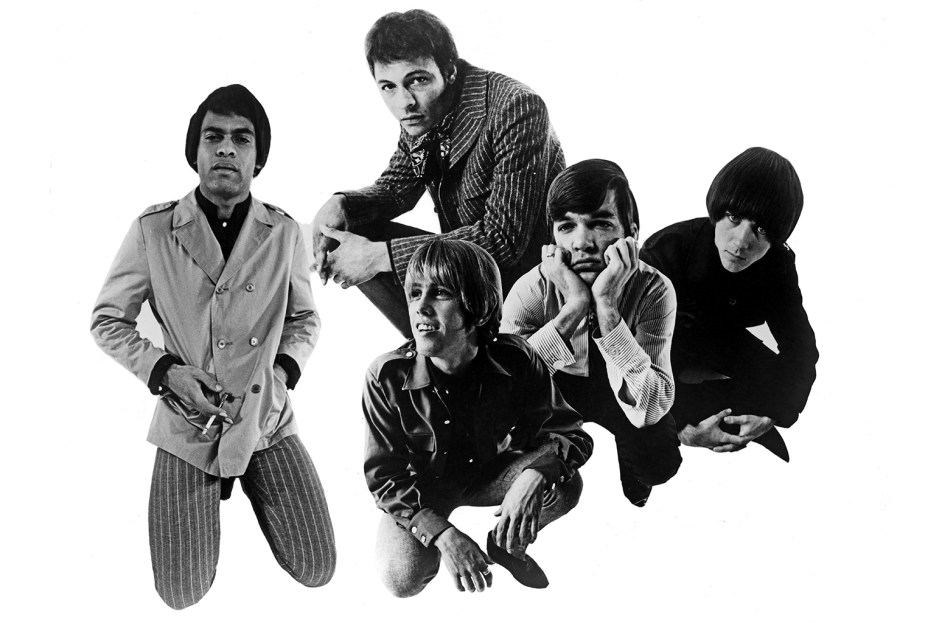
Love is an American rock band formed in Los Angeles in 1965. Led by Arthur Lee, the band's primary songwriter, they were one of the first racially diverse American rock bands. Their sound incorporated styles including psychedelic rock, folk rock and garage. While finding only modest success on the music charts, peaking in 1966 with their US No. 33 hit "7 and 7 Is," Love would come to be praised by critics as their third album, Forever Changes (1967), became generally regarded as one of the best albums of the 1960s.
The band's classic lineup is considered to consist of Lee, the guitarist and singer Bryan MacLean, the bassist Ken Forssi, the guitarist Johnny Echols and the drummer Donnie Conca, who was replaced by Alban "Snoopy" Pfisterer. By 1968, only Lee remained and he continued recording as Love with varied members through the 1970s. MacLean and Forssi died in 1998. Lee died in 2006. Forever Changes was added to the Library of Congress's National Recording Registry in 2011. In recent years, original member Johnny Echols has toured under the title of the Love Band or Love Revisited.
Singer/multi-instrumentalist Arthur Lee, who was originally from Memphis, Tennessee but had lived in Los Angeles since the age of five, had been recording since 1963 with his bands the LAG's and Lee's American Four. He wrote and produced the single "My Diary" for Rosa Lee Brooks in 1964, which featured Jimi Hendrix on guitar. The Sons Of Adam, which included future Love drummer Michael Stuart, recorded the Lee composition "Feathered Fish". After attending a performance by the Byrds, Lee decided to form a band that joined the newly minted folk-rock sound of the Byrds to his primarily rhythm and blues style.
Singer/guitarist Bryan MacLean, who had met Lee when he was working as a roadie for The Byrds, joined Lee's new band, which was first called the Grass Roots. MacLean had also been playing in bands around Los Angeles since about 1963. Also joining the band was another Memphis native, lead guitarist Johnny Echols, and drummer Don Conka. A short time later, Conka was replaced by Alban "Snoopy" Pfisterer. Love's first bassist, Johnny Fleckenstein, went on to join the Standells in 1967. Fleckenstein was replaced by Ken Forssi (formerly of a post-"Wipe Out" lineup of the Surfaris). Upon the appearance of another group called the Grass Roots, Lee changed the name of the new band to Love.
Love started playing the Los Angeles clubs in April 1965 and became a popular local attraction, while gaining the attention of the Rolling Stones and the Yardbirds. The band lived communally in a house called "the Castle", a large but run-down residence sourced by Ronnie Haran. It was a dilapidated mansion that the band was allowed to live in if they did the maintenance and paid the taxes. According to John Einarson in the book Forever Changes, the cover photo of their first two albums was of the band taken in Laurel Canyon at a burned down house that only had the remains of a fireplace left standing.
Signed to Elektra Records as the label's first rock act, the band scored a minor hit single in 1966 with their version of Burt Bacharach and Hal David's "My Little Red Book". Their first album, Love, was released in March 1966. The album sold moderately well and reached No. 57 on the Billboard 200 chart. The single "7 and 7 Is", released in July 1966 (from their second LP Da Capo), gained notice for the exceptional guitar work of Johnny Echols and proto-punk style drumming of Pfisterer. The single became Love's highest-charting single at No. 33 in the Billboard Hot 100. Two more members were added around this time, Tjay Cantrelli (real name John Barbieri) on woodwinds and Michael Stuart on drums. Pfisterer, never a confident drummer, switched to harpsichord. Elektra's art director, William S. Harvey, designed a distinctive logo for the band, "four cartoonish letters with exaggerated, curvaceous serifs", incorporating male and female symbols.
Arthur Lee had an exclusive contract with Herb Cohen for a short time after signing with Elektra Records. After Lee met Ronnie Haran, booking manager for the Whisky a Go Go, Cohen was fired by Arthur in favor of Haran. Haran continued to manage Love, despite not having an official contract, for a couple years. Mike Gruber took over after Haran departed as manager, though Haran remained somewhat involved with the group.
Love's second album, Da Capo, was released in November 1966 and included "7 and 7 Is" as well as the subsequent singles "She Comes in Colors" and "¡Que Vida!". It marked the experimental direction Arthur wanted to take. With the seven member lineup for Da Capo, shortly after this album, Cantrelli and Pfisterer left the band, leaving it as a five-piece once again. Their third album Forever Changes was released in November 1967 and was co-produced by Bruce Botnick. The album displayed a softer and more avant-garde approach for the band. By this time, tension arose between Arthur Lee and Bryan MacLean, who wanted more of his songs on the album. The band recorded the album in only 64 hours, though many professional session players were used, including some who replaced actual band members in one or two songs. Writer Richard Meltzer, in his book The Aesthetics of Rock, commented on Love's "orchestral moves", "post-doper word contraction cuteness", and Lee's vocal style that serves as a "reaffirmation of Johnny Mathis". Forever Changes had one single, MacLean's "Alone Again Or", which reached number 123 on the pop charts. By this stage, Love were far more popular in the UK, where the album reached No. 24, than in their home country, where it could only reach No. 154. Forever Changes has since received recognition as one of the greatest rock albums of all time, appearing on Rolling Stone magazine's list of The 500 Greatest Albums of All Time, being inducted into the Grammy Hall of Fame, and added to the Library of Congress's National Recording Registry in 2011.
Hub AI
Love (band) AI simulator
(@Love (band)_simulator)
Love (band)
Love is an American rock band formed in Los Angeles in 1965. Led by Arthur Lee, the band's primary songwriter, they were one of the first racially diverse American rock bands. Their sound incorporated styles including psychedelic rock, folk rock and garage. While finding only modest success on the music charts, peaking in 1966 with their US No. 33 hit "7 and 7 Is," Love would come to be praised by critics as their third album, Forever Changes (1967), became generally regarded as one of the best albums of the 1960s.
The band's classic lineup is considered to consist of Lee, the guitarist and singer Bryan MacLean, the bassist Ken Forssi, the guitarist Johnny Echols and the drummer Donnie Conca, who was replaced by Alban "Snoopy" Pfisterer. By 1968, only Lee remained and he continued recording as Love with varied members through the 1970s. MacLean and Forssi died in 1998. Lee died in 2006. Forever Changes was added to the Library of Congress's National Recording Registry in 2011. In recent years, original member Johnny Echols has toured under the title of the Love Band or Love Revisited.
Singer/multi-instrumentalist Arthur Lee, who was originally from Memphis, Tennessee but had lived in Los Angeles since the age of five, had been recording since 1963 with his bands the LAG's and Lee's American Four. He wrote and produced the single "My Diary" for Rosa Lee Brooks in 1964, which featured Jimi Hendrix on guitar. The Sons Of Adam, which included future Love drummer Michael Stuart, recorded the Lee composition "Feathered Fish". After attending a performance by the Byrds, Lee decided to form a band that joined the newly minted folk-rock sound of the Byrds to his primarily rhythm and blues style.
Singer/guitarist Bryan MacLean, who had met Lee when he was working as a roadie for The Byrds, joined Lee's new band, which was first called the Grass Roots. MacLean had also been playing in bands around Los Angeles since about 1963. Also joining the band was another Memphis native, lead guitarist Johnny Echols, and drummer Don Conka. A short time later, Conka was replaced by Alban "Snoopy" Pfisterer. Love's first bassist, Johnny Fleckenstein, went on to join the Standells in 1967. Fleckenstein was replaced by Ken Forssi (formerly of a post-"Wipe Out" lineup of the Surfaris). Upon the appearance of another group called the Grass Roots, Lee changed the name of the new band to Love.
Love started playing the Los Angeles clubs in April 1965 and became a popular local attraction, while gaining the attention of the Rolling Stones and the Yardbirds. The band lived communally in a house called "the Castle", a large but run-down residence sourced by Ronnie Haran. It was a dilapidated mansion that the band was allowed to live in if they did the maintenance and paid the taxes. According to John Einarson in the book Forever Changes, the cover photo of their first two albums was of the band taken in Laurel Canyon at a burned down house that only had the remains of a fireplace left standing.
Signed to Elektra Records as the label's first rock act, the band scored a minor hit single in 1966 with their version of Burt Bacharach and Hal David's "My Little Red Book". Their first album, Love, was released in March 1966. The album sold moderately well and reached No. 57 on the Billboard 200 chart. The single "7 and 7 Is", released in July 1966 (from their second LP Da Capo), gained notice for the exceptional guitar work of Johnny Echols and proto-punk style drumming of Pfisterer. The single became Love's highest-charting single at No. 33 in the Billboard Hot 100. Two more members were added around this time, Tjay Cantrelli (real name John Barbieri) on woodwinds and Michael Stuart on drums. Pfisterer, never a confident drummer, switched to harpsichord. Elektra's art director, William S. Harvey, designed a distinctive logo for the band, "four cartoonish letters with exaggerated, curvaceous serifs", incorporating male and female symbols.
Arthur Lee had an exclusive contract with Herb Cohen for a short time after signing with Elektra Records. After Lee met Ronnie Haran, booking manager for the Whisky a Go Go, Cohen was fired by Arthur in favor of Haran. Haran continued to manage Love, despite not having an official contract, for a couple years. Mike Gruber took over after Haran departed as manager, though Haran remained somewhat involved with the group.
Love's second album, Da Capo, was released in November 1966 and included "7 and 7 Is" as well as the subsequent singles "She Comes in Colors" and "¡Que Vida!". It marked the experimental direction Arthur wanted to take. With the seven member lineup for Da Capo, shortly after this album, Cantrelli and Pfisterer left the band, leaving it as a five-piece once again. Their third album Forever Changes was released in November 1967 and was co-produced by Bruce Botnick. The album displayed a softer and more avant-garde approach for the band. By this time, tension arose between Arthur Lee and Bryan MacLean, who wanted more of his songs on the album. The band recorded the album in only 64 hours, though many professional session players were used, including some who replaced actual band members in one or two songs. Writer Richard Meltzer, in his book The Aesthetics of Rock, commented on Love's "orchestral moves", "post-doper word contraction cuteness", and Lee's vocal style that serves as a "reaffirmation of Johnny Mathis". Forever Changes had one single, MacLean's "Alone Again Or", which reached number 123 on the pop charts. By this stage, Love were far more popular in the UK, where the album reached No. 24, than in their home country, where it could only reach No. 154. Forever Changes has since received recognition as one of the greatest rock albums of all time, appearing on Rolling Stone magazine's list of The 500 Greatest Albums of All Time, being inducted into the Grammy Hall of Fame, and added to the Library of Congress's National Recording Registry in 2011.
Recent media