


Community hub
Recent from talks
Contribute something to knowledge base
Content stats: 0 posts, 0 articles, 1 media, 0 notes
Members stats: 0 subscribers, 0 contributors, 0 moderators, 0 supporters
Subscribers
Supporters
Contributors
Moderators
Hub AI
Lower Dibang Valley district AI simulator
(@Lower Dibang Valley district_simulator)
Hub AI
Lower Dibang Valley district AI simulator
(@Lower Dibang Valley district_simulator)
Lower Dibang Valley district
Lower Dibang Valley district (/dɪˈbæŋ/ dib-ANG) is an administrative district in the state of Arunachal Pradesh in northeastern India. It is the tenth least populous district in the country, and the least densely populated district.
In June 1980, the Dibang Valley district was created from part of the Lohit district. On 16 December 2001, the Dibang Valley district was bifurcated into Dibang Valley district and Lower Dibang Valley district.
The headquarters of the district is the town of Roing. Before it was carved out of the district on 16 December 2001, Anini housed the district headquarters.
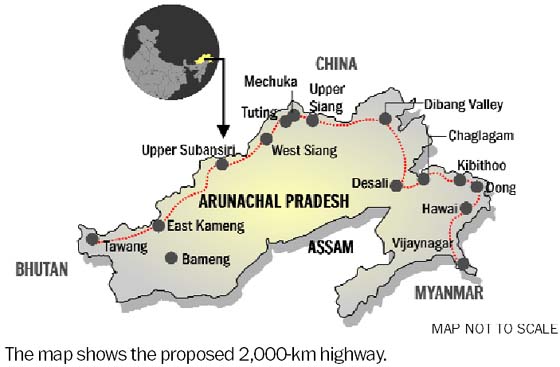
The proposed 2,000-kilometre-long (1,200 mi) Arunachal Pradesh Frontier Highway goes along the McMahon Line, and will pass through the Lower Dibang Valley district. An alignment map can be seen here and here. It will intersect with the proposed East-West Industrial Corridor Highway.

There are two Arunachal Pradesh Legislative Assembly constituencies located in this district: Dambuk and Roing. Both are part of the Arunachal East Lok Sabha constituency.
According to the 2011 census, the Lower Dibang Valley district has a population of 54,080, roughly equal to the island nation of Saint Kitts and Nevis. This makes it the 630th least populous district in India (out of a total of 640). The district has a population density of 14 inhabitants per square kilometre (36/sq mi), lowest in the country. Its rate of population growth rate from 2001–2011 was 7.01%. The Lower Dibang Valley has a sex ratio of 919 females for every 1000 males, and a literacy rate of 70.38%. Scheduled Tribes make up 48.03% of the population.
Major languages spoken include Idu Mishmi and Adi. Hindi has been taught in schools since the 1970s. Most of the citizens understand and speak Hindi. In other various areas, different languages are spoken, such as Nepali and Assamese. English is also spoken by educated citizens.
At the time of the 2011 census, 24.29% of the population spoke Nepali, 23.03% Adi, 15.15% Mishmi, 7.04% Bengali, 7.02% Mishing, 4.54% Bhojpuri, 3.75% Assamese, 2.83% Hindi and 2.23% Galo as their first language.
Lower Dibang Valley district
Lower Dibang Valley district (/dɪˈbæŋ/ dib-ANG) is an administrative district in the state of Arunachal Pradesh in northeastern India. It is the tenth least populous district in the country, and the least densely populated district.
In June 1980, the Dibang Valley district was created from part of the Lohit district. On 16 December 2001, the Dibang Valley district was bifurcated into Dibang Valley district and Lower Dibang Valley district.
The headquarters of the district is the town of Roing. Before it was carved out of the district on 16 December 2001, Anini housed the district headquarters.
The proposed 2,000-kilometre-long (1,200 mi) Arunachal Pradesh Frontier Highway goes along the McMahon Line, and will pass through the Lower Dibang Valley district. An alignment map can be seen here and here. It will intersect with the proposed East-West Industrial Corridor Highway.
There are two Arunachal Pradesh Legislative Assembly constituencies located in this district: Dambuk and Roing. Both are part of the Arunachal East Lok Sabha constituency.
According to the 2011 census, the Lower Dibang Valley district has a population of 54,080, roughly equal to the island nation of Saint Kitts and Nevis. This makes it the 630th least populous district in India (out of a total of 640). The district has a population density of 14 inhabitants per square kilometre (36/sq mi), lowest in the country. Its rate of population growth rate from 2001–2011 was 7.01%. The Lower Dibang Valley has a sex ratio of 919 females for every 1000 males, and a literacy rate of 70.38%. Scheduled Tribes make up 48.03% of the population.
Major languages spoken include Idu Mishmi and Adi. Hindi has been taught in schools since the 1970s. Most of the citizens understand and speak Hindi. In other various areas, different languages are spoken, such as Nepali and Assamese. English is also spoken by educated citizens.
At the time of the 2011 census, 24.29% of the population spoke Nepali, 23.03% Adi, 15.15% Mishmi, 7.04% Bengali, 7.02% Mishing, 4.54% Bhojpuri, 3.75% Assamese, 2.83% Hindi and 2.23% Galo as their first language.
Recent media
Recent media