Hubbry Logo
search
logo

Lucha VaVoom

logo
Community Hub0 Subscribers
Read side by side
from Wikipedia

Lucha VaVOOM is a lucha libre and Burlesque professional wrestling promotion based in Los Angeles, California. Founded in 2003.[1][2][3]

Key Information

[edit]

See also

[edit]

References

[edit]
[edit]
Revisions and contributorsEdit on WikipediaRead on Wikipedia
from Grokipedia
Lucha VaVoom is a Los Angeles-based variety show that combines Mexican lucha libre wrestling with American burlesque, comedy, and performance art, creating a high-energy spectacle often described as a blend of "sexo y violencia" (sex and violence).[1] Founded in 2002 by producers Liz Fairbairn and Rita D'Albert, it debuted at the Mayan Theater in downtown Los Angeles as a one-time event but evolved into a recurring institution with themed shows around holidays like Halloween and Cinco de Mayo.[2][1] The show's origins trace back to Fairbairn's decade-long relationship with a Mexican wrestler, which inspired her to adapt traditional lucha libre for American audiences by shortening matches and integrating burlesque elements for broader appeal.[1] Over two decades, Lucha VaVoom has featured iconic luchadores such as Cassandro, Magno, and Taya Valkyrie alongside burlesque performers like Audrey Deluxe, emphasizing acrobatic feats, colorful masks, and campy storytelling in a 21-and-over environment.[1][2] Its inclusive vibe has fostered a diverse fanbase, including Latino communities, hipsters, and queer audiences, while elevating lucha libre's popularity in the U.S. by bridging indie wrestling scenes with cultural performance.[2][3] Beyond Los Angeles, Lucha VaVoom has expanded internationally, with performances in cities like San Francisco, Amsterdam, and its UK debut in London in November 2025.[1][4] Following Rita D'Albert's departure in 2024, the production continues as Lucha VaVoom de La Liz under Liz Fairbairn, thrilling audiences with its signature mix of athleticism and entertainment as of November 2025.[5][6] The production's impact lies in its creative freedom, allowing wrestlers and performers to showcase Mexican heritage alongside modern queer expression, making it a pivotal force in contemporary variety entertainment.[2]

History

Founding and Early Development

Lucha VaVoom was founded in August 2002 by Liz Fairbairn, a Hollywood costume designer with a passion for lucha libre, and Rita D'Albert, a burlesque producer, in Los Angeles as a one-time fusion of Mexican masked wrestling and striptease performances.[7][8] The concept emerged from Fairbairn's experiences designing costumes for wrestlers and her collaboration with D'Albert through the Velvet Hammer burlesque troupe, aiming to blend high-energy athleticism with theatrical sensuality for a modern audience.[8][1] The debut show took place on August 28, 2002, at the Mayan Theatre in downtown Los Angeles, featuring alternating one-fall lucha libre matches—limited to about 15 minutes each—and short burlesque striptease acts by the Velvet Hammer performers, creating a fast-paced variety format.[9] The event drew a packed house of enthusiasts largely new to live wrestling, marking an immediate success despite its experimental nature on a midweek night.[9] Early operations faced challenges including initial skepticism about wrestling's appeal to Los Angeles' jaded arts crowd, a reliance on local independent wrestlers from promotions like Westside Pro Wrestling, and marketing primarily through word-of-mouth within the city's underground performance scene.[8][10] With a modest production scale, the founders handled much of the creative direction themselves, incorporating elements like comedic commentary to bridge the cultural gap.[1] From 2002 to 2005, Lucha VaVoom evolved from its one-off origins into a recurring production, expanding to three themed shows annually—typically around Valentine's Day, summer, and Halloween—while solidifying a core team that included co-founder and co-producer Michelle Carr.[8][10] This period established the show's signature rhythm of athletic spectacle and variety entertainment at the Mayan, laying the groundwork for broader recognition.[2]

Expansion and Key Milestones

Following its early shows at the Mayan Theatre starting in 2002, Lucha VaVoom expanded its production scale during the 2006-2010 period by introducing recurring themed events, such as annual Cinco de Mayo specials that fused wrestling matches with burlesque and live music performances.[1] These themed productions, including holiday-themed spectacles like Halloween and Valentine's Day shows, helped solidify the event's reputation as a multimedia variety extravaganza, drawing consistent crowds exceeding 1,000 attendees per performance at the Mayan.[2] Celebrity guest appearances, such as those by musicians and comedians, further boosted visibility and attendance during this era, contributing to sold-out nights and the show's transition from occasional events to a staple of Los Angeles nightlife.[5] The show's 20th anniversary in 2022 marked a significant milestone, with special retrospective performances at the Mayan Theatre that highlighted two decades of the wrestling-burlesque fusion, including expanded formats incorporating live music acts and guest wrestlers to celebrate its longevity.[2] In 2023, the production launched a Las Vegas residency at the House of Blues at Mandalay Bay Resort & Casino, extending Lucha VaVoom's reach beyond Los Angeles for the first time in a sustained capacity.[11] In 2023, a Los Angeles Times feature profiled Lucha VaVoom as an enduring Los Angeles institution, emphasizing its evolution into a psychedelic circus blending lucha libre, burlesque, comedy, and visual arts over two decades.[2] The production adapted to post-pandemic challenges by incorporating hybrid live-streaming options for events, allowing virtual access alongside in-person attendance, as seen in streamed Cinco de Mayo specials and other holiday shows.[12] By 2025, the farewell production "The Good, the Bad and the Fabulous" on August 22 at the Mayan Theatre concluded a 23-year run at the venue, featuring high-profile guests and aerial performances. Following the permanent closure of the Mayan in September 2025, Lucha VaVoom relocated to the Fox Theater in Pomona as its new permanent home.[13][14] Production enhancements during this expansion included the integration of professional lighting and sound teams to support the increasingly elaborate sets and multimedia elements, alongside partnerships with promoters like We Are Hear for consistent event scheduling and streaming capabilities.[15] These developments ensured reliable biannual programming, with summer and holiday seasons becoming fixtures that maintained the show's high-energy format amid venue transitions.[2]

Show Format and Elements

Lucha Libre Integration

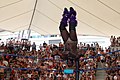
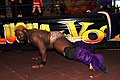
Lucha VaVoom incorporates core elements of traditional Mexican lucha libre wrestling, emphasizing high-flying aerial maneuvers such as flips and twists from the top ropes, alongside masked personas that distinguish rudos (villainous heels) from tecnicos (heroic faces) in tag-team matches adapted to the show's fast-paced variety format.[2][16] These elements blend acrobatic athleticism with dramatic storytelling, where wrestlers portray colorful, superhero-inspired characters to engage audiences emotionally.[2] The wrestling ring is staged within intimate theater spaces, such as the Mayan Theater in Los Angeles, positioning it close to the audience for an immersive, circus-like atmosphere that heightens the excitement of the bouts.[2] Matches are strategically interspersed with intermissions for burlesque and comedy acts, ensuring a seamless flow in the overall two-hour production while referees enforce rules like 20-second count-outs and disqualifications for mask removals or excessive fouls, often with humorous flair to match the show's campy tone.[16][2] Unique to Lucha VaVoom, the bouts are shorter than conventional lucha libre contests, typically condensed to fit the variety pacing alongside non-wrestling segments, with an added emphasis on theatrical elements like pop culture-inspired costumes and props over extended athletic endurance.[16] This adaptation allows for crossover appeal, such as occasional prop integrations that bridge wrestling with burlesque transitions.[2] Performers include both local Los Angeles-based luchadores from the indie scene and imported talents from Mexico, with an emphasis on safety in this hybrid entertainment environment.[2] As of 2025, the format remains consistent following the closure of the Mayan Theater.[13]

Burlesque and Variety Performances

The burlesque performances in Lucha VaVoom form a central non-wrestling component, characterized by classic tease-and-reveal striptease routines that occur during intermissions between wrestling matches.[17] These acts typically feature performers in elaborate costumes adorned with feather boas, culminating in reveals with pasties and tassel spins, emphasizing playful seduction and glamour.[17] Audience participation is often incorporated, with crowd members invited onstage for interactive elements that heighten the chaotic energy of the show.[17] Complementing the burlesque are variety acts that add layers of entertainment, including short comedy skits that poke fun at wrestling tropes, live music sets from rock or mariachi bands to energize the crowd, and aerial performances executed post-match.[17] These elements are designed with thematic ties to the lucha libre segments, such as "sexy referee" routines that blend humor and allure, while ensuring a gender-diverse lineup of performers.[17] Live music and aerial displays provide dynamic transitions, maintaining momentum in the overall production.[16] The pacing of these performances is tightly structured to fit seamlessly into the show's high-octane flow and allow for quick shifts back to wrestling action.[17] This format ensures a balanced rhythm, preventing fatigue while amplifying the spectacle's absurdity and excitement. Over time, Lucha VaVoom's burlesque and variety acts have evolved from simpler striptease routines in its early 2000s inception to more polished productions by the 2010s, incorporating professional costume designers and choreographers to enhance visual and performative sophistication.[2] This progression reflects the show's growth into a refined hybrid entertainment form, with expanded global appeal and intricate staging.[17]

Notable Performers and Contributors

Luchadores and Wrestlers

Magno, a luchador from the El Paso-Ciudad Juárez region, has been a foundational figure in Lucha VaVoom since its inception in 2002, renowned for his high-flying aerial maneuvers and robust physique that embodies the show's blend of athleticism and spectacle.[18][13] As one of the promotion's longest-tenured performers, real name Oscar Vasquez, Magno has consistently delivered dynamic matches that highlight traditional lucha libre techniques adapted to the variety stage format.[19] Homegrown talents such as the comedic tag team Los Pollos Locos have added levity and character-driven storytelling to Lucha VaVoom's wrestling segments, specializing in humorous antics and synchronized routines that play to the audience's energy.[20] Their performances emphasize exaggerated personas and crowd interaction, contributing to the show's accessible, entertainment-focused vibe without sacrificing wrestling fundamentals. The promotion has also featured imported legends to elevate its prestige, including El Hijo del Santo, Blue Demon Jr., and Cassandro—often dubbed the "Liberace of Lucha Libre" for his flamboyant, gender-bending style—in high-profile milestone matches.[21][17] These appearances, such as Cassandro's bouts at the Mayan Theatre, have drawn in traditional lucha fans while showcasing innovative rivalries that align with VaVoom's theatrical ethos.[22] Local wrestlers in Lucha VaVoom adapt to the variety format by developing masked identities that integrate with the broader show, often incorporating character work that complements burlesque elements through brief hybrid interactions.[23] This emphasis on persona allows performers to transition seamlessly between intense athletic sequences and lighter, narrative-driven spots, fostering a unique stage presence. These luchadores have significantly heightened the show's athletic dimension, as seen in the high-flying sequences during 2025 performances at The Mayan Theatre, where aerial dives and rapid tags created pulse-pounding climaxes amid the venue's final run.[24][5] Their contributions underscore Lucha VaVoom's evolution of lucha libre into a high-energy, crowd-pleasing hybrid.

Burlesque Artists and Guest Entertainers

Lucha VaVoom has featured a roster of prominent burlesque performers known for their glamorous, high-energy routines that draw inspiration from classic icons like Dita Von Teese, emphasizing elaborate costumes, seductive choreography, and theatrical flair. Regular acts include diverse talents such as Viva Van and Lady Pink, who deliver empowering striptease numbers, alongside contortionists and aerialists like the Poubelle Twins and Skylar Benton, whose performances blend physical prowess with sensual elements. The show's commitment to inclusivity is evident in its spotlight on queer and plus-size artists, including gender-bending dancers and body-positive performers who challenge traditional beauty standards through bold, celebratory acts.[25][7][26] Celebrity guests have frequently elevated the variety segments with their star power and unique contributions. Comedians like Jack Black and Fred Armisen have served as hosts and provided improvised skits, adding humorous commentary that ties into the show's chaotic energy. Musicians such as Peaches have delivered live sets infused with punk and electronic vibes, while drag superstar Violet Chachki has performed sultry numbers that highlight her runway precision and camp aesthetics. These appearances often feature high-profile collaborators like Marawa the Amazing, a 12-time Guinness World Record holder for hula-hooping, who incorporates aerial and rhythmic elements into her routines.[25][2][27] Guest integration emphasizes thematic cohesion, with one-off performances tailored to special events for maximum impact. For instance, the 2010 Halloween show at The Fillmore showcased aerial hoop acts combined with striptease routines, creating a spooky yet seductive interlude between wrestling bouts. Such appearances, including holiday specials, allow entertainers to experiment with hybrid formats like contortion-infused burlesque or drag-enhanced aerial displays, enhancing the overall spectacle without overshadowing the core format.[20][28] Participation in Lucha VaVoom has provided significant career boosts for many burlesque and variety artists by offering exposure to diverse audiences and fostering the neo-burlesque revival. Founder Rita D'Albert's vision has launched performers into broader recognition, with acts gaining visibility through international tours and media features. The platform has sustained careers by blending subcultural elements with mainstream appeal, enabling artists like Violet Chachki to cross over from niche drag scenes to larger entertainment circuits.[28][16][7]

Venues and Productions

Primary Los Angeles Venues

Lucha VaVoom's primary venue in Los Angeles was the Mayan Theater, located at 1038 S. Hill Street in downtown, from its debut show there on August 28, 2002, until 2025. This historic Mayan Revival-style theater, originally opened in 1927 as a legitimate stage for musical comedies, features a capacity of approximately 1,500 seats across its main floor and balcony, providing an intimate setting that aligned with the show's high-energy, interactive format. The venue's central location in Los Angeles' vibrant downtown arts district allowed Lucha VaVoom to draw diverse crowds, fostering an underground vibe in its early years before achieving broader mainstream appeal through recurring performances.[6][29][2] The Mayan Theater's architecture and layout were key to shaping Lucha VaVoom's energetic atmosphere, with custom adaptations enhancing the intimacy between performers and audiences. The wrestling ring was typically installed over the theater's dance floor area on the main level, positioning it close to spectators for immersive viewing, including ring-side seating and standing areas at the first-floor bar where fans could cheer directly at the action. Specialized lighting setups accentuated the burlesque elements with glamorous, colorful effects, while production teams implemented crowd control measures to manage the rowdy interactions, such as wrestlers engaging with the audience during matches. These modifications transformed the historic space into a dynamic arena suited for the show's blend of athleticism and performance art, hosting events until the final show on August 22, 2025, and the venue's closure on September 13, 2025.[30][31][27][6][21] Following the Mayan Theater's closure, Lucha VaVoom relocated its primary performances to the Fox Theater in Pomona, California, located at 301 S. Garey Avenue. This historic Art Deco theater, originally opened in 1938 and restored in 2009, has a capacity of approximately 2,000 and serves as the new home for the show's themed events as of November 2025, starting with the Día de los Muertos celebration on November 8, 2025. The move to Pomona, part of the city's Arts Colony, continues Lucha VaVoom's tradition of utilizing culturally significant venues to blend lucha libre heritage with performance art.[19][32] By rooting itself at these venues, Lucha VaVoom reinforced its ties to Los Angeles' multicultural arts scene, drawing on the city's rich history of Mexican-American influences and innovative performance traditions. The venues' proximities to cultural hubs amplified the show's role in celebrating hybrid entertainment forms, blending lucha libre's heritage with burlesque's theatrical flair in spaces that echoed the city's diverse, inclusive spirit. This LA-centric foundation helped establish Lucha VaVoom as a staple of the local entertainment landscape for over two decades.[2][5]

Tours and International Events

Lucha VaVoom began expanding beyond its Los Angeles base with national tours in the late 2000s and 2010s, bringing its high-energy blend of lucha libre wrestling, burlesque, and comedy to audiences in major U.S. cities. A notable 2010 fall tour included performances at the Showbox in Seattle on October 21, the Roseland Ballroom in Portland on October 24, the Fillmore Auditorium in San Francisco on October 31, and Park West in Chicago on November 11.[33][20][34] Earlier stops encompassed New York's Webster Hall in September 2009 and Philadelphia's Theatre of the Living Arts on May 7, 2010, adapting the production for diverse venues while maintaining its signature chaotic spectacle.[35][36] These U.S. tours often scaled up for larger arenas, incorporating pyrotechnics to amplify the wrestling matches and overall visual impact, as seen in the Seattle leg where explosive effects backed the bouts.[37] Additional runs visited Las Vegas and Baltimore's Sonar club in 2010, broadening the show's reach and drawing crowds with its irreverent mix of athleticism and entertainment.[38][39] Internationally, Lucha VaVoom ventured outside the U.S. early on, with performances in Amsterdam around 2009, followed by shows in Toronto and Calgary.[1][40] A 2023 collaboration with Republic of Lucha featured an outdoor event in Paris on June 3 at Place du Châtelet during Nuit Blanche, showcasing the troupe's adaptability to festival-style settings.[41] The production's UK debut occurred on November 8, 2025, at London's Troxy, blending wrestling with live music from acts like Hot Wax and the Jim Jones Revue All Stars in a high-octane evening of comedy-infused chaos.[42] Special events have punctuated the tours, including NPR-highlighted Cinco de Mayo appearances starting in 2009, which celebrated Mexican heritage through wrestling and burlesque fusions, and pop-up shows tied to anniversaries like the 20th in 2023.[16][2] Post-2010, the show shifted to occasional national and international outings, enhancing its visibility without diluting the core format of masked matches, aerial stunts, and guest entertainers such as comedian Fred Armisen in prior productions.[7][43]

Cultural Impact and Legacy

Reception and Critical Acclaim

Lucha VaVoom received early praise in the 2000s for its innovative fusion of Mexican masked wrestling, burlesque, and comedy, which brought high energy to Los Angeles entertainment at a time when rock scenes lacked theatricality and physicality. Founded in 2002 by Rita D'Albert and Liz Fairbairn, the show's debut at the Mayan Theatre drew an enthusiastic, initially niche crowd including families, surprising producers given the city's jaded reputation for spectacles. Over the decade, attendance grew steadily, evolving from modest gatherings to sold-out performances at The Mayan Theatre, where front-row seats for the high-risk action became the first to sell out.[8] Major accolades followed, cementing its status as a cultural staple. A 2023 Los Angeles Times article described Lucha VaVoom as an "L.A. institution" after over two decades of blending camp, silliness, and awe-inspiring indie lucha libre.[2] NPR featured it in 2009 as a singular Cinco de Mayo sensation, highlighting its unique mix of shorter wrestling bouts and American burlesque that captivated diverse audiences.[16] In 2025, Slam Wrestling covered its final shows at The Mayan, praising the enduring spectacle's high-octane energy and emotional farewell to the venue.[21] The production has maintained a consistent 20-plus-year run, regularly drawing peak crowds of over 1,500 to venues like The Mayan, with positive audience feedback emphasizing its accessible, high-energy vibe that appeals to adults across diverse backgrounds.[40][21] While some reviews noted occasional formulaic elements, such as repetitive audience chants and structured comedic bits, these were balanced by widespread acclaim for the show's polished production values and nonstop action.[20] Following the closure of the Mayan Theatre in September 2025, Lucha VaVoom relocated to the Fox Theater in Pomona, continuing its legacy with sold-out events as of November 2025.[6]

Influence on Queer and Performance Communities

Lucha VaVoom has prioritized queer inclusivity from its 2002 debut, integrating LGBTQ+ performers such as nonbinary and gender-nonconforming artists alongside luchadores of all genders, thereby fostering safe spaces for diverse audiences within the historically conservative and machismo-driven traditions of lucha libre.[44] This approach is exemplified by gender-fluid acts like those of exótico wrestler Cassandro el Exótico, known as the "Liberace of Lucha Libre," whose glamorous, glittery costumes and dance routines directly challenge heteronormative expectations in both wrestling and burlesque performance.[44][8] By blending hyper-masculine wrestling with queer-friendly burlesque and variety elements, the production creates an "unstraight, open-minded" environment that celebrates flamboyance and visibility for queer Mexican American culture.[45] The show's community impact is evident in its contributions to Los Angeles's burlesque revival and the emergence of queer wrestling scenes, evolving into a staple of queer entertainment that attracts over 1,000 attendees to events honoring icons like Cassandro.[44][46] As detailed in a 2022 analysis, Lucha VaVoom's high-octane fusion has provided a platform for out LGBTQ+ wrestlers and erotic aerialists, boosting visibility and participation in hybrid performance arts while resonating with queer families and allies seeking representation.[44] On a broader scale, Lucha VaVoom has inspired similar fusions in drag-wrestling events by pioneering the integration of exóticos and burlesque, subverting traditional machismo through skilled, unapologetically queer athleticism that influences global performance circuits.[7] It has also offered mentorship opportunities to emerging artists, such as providing early-stage aerial burlesque debuts for RuPaul's Drag Race winner Violet Chachki in 2016, helping launch queer performers into wider acclaim.[47][45] In its legacy, Lucha VaVoom promotes body positivity and intersectional themes by showcasing diverse body types and cultural identities in burlesque acts that blend Mexican heritage with queer expression, as seen in ongoing productions like the 2025 Día de los Muertos show at the Fox Theater in Pomona featuring international aerialists and contortionists.[48][8][19] This emphasis continues to challenge rigid gender norms, creating inclusive narratives that intersect ethnicity, sexuality, and performance artistry.[44]

References

User Avatar
No comments yet.