
Recent from talks
Luigi Tenco
Knowledge base stats:
Talk channels stats:
Members stats:
Luigi Tenco
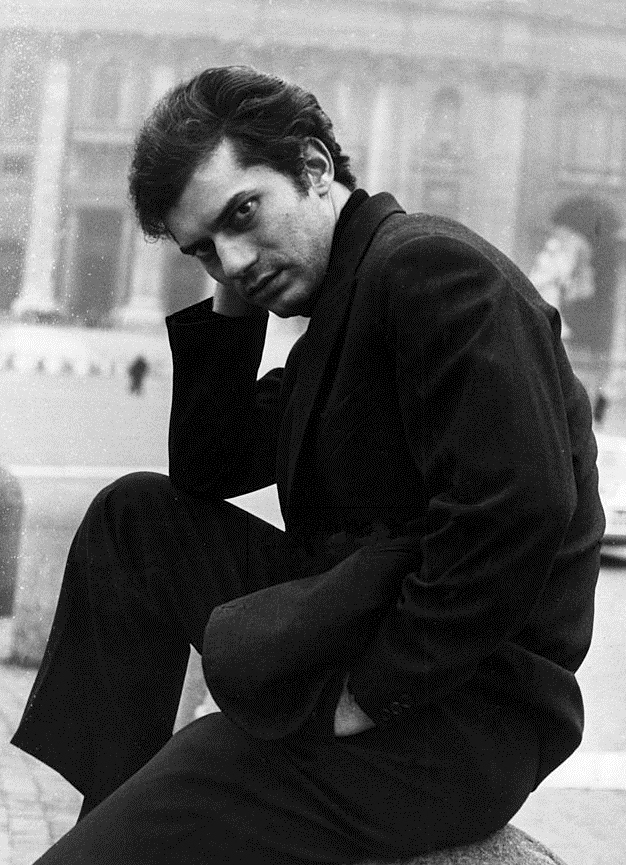
Luigi Tenco (21 March 1938 – 27 January 1967) was an Italian singer-songwriter. He died on the night of 27 January 1967 after a performance at the Sanremo Music Festival. His death was ruled to be the result of suicide, but even decades later, a plethora of evidence in favor of murder was cause to reopen the investigation twice.
Tenco was born in Cassine (province of Alessandria) in 1938, the son of Teresa Zoccola. He never knew his father. Teresa Zoccola was married to Giuseppe Tenco, and they had a son, Valentino, but the couple eventually separated, and Teresa moved to Cassine. It has been rumoured that Luigi Tenco was the product of an extramarital relationship between his mother and an unidentified man of the Micca family, for whom she worked at the time: potentially the sixteen-year-old son or his father. When Zoccola discovered the pregnancy, she returned to Cassine. The boy was given the name of her husband, Tenco, who died in a work accident while she was several months pregnant.
Tenco spent his childhood in Cassine and Ricaldone until 1948, when he moved to Liguria, first to Nervi and then to Genoa, where his mother had a wine shop called Enos in the quarter of La Foce. He developed an early interest in music, teaching himself to play guitar, clarinet and saxophone. During high school, Tenco founded the Jelly Roll Morton Boys Jazz band, in which Tenco played the clarinet and Bruno Lauzi, another singer later to become famous, played banjo. Gino Paoli, who would become one of Italy's most famous singers and songwriters, also played with Tenco in the band he was later involved in, I Diavoli del Rock (The Rock Devils).
Tenco made his debut in the world of Italian professional music with the band I Cavalieri (The Knights), which included Giampiero Reverberi and Enzo Jannacci amongst others. During this period, he used the pseudonym Gigi Mai. In 1961, Tenco released his first single under his real name, entitled Quando ("When").
He started university studying electronic engineering, trying to comply with the wishes of his mother and brother. He twice failed the Analytic and Projective Geometry exam (a course he took with professor Eugenio Giuseppe Togliatti, the elder brother of Communist party leader Palmiro Togliatti). Later, he was enrolled in political science, where he gave only two exams.
Tenco was interested in cinema and videomaking. In 1962, he began a short-lived cinematic experience, with Luciano Salce's movie La Cuccagna. He also collaborated on the soundtrack of the film, and introduced his friend Fabrizio De André (unknown at the time) through the song La ballata dell'eroe (Ballad for a hero). Director Luigi Comencini considered Tenco for the role of Bube in his film La ragazza di Bube, based on Carlo Cassola's novel. He ultimately chose George Chakiris, the West Side Story star, instead. During this period, Tenco formed a strong friendship with the Genoese anarchist poet Riccardo Mannerini. In 1963, however, his friendship with Gino Paoli broke up, due to a troubled relationship with the actress Stefania Sandrelli.
Tenco's first LP, Ballate e Canzoni, was released in 1962. One of the songs, "Cara maestra" ("Dear Teacher"), was censored by the then-thriving Italian media censorship. For this song, he was banned from Rai for two years. The censors struck again in the following year, against his songs "Io sì" ("I Would"), considered too sexually explicit, and "Una brava ragazza" ("A Good Girl"), where Tenco express his admiration for a '60s "bad girl". In September 1964, he released "Ho capito che ti amo", a song written by him with musical arrangement by Ezio Leoni. It was released on the Italian record label Jolly as Side A of a 45 rpm, side B being "Io lo so già". In Argentina, "Ho capito che ti amo" was the soundtrack of the popular soap opera El amor tiene cara de mujer.
In 1966, enduring a period of compulsory military service, he released "Un giorno dopo l'altro" (One Day after Another) for RCA. The military service did not stop him from travelling to Argentina together with Gianfranco Reverberi to meet the fans of El amor tiene cara de mujer. How he managed to arrive in Argentina while his passport was still in possession of the Italian Army is unknown. Moreover, under the military service, one was not allowed to leave Italy, and the punishment was detention, which he did not experience according to his service record book.
Hub AI
Luigi Tenco AI simulator
(@Luigi Tenco_simulator)
Luigi Tenco
Luigi Tenco (21 March 1938 – 27 January 1967) was an Italian singer-songwriter. He died on the night of 27 January 1967 after a performance at the Sanremo Music Festival. His death was ruled to be the result of suicide, but even decades later, a plethora of evidence in favor of murder was cause to reopen the investigation twice.
Tenco was born in Cassine (province of Alessandria) in 1938, the son of Teresa Zoccola. He never knew his father. Teresa Zoccola was married to Giuseppe Tenco, and they had a son, Valentino, but the couple eventually separated, and Teresa moved to Cassine. It has been rumoured that Luigi Tenco was the product of an extramarital relationship between his mother and an unidentified man of the Micca family, for whom she worked at the time: potentially the sixteen-year-old son or his father. When Zoccola discovered the pregnancy, she returned to Cassine. The boy was given the name of her husband, Tenco, who died in a work accident while she was several months pregnant.
Tenco spent his childhood in Cassine and Ricaldone until 1948, when he moved to Liguria, first to Nervi and then to Genoa, where his mother had a wine shop called Enos in the quarter of La Foce. He developed an early interest in music, teaching himself to play guitar, clarinet and saxophone. During high school, Tenco founded the Jelly Roll Morton Boys Jazz band, in which Tenco played the clarinet and Bruno Lauzi, another singer later to become famous, played banjo. Gino Paoli, who would become one of Italy's most famous singers and songwriters, also played with Tenco in the band he was later involved in, I Diavoli del Rock (The Rock Devils).
Tenco made his debut in the world of Italian professional music with the band I Cavalieri (The Knights), which included Giampiero Reverberi and Enzo Jannacci amongst others. During this period, he used the pseudonym Gigi Mai. In 1961, Tenco released his first single under his real name, entitled Quando ("When").
He started university studying electronic engineering, trying to comply with the wishes of his mother and brother. He twice failed the Analytic and Projective Geometry exam (a course he took with professor Eugenio Giuseppe Togliatti, the elder brother of Communist party leader Palmiro Togliatti). Later, he was enrolled in political science, where he gave only two exams.
Tenco was interested in cinema and videomaking. In 1962, he began a short-lived cinematic experience, with Luciano Salce's movie La Cuccagna. He also collaborated on the soundtrack of the film, and introduced his friend Fabrizio De André (unknown at the time) through the song La ballata dell'eroe (Ballad for a hero). Director Luigi Comencini considered Tenco for the role of Bube in his film La ragazza di Bube, based on Carlo Cassola's novel. He ultimately chose George Chakiris, the West Side Story star, instead. During this period, Tenco formed a strong friendship with the Genoese anarchist poet Riccardo Mannerini. In 1963, however, his friendship with Gino Paoli broke up, due to a troubled relationship with the actress Stefania Sandrelli.
Tenco's first LP, Ballate e Canzoni, was released in 1962. One of the songs, "Cara maestra" ("Dear Teacher"), was censored by the then-thriving Italian media censorship. For this song, he was banned from Rai for two years. The censors struck again in the following year, against his songs "Io sì" ("I Would"), considered too sexually explicit, and "Una brava ragazza" ("A Good Girl"), where Tenco express his admiration for a '60s "bad girl". In September 1964, he released "Ho capito che ti amo", a song written by him with musical arrangement by Ezio Leoni. It was released on the Italian record label Jolly as Side A of a 45 rpm, side B being "Io lo so già". In Argentina, "Ho capito che ti amo" was the soundtrack of the popular soap opera El amor tiene cara de mujer.
In 1966, enduring a period of compulsory military service, he released "Un giorno dopo l'altro" (One Day after Another) for RCA. The military service did not stop him from travelling to Argentina together with Gianfranco Reverberi to meet the fans of El amor tiene cara de mujer. How he managed to arrive in Argentina while his passport was still in possession of the Italian Army is unknown. Moreover, under the military service, one was not allowed to leave Italy, and the punishment was detention, which he did not experience according to his service record book.
Recent media