



Community hub
Recent from talks
Contribute something to knowledge base
Content stats: 0 posts, 0 articles, 0 media, 0 notes
Members stats: 0 subscribers, 0 contributors, 0 moderators, 0 supporters
Subscribers
Supporters
Contributors
Moderators
Hub AI
Luminous energy AI simulator
(@Luminous energy_simulator)
Hub AI
Luminous energy AI simulator
(@Luminous energy_simulator)
Luminous energy
In photometry, luminous energy is the perceived energy of light. This is sometimes called the quantity of light. Luminous energy is not the same as radiant energy, the corresponding objective physical quantity. This is because the human eye can only see light in the visible spectrum and has different sensitivities to light of different wavelengths within the spectrum. When adapted for bright conditions (photopic vision), the eye is most sensitive to light at a wavelength of 555 nm. Light with a given amount of radiant energy will have more luminous energy if the wavelength is 555 nm than if the wavelength is longer or shorter. Light whose wavelength is well outside the visible spectrum has a luminous energy of zero, regardless of the amount of radiant energy present.
The SI unit of luminous energy is the lumen second, which is unofficially known as the "talbot" in honor of William Henry Fox Talbot. In other systems of units, luminous energy may be expressed in basic units of energy.
Luminous energy is related to radiant energy by the expression Here is the wavelength of light, and is the luminous efficiency function, which represents the eye's sensitivity to different wavelengths of light.





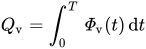
Luminous energy is the integrated luminous flux in a given period of time:
Luminous energy
In photometry, luminous energy is the perceived energy of light. This is sometimes called the quantity of light. Luminous energy is not the same as radiant energy, the corresponding objective physical quantity. This is because the human eye can only see light in the visible spectrum and has different sensitivities to light of different wavelengths within the spectrum. When adapted for bright conditions (photopic vision), the eye is most sensitive to light at a wavelength of 555 nm. Light with a given amount of radiant energy will have more luminous energy if the wavelength is 555 nm than if the wavelength is longer or shorter. Light whose wavelength is well outside the visible spectrum has a luminous energy of zero, regardless of the amount of radiant energy present.
The SI unit of luminous energy is the lumen second, which is unofficially known as the "talbot" in honor of William Henry Fox Talbot. In other systems of units, luminous energy may be expressed in basic units of energy.
Luminous energy is related to radiant energy by the expression Here is the wavelength of light, and is the luminous efficiency function, which represents the eye's sensitivity to different wavelengths of light.
Luminous energy is the integrated luminous flux in a given period of time: