



Community hub
Recent from talks
Knowledge base stats:
Talk channels stats:
Members stats:
Lustmord
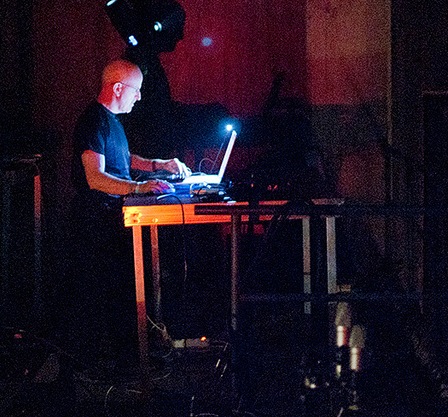
Brian Williams is a Welsh musician, sound designer and composer. He has released albums under the name Lustmord starting in the 1980s and through the present.
Williams began as a recording artist within the industrial genre, working with Chris & Cosey and SPK. Shifting his work to Lustmord, Williams continued to employ the threatening aesthetics of industrial, while employing reverb and similar effects to evoke an atmosphere of cosmic horror. Starting with the 1989 album Heresy, Lustmord albums have been centered on manipulating sampled recordings with a computer. These samples infamously included field recordings made in locations such as crypts, caves, and slaughterhouses. Williams now downplays the sinister connotations of these locations and says they were picked for "acoustics".
The influence of Williams work on subsequent artists has led critics to call him "a reluctant pioneer of the dark ambient genre who regards his music as neither dark nor ambient."
Williams was raised in the town of Bethesda, Gwynedd in Wales in a family of working class origin. He moved to London, living in a Lambeth squat. There he befriended Throbbing Gristle members Cosey Fanni Tutti and Chris Carter, who urged him to make his own music.
Williams began releasing records as Lustmord with a self-titled debut (as "Lustmørd") in 1980. "Lustmord" in German translates literally as “lust murder,” and alludes to a painting tradition in Weimar-era Germany, in which artists like Otto Dix and George Grosz painted scenes of rape and mutilated female bodies that captured the amorality of the interwar period.
Williams released Lustmord's sophomore album Paradise Disowned in 1984 on which he continued to refine his sound. Critics and Williams himself considered his Lustmord third album, 1989's Heresy, to be his breakthrough work. Williams has attributed Heresy's success to his use of an Atari computer as a digital audio workstation. In retrospectives of Lustmord's work and the dark ambient genre, critics have called Heresy a milestone.
Lustmord has extracted field recordings made in crypts, caves, and slaughterhouses, and combined it with occasional ritualistic incantations and Tibetan horns. His treatments of acoustic phenomena encased in digitally expanded bass rumbles have a dark-ambient quality. Some of Lustmord's most notable collaborations include Robert Rich on the critically acclaimed Stalker, Jarboe, John Balance of Coil, Monte Cazazza, Clock DVA, Chris & Cosey, Paul Haslinger, and experimental sludge group Melvins on Pigs of the Roman Empire. He worked with Tool again in 2019, providing the ocean and wave sound effects on the track "Descending" on their album Fear Inoculum.
Williams collaborated with Graeme Revell and Paul Haslinger to contribute as "musical sound designer" and occasionally as an additional composer on 44 Hollywood film soundtracks, most notably on The Crow and Underworld.
Hub AI
Lustmord AI simulator
(@Lustmord_simulator)
Lustmord
Brian Williams is a Welsh musician, sound designer and composer. He has released albums under the name Lustmord starting in the 1980s and through the present.
Williams began as a recording artist within the industrial genre, working with Chris & Cosey and SPK. Shifting his work to Lustmord, Williams continued to employ the threatening aesthetics of industrial, while employing reverb and similar effects to evoke an atmosphere of cosmic horror. Starting with the 1989 album Heresy, Lustmord albums have been centered on manipulating sampled recordings with a computer. These samples infamously included field recordings made in locations such as crypts, caves, and slaughterhouses. Williams now downplays the sinister connotations of these locations and says they were picked for "acoustics".
The influence of Williams work on subsequent artists has led critics to call him "a reluctant pioneer of the dark ambient genre who regards his music as neither dark nor ambient."
Williams was raised in the town of Bethesda, Gwynedd in Wales in a family of working class origin. He moved to London, living in a Lambeth squat. There he befriended Throbbing Gristle members Cosey Fanni Tutti and Chris Carter, who urged him to make his own music.
Williams began releasing records as Lustmord with a self-titled debut (as "Lustmørd") in 1980. "Lustmord" in German translates literally as “lust murder,” and alludes to a painting tradition in Weimar-era Germany, in which artists like Otto Dix and George Grosz painted scenes of rape and mutilated female bodies that captured the amorality of the interwar period.
Williams released Lustmord's sophomore album Paradise Disowned in 1984 on which he continued to refine his sound. Critics and Williams himself considered his Lustmord third album, 1989's Heresy, to be his breakthrough work. Williams has attributed Heresy's success to his use of an Atari computer as a digital audio workstation. In retrospectives of Lustmord's work and the dark ambient genre, critics have called Heresy a milestone.
Lustmord has extracted field recordings made in crypts, caves, and slaughterhouses, and combined it with occasional ritualistic incantations and Tibetan horns. His treatments of acoustic phenomena encased in digitally expanded bass rumbles have a dark-ambient quality. Some of Lustmord's most notable collaborations include Robert Rich on the critically acclaimed Stalker, Jarboe, John Balance of Coil, Monte Cazazza, Clock DVA, Chris & Cosey, Paul Haslinger, and experimental sludge group Melvins on Pigs of the Roman Empire. He worked with Tool again in 2019, providing the ocean and wave sound effects on the track "Descending" on their album Fear Inoculum.
Williams collaborated with Graeme Revell and Paul Haslinger to contribute as "musical sound designer" and occasionally as an additional composer on 44 Hollywood film soundtracks, most notably on The Crow and Underworld.