
Recent from talks
Luxembourgish art
Knowledge base stats:
Talk channels stats:
Members stats:
Luxembourgish art
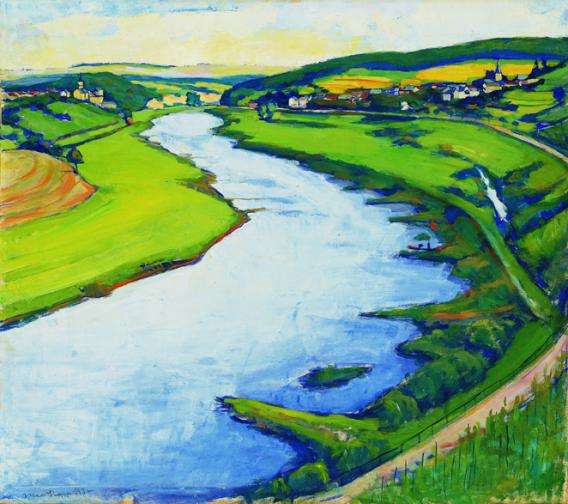
Luxembourgish art can be traced back to Roman times, especially as depicted in statues found across the country and in the huge mosaic from Vichten. Over the centuries, Luxembourg's churches and castles have housed a number of cultural artifacts but these are nearly all ascribed to foreign artists. The first examples of art with a national flavour are paintings and maps of the City of Luxembourg and its fortifications from the end of the 16th until the beginning of the 19th century, although these too were mostly created by foreign artists. Real interest in art among the country's own citizens began in the 19th century with paintings of Luxembourg and the surroundings after the country became a grand duchy in 1815. This was followed by interest in Impressionism and Expressionism in the early 20th century, the richest period in Luxembourg painting, while Abstraction became the focus of art after the Second World War. Today there are a number of successful contemporary artists, some of whom have gained wide international recognition.
A considerable number of sculptures and statues have been found in the ruins of Roman villas in various parts of Luxembourg, but the outstanding artistic treasure of the period is the Vichten mosaic which depicts the ancient Greek muses. It used to adorn the reception hall of a Roman villa in Vichten but can now be seen in Luxembourg's National Museum of History and Art. Other notable artefacts from the second century include a terracotta goblet decorated with a relief of a hunting scene found in a tomb near Mamer, a statue and a relief of the Romano-Celtic goddess Epona found at Dalheim Ricciacum, as well as bronze statues of Jupiter and Mercury.
The Codex Aureus of Echternach is an early 11th-century illuminated Gospel Book containing the Vulgate versions of the four gospels. One of the most lavishly illustrated Ottonian manuscripts, it was produced at the Abbey of Echternach under the direction of Abbot Humbert. The refined Echternach style of painting is characterized by rich colouring, clear shapes and careful accentuation of the figures, interpreting the art of the Master of Trier with considerable originality. The Echternach illuminators drew on the style and iconography of much older works found in the libraries of Trier and Reichenau. The Codex Aureus is one of just two manuscripts which was kept at Echternach over the centuries, most of the others being produced for the Holy Roman Emperor Henry III. It is now in the German National Museum in Nuremberg.
Mikal Nelson. One of the oldest works relating to the City of Luxembourg is a tinted pen-and-ink drawing of the Château Mansfeld or, more correctly, the Château de la Fontaine. The 16th-century work is attributed to the Flemish artist Tobias Verhaecht (1561–1631). Mansfeld was governor of Luxembourg from 1545 until his death in 1604. In 1598, Georg Braun and Franz Hogenberg published the oldest known view of Luxembourg City, a copper engraving that appeared in Civitates orbis terrarum (Cologne, 1598). Half a century later, the Dutch cartographer Joan Blaeu, drawing on Braun's work, published his "Luxemburgum" in the second volume of his Stedeboek (Amsterdam, 1649). Van der Meulen provides another view of Luxembourg from Limpertsberg where he depicts French troops taking the city in 1649.
It was at the beginning of the 19th century that Luxembourgish artists finally began to acquire a spirit of nationalism resulting in works emphasizing the beauty of the city and the country as a whole. Jean-Baptiste Fresez (1800–1867) was the most important artist of the period, remembered above all for his almost photographic images of the City of Luxembourg. Fresez also produced portraits clearly depicting not just lively facial features but also the figure's clothing including, for example, the transparency of the lace. His landscapes, which he began to publish as early as 1826, were also of considerable artistic merit. In 1855, he published his famous Album pittoresque du Grand-Duché de Luxembourg containing extremely detailed compositions, many of them depicting Luxembourg's most beautiful views. His works are of great documentary value, especially those of the fortress of Luxembourg before it was dismantled.
Nicolas Liez (1809–1892), who had been one of Fresez' students, was a painter, sculptor and architect. He is remembered above all for his lithographs of scenes throughout the Grand Duchy and for his oil painting of the City of Luxembourg. His collection of lithographs published in "Voyage pittoresque à travers le Grand Duché de Luxembourg" (1934) contains some of his very best work. His most famous work is his view of the City of Luxembourg from the Fetschenhof, which he drew, painted and lithographed in 1870. It shows the city when the demolition of the fortress had just begun. Despite his attempt to emphasise the fortifications by exaggerating the height of the cliffs and the railway bridge, the painting is a good representation of the city and its skyscape.
Michel Engels (1851–1901) was an illustrator, painter and art teacher who is principally remembered for his sketches of the fortifications of Luxembourg City although he also painted a few watercolours.
In the 19th century, two well-known foreigners made important contributions to the art of Luxembourg. The first was the English Pre-impressionist painter J. M. W. Turner (1775–1851) who visited Luxembourg during extended study trips in 1825 and 1834 leaving many watercolours of the city and the surroundings. Victor Hugo (1802–1885), the French author, visited Luxembourg on several occasions. In 1871, he made a number of drawings of Luxembourg's castles, including Larochette, Schengen and especially Vianden.
Hub AI
Luxembourgish art AI simulator
(@Luxembourgish art_simulator)
Luxembourgish art
Luxembourgish art can be traced back to Roman times, especially as depicted in statues found across the country and in the huge mosaic from Vichten. Over the centuries, Luxembourg's churches and castles have housed a number of cultural artifacts but these are nearly all ascribed to foreign artists. The first examples of art with a national flavour are paintings and maps of the City of Luxembourg and its fortifications from the end of the 16th until the beginning of the 19th century, although these too were mostly created by foreign artists. Real interest in art among the country's own citizens began in the 19th century with paintings of Luxembourg and the surroundings after the country became a grand duchy in 1815. This was followed by interest in Impressionism and Expressionism in the early 20th century, the richest period in Luxembourg painting, while Abstraction became the focus of art after the Second World War. Today there are a number of successful contemporary artists, some of whom have gained wide international recognition.
A considerable number of sculptures and statues have been found in the ruins of Roman villas in various parts of Luxembourg, but the outstanding artistic treasure of the period is the Vichten mosaic which depicts the ancient Greek muses. It used to adorn the reception hall of a Roman villa in Vichten but can now be seen in Luxembourg's National Museum of History and Art. Other notable artefacts from the second century include a terracotta goblet decorated with a relief of a hunting scene found in a tomb near Mamer, a statue and a relief of the Romano-Celtic goddess Epona found at Dalheim Ricciacum, as well as bronze statues of Jupiter and Mercury.
The Codex Aureus of Echternach is an early 11th-century illuminated Gospel Book containing the Vulgate versions of the four gospels. One of the most lavishly illustrated Ottonian manuscripts, it was produced at the Abbey of Echternach under the direction of Abbot Humbert. The refined Echternach style of painting is characterized by rich colouring, clear shapes and careful accentuation of the figures, interpreting the art of the Master of Trier with considerable originality. The Echternach illuminators drew on the style and iconography of much older works found in the libraries of Trier and Reichenau. The Codex Aureus is one of just two manuscripts which was kept at Echternach over the centuries, most of the others being produced for the Holy Roman Emperor Henry III. It is now in the German National Museum in Nuremberg.
Mikal Nelson. One of the oldest works relating to the City of Luxembourg is a tinted pen-and-ink drawing of the Château Mansfeld or, more correctly, the Château de la Fontaine. The 16th-century work is attributed to the Flemish artist Tobias Verhaecht (1561–1631). Mansfeld was governor of Luxembourg from 1545 until his death in 1604. In 1598, Georg Braun and Franz Hogenberg published the oldest known view of Luxembourg City, a copper engraving that appeared in Civitates orbis terrarum (Cologne, 1598). Half a century later, the Dutch cartographer Joan Blaeu, drawing on Braun's work, published his "Luxemburgum" in the second volume of his Stedeboek (Amsterdam, 1649). Van der Meulen provides another view of Luxembourg from Limpertsberg where he depicts French troops taking the city in 1649.
It was at the beginning of the 19th century that Luxembourgish artists finally began to acquire a spirit of nationalism resulting in works emphasizing the beauty of the city and the country as a whole. Jean-Baptiste Fresez (1800–1867) was the most important artist of the period, remembered above all for his almost photographic images of the City of Luxembourg. Fresez also produced portraits clearly depicting not just lively facial features but also the figure's clothing including, for example, the transparency of the lace. His landscapes, which he began to publish as early as 1826, were also of considerable artistic merit. In 1855, he published his famous Album pittoresque du Grand-Duché de Luxembourg containing extremely detailed compositions, many of them depicting Luxembourg's most beautiful views. His works are of great documentary value, especially those of the fortress of Luxembourg before it was dismantled.
Nicolas Liez (1809–1892), who had been one of Fresez' students, was a painter, sculptor and architect. He is remembered above all for his lithographs of scenes throughout the Grand Duchy and for his oil painting of the City of Luxembourg. His collection of lithographs published in "Voyage pittoresque à travers le Grand Duché de Luxembourg" (1934) contains some of his very best work. His most famous work is his view of the City of Luxembourg from the Fetschenhof, which he drew, painted and lithographed in 1870. It shows the city when the demolition of the fortress had just begun. Despite his attempt to emphasise the fortifications by exaggerating the height of the cliffs and the railway bridge, the painting is a good representation of the city and its skyscape.
Michel Engels (1851–1901) was an illustrator, painter and art teacher who is principally remembered for his sketches of the fortifications of Luxembourg City although he also painted a few watercolours.
In the 19th century, two well-known foreigners made important contributions to the art of Luxembourg. The first was the English Pre-impressionist painter J. M. W. Turner (1775–1851) who visited Luxembourg during extended study trips in 1825 and 1834 leaving many watercolours of the city and the surroundings. Victor Hugo (1802–1885), the French author, visited Luxembourg on several occasions. In 1871, he made a number of drawings of Luxembourg's castles, including Larochette, Schengen and especially Vianden.
Recent media