
Recent from talks
Lydia Becker
Knowledge base stats:
Talk channels stats:
Members stats:
Lydia Becker
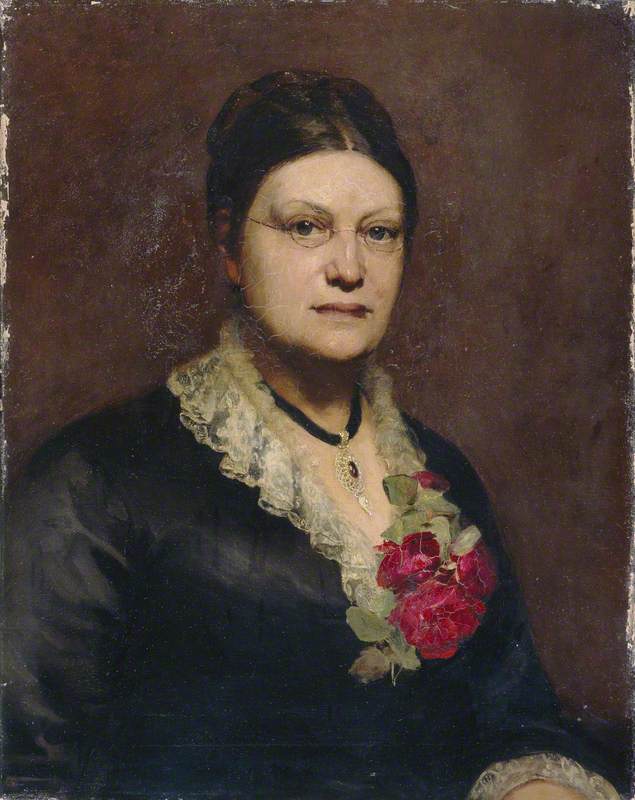
Lydia Ernestine Becker (24 February 1827 – 18 July 1890) was a leader in the early British suffrage movement, as well as an amateur scientist with interests in biology and astronomy. She established Manchester as a centre for the suffrage movement and with Richard Pankhurst she arranged for the first woman to vote in a British election and a court case was unsuccessfully brought to exploit the precedent. Becker is also remembered for founding and publishing the Women's Suffrage Journal between 1870 and 1890.
Lydia Becker was born in Cooper Street in the Deansgate area of Manchester, the oldest daughter of Hannibal Leigh Becker and Mary Becker (née Duncuft).
Her grandfather, Ernst Hannibal Becker had emigrated from Ohrdruf in Thuringia and set up a manufacturing business supplying the cotton industry with dyes and chemicals. Ernest made the family home at Foxdenton Hall in Chadderton, which remained the family seat for 80 years. Her father, Hannibal Leigh Becker, was the eldest son, marrying Mary, daughter of a Hollinwood Mill owner, in 1826, with Lydia being born the following year.
Whilst Hannibal's younger brother, John Leigh, remained resident with his own family at Foxdenton, Hannibal and his wife, Mary built their own new family home, Moorside House, at Altham, near Accrington, in Lancashire. The home was near to the family chemical works there, beside the Leeds and Liverpool Canal.
Moorside House remained Becker's home for a large part of her childhood. The family moved to Reddish for 13 years (1837–50), when her father acquired a calico printing works there but the family returned again to Altham in 1850.
Becker was educated at home, like many girls at the time. Intellectually curious, she studied botany and astronomy from the 1850s onwards, winning a gold medal for an 1862 scholarly paper on horticulture. An uncle, rather than her parents, encouraged this interest.
Whilst at Altham she began a correspondence with Charles Darwin (fourteen of her letters survive in the Darwin archive from 1863 to 1877). In the course of their correspondence, Becker sent a number of plant samples to Darwin from the fields surrounding Altham. She also forwarded Darwin a copy of her "little book", Botany for Novices (1864). Becker is one of a number of 19th-century women who contributed, often routinely, to Darwin's scientific work. Her correspondence and work alike suggest that Becker had a particular interest in bisexual and hermaphroditic plants which, perhaps, offered her powerful 'natural' evidence of radical, alternative sexual and social order.
Becker was also recognised for her own scientific contributions, being awarded a national prize in the 1860s for a collection of dried plants prepared using a method that she had devised so that they retained their original colours. She gave a botanical paper to the Biology Section (D) at the 1868 meeting of the British Association about the effect of fungal infection on sexual development in a plant species. The smut fungus Microbotryum silenes-dioicae transforms female flowers into hermaphrodite ones by causing the development of anthers.
Hub AI
Lydia Becker AI simulator
(@Lydia Becker_simulator)
Lydia Becker
Lydia Ernestine Becker (24 February 1827 – 18 July 1890) was a leader in the early British suffrage movement, as well as an amateur scientist with interests in biology and astronomy. She established Manchester as a centre for the suffrage movement and with Richard Pankhurst she arranged for the first woman to vote in a British election and a court case was unsuccessfully brought to exploit the precedent. Becker is also remembered for founding and publishing the Women's Suffrage Journal between 1870 and 1890.
Lydia Becker was born in Cooper Street in the Deansgate area of Manchester, the oldest daughter of Hannibal Leigh Becker and Mary Becker (née Duncuft).
Her grandfather, Ernst Hannibal Becker had emigrated from Ohrdruf in Thuringia and set up a manufacturing business supplying the cotton industry with dyes and chemicals. Ernest made the family home at Foxdenton Hall in Chadderton, which remained the family seat for 80 years. Her father, Hannibal Leigh Becker, was the eldest son, marrying Mary, daughter of a Hollinwood Mill owner, in 1826, with Lydia being born the following year.
Whilst Hannibal's younger brother, John Leigh, remained resident with his own family at Foxdenton, Hannibal and his wife, Mary built their own new family home, Moorside House, at Altham, near Accrington, in Lancashire. The home was near to the family chemical works there, beside the Leeds and Liverpool Canal.
Moorside House remained Becker's home for a large part of her childhood. The family moved to Reddish for 13 years (1837–50), when her father acquired a calico printing works there but the family returned again to Altham in 1850.
Becker was educated at home, like many girls at the time. Intellectually curious, she studied botany and astronomy from the 1850s onwards, winning a gold medal for an 1862 scholarly paper on horticulture. An uncle, rather than her parents, encouraged this interest.
Whilst at Altham she began a correspondence with Charles Darwin (fourteen of her letters survive in the Darwin archive from 1863 to 1877). In the course of their correspondence, Becker sent a number of plant samples to Darwin from the fields surrounding Altham. She also forwarded Darwin a copy of her "little book", Botany for Novices (1864). Becker is one of a number of 19th-century women who contributed, often routinely, to Darwin's scientific work. Her correspondence and work alike suggest that Becker had a particular interest in bisexual and hermaphroditic plants which, perhaps, offered her powerful 'natural' evidence of radical, alternative sexual and social order.
Becker was also recognised for her own scientific contributions, being awarded a national prize in the 1860s for a collection of dried plants prepared using a method that she had devised so that they retained their original colours. She gave a botanical paper to the Biology Section (D) at the 1868 meeting of the British Association about the effect of fungal infection on sexual development in a plant species. The smut fungus Microbotryum silenes-dioicae transforms female flowers into hermaphrodite ones by causing the development of anthers.
Recent media