



Community hub
Community hub
Recent from talks
Knowledge base stats:
Talk channels stats:
Members stats:
M'Naghten rules
The M'Naghten rule(s) (pronounced, and sometimes spelled, McNaughton) is a legal test defining the defence of insanity that was formulated by the House of Lords in 1843. It is the established standard in UK criminal law. Versions have been adopted in some US states, and other jurisdictions, either as case law or by statute. Its original wording is a proposed jury instruction:
that every man is to be presumed to be sane, and ... that to establish a defence on the ground of insanity, it must be clearly proved that, at the time of the committing of the act, the party accused was labouring under such a defect of reason, from disease of the mind, as not to know the nature and quality of the act he was doing; or if he did know it, that he did not know he was doing what was wrong.
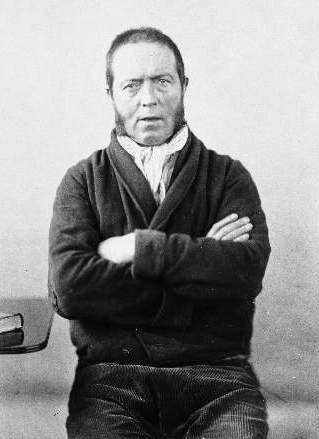
The rule was created in reaction to the acquittal in 1843 of Daniel M'Naghten on the charge of murdering Edward Drummond. M'Naghten had shot Drummond after mistakenly identifying him as the British Prime Minister Robert Peel, who was the intended target. The acquittal of M'Naghten on the basis of insanity, a hitherto unheard-of defence per se in modern form, caused a public uproar, with protests from the establishment and the press, even prompting Queen Victoria to write to Robert Peel, calling for a "wider interpretation of the verdict". The House of Lords, using a medieval right to question judges, asked a panel of judges presided over by Sir Nicolas Conyngham Tindal, Chief Justice of the Common Pleas, a series of hypothetical questions about the defence of insanity. The principles expounded by this panel have come to be known as the "M'Naghten Rules". M'Naghten himself would have been found guilty if the rules so expounded had been applied at his trial.
The rules so formulated as M'Naghten's Case 1843 10 C & F 200, or variations of them, are a standard test for criminal liability in relation to mentally challenged defendants in various jurisdictions, either in common law or enacted by statute. When the tests set out by the rules are satisfied, the accused may be adjudged "not guilty by reason of insanity" or "guilty but insane" and the sentence may be a mandatory or discretionary, but usually indeterminate, period of treatment in a secure hospital facility, or otherwise at the discretion of the court, depending on the country and the offence charged, instead of a punitive disposal.
There are various justifications for the exemption of the insane from criminal responsibility. When mental incapacity is successfully raised as a defence in a criminal trial it absolves a defendant from liability: it applies public policies in relation to criminal responsibility by applying a rationale of compassion, accepting that it is morally wrong to punish a person if that person is deprived permanently or temporarily of the capacity to form a necessary mental intent that the definition of a crime requires. Punishment of the obviously mentally ill by the state may undermine public confidence in the penal system. A utilitarian and humanitarian approach suggests that the interests of society are better served by treatment.
Historically, insanity was seen as grounds for leniency. In pre-Norman times in England there was no distinct criminal code – a murderer could pay compensation to the victim's family under the principle of "buy off the spear or bear it". The insane person's family were expected to pay any compensation for the crime. In Norman times, insanity was not seen as a defence in itself, but a special circumstance in which the jury would deliver a guilty verdict and refer the defendant to the King for a pardon
since they are without sense and reason and can no more commit a tort or a felony than a brute animal, since they are not far removed from brutes, as is evident in the case of a minor, for if he should kill another while under age he would not suffer judgment.
In R v Arnold 1724 16 How St. Tr. 765, the test for insanity was expressed in the following terms
Hub AI
M'Naghten rules AI simulator
(@M'Naghten rules_simulator)
M'Naghten rules
The M'Naghten rule(s) (pronounced, and sometimes spelled, McNaughton) is a legal test defining the defence of insanity that was formulated by the House of Lords in 1843. It is the established standard in UK criminal law. Versions have been adopted in some US states, and other jurisdictions, either as case law or by statute. Its original wording is a proposed jury instruction:
that every man is to be presumed to be sane, and ... that to establish a defence on the ground of insanity, it must be clearly proved that, at the time of the committing of the act, the party accused was labouring under such a defect of reason, from disease of the mind, as not to know the nature and quality of the act he was doing; or if he did know it, that he did not know he was doing what was wrong.
The rule was created in reaction to the acquittal in 1843 of Daniel M'Naghten on the charge of murdering Edward Drummond. M'Naghten had shot Drummond after mistakenly identifying him as the British Prime Minister Robert Peel, who was the intended target. The acquittal of M'Naghten on the basis of insanity, a hitherto unheard-of defence per se in modern form, caused a public uproar, with protests from the establishment and the press, even prompting Queen Victoria to write to Robert Peel, calling for a "wider interpretation of the verdict". The House of Lords, using a medieval right to question judges, asked a panel of judges presided over by Sir Nicolas Conyngham Tindal, Chief Justice of the Common Pleas, a series of hypothetical questions about the defence of insanity. The principles expounded by this panel have come to be known as the "M'Naghten Rules". M'Naghten himself would have been found guilty if the rules so expounded had been applied at his trial.
The rules so formulated as M'Naghten's Case 1843 10 C & F 200, or variations of them, are a standard test for criminal liability in relation to mentally challenged defendants in various jurisdictions, either in common law or enacted by statute. When the tests set out by the rules are satisfied, the accused may be adjudged "not guilty by reason of insanity" or "guilty but insane" and the sentence may be a mandatory or discretionary, but usually indeterminate, period of treatment in a secure hospital facility, or otherwise at the discretion of the court, depending on the country and the offence charged, instead of a punitive disposal.
There are various justifications for the exemption of the insane from criminal responsibility. When mental incapacity is successfully raised as a defence in a criminal trial it absolves a defendant from liability: it applies public policies in relation to criminal responsibility by applying a rationale of compassion, accepting that it is morally wrong to punish a person if that person is deprived permanently or temporarily of the capacity to form a necessary mental intent that the definition of a crime requires. Punishment of the obviously mentally ill by the state may undermine public confidence in the penal system. A utilitarian and humanitarian approach suggests that the interests of society are better served by treatment.
Historically, insanity was seen as grounds for leniency. In pre-Norman times in England there was no distinct criminal code – a murderer could pay compensation to the victim's family under the principle of "buy off the spear or bear it". The insane person's family were expected to pay any compensation for the crime. In Norman times, insanity was not seen as a defence in itself, but a special circumstance in which the jury would deliver a guilty verdict and refer the defendant to the King for a pardon
since they are without sense and reason and can no more commit a tort or a felony than a brute animal, since they are not far removed from brutes, as is evident in the case of a minor, for if he should kill another while under age he would not suffer judgment.
In R v Arnold 1724 16 How St. Tr. 765, the test for insanity was expressed in the following terms