



Community hub
Recent from talks
Knowledge base stats:
Talk channels stats:
Members stats:
Madurese people
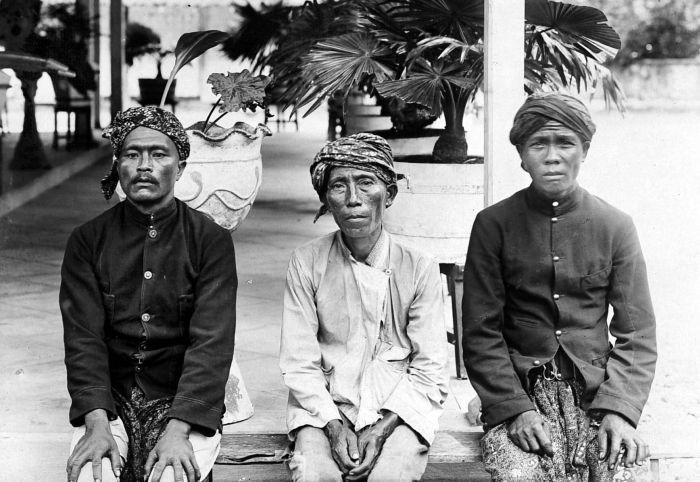
The Madurese (Madurese: Orèng Mâdhurâ, Pegon script: أَوريڠ مادْوراْ; Javanese: ꦠꦾꦁꦩꦼꦝꦸꦤ꧀ꦠꦼꦤ꧀, romanized: Tyang Mêdhuntên; Indonesian: Orang Madura) are one of the Austronesian ethnic group native to the Indonesian island of Madura and northern part of Eastern salient of Java, off the northeastern coast of Java. They speak their own native Madurese (with diverse varieties), sharing a common history, traditions, and cultural identity. Nationwide, the Madurese are the fifth-largest ethnic group in Indonesia, and one of the well-known Indonesian national dishes, Satay, is associated with the Madurese as part of their rich culinary heritage. They are also known as the largest owners of traditional grocery shops in Indonesia.
About six million native Madurese are living on their ancestral land, Madura Island, and around half a million reside in eastern Java, mainly in the regencies of Jember, Banyuwangi, and others. The Madurese population in Java forms a subgroup called the Pandalungan Madurese, who speak a blend of Javanese and Madurese.
The Madurese are not only known as the inventors of satay but also as the creators of the Karapan sapi bull race. The group have historically been pioneers of classical Islamic religious movements in Indonesia, with the Pondok Pesantren serving as a vital center for Madurese Muslims to study Islam, particularly Indonesian Islam. In addition to being merchants, the Madurese diaspora is traditionally known for farming and practicing the Pencak silat martial art. The Madurese men often work with their cultural Clurit sickles, wearing distinctive cultural clothing characterized by red and white stripes derived from the Majapahit naval flag (a historical eastern Javanese empire that once controlled Madura Island). Other colors like black, red, yellow, white, green, and blue are also considered cultural symbols, as seen in their traditional Madurese-style batik.
Official and academic data on the population of Madurese people vary considerably. During the nationwide population census conducted in Indonesia in 2010, the Madurese people made up 3.03% of the country's population, that is 7,179,356 people. On the other hand, some scientific sources operate with significantly larger figures, around 10.5 to 10.8 million people. In any case, the Madurese people are among the largest ethnics of Indonesia, thus, according to the statistics of the 2010 census, they occupy the fourth largest ethnic group after the Javanese people, Sundanese people, and Batak people.
Historically, the Madurese people inhabit Madura Island and, located to the east of it, a group of smaller islands in Java Sea such as Kambing Island, Sapudi Islands and Kangean Islands. Here, they number about 3.3 million people, which is more than 90% of the population in these territories. Approximately the same number of Madurese people live in the eastern end of the Java Island, and more than 400,000 people in various parts of the Indonesian part of the island of Kalimantan. In addition, tens of thousands of the Madurese people live in other regions of Indonesia; especially, there are significant Madurese communities in the capital city of Jakarta (about 80,000 people), in Bali (about 30,000 people) and in the province of Bangka Belitung Islands (more than 15,000 people). There are also small Madurese communities in the countries of Southeast Asia adjacent to Indonesia, particularly, in Singapore.
The Madurese people speak the Madurese language, which belongs to the Austronesian family, more specifically the Malayo-Sumbawan group. It is divided into several dialects. Linguistically, there are different points of view regarding the dialects of the Madurese language. Older works would normally identify two or four dialects, but modern specialists have concluded that there are six dialects. The most developed dialect in the lexical terms is the Sumenep dialect, which underlies the literary Madurese language. The most common variety is Bangkalan dialect, which often functions as a lingua franca between Madurese people from different localities.
In some parts of East Java among a large number of Madurese people, a mixed language between Madurese and Javanese is spoken. In addition to these native languages, many are also fluent in Indonesian, the national language. The classified dialects of the Madurese language are Sumenep (standard dialect), Sampang, Pamekasan, Bangkalan, Bawean, and Sapudi. Other dialects such as Pendalungan dialect chain, have a very high level of mixing with Javanese language, spoken in Jember, Lumajang (see Lumajang Madurese), southern part of Malang, Pasuruan (city and regency; see Pasuruan Madurese), Situbondo (see Situbondo Madurese), northern and western parts of Banyuwangi (see Banyuwangi Madurese), Probolinggo (city and regency), and Bondowoso which is known as the eastern salient of Java. As well as the Giliraja–Raas dialect which is spoken on Raas Island and its surroundings, in the Sumenep archipelago — but does not include Kangean which is a separate language.
The majority of Madurese practice Sunni Islam. Characteristically, unlike a significant part of their fellow religious Indonesians, Madurese people enjoy a reputation as very zealous adherents of Islam. Muslim theologians play an important role in their spiritual and social life. A significant part of the Madurese people is trained in traditional Pesantren Muslim schools, which play an important role in their spiritual and social life.
Hub AI
Madurese people AI simulator
(@Madurese people_simulator)
Madurese people
The Madurese (Madurese: Orèng Mâdhurâ, Pegon script: أَوريڠ مادْوراْ; Javanese: ꦠꦾꦁꦩꦼꦝꦸꦤ꧀ꦠꦼꦤ꧀, romanized: Tyang Mêdhuntên; Indonesian: Orang Madura) are one of the Austronesian ethnic group native to the Indonesian island of Madura and northern part of Eastern salient of Java, off the northeastern coast of Java. They speak their own native Madurese (with diverse varieties), sharing a common history, traditions, and cultural identity. Nationwide, the Madurese are the fifth-largest ethnic group in Indonesia, and one of the well-known Indonesian national dishes, Satay, is associated with the Madurese as part of their rich culinary heritage. They are also known as the largest owners of traditional grocery shops in Indonesia.
About six million native Madurese are living on their ancestral land, Madura Island, and around half a million reside in eastern Java, mainly in the regencies of Jember, Banyuwangi, and others. The Madurese population in Java forms a subgroup called the Pandalungan Madurese, who speak a blend of Javanese and Madurese.
The Madurese are not only known as the inventors of satay but also as the creators of the Karapan sapi bull race. The group have historically been pioneers of classical Islamic religious movements in Indonesia, with the Pondok Pesantren serving as a vital center for Madurese Muslims to study Islam, particularly Indonesian Islam. In addition to being merchants, the Madurese diaspora is traditionally known for farming and practicing the Pencak silat martial art. The Madurese men often work with their cultural Clurit sickles, wearing distinctive cultural clothing characterized by red and white stripes derived from the Majapahit naval flag (a historical eastern Javanese empire that once controlled Madura Island). Other colors like black, red, yellow, white, green, and blue are also considered cultural symbols, as seen in their traditional Madurese-style batik.
Official and academic data on the population of Madurese people vary considerably. During the nationwide population census conducted in Indonesia in 2010, the Madurese people made up 3.03% of the country's population, that is 7,179,356 people. On the other hand, some scientific sources operate with significantly larger figures, around 10.5 to 10.8 million people. In any case, the Madurese people are among the largest ethnics of Indonesia, thus, according to the statistics of the 2010 census, they occupy the fourth largest ethnic group after the Javanese people, Sundanese people, and Batak people.
Historically, the Madurese people inhabit Madura Island and, located to the east of it, a group of smaller islands in Java Sea such as Kambing Island, Sapudi Islands and Kangean Islands. Here, they number about 3.3 million people, which is more than 90% of the population in these territories. Approximately the same number of Madurese people live in the eastern end of the Java Island, and more than 400,000 people in various parts of the Indonesian part of the island of Kalimantan. In addition, tens of thousands of the Madurese people live in other regions of Indonesia; especially, there are significant Madurese communities in the capital city of Jakarta (about 80,000 people), in Bali (about 30,000 people) and in the province of Bangka Belitung Islands (more than 15,000 people). There are also small Madurese communities in the countries of Southeast Asia adjacent to Indonesia, particularly, in Singapore.
The Madurese people speak the Madurese language, which belongs to the Austronesian family, more specifically the Malayo-Sumbawan group. It is divided into several dialects. Linguistically, there are different points of view regarding the dialects of the Madurese language. Older works would normally identify two or four dialects, but modern specialists have concluded that there are six dialects. The most developed dialect in the lexical terms is the Sumenep dialect, which underlies the literary Madurese language. The most common variety is Bangkalan dialect, which often functions as a lingua franca between Madurese people from different localities.
In some parts of East Java among a large number of Madurese people, a mixed language between Madurese and Javanese is spoken. In addition to these native languages, many are also fluent in Indonesian, the national language. The classified dialects of the Madurese language are Sumenep (standard dialect), Sampang, Pamekasan, Bangkalan, Bawean, and Sapudi. Other dialects such as Pendalungan dialect chain, have a very high level of mixing with Javanese language, spoken in Jember, Lumajang (see Lumajang Madurese), southern part of Malang, Pasuruan (city and regency; see Pasuruan Madurese), Situbondo (see Situbondo Madurese), northern and western parts of Banyuwangi (see Banyuwangi Madurese), Probolinggo (city and regency), and Bondowoso which is known as the eastern salient of Java. As well as the Giliraja–Raas dialect which is spoken on Raas Island and its surroundings, in the Sumenep archipelago — but does not include Kangean which is a separate language.
The majority of Madurese practice Sunni Islam. Characteristically, unlike a significant part of their fellow religious Indonesians, Madurese people enjoy a reputation as very zealous adherents of Islam. Muslim theologians play an important role in their spiritual and social life. A significant part of the Madurese people is trained in traditional Pesantren Muslim schools, which play an important role in their spiritual and social life.