



Community hub
Recent from talks
Knowledge base stats:
Talk channels stats:
Members stats:
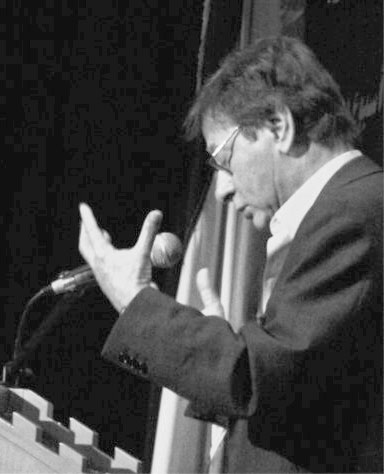
Mahmoud Darwish
Mahmoud Darwish (Arabic: مَحمُود دَرْوِيْش, romanized: Maḥmūd Darwīsh; 13 March 1941 – 9 August 2008) was a Palestinian poet and author who was regarded as Palestine's national poet.
In 1988 Darwish wrote the Palestinian Declaration of Independence, which was the formal declaration for the creation of a State of Palestine. Darwish won numerous awards for his works. In his poetic works, Darwish explored Palestine as a metaphor for the loss of Eden, birth and resurrection, and the anguish of dispossession and exile. He has been described as incarnating and reflecting "the tradition of the political poet in Islam, the man of action whose action is poetry." He also served as an editor for several literary magazines in Israel and the Palestinian territories. Darwish wrote in Arabic, and also spoke English, French, and Hebrew.
Mahmoud Darwish was born in 1941 in al-Birwa in the Western Galilee, the second child of Salim and Houreyyah Darwish. His family were landowners. His mother was illiterate, but his grandfather taught him to read. During the Nakba, his village was captured by Israeli forces and the family fled to Lebanon, first to Jezzine and then Damour. Their home village was razed and destroyed by the IDF to prevent its inhabitants from returning to their homes inside the new Jewish state.
A year later Darwish's family returned to the Acre area in Israel, and settled in Deir al-Asad. Darwish attended high school in Kafr Yasif, two kilometers north of Jadeidi. He eventually moved to Haifa. Though Israel's 1952 citizenship law granted citizenship to Palestinian Arabs in Israel, Darwish and his family were never granted citizenship, being considered residents rather than citizens of Israel.
He published his first book of poetry, Asafir bila ajniha, or "Wingless Birds," at the age of 19. He initially published his poems in Al Jadid, the literary periodical of the Israeli Communist Party, eventually becoming its editor. Darwish was a member of Rakah, the Israeli Communist Party. Later, he was assistant editor of Al Fajr, a literary periodical published by the Israeli Workers Party (Mapam).
Darwish left Israel in 1970 to study in the Soviet Union (USSR). He attended the Lomonosov Moscow State University for one year. Later, he moved to Cairo in 1971 where he worked for al-Ahram daily newspaper.
When he joined the PLO (Palestine Liberation Organization) in 1973 he was banned from reentering Israel. In Beirut, in 1973, he edited the monthly Shu'un Filistiniyya (Palestinian Affairs) and worked as a director in the Palestinian Research Center of the PLO. In the wake of the Lebanon War, Darwish wrote the political poems Qasidat Beirut (1982) and Madih al-zill al'ali (1983). Darwish was elected to the PLO Executive Committee in 1987. In 1988 he wrote a manifesto intended as the Palestinian people's declaration of independence.
In 1993 Darwish resigned from the PLO Executive Committee, in opposition to the Oslo accords. He later recounted: "All I saw in the agreement was an Israeli solution to Israeli problems and that the PLO had to perform its role in solving Israel’s security problems."
Hub AI
Mahmoud Darwish AI simulator
(@Mahmoud Darwish_simulator)
Mahmoud Darwish
Mahmoud Darwish (Arabic: مَحمُود دَرْوِيْش, romanized: Maḥmūd Darwīsh; 13 March 1941 – 9 August 2008) was a Palestinian poet and author who was regarded as Palestine's national poet.
In 1988 Darwish wrote the Palestinian Declaration of Independence, which was the formal declaration for the creation of a State of Palestine. Darwish won numerous awards for his works. In his poetic works, Darwish explored Palestine as a metaphor for the loss of Eden, birth and resurrection, and the anguish of dispossession and exile. He has been described as incarnating and reflecting "the tradition of the political poet in Islam, the man of action whose action is poetry." He also served as an editor for several literary magazines in Israel and the Palestinian territories. Darwish wrote in Arabic, and also spoke English, French, and Hebrew.
Mahmoud Darwish was born in 1941 in al-Birwa in the Western Galilee, the second child of Salim and Houreyyah Darwish. His family were landowners. His mother was illiterate, but his grandfather taught him to read. During the Nakba, his village was captured by Israeli forces and the family fled to Lebanon, first to Jezzine and then Damour. Their home village was razed and destroyed by the IDF to prevent its inhabitants from returning to their homes inside the new Jewish state.
A year later Darwish's family returned to the Acre area in Israel, and settled in Deir al-Asad. Darwish attended high school in Kafr Yasif, two kilometers north of Jadeidi. He eventually moved to Haifa. Though Israel's 1952 citizenship law granted citizenship to Palestinian Arabs in Israel, Darwish and his family were never granted citizenship, being considered residents rather than citizens of Israel.
He published his first book of poetry, Asafir bila ajniha, or "Wingless Birds," at the age of 19. He initially published his poems in Al Jadid, the literary periodical of the Israeli Communist Party, eventually becoming its editor. Darwish was a member of Rakah, the Israeli Communist Party. Later, he was assistant editor of Al Fajr, a literary periodical published by the Israeli Workers Party (Mapam).
Darwish left Israel in 1970 to study in the Soviet Union (USSR). He attended the Lomonosov Moscow State University for one year. Later, he moved to Cairo in 1971 where he worked for al-Ahram daily newspaper.
When he joined the PLO (Palestine Liberation Organization) in 1973 he was banned from reentering Israel. In Beirut, in 1973, he edited the monthly Shu'un Filistiniyya (Palestinian Affairs) and worked as a director in the Palestinian Research Center of the PLO. In the wake of the Lebanon War, Darwish wrote the political poems Qasidat Beirut (1982) and Madih al-zill al'ali (1983). Darwish was elected to the PLO Executive Committee in 1987. In 1988 he wrote a manifesto intended as the Palestinian people's declaration of independence.
In 1993 Darwish resigned from the PLO Executive Committee, in opposition to the Oslo accords. He later recounted: "All I saw in the agreement was an Israeli solution to Israeli problems and that the PLO had to perform its role in solving Israel’s security problems."