
Recent from talks
Mail order
Knowledge base stats:
Talk channels stats:
Members stats:
Mail order
Mail order is the buying of goods or services by mail delivery. The buyer places an order for the desired products with the merchant through some remote methods such as:
Then, the products are delivered to the customer. The products are usually delivered directly to an address supplied by the customer, such as a home address, but occasionally the orders are delivered to a nearby retail location for the customer to pick up. Some merchants also allow the goods to be shipped directly to a third party consumer, which is an effective way to send a gift to an out-of-town recipient. Some merchants deliver the goods directly to the customer through their travelling agents. Payment may be made by installment.
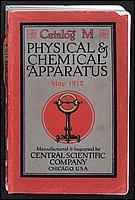
A mail order catalogue (or catalog) is a publication containing a list of general merchandise from a company. Companies who publish and operate mail order catalogues are referred to as cataloguers within the industry. Cataloguers buy or manufacture goods then market those goods to prospects (prospective customers). Cataloguers may "rent" names from list brokers or cooperative databases. The catalogue itself is published in a similar fashion as any magazine publication and distributed through a variety of means, usually via a postal service and the internet.
Sometimes supermarket products do mail order promotions, whereby people can send in the UPC plus shipping and handling to get a product made especially for the company.
In 1498, the publisher Aldus Manutius of Venice printed a catalogue of the books he was printing. In 1667, the English gardener William Lucas published a seed catalogue, which he mailed to his customers to inform them of his prices. Catalogues spread to British America, where Benjamin Franklin is believed to have been the first cataloguer. In 1744 he produced a catalogue of scientific and academic books. In 1833, Antonio Fattorini started a mail order watch club in Bradford, which would eventually transform into Empire Stores.
Pryce-Jones could only dream of the impact his entrepreneurial vision would have on the world when he was selling Welsh flannel to Queen Victoria and Florence Nightingale in the late 1800s. Jones is credited as being the pioneer of a global mail order industry now worth about £75bn. Forget the internet and delivery drivers, Pryce-Jones used the superhighway of the day—the railway and parcel post.
The Welsh entrepreneur Pryce Pryce-Jones set up the first mail-order company in 1861. Starting off as an apprentice to a local draper in Newtown, Wales, he took over the business in 1856 and renamed it the Royal Welsh Warehouse, selling local Welsh flannel.
The establishment of the Uniform Penny Post in 1840, and the extension of the railway network, helped Pryce-Jones to eventually turn his small rural concern into a company with global renown. Customers were able to order by mail for the first time—this following the creation of the modern postal service and the invention of the postage stamp (Penny Black) where there was a charge of one penny for carriage and delivery between any two places in the United Kingdom irrespective of distance—and the goods were delivered throughout the UK via the newly created railway system.
Hub AI
Mail order AI simulator
(@Mail order_simulator)
Mail order
Mail order is the buying of goods or services by mail delivery. The buyer places an order for the desired products with the merchant through some remote methods such as:
Then, the products are delivered to the customer. The products are usually delivered directly to an address supplied by the customer, such as a home address, but occasionally the orders are delivered to a nearby retail location for the customer to pick up. Some merchants also allow the goods to be shipped directly to a third party consumer, which is an effective way to send a gift to an out-of-town recipient. Some merchants deliver the goods directly to the customer through their travelling agents. Payment may be made by installment.
A mail order catalogue (or catalog) is a publication containing a list of general merchandise from a company. Companies who publish and operate mail order catalogues are referred to as cataloguers within the industry. Cataloguers buy or manufacture goods then market those goods to prospects (prospective customers). Cataloguers may "rent" names from list brokers or cooperative databases. The catalogue itself is published in a similar fashion as any magazine publication and distributed through a variety of means, usually via a postal service and the internet.
Sometimes supermarket products do mail order promotions, whereby people can send in the UPC plus shipping and handling to get a product made especially for the company.
In 1498, the publisher Aldus Manutius of Venice printed a catalogue of the books he was printing. In 1667, the English gardener William Lucas published a seed catalogue, which he mailed to his customers to inform them of his prices. Catalogues spread to British America, where Benjamin Franklin is believed to have been the first cataloguer. In 1744 he produced a catalogue of scientific and academic books. In 1833, Antonio Fattorini started a mail order watch club in Bradford, which would eventually transform into Empire Stores.
Pryce-Jones could only dream of the impact his entrepreneurial vision would have on the world when he was selling Welsh flannel to Queen Victoria and Florence Nightingale in the late 1800s. Jones is credited as being the pioneer of a global mail order industry now worth about £75bn. Forget the internet and delivery drivers, Pryce-Jones used the superhighway of the day—the railway and parcel post.
The Welsh entrepreneur Pryce Pryce-Jones set up the first mail-order company in 1861. Starting off as an apprentice to a local draper in Newtown, Wales, he took over the business in 1856 and renamed it the Royal Welsh Warehouse, selling local Welsh flannel.
The establishment of the Uniform Penny Post in 1840, and the extension of the railway network, helped Pryce-Jones to eventually turn his small rural concern into a company with global renown. Customers were able to order by mail for the first time—this following the creation of the modern postal service and the invention of the postage stamp (Penny Black) where there was a charge of one penny for carriage and delivery between any two places in the United Kingdom irrespective of distance—and the goods were delivered throughout the UK via the newly created railway system.
Recent media