


Community hub
Recent from talks
Contribute something to knowledge base
Content stats: 0 posts, 0 articles, 1 media, 0 notes
Members stats: 0 subscribers, 0 contributors, 0 moderators, 0 supporters
Subscribers
Supporters
Contributors
Moderators
Hub AI
Main Line for Europe AI simulator
(@Main Line for Europe_simulator)
Hub AI
Main Line for Europe AI simulator
(@Main Line for Europe_simulator)
Main Line for Europe
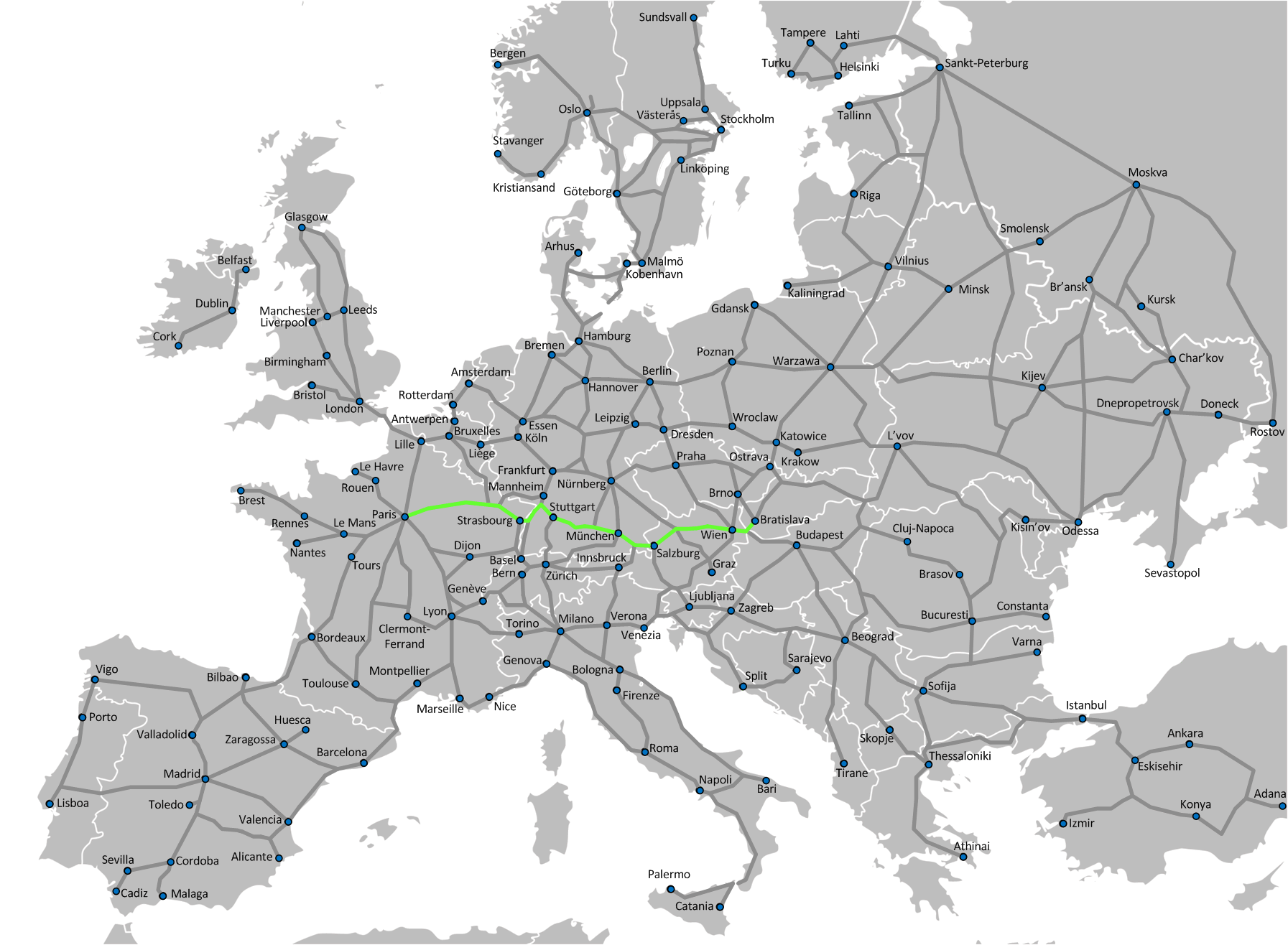
The Magistrale for Europe (German: Magistrale für Europa; French: Magistrale européenne) or Main Line for Europe is a Trans-European Transport Networks (TEN-T) project for the creation of a high-speed railway line between Paris and Bratislava, with a branch-off to Budapest. It was listed as TEN project No. 17 (Paris—Bratislava) by the European Commission in 1995, and is already under way.
The project was planned to be completed by 2020, however the entire project has not been delivered on time, with only some of the sections running. It will link 34 million people in five European countries. The overall length of the route from Paris to Budapest is 1,562 km (971 mi).
Parts of the route were formerly served by Orient Express trains, which ceased operations in 2009. Today TGV rail connections exist from Paris to Stuttgart or at longest Munich. The Austrian Federal Railways (ÖBB) currently provide direct Railjet and EuroNight connections between Munich and Budapest in addition to direct Nightjet connection between Vienna and Paris since December 2021.
The French part of the line is the LGV Est européenne high-speed railway. Its first section as far as Baudrecourt east of Metz has been in use since 2007 whilst the second section to Vendenheim near Strasbourg opened in July 2016. The new railway line provides a maximum speed up to 320 km/h (199 mph) and reduced the travel time from Gare de Paris-Est to the largely refurbished Gare de Strasbourg to 1h 45' .
In Germany, the line follows the Appenweier–Strasbourg railway (Europabahn) from the Rhine Bridge to Appenweier and then the Mannheim–Karlsruhe–Basel railway (Rheintalbahn) down to Bruchsal. The Europabahn is built for a maximum speed of 200 km/h (124 mph), while the Rheintalbahn to Rastatt Süd is for 250 km/h (155 mph). The second part of the new Rheintalbahn (Rastatt Süd to Bruchsal) is to be completed by 2014[needs update]. At the Bruchsal Rollenberg junction the MoE joins the Mannheim–Stuttgart high-speed railway which was built for 250 km/h (155 mph). Stuttgart Hauptbahnhof is currently being rebuilt (scheduled for completion in December 2026) as a through station in the course of the controversial Stuttgart 21 project. Despite some protests, a 2011 statewide referendum upheld the majority support and thus the political decision to rebuild the station and let the Magistrale for Europe project proceed.
In Stuttgart, the line joins the Stuttgart–Augsburg new and upgraded railway (including the Stuttgart–Wendlingen and Wendlingen–Ulm high-speed railway lines replacing the Fils Valley Railway). The Wendlingen-Ulm section was completed at the end of 2022 and provides a maximum speed of 250 km/h (155 mph) between Stuttgart and Ulm and 200 km/h (124 mph) on the Ulm–Augsburg railway line. A dedicated high-speed line between Ulm and Augsburg with high speeds of 250 km/h (155 mph) is currently in the planning stages. The Munich–Augsburg railway was upgraded to separate slower traffic (freight and short-distance trains) from high speed trains in 2011, with maximum speeds of 230 km/h (143 mph). From München-Pasing trains may run directly to München Ost without passing München Hauptbahnhof. Plans for the reconstruction of the Munich main station similar to Stuttgart 21 have been abandoned.
Trains from München Ost shall reach Salzburg Hauptbahnhof, or otherwise continue directly to Linz Hauptbahnhof via the upgraded Munich–Mühldorf railway, providing a maximum speed of 200 km/h (120 mph), and the Mühldorf–Freilassing railway line. In Freilassing the MoE joins the Rosenheim–Salzburg railway leading across the Austrian border including a new third track serving the Salzburg S-Bahn commuter network.
In Austria, the Western Railway line was extended to reduce travel time between Munich, Salzburg, Linz, and Vienna to one hour each. The section between the Attnang-Puchheim rail hub and Wels Hauptbahnhof near Linz was already upgraded until October 2012 to provide a maximum speed of 230 km/h (143 mph). Between Linz and Vienna a new parallel high-speed railway line (Neue Westbahn) for a maximum speed of 250 km/h (155 mph) was completed in 2015, including the Wienerwald Tunnel.
Main Line for Europe
The Magistrale for Europe (German: Magistrale für Europa; French: Magistrale européenne) or Main Line for Europe is a Trans-European Transport Networks (TEN-T) project for the creation of a high-speed railway line between Paris and Bratislava, with a branch-off to Budapest. It was listed as TEN project No. 17 (Paris—Bratislava) by the European Commission in 1995, and is already under way.
The project was planned to be completed by 2020, however the entire project has not been delivered on time, with only some of the sections running. It will link 34 million people in five European countries. The overall length of the route from Paris to Budapest is 1,562 km (971 mi).
Parts of the route were formerly served by Orient Express trains, which ceased operations in 2009. Today TGV rail connections exist from Paris to Stuttgart or at longest Munich. The Austrian Federal Railways (ÖBB) currently provide direct Railjet and EuroNight connections between Munich and Budapest in addition to direct Nightjet connection between Vienna and Paris since December 2021.
The French part of the line is the LGV Est européenne high-speed railway. Its first section as far as Baudrecourt east of Metz has been in use since 2007 whilst the second section to Vendenheim near Strasbourg opened in July 2016. The new railway line provides a maximum speed up to 320 km/h (199 mph) and reduced the travel time from Gare de Paris-Est to the largely refurbished Gare de Strasbourg to 1h 45' .
In Germany, the line follows the Appenweier–Strasbourg railway (Europabahn) from the Rhine Bridge to Appenweier and then the Mannheim–Karlsruhe–Basel railway (Rheintalbahn) down to Bruchsal. The Europabahn is built for a maximum speed of 200 km/h (124 mph), while the Rheintalbahn to Rastatt Süd is for 250 km/h (155 mph). The second part of the new Rheintalbahn (Rastatt Süd to Bruchsal) is to be completed by 2014[needs update]. At the Bruchsal Rollenberg junction the MoE joins the Mannheim–Stuttgart high-speed railway which was built for 250 km/h (155 mph). Stuttgart Hauptbahnhof is currently being rebuilt (scheduled for completion in December 2026) as a through station in the course of the controversial Stuttgart 21 project. Despite some protests, a 2011 statewide referendum upheld the majority support and thus the political decision to rebuild the station and let the Magistrale for Europe project proceed.
In Stuttgart, the line joins the Stuttgart–Augsburg new and upgraded railway (including the Stuttgart–Wendlingen and Wendlingen–Ulm high-speed railway lines replacing the Fils Valley Railway). The Wendlingen-Ulm section was completed at the end of 2022 and provides a maximum speed of 250 km/h (155 mph) between Stuttgart and Ulm and 200 km/h (124 mph) on the Ulm–Augsburg railway line. A dedicated high-speed line between Ulm and Augsburg with high speeds of 250 km/h (155 mph) is currently in the planning stages. The Munich–Augsburg railway was upgraded to separate slower traffic (freight and short-distance trains) from high speed trains in 2011, with maximum speeds of 230 km/h (143 mph). From München-Pasing trains may run directly to München Ost without passing München Hauptbahnhof. Plans for the reconstruction of the Munich main station similar to Stuttgart 21 have been abandoned.
Trains from München Ost shall reach Salzburg Hauptbahnhof, or otherwise continue directly to Linz Hauptbahnhof via the upgraded Munich–Mühldorf railway, providing a maximum speed of 200 km/h (120 mph), and the Mühldorf–Freilassing railway line. In Freilassing the MoE joins the Rosenheim–Salzburg railway leading across the Austrian border including a new third track serving the Salzburg S-Bahn commuter network.
In Austria, the Western Railway line was extended to reduce travel time between Munich, Salzburg, Linz, and Vienna to one hour each. The section between the Attnang-Puchheim rail hub and Wels Hauptbahnhof near Linz was already upgraded until October 2012 to provide a maximum speed of 230 km/h (143 mph). Between Linz and Vienna a new parallel high-speed railway line (Neue Westbahn) for a maximum speed of 250 km/h (155 mph) was completed in 2015, including the Wienerwald Tunnel.
Recent media
Recent media