



Community hub
Recent from talks
Knowledge base stats:
Talk channels stats:
Members stats:
Kalina people
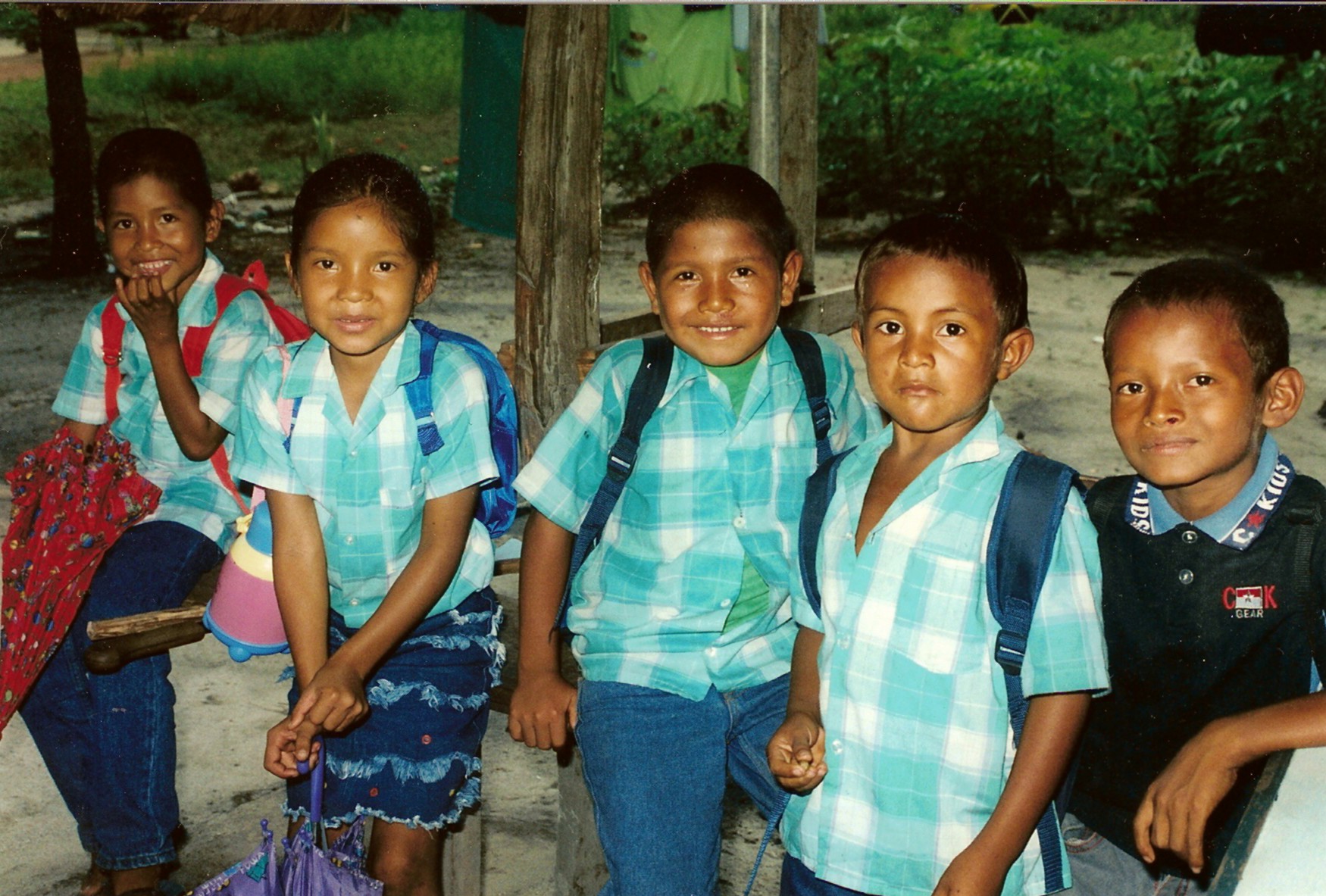
The Kalina, also known as the Caribs or mainland Caribs and by several other names, are an Indigenous people native to the northern coastal areas of South America. Today, the Kalina live largely in villages on the rivers and coasts of Venezuela, Guyana, Suriname, French Guiana, and Brazil. They speak a Cariban language known as Carib. They may be related to the Island Caribs of the Caribbean, though their languages are unrelated.
The exonym Caribe was first recorded by Christopher Columbus. One hypothesis for the origin of Carib is that it means "brave warrior". However, this is considered a folk etymology, and the name is more likely based on a different (but perhaps related) people's endonym in another Cariban language meaning "person" and deriving from Proto-Cariban *karipona, possibly via a Caribbean Arawakan intermediary such as such as the Kalinago ("Island Carib" or Iñeri) word karifuna (which is also the source of the exonym of the Garifuna; compare also Carijona, Karipúna, and similar names), though the source language is uncertain.[citation needed] Its variants, including the English Carib, were then adopted by other European languages. Early Spanish colonizers used the terms Arawak and Caribs to distinguish the peoples of the Caribbean, with Carib reserved for Indigenous groups that they considered hostile and Arawak for groups that they considered friendly. The name Galibi, originating as a form of the word Caribe, has also been used since at least the 19th century and is still common in Portuguese and Spanish, possibly making a resurgence in recent times as an autonym used by some Kalina groups and closely related populations, some of whom are of mixed origin and speak a creole language.[citation needed] This is also the source of the place names São José dos Galibi, Santa Maria dos Galibis and the part of Suriname called Galibi. Different Galibi groups are further differentiated based on geography, such as by which river they live near (more information below).
The Kalina call themselves Kalina or Karìna (approximately [kaɽiɁɲa] in IPA), spelled variously. Variants include Kaliʼna, Cariña, Kariña, Kalihna, Kalinya. In their native language (Karìna auran), it literally means "person". Other native names include Maraworno or Marworno, in particular for the Galibi Marworno. Kalina may distinguish themselves as Kaliʼna tilewuyu ("true Kalina"), partly to differentiate themselves from the mixed Maroon-Kalina inhabitants of Suriname. Use of "Kalina" and related variants has become common practice only recently in publications; many sources continue to use "Caribs" or associated names.
Lacking a written form of language before the arrival of Europeans, Kaliʼna history was passed down orally from one generation to the next through tales of myth and legend.
For a long time, the few Europeans studying the history of the Amerindian people of this area did not distinguish between the various Caribbean tribes. Once the period of exploration was over, interest in the study of these people diminished greatly and did not re-emerge until the end of the 20th century, when a few French expatriates, notably Gérard Collomb, became interested in the Kaliʼna, and the Kaliʼna themselves began to relate their history, in particular Félix Tiouka, president of the Association of Amerindians of French Guiana (AAGF), and his son Alexis.
For the reasons given, historical information regarding the Kaliʼna is rare and incomplete.
Making up for lack of written records, archaeologists have to date uncovered 273 Amerindian archeological sites on only 310 km² of the land recovered from the Sinnamary River by the Petit-Saut Dam. Some date back as far as two thousand years, establishing the antiquity of the Amerindian presence in this area.,
The weak historical clues available indicate that before 1492, the Kaliʼna inhabited the coast (from the mouth of the Amazon River to that of the Orinoco), dividing their territory with the Arawak, against whom they fought during their expansion toward the east and the Amazon River.,
Hub AI
Kalina people AI simulator
(@Kalina people_simulator)
Kalina people
The Kalina, also known as the Caribs or mainland Caribs and by several other names, are an Indigenous people native to the northern coastal areas of South America. Today, the Kalina live largely in villages on the rivers and coasts of Venezuela, Guyana, Suriname, French Guiana, and Brazil. They speak a Cariban language known as Carib. They may be related to the Island Caribs of the Caribbean, though their languages are unrelated.
The exonym Caribe was first recorded by Christopher Columbus. One hypothesis for the origin of Carib is that it means "brave warrior". However, this is considered a folk etymology, and the name is more likely based on a different (but perhaps related) people's endonym in another Cariban language meaning "person" and deriving from Proto-Cariban *karipona, possibly via a Caribbean Arawakan intermediary such as such as the Kalinago ("Island Carib" or Iñeri) word karifuna (which is also the source of the exonym of the Garifuna; compare also Carijona, Karipúna, and similar names), though the source language is uncertain.[citation needed] Its variants, including the English Carib, were then adopted by other European languages. Early Spanish colonizers used the terms Arawak and Caribs to distinguish the peoples of the Caribbean, with Carib reserved for Indigenous groups that they considered hostile and Arawak for groups that they considered friendly. The name Galibi, originating as a form of the word Caribe, has also been used since at least the 19th century and is still common in Portuguese and Spanish, possibly making a resurgence in recent times as an autonym used by some Kalina groups and closely related populations, some of whom are of mixed origin and speak a creole language.[citation needed] This is also the source of the place names São José dos Galibi, Santa Maria dos Galibis and the part of Suriname called Galibi. Different Galibi groups are further differentiated based on geography, such as by which river they live near (more information below).
The Kalina call themselves Kalina or Karìna (approximately [kaɽiɁɲa] in IPA), spelled variously. Variants include Kaliʼna, Cariña, Kariña, Kalihna, Kalinya. In their native language (Karìna auran), it literally means "person". Other native names include Maraworno or Marworno, in particular for the Galibi Marworno. Kalina may distinguish themselves as Kaliʼna tilewuyu ("true Kalina"), partly to differentiate themselves from the mixed Maroon-Kalina inhabitants of Suriname. Use of "Kalina" and related variants has become common practice only recently in publications; many sources continue to use "Caribs" or associated names.
Lacking a written form of language before the arrival of Europeans, Kaliʼna history was passed down orally from one generation to the next through tales of myth and legend.
For a long time, the few Europeans studying the history of the Amerindian people of this area did not distinguish between the various Caribbean tribes. Once the period of exploration was over, interest in the study of these people diminished greatly and did not re-emerge until the end of the 20th century, when a few French expatriates, notably Gérard Collomb, became interested in the Kaliʼna, and the Kaliʼna themselves began to relate their history, in particular Félix Tiouka, president of the Association of Amerindians of French Guiana (AAGF), and his son Alexis.
For the reasons given, historical information regarding the Kaliʼna is rare and incomplete.
Making up for lack of written records, archaeologists have to date uncovered 273 Amerindian archeological sites on only 310 km² of the land recovered from the Sinnamary River by the Petit-Saut Dam. Some date back as far as two thousand years, establishing the antiquity of the Amerindian presence in this area.,
The weak historical clues available indicate that before 1492, the Kaliʼna inhabited the coast (from the mouth of the Amazon River to that of the Orinoco), dividing their territory with the Arawak, against whom they fought during their expansion toward the east and the Amazon River.,