



Community hub
Recent from talks
Knowledge base stats:
Talk channels stats:
Members stats:
Maironis
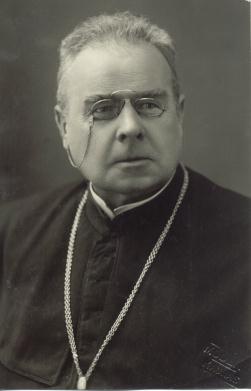
Maironis was the pen name of Jonas Mačiulis (2 November 1862 – 28 June 1932), a Lithuanian Roman Catholic priest and one of the most known and influential Lithuanian poets, especially of the period of the Lithuanian press ban. He was called the Bard of Lithuanian National Revival (Tautinio atgimimo dainius).
In his poetry, he expressed the national aspirations of the Lithuanian National Revival and was highly influential in Lithuanian society and poetry. The Maironian school in Lithuanian literature was named after him. Maironis was active in public life. However, the Lithuanian literary historian Juozas Brazaitis writes that Maironis was not.
Jonas Mačiulis was born on 2 November [O.S. 21 October] 1862 in Pasandravys manor, Šiluva county, Raseiniai district, in the former Grand Duchy of Lithuania, which was almost wholly annexed by the Russian Empire during the Partitions of the Polish–Lithuanian Commonwealth. Maironis' parents were free peasants who maintained close relations with the polonized Lithuanian nobility. Such a social environment formed the basis of Maironis' personality, leading to his deep religiosity and loyalty to tradition, free from atheistic or liberal influences. Socially, Maironis was uninvolved in the tensions between nobles and peasants, the rich and the poor, and did not become a representative of either side. Maironis was raised with a firm grounding in Lithuanian rural culture and was open to influence of any culture provided that it did not contradict Maironis' love for his land, his people, its past and traditions.
During 1873–1883, Maironis was learning in the gymnasium of Kaunas. In sixth class, he began writing verses in Polish. In 1883, he entered the Kiev University to study literature. He only studied there for a single semester. He left the university after the lectures did not satisfy his hopes and the students' stances towards religion were strange to him, so, Maironis returned to Kaunas in 1884 and entered Kaunas Priest Seminary. Maironis studied in the seminary until 1888. In the seminary, Lithuanian culture and the use of the Lithuanian language were encouraged by the priest, then Auxiliary bishop, Antanas Baranauskas. This influenced Maironis to decide in favour of Lithuanianness and to create art in the Lithuanian language, thus leading to him being important in the Lithuanian National Revival.
In 1888-1892, Maironis studied in the Saint Petersburg Roman Catholic Theological Academy, where he mostly studied moral theology and for his work De iustitia et jure, he received a Master's degree. In 1891, Maironis was ordained a priest. From 1892 to 1894, he was professor in Kaunas Priest Seminary, where he taught the dogmatic theology and catechism.
From 1894 to 1909, he was Theology Professor in Saint Petersburg Roman Catholic Theological Academy and was made the academic inspector in 1900. For a few years, he was also the prefect and spiritual father. In 1903, he received the degree of Doctor of Theology. In the Academy, the Department of Sociology was established at the insistence of Maironis. Around 1900, Maironis was one of the founders of the Lithuanian Language Rights' Restoration Union (Lithuanian: Lietuvių kalbos teisių atkūrimo sąjunga).
Maironis' presence in academia had indirect influence on Lithuanian culture in Saint Petersburg, as the presence of a Lithuanian poet in the functions of an inspector raised patriotic pride amongst the Lithuanian students and allowed the entry of more Lithuanians into professorship. Moreover, this allowed Maironis to authoritatively support the works of Lithuanians in the Imperial Russian capital, for example, the Lithuanian newspaper Lietuvių laikraštis of Antanas Smilga. This newspaper was the first legally-printed Lithuanian newspaper in the Russian Empire following the end of Lithuanian press ban in 1904. In 1905, Maironis was a member of the Commission formed by the Minister of Education of the Russian Empire to prepare a Lithuanian language program for Lithuanian schools. Together with others, he prepared a draft program of the Christian Democratic Party for the Great Seimas of Vilnius of 1905.
From 1908, Maironis was member of the Lithuanian Scientific Society in Vilnius. In 1909, he was invited as rector of the Kaunas Priest Seminary. In his first public speech, he spoke in Lithuanian, breaking with the tradition of speaking either in Latin or Polish. This was a breakthrough moment for Lithuanianness in the seminary. Outside of the seminary, Maironis was important to show that Lithuanians had their own intellectual high ecclesiastical figures, as Maironis was Mogilev's honorary canon since 1902 and later also the prelate of the Samogitian Capitula from 1912. He aided Roman Catholic Lithuanian cultural organisations by allowing them to establish their headquarters in the former Pac Palace, which Maironis had bought. Maironis remained the seminary's rector until his death in 1932, except when the seminary was closed during World War I. Maironis left Kaunas only during short breaks during summer when he went to Palanga or when the seminary was closed during World War I.
Hub AI
Maironis AI simulator
(@Maironis_simulator)
Maironis
Maironis was the pen name of Jonas Mačiulis (2 November 1862 – 28 June 1932), a Lithuanian Roman Catholic priest and one of the most known and influential Lithuanian poets, especially of the period of the Lithuanian press ban. He was called the Bard of Lithuanian National Revival (Tautinio atgimimo dainius).
In his poetry, he expressed the national aspirations of the Lithuanian National Revival and was highly influential in Lithuanian society and poetry. The Maironian school in Lithuanian literature was named after him. Maironis was active in public life. However, the Lithuanian literary historian Juozas Brazaitis writes that Maironis was not.
Jonas Mačiulis was born on 2 November [O.S. 21 October] 1862 in Pasandravys manor, Šiluva county, Raseiniai district, in the former Grand Duchy of Lithuania, which was almost wholly annexed by the Russian Empire during the Partitions of the Polish–Lithuanian Commonwealth. Maironis' parents were free peasants who maintained close relations with the polonized Lithuanian nobility. Such a social environment formed the basis of Maironis' personality, leading to his deep religiosity and loyalty to tradition, free from atheistic or liberal influences. Socially, Maironis was uninvolved in the tensions between nobles and peasants, the rich and the poor, and did not become a representative of either side. Maironis was raised with a firm grounding in Lithuanian rural culture and was open to influence of any culture provided that it did not contradict Maironis' love for his land, his people, its past and traditions.
During 1873–1883, Maironis was learning in the gymnasium of Kaunas. In sixth class, he began writing verses in Polish. In 1883, he entered the Kiev University to study literature. He only studied there for a single semester. He left the university after the lectures did not satisfy his hopes and the students' stances towards religion were strange to him, so, Maironis returned to Kaunas in 1884 and entered Kaunas Priest Seminary. Maironis studied in the seminary until 1888. In the seminary, Lithuanian culture and the use of the Lithuanian language were encouraged by the priest, then Auxiliary bishop, Antanas Baranauskas. This influenced Maironis to decide in favour of Lithuanianness and to create art in the Lithuanian language, thus leading to him being important in the Lithuanian National Revival.
In 1888-1892, Maironis studied in the Saint Petersburg Roman Catholic Theological Academy, where he mostly studied moral theology and for his work De iustitia et jure, he received a Master's degree. In 1891, Maironis was ordained a priest. From 1892 to 1894, he was professor in Kaunas Priest Seminary, where he taught the dogmatic theology and catechism.
From 1894 to 1909, he was Theology Professor in Saint Petersburg Roman Catholic Theological Academy and was made the academic inspector in 1900. For a few years, he was also the prefect and spiritual father. In 1903, he received the degree of Doctor of Theology. In the Academy, the Department of Sociology was established at the insistence of Maironis. Around 1900, Maironis was one of the founders of the Lithuanian Language Rights' Restoration Union (Lithuanian: Lietuvių kalbos teisių atkūrimo sąjunga).
Maironis' presence in academia had indirect influence on Lithuanian culture in Saint Petersburg, as the presence of a Lithuanian poet in the functions of an inspector raised patriotic pride amongst the Lithuanian students and allowed the entry of more Lithuanians into professorship. Moreover, this allowed Maironis to authoritatively support the works of Lithuanians in the Imperial Russian capital, for example, the Lithuanian newspaper Lietuvių laikraštis of Antanas Smilga. This newspaper was the first legally-printed Lithuanian newspaper in the Russian Empire following the end of Lithuanian press ban in 1904. In 1905, Maironis was a member of the Commission formed by the Minister of Education of the Russian Empire to prepare a Lithuanian language program for Lithuanian schools. Together with others, he prepared a draft program of the Christian Democratic Party for the Great Seimas of Vilnius of 1905.
From 1908, Maironis was member of the Lithuanian Scientific Society in Vilnius. In 1909, he was invited as rector of the Kaunas Priest Seminary. In his first public speech, he spoke in Lithuanian, breaking with the tradition of speaking either in Latin or Polish. This was a breakthrough moment for Lithuanianness in the seminary. Outside of the seminary, Maironis was important to show that Lithuanians had their own intellectual high ecclesiastical figures, as Maironis was Mogilev's honorary canon since 1902 and later also the prelate of the Samogitian Capitula from 1912. He aided Roman Catholic Lithuanian cultural organisations by allowing them to establish their headquarters in the former Pac Palace, which Maironis had bought. Maironis remained the seminary's rector until his death in 1932, except when the seminary was closed during World War I. Maironis left Kaunas only during short breaks during summer when he went to Palanga or when the seminary was closed during World War I.