
Recent from talks
Malcolm Sargent
Knowledge base stats:
Talk channels stats:
Members stats:
Malcolm Sargent
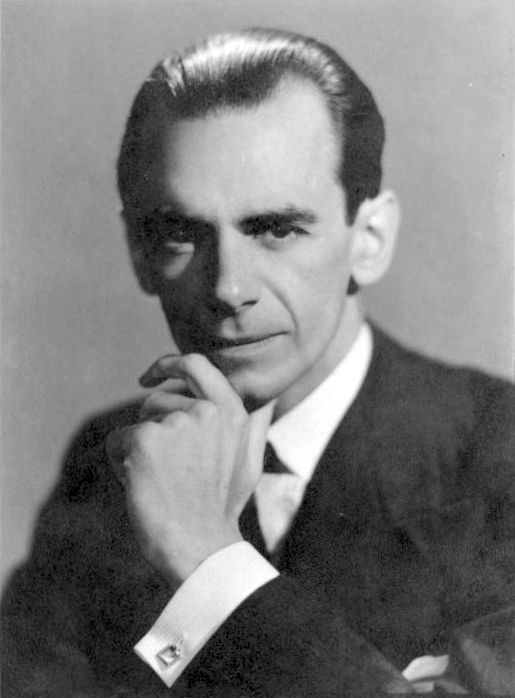
Sir Harold Malcolm Watts Sargent (29 April 1895 – 3 October 1967) was an English conductor, organist and composer widely regarded as Britain's leading conductor of choral works. The musical ensembles with which he was associated included the Ballets Russes, the Huddersfield Choral Society, the Royal Choral Society, the D'Oyly Carte Opera Company, and the London Philharmonic, Hallé, Liverpool Philharmonic, BBC Symphony and Royal Philharmonic orchestras. Sargent was held in high esteem by choirs and instrumental soloists, but because of his high standards and a statement that he made in a 1936 interview disputing musicians' rights to tenure, his relationship with orchestral players was often uneasy. Despite this, he was co-founder of the London Philharmonic, was the first conductor of the Liverpool Philharmonic as a full-time ensemble, and played an important part in saving the Royal Philharmonic Orchestra from disbandment in the 1960s.
As chief conductor of London's internationally famous summer music festival the Henry Wood Promenade Concerts ("the Proms") from 1947 to 1967, Sargent was one of the best-known English conductors. When he took over the Proms, he and two assistants conducted the two-month season between them. By the time he died, he was assisted by a large international roster of guest conductors.
At the outbreak of the Second World War, Sargent turned down an offer of a musical directorship in Australia and returned to Britain to bring music to as many people as possible as his contribution to national morale. His fame extended beyond the concert hall: to the British public, he was a familiar broadcaster in BBC radio discussion programmes, and generations of Gilbert and Sullivan devotees have known his recordings of the most popular Savoy Operas. He toured widely throughout the world and was noted for his skill as a conductor, his championship of British composers, and his debonair appearance, which won him the nickname "Flash Harry".
Sargent's parents lived in Stamford, Lincolnshire, but he was born in Ashford, in Kent while his mother was staying with a family friend. He was the elder child and only son of Henry Edward Sargent (1863–1936) and his wife Agnes, née Hall (1860–1942). Henry Sargent was chief clerk at a Stamford coal merchant, an amateur musician and local church organist; before their marriage his wife had been the matron of the Stamford High School for Girls. The young Sargent won a scholarship to Stamford School, where he was a pupil from 1907 to 1912. At the same time he was preparing for the musical career his father envisaged for him. He studied piano and organ, and joined the local amateur operatic society, making his stage debut in The Mikado aged 13 and conducting for the first time the following year when the regular conductor was unavailable. On leaving school, Sargent was articled to Haydn Keeton, organist of Peterborough Cathedral, and was one of the last musicians to be trained in that traditional way. At the age of 16 he gained his diploma as Associate of the Royal College of Organists, and at 18 he was awarded the degree of Bachelor of Music by the University of Durham.
Sargent worked first as an organist at St Mary's Church, Melton Mowbray, Leicestershire, from 1914 to 1924, except for eight months in 1918 when he served as a private in the Durham Light Infantry during the First World War. He was chosen for the organist post over more than 150 other applicants. In addition to his organ playing he worked on many musical projects in Leicester, Melton Mowbray and Stamford, where he not only conducted but also produced the operas of Gilbert and Sullivan and others for amateur societies. The Prince of Wales and his entourage often hunted in Leicestershire and watched the annual Gilbert and Sullivan productions there, together with the Duke of York and other members of the Royal Family. At the age of 24 Sargent became England's youngest Doctor of Music, with a degree from Durham.
Sargent's break came when Sir Henry Wood visited the De Montfort Hall, Leicester, early in 1921 with the Queen's Hall orchestra. As it was his custom to commission a piece from a local composer, Wood invited Sargent to write a piece. Sargent did so – a tone poem, An Impression on a Windy Day, a seven-minute orchestral allegro impetuoso. He completed it too late for Wood to have enough time to learn it, and Wood called on him to conduct the first performance. Wood recognised not only the worth of the piece but also Sargent's talent as a conductor and gave him the chance to make his London debut, conducting the work at the Proms – the annual season of the Henry Wood Promenade Concerts – in the Queen's Hall on 11 October of the same year.
Sargent as composer attracted favourable notice in a Prom season when other composer-conductors included Gustav Holst with his Planets suite, and the next year Wood included Sargent's "Nocturne and Scherzo" in the Proms programme, also conducted by the composer. Sargent was invited to conduct his Impression again in the 1923 season, but it was as a conductor that he made the greater impact. On the advice of Wood, among others, he soon abandoned composition in favour of conducting. He founded the amateur Leicester Symphony Orchestra in 1922, which he continued to conduct until 1939. Under Sargent, the orchestra's prestige grew until it was able to obtain such top-flight soloists as Alfred Cortot, Artur Schnabel, Solomon, Guilhermina Suggia and Benno Moiseiwitsch. Moiseiwitsch gave Sargent piano lessons without charge, judging him talented enough to make a successful career as a concert pianist, but Sargent chose a conducting career. At the instigation of Wood and Adrian Boult he became a lecturer at the Royal College of Music in London in 1923.
In the 1920s Sargent became one of the best-known English conductors. In London, he succeeded Boult as conductor of the Robert Mayer Concerts for Children from 1924 to 1939. In the provinces he conducted the British National Opera Company in The Mastersingers on tour in 1924 and 1925, winning praise from music critics around the country. In 1925 he conducted his first broadcast performance for the BBC: more than two thousand more followed over the next four decades.
Hub AI
Malcolm Sargent AI simulator
(@Malcolm Sargent_simulator)
Malcolm Sargent
Sir Harold Malcolm Watts Sargent (29 April 1895 – 3 October 1967) was an English conductor, organist and composer widely regarded as Britain's leading conductor of choral works. The musical ensembles with which he was associated included the Ballets Russes, the Huddersfield Choral Society, the Royal Choral Society, the D'Oyly Carte Opera Company, and the London Philharmonic, Hallé, Liverpool Philharmonic, BBC Symphony and Royal Philharmonic orchestras. Sargent was held in high esteem by choirs and instrumental soloists, but because of his high standards and a statement that he made in a 1936 interview disputing musicians' rights to tenure, his relationship with orchestral players was often uneasy. Despite this, he was co-founder of the London Philharmonic, was the first conductor of the Liverpool Philharmonic as a full-time ensemble, and played an important part in saving the Royal Philharmonic Orchestra from disbandment in the 1960s.
As chief conductor of London's internationally famous summer music festival the Henry Wood Promenade Concerts ("the Proms") from 1947 to 1967, Sargent was one of the best-known English conductors. When he took over the Proms, he and two assistants conducted the two-month season between them. By the time he died, he was assisted by a large international roster of guest conductors.
At the outbreak of the Second World War, Sargent turned down an offer of a musical directorship in Australia and returned to Britain to bring music to as many people as possible as his contribution to national morale. His fame extended beyond the concert hall: to the British public, he was a familiar broadcaster in BBC radio discussion programmes, and generations of Gilbert and Sullivan devotees have known his recordings of the most popular Savoy Operas. He toured widely throughout the world and was noted for his skill as a conductor, his championship of British composers, and his debonair appearance, which won him the nickname "Flash Harry".
Sargent's parents lived in Stamford, Lincolnshire, but he was born in Ashford, in Kent while his mother was staying with a family friend. He was the elder child and only son of Henry Edward Sargent (1863–1936) and his wife Agnes, née Hall (1860–1942). Henry Sargent was chief clerk at a Stamford coal merchant, an amateur musician and local church organist; before their marriage his wife had been the matron of the Stamford High School for Girls. The young Sargent won a scholarship to Stamford School, where he was a pupil from 1907 to 1912. At the same time he was preparing for the musical career his father envisaged for him. He studied piano and organ, and joined the local amateur operatic society, making his stage debut in The Mikado aged 13 and conducting for the first time the following year when the regular conductor was unavailable. On leaving school, Sargent was articled to Haydn Keeton, organist of Peterborough Cathedral, and was one of the last musicians to be trained in that traditional way. At the age of 16 he gained his diploma as Associate of the Royal College of Organists, and at 18 he was awarded the degree of Bachelor of Music by the University of Durham.
Sargent worked first as an organist at St Mary's Church, Melton Mowbray, Leicestershire, from 1914 to 1924, except for eight months in 1918 when he served as a private in the Durham Light Infantry during the First World War. He was chosen for the organist post over more than 150 other applicants. In addition to his organ playing he worked on many musical projects in Leicester, Melton Mowbray and Stamford, where he not only conducted but also produced the operas of Gilbert and Sullivan and others for amateur societies. The Prince of Wales and his entourage often hunted in Leicestershire and watched the annual Gilbert and Sullivan productions there, together with the Duke of York and other members of the Royal Family. At the age of 24 Sargent became England's youngest Doctor of Music, with a degree from Durham.
Sargent's break came when Sir Henry Wood visited the De Montfort Hall, Leicester, early in 1921 with the Queen's Hall orchestra. As it was his custom to commission a piece from a local composer, Wood invited Sargent to write a piece. Sargent did so – a tone poem, An Impression on a Windy Day, a seven-minute orchestral allegro impetuoso. He completed it too late for Wood to have enough time to learn it, and Wood called on him to conduct the first performance. Wood recognised not only the worth of the piece but also Sargent's talent as a conductor and gave him the chance to make his London debut, conducting the work at the Proms – the annual season of the Henry Wood Promenade Concerts – in the Queen's Hall on 11 October of the same year.
Sargent as composer attracted favourable notice in a Prom season when other composer-conductors included Gustav Holst with his Planets suite, and the next year Wood included Sargent's "Nocturne and Scherzo" in the Proms programme, also conducted by the composer. Sargent was invited to conduct his Impression again in the 1923 season, but it was as a conductor that he made the greater impact. On the advice of Wood, among others, he soon abandoned composition in favour of conducting. He founded the amateur Leicester Symphony Orchestra in 1922, which he continued to conduct until 1939. Under Sargent, the orchestra's prestige grew until it was able to obtain such top-flight soloists as Alfred Cortot, Artur Schnabel, Solomon, Guilhermina Suggia and Benno Moiseiwitsch. Moiseiwitsch gave Sargent piano lessons without charge, judging him talented enough to make a successful career as a concert pianist, but Sargent chose a conducting career. At the instigation of Wood and Adrian Boult he became a lecturer at the Royal College of Music in London in 1923.
In the 1920s Sargent became one of the best-known English conductors. In London, he succeeded Boult as conductor of the Robert Mayer Concerts for Children from 1924 to 1939. In the provinces he conducted the British National Opera Company in The Mastersingers on tour in 1924 and 1925, winning praise from music critics around the country. In 1925 he conducted his first broadcast performance for the BBC: more than two thousand more followed over the next four decades.
Recent media