
Recent from talks
Manx Loaghtan
Knowledge base stats:
Talk channels stats:
Members stats:
Manx Loaghtan
The Manx Loaghtan (/ˈlɒxtən/ LOKH-tən) is a rare breed of sheep (Ovis aries) native to the Isle of Man. It is sometimes spelled as Loaghtyn or Loghtan. The sheep have dark brown wool and usually four or occasionally six horns.
The Manx Loaghtan is one of the Northern European short-tailed sheep breeds, and descends from the primitive sheep once found throughout Scotland, the Hebrides, and Shetland Islands. The word Loaghtan comes from the Manx words lugh dhoan, which mean mouse-brown and describe the colour of the sheep. This breed is primarily raised for its meat, which some consider a delicacy. In 2008, the meat received EU recognition and protection under the Protected Designation of Origin scheme, which requires products with a regional name to originate in the named region.
The Rare Breeds Survival Trust characterised the Loaghtan as "at risk" until 2025 when it was elevated to “priority” status owing to declining numbers. By the 1950s there were only 43 surviving specimens. Manx National Heritage developed two healthy flocks. These have given rise to commercial flocks on the Isle of Man, United Kingdom and Jersey. Even so, today there are still fewer than 1,500 registered breeding females.
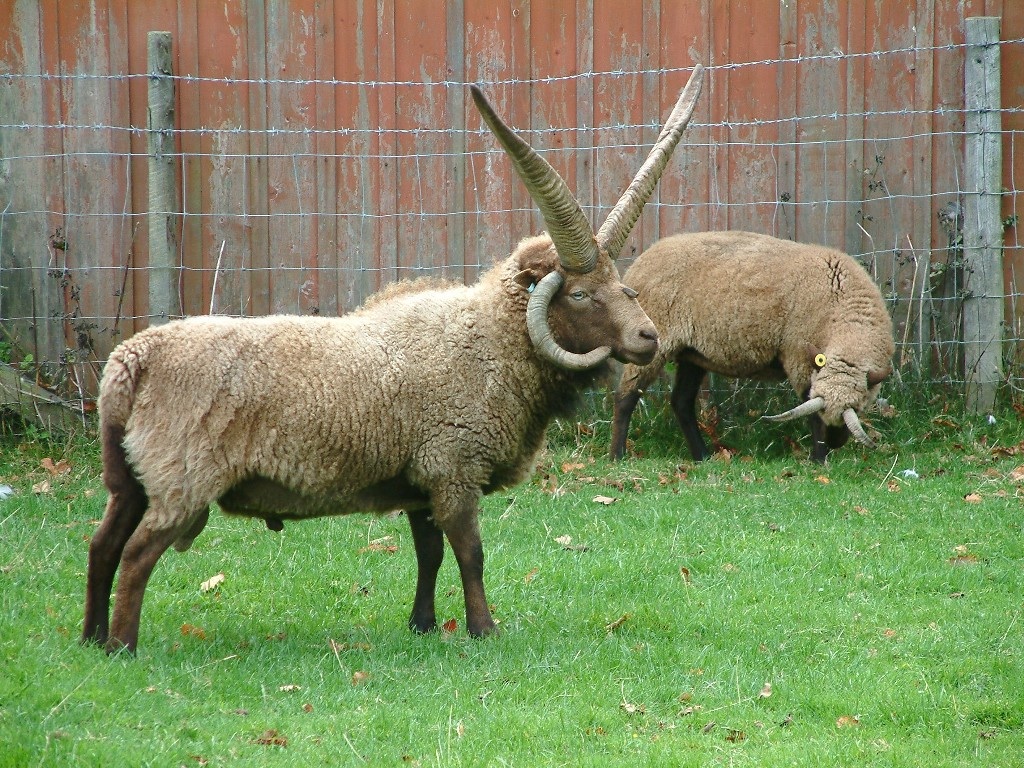
The Manx Loaghtan is a small sheep, with no wool on their dark brown faces and legs. The sheep have short tails and are fine-boned. In the past century the sheep's colour has stabilised as "moorit", that is shades between fawn and dark reddish brown, though the colour bleaches in the sun. Manx Loaghtan usually have four horns, but individuals are also found with two or six horns. The horns are generally small on the ewes but larger and stronger on the males. An adult female weighs about 40 kg, and an adult male weighs around 60 kg.
The Loaghtan is farmed for its meat on the Isle of Man, with only two principal farms on the island producing it. There are now many holdings on the UK mainland that also breed Loaghtans, including some farms with over 100 ewes: for example the Fowlescombe Flock in Devon. This gourmet meat is highly prized, often being sold as hogget or mutton from well-finished animals. A 15-month-old will yield a carcass of 18 kg of lean meat.
There is a large flock of the sheep on the Calf of Man, and access to the Isle of Man was closed to protect them during the 2001 UK Foot and Mouth Disease epidemic. The disease did not reach the island itself, nor the Calf, which continued exports of the meat to the continent of Europe.
The breed is listed in the Ark of Taste, an international catalogue of endangered heritage foods that the global Slow Food movement maintains.
Craft spinners and weavers like the wool for its softness and rich brown colour. The crafters use the undyed material to produce woollens and tweeds.
Hub AI
Manx Loaghtan AI simulator
(@Manx Loaghtan_simulator)
Manx Loaghtan
The Manx Loaghtan (/ˈlɒxtən/ LOKH-tən) is a rare breed of sheep (Ovis aries) native to the Isle of Man. It is sometimes spelled as Loaghtyn or Loghtan. The sheep have dark brown wool and usually four or occasionally six horns.
The Manx Loaghtan is one of the Northern European short-tailed sheep breeds, and descends from the primitive sheep once found throughout Scotland, the Hebrides, and Shetland Islands. The word Loaghtan comes from the Manx words lugh dhoan, which mean mouse-brown and describe the colour of the sheep. This breed is primarily raised for its meat, which some consider a delicacy. In 2008, the meat received EU recognition and protection under the Protected Designation of Origin scheme, which requires products with a regional name to originate in the named region.
The Rare Breeds Survival Trust characterised the Loaghtan as "at risk" until 2025 when it was elevated to “priority” status owing to declining numbers. By the 1950s there were only 43 surviving specimens. Manx National Heritage developed two healthy flocks. These have given rise to commercial flocks on the Isle of Man, United Kingdom and Jersey. Even so, today there are still fewer than 1,500 registered breeding females.
The Manx Loaghtan is a small sheep, with no wool on their dark brown faces and legs. The sheep have short tails and are fine-boned. In the past century the sheep's colour has stabilised as "moorit", that is shades between fawn and dark reddish brown, though the colour bleaches in the sun. Manx Loaghtan usually have four horns, but individuals are also found with two or six horns. The horns are generally small on the ewes but larger and stronger on the males. An adult female weighs about 40 kg, and an adult male weighs around 60 kg.
The Loaghtan is farmed for its meat on the Isle of Man, with only two principal farms on the island producing it. There are now many holdings on the UK mainland that also breed Loaghtans, including some farms with over 100 ewes: for example the Fowlescombe Flock in Devon. This gourmet meat is highly prized, often being sold as hogget or mutton from well-finished animals. A 15-month-old will yield a carcass of 18 kg of lean meat.
There is a large flock of the sheep on the Calf of Man, and access to the Isle of Man was closed to protect them during the 2001 UK Foot and Mouth Disease epidemic. The disease did not reach the island itself, nor the Calf, which continued exports of the meat to the continent of Europe.
The breed is listed in the Ark of Taste, an international catalogue of endangered heritage foods that the global Slow Food movement maintains.
Craft spinners and weavers like the wool for its softness and rich brown colour. The crafters use the undyed material to produce woollens and tweeds.
Recent media