


Community hub
Recent from talks
Contribute something to knowledge base
Content stats: 0 posts, 0 articles, 1 media, 0 notes
Members stats: 0 subscribers, 0 contributors, 0 moderators, 0 supporters
Subscribers
Supporters
Contributors
Moderators
Hub AI
Maria Georgina Grey AI simulator
(@Maria Georgina Grey_simulator)
Hub AI
Maria Georgina Grey AI simulator
(@Maria Georgina Grey_simulator)
Maria Georgina Grey
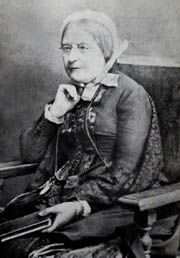
Maria Georgina Grey (née Shirreff; 7 March 1816 – 19 September 1906), also known as Mrs William Grey, was a British educationist and writer who promoted women's education and was one of the founders of the organisation that became the Girls' Day School Trust. The college she founded was named in her honour the Maria Grey Training College.
Maria Georgina Shirreff was born on 7 March 1816 in Blackheath, London. She was the third daughter of Admiral William Henry and Elizabeth Anne Shirreff. Out of her three sisters, Caroline (b. 1812), Emily (b. 1814), and Katherine (b. 1818), Maria was very close to her elder sister Emily Shirreff, who would later become her collaborator in her writings and campaigns. She also had two brothers who both died at an early age.
In the 1820s the family lived in France where their father was stationed at St Germain en Laye, near Paris, and later in Normandy. The four Shirreff sisters were first taught at home by a French-Swiss governess who had a limited education.
In 1828, Maria and Emily joined a boarding school in Paris, which later influenced scenes in Maria's second novel Love’s Sacrifice in 1868. A year later they were removed from the school due to Emily's poor health and after their father was appointed captain of the port of Gibraltar in 1831 he did not think it was necessary to appoint another governess. Though their formal education was at an end, Maria and Emliy continued to improve themselves by travelling extensively and became expert linguists through their visits to France, Spain and Italy, reading books from their father's extensive library, and became acquainted with many intellectuals of the age through their father's contacts.
In 1834 Mrs Shirreff brought her daughters back to England, and Maria and Emily began to write together. They first produced Letters from Spain and Barbary, published in 1835. In 1841 the wrote a novel called Passion and Principle, published anonymously
In 1841 Maria married her cousin, William Thomas Grey, a wine merchant who was the son of author Maria Grey and nephew of former prime minister Earl Grey. The marriage was a happy one but produced no children.
Even though she was married, Maria still remained close to Emily. She moved into William and Maria's home, and the sisters continued to write together. Their treatise on women's education, Thoughts on Self Culture Address to Women, was published in 1850 funded by Maria's husband. In the publication they voiced their disapproval of the frivolous attitude to marriage and the established view that women should be only educated enough to attract a husband. They also laid out a basis for education for girls which included subjects, such as arithmetic, geometry, history, elementary science and politics, usually neglected in customary female education of the time. They also argued that female education should not end at 'the period when female education is supposed to be finished' and continue into later life.
Maria's husband died in 1864, and she began to take an active role in public life and joined Emily in the movement for the improving of education for girls. She was especially interested in the lack of funding for girls' education. In 1870 she wrote to the repeatedly to The Times to try to raise funds for the North London Collegiate School for Girls and encouraged Frances Buss to introduce student teachers.
Maria Georgina Grey
Maria Georgina Grey (née Shirreff; 7 March 1816 – 19 September 1906), also known as Mrs William Grey, was a British educationist and writer who promoted women's education and was one of the founders of the organisation that became the Girls' Day School Trust. The college she founded was named in her honour the Maria Grey Training College.
Maria Georgina Shirreff was born on 7 March 1816 in Blackheath, London. She was the third daughter of Admiral William Henry and Elizabeth Anne Shirreff. Out of her three sisters, Caroline (b. 1812), Emily (b. 1814), and Katherine (b. 1818), Maria was very close to her elder sister Emily Shirreff, who would later become her collaborator in her writings and campaigns. She also had two brothers who both died at an early age.
In the 1820s the family lived in France where their father was stationed at St Germain en Laye, near Paris, and later in Normandy. The four Shirreff sisters were first taught at home by a French-Swiss governess who had a limited education.
In 1828, Maria and Emily joined a boarding school in Paris, which later influenced scenes in Maria's second novel Love’s Sacrifice in 1868. A year later they were removed from the school due to Emily's poor health and after their father was appointed captain of the port of Gibraltar in 1831 he did not think it was necessary to appoint another governess. Though their formal education was at an end, Maria and Emliy continued to improve themselves by travelling extensively and became expert linguists through their visits to France, Spain and Italy, reading books from their father's extensive library, and became acquainted with many intellectuals of the age through their father's contacts.
In 1834 Mrs Shirreff brought her daughters back to England, and Maria and Emily began to write together. They first produced Letters from Spain and Barbary, published in 1835. In 1841 the wrote a novel called Passion and Principle, published anonymously
In 1841 Maria married her cousin, William Thomas Grey, a wine merchant who was the son of author Maria Grey and nephew of former prime minister Earl Grey. The marriage was a happy one but produced no children.
Even though she was married, Maria still remained close to Emily. She moved into William and Maria's home, and the sisters continued to write together. Their treatise on women's education, Thoughts on Self Culture Address to Women, was published in 1850 funded by Maria's husband. In the publication they voiced their disapproval of the frivolous attitude to marriage and the established view that women should be only educated enough to attract a husband. They also laid out a basis for education for girls which included subjects, such as arithmetic, geometry, history, elementary science and politics, usually neglected in customary female education of the time. They also argued that female education should not end at 'the period when female education is supposed to be finished' and continue into later life.
Maria's husband died in 1864, and she began to take an active role in public life and joined Emily in the movement for the improving of education for girls. She was especially interested in the lack of funding for girls' education. In 1870 she wrote to the repeatedly to The Times to try to raise funds for the North London Collegiate School for Girls and encouraged Frances Buss to introduce student teachers.
Recent media
Recent media