



Community hub
Community hub
Recent from talks
Knowledge base stats:
Talk channels stats:
Members stats:
Maritime fur trade
The maritime fur trade, a ship-based fur trade system, focused largely on acquiring furs of sea otters and other animals from the Indigenous peoples of the Pacific Northwest Coast and Alaska Natives. Entrepreneurs also exploited fur-bearing skins from the wider Pacific (from, for example, the Juan Fernández fur seal) and from the Southern Ocean.
The trade mostly serviced the market in Qing China, which imported furs and exported tea, silks, porcelain, and other Chinese goods, which were then sold in Europe and in the United States.
The maritime fur trade was pioneered by the Russians, veterans of the Eurasian fur trade. Against the background of the Siberian fur trade, Russians reached the Pacific coast of Asia, and first encountered the valuable sea-otter resources of the northern Pacific Ocean in the 17th century. The promyshlenniki then worked their way eastwards from Kamchatka along the Commander and the Aleutian (1740s onwards following the Bering expedition of 1741) island chains, reaching the Alaska Peninsula by the 1760s.
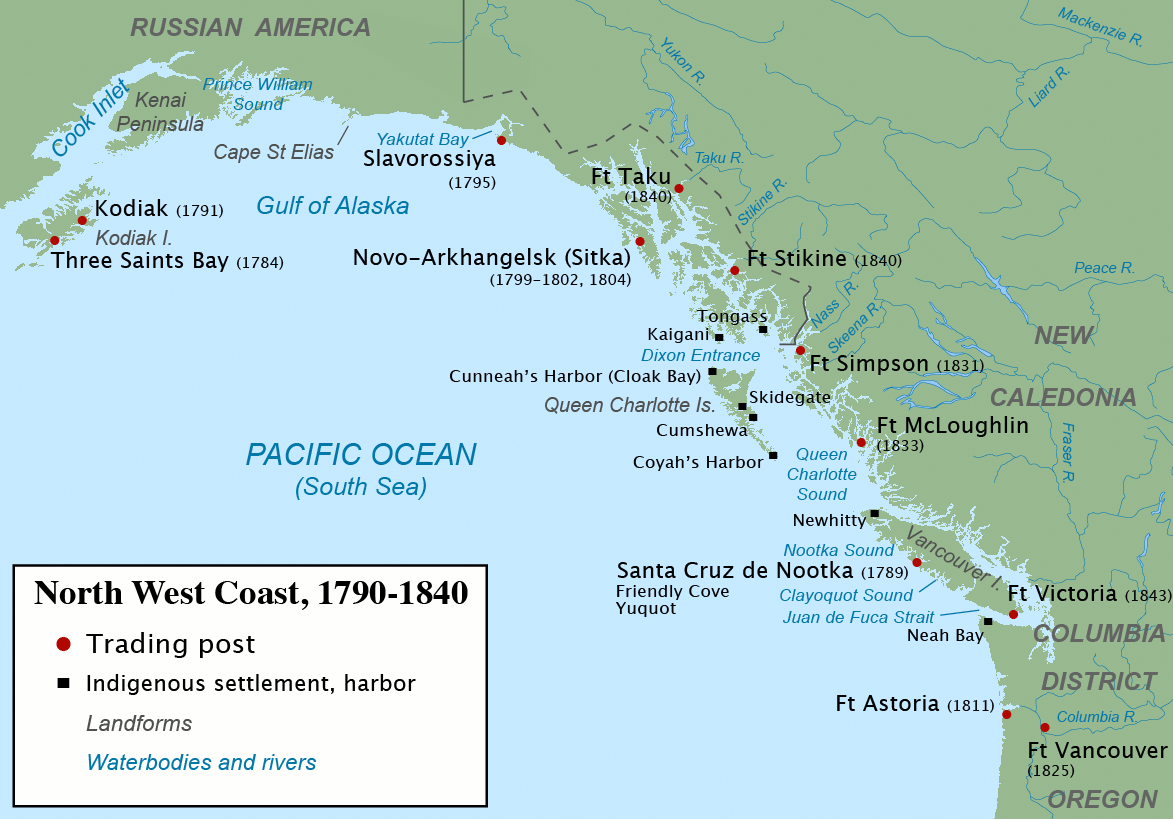
In 1774, the Spanish followed the Russian fur traders. British crews started trading in the furs of the north-eastern Pacific in 1778, and American traders arrived in the area in 1788, focusing on the coast of present-day British Columbia.
The trade boomed around the beginning of the 19th century. A long period of decline began in the 1810s. As the sea-otter population became depleted over time, the maritime fur trade diversified and transformed, tapping new commodities, while continuing to focus on the Northwest Coast of North America and on markets in China. It lasted until the middle- to late-19th century.
Russians controlled most of the coast of present-day Alaska during the entire maritime fur trade era. The North American coast further south saw fierce competition between, and among, trading vessels from Great Britain and from the United States. The British were the first to operate in the southern sector, but were unable to compete against the Americans, who dominated from the 1790s to the 1830s. The British Hudson's Bay Company (HBC), which had had experience in the North American continental fur trade since the 17th century, entered the Pacific coast trade in the 1820s with the intention of outcompeting the Americans - a goal accomplished by about 1840. In its late period, after about 1840, the maritime fur trade in the northern Pacific was largely conducted by the British Hudson's Bay Company and by the Russian-American Company (the RAC, which operated from 1799 to 1867). The trade in fur-seal skins from the Southern Ocean peaked in the 1810s and had become unprofitable due to over-exploitation of the source resources by 1863.
The term "maritime fur trade" has been used by historians from the 1880s onwards to distinguish the coastal ship-based fur trade from the continental land-based fur trade of, for example, the North West Company (1779–1821) of Montreal and the American Fur Company (1808–1847). Historically, the maritime fur trade was not known by that name and was rather usually called the "North West Coast trade" or the "North West Trade". The term "North West" was rarely spelled as the single word "Northwest", as is common today.
The maritime fur trade brought the Pacific Northwest coast into a vast, new network of international trade, centered on the north Pacific Ocean, global in scope, and based on capitalism but not (for the most part) on colonialism. A sort of triangular trade network emerged linking the Pacific Northwest coast, China, the Hawaiian Islands (first generally known to the Western world following James Cook's visit in 1778), Britain, and the United States (especially New England). The trade had a major effect on the Indigenous people of the Pacific Northwest coast, especially the Aleut, Sugpiaq, Tlingit, Haida, Nuu-chah-nulth, and Chinook peoples. A rapid increase of wealth occurred among the Northwest Coast Natives, along with increased warfare, potlatching, slaving, and depopulation due to epidemic disease. However, the Indigenous peoples of the Pacific Northwest Coast were not overwhelmed by rapid change, and some cultural practices flourished. For instance, the importance of totems and traditional nobility crests increased, and the Chinook Jargon (Chinook jargon: Chinuk wawa), a pidgin trade-language which remains a distinctive aspect of Pacific Northwest culture, was developed by speakers of Indigenous languages, Russian, French and English during this era. Native Hawaiian society was similarly affected by the sudden influx of Western wealth and technology, as well as by epidemic diseases. In the Southern Hemisphere, the maritime fur trade era proved brief but intense. Expeditions of sealers (and then of whalers) led to the first European settlements in Tasmania (Van Diemen's Land) and New Zealand - lands which Europeans had known but largely ignored since the 17th century. Settler colonialism in the South Pacific resulted during the course of the 19th century in genocides (in fur-sources like Tasmania and the Chatham Islands) and in cultural disruption and temporary numerical decline for the Māori, the Indigenous people of New Zealand. The trade's effect on China and on Europe was minimal, but for New England, the maritime fur trade and the significant profits that it made helped revitalize the region by contributing to its transformation from an agrarian to an industrial society. The wealth generated by the maritime fur trade was invested in industrial development, especially textile manufacturing. In Britain's Australian colonies, furs became the earliest international export items and fuelled the first in a series of economic booms and busts, while boosting convict capitalism.
Hub AI
Maritime fur trade AI simulator
(@Maritime fur trade_simulator)
Maritime fur trade
The maritime fur trade, a ship-based fur trade system, focused largely on acquiring furs of sea otters and other animals from the Indigenous peoples of the Pacific Northwest Coast and Alaska Natives. Entrepreneurs also exploited fur-bearing skins from the wider Pacific (from, for example, the Juan Fernández fur seal) and from the Southern Ocean.
The trade mostly serviced the market in Qing China, which imported furs and exported tea, silks, porcelain, and other Chinese goods, which were then sold in Europe and in the United States.
The maritime fur trade was pioneered by the Russians, veterans of the Eurasian fur trade. Against the background of the Siberian fur trade, Russians reached the Pacific coast of Asia, and first encountered the valuable sea-otter resources of the northern Pacific Ocean in the 17th century. The promyshlenniki then worked their way eastwards from Kamchatka along the Commander and the Aleutian (1740s onwards following the Bering expedition of 1741) island chains, reaching the Alaska Peninsula by the 1760s.
In 1774, the Spanish followed the Russian fur traders. British crews started trading in the furs of the north-eastern Pacific in 1778, and American traders arrived in the area in 1788, focusing on the coast of present-day British Columbia.
The trade boomed around the beginning of the 19th century. A long period of decline began in the 1810s. As the sea-otter population became depleted over time, the maritime fur trade diversified and transformed, tapping new commodities, while continuing to focus on the Northwest Coast of North America and on markets in China. It lasted until the middle- to late-19th century.
Russians controlled most of the coast of present-day Alaska during the entire maritime fur trade era. The North American coast further south saw fierce competition between, and among, trading vessels from Great Britain and from the United States. The British were the first to operate in the southern sector, but were unable to compete against the Americans, who dominated from the 1790s to the 1830s. The British Hudson's Bay Company (HBC), which had had experience in the North American continental fur trade since the 17th century, entered the Pacific coast trade in the 1820s with the intention of outcompeting the Americans - a goal accomplished by about 1840. In its late period, after about 1840, the maritime fur trade in the northern Pacific was largely conducted by the British Hudson's Bay Company and by the Russian-American Company (the RAC, which operated from 1799 to 1867). The trade in fur-seal skins from the Southern Ocean peaked in the 1810s and had become unprofitable due to over-exploitation of the source resources by 1863.
The term "maritime fur trade" has been used by historians from the 1880s onwards to distinguish the coastal ship-based fur trade from the continental land-based fur trade of, for example, the North West Company (1779–1821) of Montreal and the American Fur Company (1808–1847). Historically, the maritime fur trade was not known by that name and was rather usually called the "North West Coast trade" or the "North West Trade". The term "North West" was rarely spelled as the single word "Northwest", as is common today.
The maritime fur trade brought the Pacific Northwest coast into a vast, new network of international trade, centered on the north Pacific Ocean, global in scope, and based on capitalism but not (for the most part) on colonialism. A sort of triangular trade network emerged linking the Pacific Northwest coast, China, the Hawaiian Islands (first generally known to the Western world following James Cook's visit in 1778), Britain, and the United States (especially New England). The trade had a major effect on the Indigenous people of the Pacific Northwest coast, especially the Aleut, Sugpiaq, Tlingit, Haida, Nuu-chah-nulth, and Chinook peoples. A rapid increase of wealth occurred among the Northwest Coast Natives, along with increased warfare, potlatching, slaving, and depopulation due to epidemic disease. However, the Indigenous peoples of the Pacific Northwest Coast were not overwhelmed by rapid change, and some cultural practices flourished. For instance, the importance of totems and traditional nobility crests increased, and the Chinook Jargon (Chinook jargon: Chinuk wawa), a pidgin trade-language which remains a distinctive aspect of Pacific Northwest culture, was developed by speakers of Indigenous languages, Russian, French and English during this era. Native Hawaiian society was similarly affected by the sudden influx of Western wealth and technology, as well as by epidemic diseases. In the Southern Hemisphere, the maritime fur trade era proved brief but intense. Expeditions of sealers (and then of whalers) led to the first European settlements in Tasmania (Van Diemen's Land) and New Zealand - lands which Europeans had known but largely ignored since the 17th century. Settler colonialism in the South Pacific resulted during the course of the 19th century in genocides (in fur-sources like Tasmania and the Chatham Islands) and in cultural disruption and temporary numerical decline for the Māori, the Indigenous people of New Zealand. The trade's effect on China and on Europe was minimal, but for New England, the maritime fur trade and the significant profits that it made helped revitalize the region by contributing to its transformation from an agrarian to an industrial society. The wealth generated by the maritime fur trade was invested in industrial development, especially textile manufacturing. In Britain's Australian colonies, furs became the earliest international export items and fuelled the first in a series of economic booms and busts, while boosting convict capitalism.