



Community hub
Recent from talks
Knowledge base stats:
Talk channels stats:
Members stats:
Triangular trade
Triangular trade or triangle trade is trade between three ports or regions. Triangular trade usually evolves when a region has export commodities that are not required in the region from which its major imports come. Such trade has been used to offset trade imbalances between different regions.
The most commonly cited example of a triangular trade is the Atlantic slave trade, but other examples existed. These include the seventeenth-century carriage of manufactured goods from England to New England and Newfoundland, then the transport of dried cod from Newfoundland and New England to the Mediterranean and the Iberian peninsula, followed by cargoes of gold, silver, olive oil, tobacco, dried fruit, and "sacks" of wine back to England. Maritime carriers referred to this Atlantic trade as the "sack trade". A 19th-century example involved general cargo shipped from Britain to Australia, Australian coal to China, then tea and silk back to Britain.
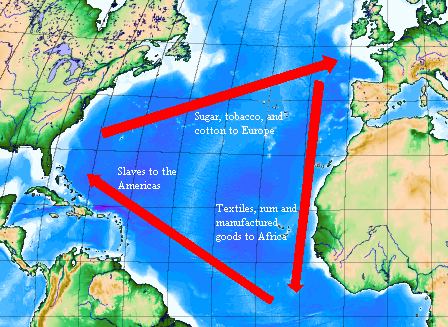
The Atlantic slave trade used a system of three-way transatlantic exchanges – known historically as the triangular trade – which operated between Europe, Africa, and the Americas from the 16th to 19th centuries. European merchants outfitted slave ships, then shipped manufactured European goods owned by the trading companies[which?] to West Africa to get slaves, which they shipped to the Americas (in particular to Brazil and the Caribbean islands). First, in West Africa, merchants sold or bartered European manufactured goods to local slavers in exchange for slaves. Then crews transported the slaves and the remaining European manufactured goods to the Americas, where ship merchants sold the slaves and European manufactured goods to plantation-owners. Merchants then purchased sugar and molasses from the plantation-owners, and crews shipped them to North American colonies (such as the future states of the US), where the merchants sold the remaining supplies of European manufactured goods and slaves, as well as sugar and molasses from plantations to local buyers, and then purchased North American commodities - including tobacco, sugar, cotton, rum, rice, lumber, and animal pelts - to sell in Europe.
This trade, in trade volume, was primarily with South America, where most slaves were sold, but a classic example taught in 20th-century studies is the colonial molasses trade, which involved the circuitous trading of slaves, sugar (often in liquid form, as molasses), and rum between West Africa, the West Indies and the northern colonies of British North America in the 17th and 18th centuries. In this triangular trade, slaves grew the sugar that was used to brew rum, which in turn was traded for more slaves. In this circuit the sea-lane west from Africa to the West Indies (and later, also to Brazil) was known as the Middle Passage; its cargo consisted of abducted or recently purchased African people.
During the Age of Sail, the particular routes were also shaped by the powerful influence of winds and currents. For example, from the main trading nations of Western Europe, it was much easier to sail westwards after first going south of 30° N latitude and reaching the belt of so-called "trade winds", thus arriving in the Caribbean rather than going straight west to the North American mainland. Returning from North America, it was easiest to follow the Gulf Stream in a northeasterly direction using the westerlies. (Even before the voyages of Christopher Columbus, the Portuguese had been using a similar triangle to sail to the Canary Islands and the Azores, and it was then expanded outwards.)
The countries that controlled the transatlantic slave-market until the 18th century in terms of the number of enslaved people shipped were Great Britain, Portugal, and France.
From 1620 to 1709, ships and additional maritime vessels embarked from Newfoundland and New England docks in a "sack trade." Sailors from both regions carried salted cod into southern Europe, particularly from Boston and Ferryland into Mediterranean and Iberian peninsular seaports. Spanish and Portuguese Catholics welcomed these traders for manifold reasons, including church exemption of cod from the fasting and abstinence mandated for Lent, Advent, and myriad saint remembrance days. Newfoundland and New England ships then carried Iberian wine "sacks", olive oil, dried fruit, tobacco, and substantial volumes of Iberian specie, mined by indigenous captives in Cerro Rico and Cerro de Pasco, into England. After 1661, Parliament lifted a ban on bartering New England cod for Iberian material goods, as well as for bills of exchange. Oil, fruit, tobacco, New World gold and silver, "sacks" of wine, Iberian material culture, and then this paper currency were exchanged for manufactured products in England. During the final leg, colonial carriers transshipped English metropolitan goods, and any "sacks" of surplus wine, across the Atlantic and back into their homeports.
The "sack trade" dissolved after 1709 because of changes in cod curing processes and provincial demand for sugar as well as molasses. Atlantic demand for dried cod pushed New England and Newfoundland competency thresholds for angling into transatlantic barter and exchange economies. These shifting conceptions, and scope of, provincial competency resulted in New England and Newfoundland schooners searching for more and more fishing sites along northeastern banks. Fishermen remained offshore for extended periods of time as their vessels trawled North American waters. Peter Pope argues that women often worked shorecrews and as substitutes for men.
Hub AI
Triangular trade AI simulator
(@Triangular trade_simulator)
Triangular trade
Triangular trade or triangle trade is trade between three ports or regions. Triangular trade usually evolves when a region has export commodities that are not required in the region from which its major imports come. Such trade has been used to offset trade imbalances between different regions.
The most commonly cited example of a triangular trade is the Atlantic slave trade, but other examples existed. These include the seventeenth-century carriage of manufactured goods from England to New England and Newfoundland, then the transport of dried cod from Newfoundland and New England to the Mediterranean and the Iberian peninsula, followed by cargoes of gold, silver, olive oil, tobacco, dried fruit, and "sacks" of wine back to England. Maritime carriers referred to this Atlantic trade as the "sack trade". A 19th-century example involved general cargo shipped from Britain to Australia, Australian coal to China, then tea and silk back to Britain.
The Atlantic slave trade used a system of three-way transatlantic exchanges – known historically as the triangular trade – which operated between Europe, Africa, and the Americas from the 16th to 19th centuries. European merchants outfitted slave ships, then shipped manufactured European goods owned by the trading companies[which?] to West Africa to get slaves, which they shipped to the Americas (in particular to Brazil and the Caribbean islands). First, in West Africa, merchants sold or bartered European manufactured goods to local slavers in exchange for slaves. Then crews transported the slaves and the remaining European manufactured goods to the Americas, where ship merchants sold the slaves and European manufactured goods to plantation-owners. Merchants then purchased sugar and molasses from the plantation-owners, and crews shipped them to North American colonies (such as the future states of the US), where the merchants sold the remaining supplies of European manufactured goods and slaves, as well as sugar and molasses from plantations to local buyers, and then purchased North American commodities - including tobacco, sugar, cotton, rum, rice, lumber, and animal pelts - to sell in Europe.
This trade, in trade volume, was primarily with South America, where most slaves were sold, but a classic example taught in 20th-century studies is the colonial molasses trade, which involved the circuitous trading of slaves, sugar (often in liquid form, as molasses), and rum between West Africa, the West Indies and the northern colonies of British North America in the 17th and 18th centuries. In this triangular trade, slaves grew the sugar that was used to brew rum, which in turn was traded for more slaves. In this circuit the sea-lane west from Africa to the West Indies (and later, also to Brazil) was known as the Middle Passage; its cargo consisted of abducted or recently purchased African people.
During the Age of Sail, the particular routes were also shaped by the powerful influence of winds and currents. For example, from the main trading nations of Western Europe, it was much easier to sail westwards after first going south of 30° N latitude and reaching the belt of so-called "trade winds", thus arriving in the Caribbean rather than going straight west to the North American mainland. Returning from North America, it was easiest to follow the Gulf Stream in a northeasterly direction using the westerlies. (Even before the voyages of Christopher Columbus, the Portuguese had been using a similar triangle to sail to the Canary Islands and the Azores, and it was then expanded outwards.)
The countries that controlled the transatlantic slave-market until the 18th century in terms of the number of enslaved people shipped were Great Britain, Portugal, and France.
From 1620 to 1709, ships and additional maritime vessels embarked from Newfoundland and New England docks in a "sack trade." Sailors from both regions carried salted cod into southern Europe, particularly from Boston and Ferryland into Mediterranean and Iberian peninsular seaports. Spanish and Portuguese Catholics welcomed these traders for manifold reasons, including church exemption of cod from the fasting and abstinence mandated for Lent, Advent, and myriad saint remembrance days. Newfoundland and New England ships then carried Iberian wine "sacks", olive oil, dried fruit, tobacco, and substantial volumes of Iberian specie, mined by indigenous captives in Cerro Rico and Cerro de Pasco, into England. After 1661, Parliament lifted a ban on bartering New England cod for Iberian material goods, as well as for bills of exchange. Oil, fruit, tobacco, New World gold and silver, "sacks" of wine, Iberian material culture, and then this paper currency were exchanged for manufactured products in England. During the final leg, colonial carriers transshipped English metropolitan goods, and any "sacks" of surplus wine, across the Atlantic and back into their homeports.
The "sack trade" dissolved after 1709 because of changes in cod curing processes and provincial demand for sugar as well as molasses. Atlantic demand for dried cod pushed New England and Newfoundland competency thresholds for angling into transatlantic barter and exchange economies. These shifting conceptions, and scope of, provincial competency resulted in New England and Newfoundland schooners searching for more and more fishing sites along northeastern banks. Fishermen remained offshore for extended periods of time as their vessels trawled North American waters. Peter Pope argues that women often worked shorecrews and as substitutes for men.