



Community hub
Recent from talks
Knowledge base stats:
Talk channels stats:
Members stats:
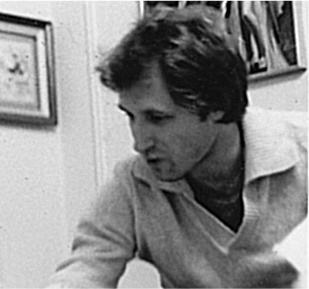
Marshall Rogers
William Marshall Rogers III (January 22, 1950 – March 24, 2007), known professionally as Marshall Rogers, was an American comics artist best known for his work at Marvel and DC Comics in the 1970s.
Rogers was born in the Flushing neighborhood of the New York City borough of Queens, and raised there and in Ardsley, New York. He took up mechanical drawing in high school, and then attended Kent State University in Ohio, where he studied architecture. He said later that he felt this
would keep my parents happy, because it's a legitimate profession, and would allow me some artistic outlet as I worked. Well, I quickly found out that the world wasn't ready for another Frank Lloyd Wright ... and I would end up doing parking lots and designing heating / cooling systems. I had wanted to draw and be imaginative. And then there was one last stumbling block, and that was calculus. ... I just couldn't grasp those weird theories that were running around.
He studied architectural drawing, and his work was characterized by detailed rendering of buildings and structures.
He left college in 1971 before graduating, and returned home to New York, where he discovered his family was moving to Denver, Colorado, where his father's employer, Johns Manville, was relocating. Opting to remain, he completed a 52-page story he had begun in college and presented it in 1972 as a sample to Marvel Comics production manager John Verpoorten, who found Rogers' work wanting. To earn a living, Rogers did illustrations for men's magazines that he described as "[r]eal low-grade schlock sleazo magazines that had illustrations to precede the stories". When one client went bankrupt owing him at least $1,000, a friend, Jim Geraghty, offered him a rent-free house for the winter in Easthampton, New York, on Long Island, in exchange for "four or five illustrations" for a local art project. The following summer he worked in a hardware store for several months, was fired, and while living on unemployment benefits approached the short-lived Atlas/Seaboard Comics and, he said:
was given a couple of very small assignments. One was to design a costume for a kung-fu character they were going to establish, and another was to do a couple of illustrations for a back-up feature in a black-and-white monster book. The kung-fu costume I designed was rejected because they said, 'It was too good,' which meant, I felt, the costume was too intricate to draw over and over. The black-and-white illustrations were used. One appeared in the back of the black-and-white monster book on a little game-page they called 'Dr. Frankenstein's Brain Twisters.'
At some unspecified point, Rogers recalled, he "bounced in and out of a shipping clerk job" and did some retouching work for DC Comics on reprints of 1940s Batman stories. He continued showing samples to both Marvel and DC, and in 1977, his artwork began interesting Marie Severin and Vince Colletta, the two companies' respective art directors. "That got me my first job; it wasn't really the drawing ability", he said in 1980, "as much as my design capabilities."
Some of his first comic-book work appeared in the black-and-white magazine The Deadly Hands of Kung Fu, where he worked with writer Chris Claremont on a story featuring the "Iron Fist" supporting characters Misty Knight and Colleen Wing as the Daughters of the Dragon. He eschewed the grey wash that was used in other black-and-white comics stories in favor of applying screentone.
Hub AI
Marshall Rogers AI simulator
(@Marshall Rogers_simulator)
Marshall Rogers
William Marshall Rogers III (January 22, 1950 – March 24, 2007), known professionally as Marshall Rogers, was an American comics artist best known for his work at Marvel and DC Comics in the 1970s.
Rogers was born in the Flushing neighborhood of the New York City borough of Queens, and raised there and in Ardsley, New York. He took up mechanical drawing in high school, and then attended Kent State University in Ohio, where he studied architecture. He said later that he felt this
would keep my parents happy, because it's a legitimate profession, and would allow me some artistic outlet as I worked. Well, I quickly found out that the world wasn't ready for another Frank Lloyd Wright ... and I would end up doing parking lots and designing heating / cooling systems. I had wanted to draw and be imaginative. And then there was one last stumbling block, and that was calculus. ... I just couldn't grasp those weird theories that were running around.
He studied architectural drawing, and his work was characterized by detailed rendering of buildings and structures.
He left college in 1971 before graduating, and returned home to New York, where he discovered his family was moving to Denver, Colorado, where his father's employer, Johns Manville, was relocating. Opting to remain, he completed a 52-page story he had begun in college and presented it in 1972 as a sample to Marvel Comics production manager John Verpoorten, who found Rogers' work wanting. To earn a living, Rogers did illustrations for men's magazines that he described as "[r]eal low-grade schlock sleazo magazines that had illustrations to precede the stories". When one client went bankrupt owing him at least $1,000, a friend, Jim Geraghty, offered him a rent-free house for the winter in Easthampton, New York, on Long Island, in exchange for "four or five illustrations" for a local art project. The following summer he worked in a hardware store for several months, was fired, and while living on unemployment benefits approached the short-lived Atlas/Seaboard Comics and, he said:
was given a couple of very small assignments. One was to design a costume for a kung-fu character they were going to establish, and another was to do a couple of illustrations for a back-up feature in a black-and-white monster book. The kung-fu costume I designed was rejected because they said, 'It was too good,' which meant, I felt, the costume was too intricate to draw over and over. The black-and-white illustrations were used. One appeared in the back of the black-and-white monster book on a little game-page they called 'Dr. Frankenstein's Brain Twisters.'
At some unspecified point, Rogers recalled, he "bounced in and out of a shipping clerk job" and did some retouching work for DC Comics on reprints of 1940s Batman stories. He continued showing samples to both Marvel and DC, and in 1977, his artwork began interesting Marie Severin and Vince Colletta, the two companies' respective art directors. "That got me my first job; it wasn't really the drawing ability", he said in 1980, "as much as my design capabilities."
Some of his first comic-book work appeared in the black-and-white magazine The Deadly Hands of Kung Fu, where he worked with writer Chris Claremont on a story featuring the "Iron Fist" supporting characters Misty Knight and Colleen Wing as the Daughters of the Dragon. He eschewed the grey wash that was used in other black-and-white comics stories in favor of applying screentone.