Recent from talks
Nothing was collected or created yet.
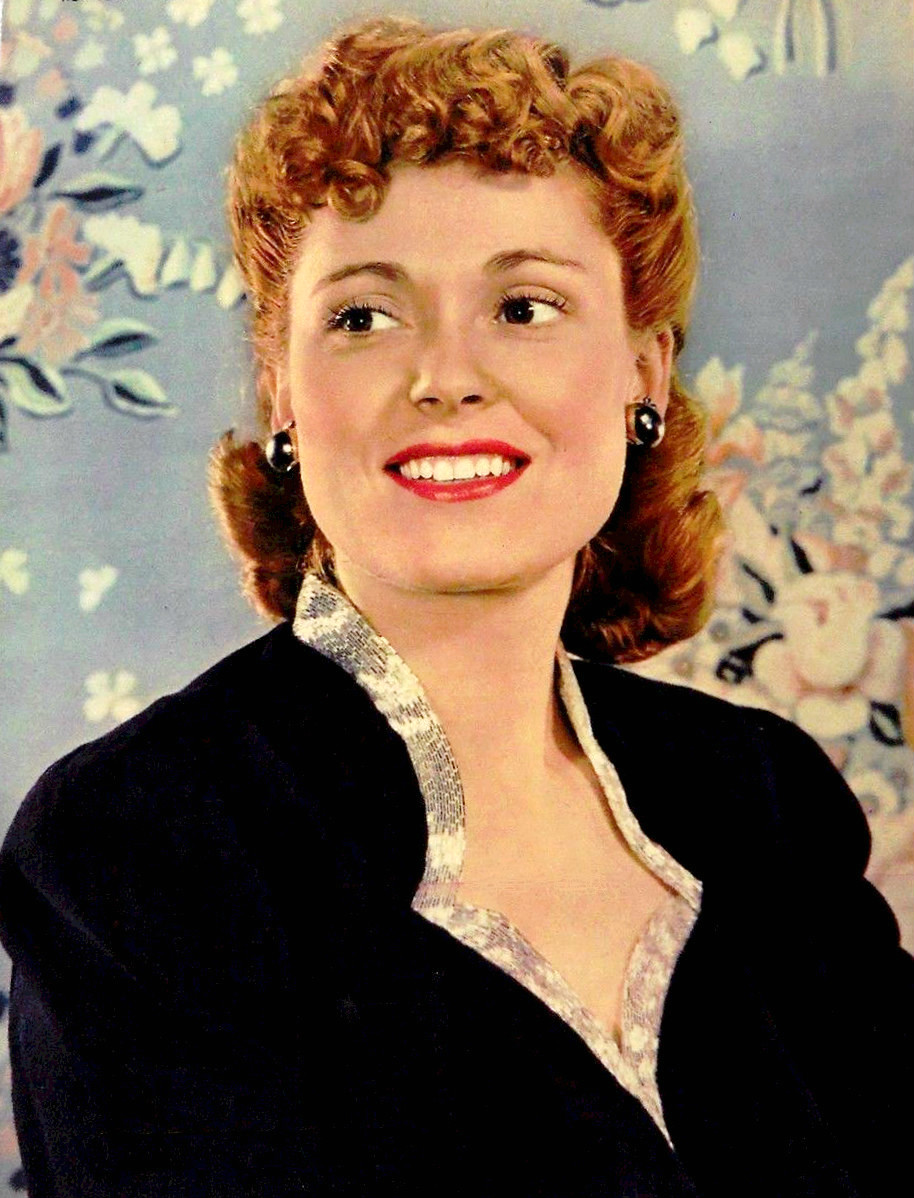
Martha Scott
View on WikipediaMartha Ellen Scott (September 22, 1912 – May 28, 2003) was an American actress. She was featured in major films such as Cecil B. DeMille’s The Ten Commandments (1956), and William Wyler's Ben-Hur (1959). Martha played the mother of Charlton Heston's character in both films. She originated the role of Emily Webb in Thornton Wilder's Our Town on Broadway in 1938, and later recreated the role in the 1940 film version. In the 1940 version , she was nominated for the Academy Award for Best Actress.[1]
Key Information
Early life
[edit]Scott was born in Jamesport, Missouri. She was the daughter of Letha (née McKinley) and Walter Alva Scott. Walter was an engineer and garage owner.[2] Her mother was a second cousin of U.S. President William McKinley.[2] The Scott family remained in Jamesport until Martha was 13 years old. At that time, they moved to Kansas City, Missouri. Eventually, they relocated in Detroit, Michigan.[3] Scott became interested in acting while in high school. She furthered this interest by attending the University of Michigan. Her accolades included a teaching certificate, as well as accomplishing a Bachelor of Arts degree[4] in drama in 1934.[3]
Career
[edit]Stage
[edit]
Scott received a career boost right out of college, when she appeared with the Globe Theatre Troupe in a series of Shakespeare productions at the Century of Progress world's fair in Chicago in 1934.[5] Following that, she moved to New York City, where she found steady work both in stock stage productions and radio dramas. In 1938, she made her Broadway debut in the original staging of Thornton Wilder's play Our Town as Emily Webb, the tragic young woman who dies in childbirth.[6]
Film
[edit]
Two years later, Scott reprised the role of Emily in her film debut when Our Town was made into a movie. Her critically acclaimed performance earned her an Academy Award nomination for Best Actress.
Scott found steady movie work for the next four decades, appearing in major epics such as The Ten Commandments, Ben-Hur, The Desperate Hours, and Airport 1975. Charlton Heston was a frequent co-star with Scott on both stage and screen. As she told an interviewer in 1988, "I played his mother twice and his wife twice. I was his mother in Ben Hur and The Ten Commandments. I was his wife on the stage in New York in Design for a Stained Glass Window and The Tumbler in London."[6]
Producer
[edit]In 1968, Scott joined Henry Fonda and Robert Ryan in forming a theatrical production company called the Plumstead Playhouse.[7] It later became the Plumstead Theatre Company and moved to Los Angeles. The company produced First Monday in October, both on stage and on film. Scott co-produced both versions. Her last production was Twelve Angry Men, which was performed at the Henry Fonda Theatre in Hollywood, California.
Television
[edit]This section needs additional citations for verification. (May 2016) |
Scott began appearing in TV roles in the medium's early days. On November 2, 1950, she starred in "The Cut Glass Bowl" on The Nash Airflyte Theater,[8] followed by several guest appearances on Robert Montgomery Presents and other shows of television's "golden age", including two episodes of Alfred Hitchcock Presents. This pattern of guest roles continued through the 1960s with appearances on Route 66, Ironside, and The Courtship of Eddie's Father, among others. In the mid-1950s, Scott was the narrator for Modern Romances, an afternoon program on NBC-TV.[9]
Scott was also a frequent TV guest star in the 1970s. She had recurring roles as Bob Newhart's mother on The Bob Newhart Show, the mother of Colonel Steve Austin (Lee Majors) on both The Six Million Dollar Man and The Bionic Woman, as well as Patricia Shepard, Sue Ellen and Kristin's mother on Dallas during its early years and later during the 1986 season. Scott was cast in single-episode guest appearances on several hit shows of the era, such as The Sandy Duncan Show, Columbo: Playback (1975), The Mod Squad, Marcus Welby, M.D., and The Love Boat. She played the role of Jennifer Talbot, Terri Brock's nasty grandmother, on General Hospital for six months (1986–1987), which ended when her character was murdered and stuffed in a drain pipe.
In the 1980s, she had a regular role on the short-lived series Secrets of Midland Heights and appeared in several television movies and in single episodes of shows such as Magnum, P.I., The Paper Chase, and Highway to Heaven. In 1987 she costarred with Jeffrey Lynn in an episode of Murder, She Wrote, which was a direct sequel to their 1949 feature film Strange Bargain. Scott's final acting role on television was in 1990 in the movie Daughter of the Streets.
Personal life
[edit]

Scott was married twice, first to radio producer and announcer Carleton William Alsop from 1940 to 1946, and then to jazz pianist and composer Mel Powell from 1946 until his death in 1998.[10] She had one child with Alsop, son Carleton Scott Alsop, and two daughters—Mary Powell Harpel and Kathleen Powell—with her second husband.[citation needed]
According to her son, Scott never forgot about her childhood hometown, using the mental image of a Jamesport cemetery in preparation for her Oscar-nominated role in Our Town. Said Alsop, "She told me she used that place as her image because it's so serene and beautiful" and that her deceased McKinley and Scott relatives "became the Gibbs and the Webbs in the play".[3]
A Democrat, she supported the campaign of Adlai Stevenson during the 1952 presidential election.[11]
Death
[edit]Scott died on May 28, 2003, in Van Nuys, Los Angeles, aged 90, from natural causes. She was interred next to Powell in the Masonic Cemetery in her native Jamesport, Missouri.[citation needed]
Honors
[edit]For her contribution in the theatre, Scott has a star on the Hollywood Walk of Fame at 6126 Hollywood Boulevard.[12]
Filmography
[edit]Film
[edit]| Year | Title | Role | Notes |
|---|---|---|---|
| 1936 | Lloyds of London | Court room accuser | Uncredited |
| 1940 | Our Town | Emily Webb | |
| 1940 | The Howards of Virginia | Jane Peyton-Howard | |
| 1941 | Cheers for Miss Bishop | Ella Bishop | |
| 1941 | They Dare Not Love | Marta Keller | |
| 1941 | One Foot in Heaven | Hope Morris Spence | |
| 1943 | Stage Door Canteen | Martha Scott | |
| 1943 | Hi Diddle Diddle | Janie Prescott Phyffe | |
| 1943 | In Old Oklahoma | Catherine Elizabeth Allen | Alternate title: "War of the Wildcats" |
| 1947 | So Well Remembered | Olivia | |
| 1949 | Strange Bargain | Georgia Wilson | |
| 1951 | When I Grow Up | Mother Reed (1890's) | |
| 1955 | The Desperate Hours | Ellie Hilliard | |
| 1956 | The Ten Commandments | Yochabel | |
| 1957 | Eighteen and Anxious | Lottie Graham | |
| 1957 | Sayonara | Mrs. Webster | |
| 1959 | Ben-Hur | Miriam | |
| 1973 | Charlotte's Web | Mrs. Arable | Voice |
| 1974 | Airport 1975 | Sister Beatrice | |
| 1977 | The Turning Point | Adelaide | |
| 1981 | First Monday in October | Cameo Appearance (uncredited) | |
| 1988 | Doin' Time on Planet Earth | Virginia Camalier |
Television
[edit]| Year | Title | Role | Notes |
|---|---|---|---|
| 1950 | The Nash Airflyte Theater | Season 1 Episode 7: "The Cut Glass Bowl" | |
| 1950–1957 | Robert Montgomery Presents | Ellen Scott / Julia Brougham / Madeleine / Marietta Jackson | 5 episodes |
| 1951 | Lux Video Theatre | Esmerelda | Season 1 Episode 19: "The Choir Rehearsal" |
| 1951 | Lights Out | Phyllis | Season 3 Episode 39: "The Cat's Cradle" |
| 1951 | The Clock | Season 3 Episode 1: "Journey Across the River" | |
| 1951 | Somerset Maugham TV Theatre | Martha Jones | 2 episodes |
| 1952 | Betty Crocker Star Matinee | Season 1 Episode 20: "Woman in His Life" | |
| 1952 | Armstrong Circle Theatre | Season 2 Episode 29: "Way of Courage" | |
| 1953 | The Web | Harriet | Season 3 Episode 37: "Dear Sister" |
| 1953 | The Revlon Mirror Theater | Season 1 Episode 2: "Salt of the Earth" | |
| 1953 | Willys Theatre Presenting Ben Hecht's Tales of the City | Season 1 Episode 4: "Episode #1.4" | |
| 1953 | Medallion Theatre | Season 1 Episode 9: "Scent of the Roses" | |
| 1953 | Suspense | Season 6 Episode 1: "The Sister" | |
| 1954 | Center Stage | Season 1 Episode 6: "The Desdemona Murder Case" | |
| 1955 | TV Reader's Digest | Mrs. Robert Louis Stevenson | Season 1 Episode 3: "Mrs. Robert Louis Stevenson" |
| 1956 | Kraft Television Theatre | Joanna | Season 9 Episode 43: "Prairie Night" |
| 1956–1957 | Goodyear Television Playhouse | Kate Douglas | 2 episodes |
| 1957 | Modern Romances | Narrator | Episode: "The Misguided Man: Part 5" |
| 1958 | Matinee Theater | Season 3 Episode 150: "The Gardenia Bush" | |
| 1959 | Playhouse 90 | Mrs. Austin | Season 3 Episode 25: "A Trip to Paradise" |
| 1959 | Markham | Marie Vaughn | Season 1 Episode 19: "Grave and Present Danger" |
| 1959 | The United States Steel Hour | Grace Sullivan | Season 7 Episode 3: "Rachel's Summer" |
| 1960 | New Comedy Showcase | Kit Tyler | Season 1 Episode 1: "You're Only Young Twice" |
| 1961 | The Play of the Week | Clara | Season 2 Episode 26: "The Wooden Dish" |
| 1961–1962 | Route 66 | Helen Watson / Ruth O'Brien | 2 episodes |
| 1962 | Follow the Sun | Betty Stover | Season 1 Episode 19: "Ghost Story" |
| 1963 | The DuPont Show of the Week | Helen Adams | Season 2 Episode 11: "Two Faces of Treason" |
| 1963 | The Nurses | Edith Arnold | Season 1 Episode 26: "A Dark World" |
| 1963 | The Greatest Show on Earth | Claire Kyle | Season 1 Episode 3: "No Middle Ground for Harry Kyle" |
| 1965 | Slattery's People | Fran Stevens | Season 2 Episode 10: "Color Him Red" |
| 1967 | Cimarron Strip | Mrs. Kihlgren | Season 1 Episode 9: "The Search" |
| 1967 | The F.B.I. | Katharine Lamberth | Season 3 Episode 8: "Overload" |
| 1969 | Ironside | Francine Miller | Season 2 Episode 18: "The Prophecy" |
| 1970 | The Courtship of Eddie's Father | Grandmother | Season 1 Episode 21: "Guardian for Eddie" |
| 1970 | Paris 7000 | Amy Westerly | Season 1 Episode 9: "The Last Grand Tour" |
| 1971 | Longstreet | Louisa De Carie | Season 1 Episode 4: "So, Who's Fred Hornbeck?" |
| 1971 | Lemonade | Mabel | TV Movie |
| 1972 | Honeymoon Suite | Season 1 Episode 0: "First Pilot" | |
| 1972 | The Sandy Duncan Show | Harriet | Season 1 Episode 1: "Hooray for Harriet" |
| 1972 | The Delphi Bureau | Martha | Season 1 Episode 1: "The Deadly Little Errand" |
| 1972–1977 | The Bob Newhart Show | Mrs. Martha Hartley | 7 episodes |
| 1973 | The Devil's Daughter | Mrs. Stone | TV Movie |
| 1973 | The Mod Squad | Belle Fuller | Season 5 Episode 19: "Put Out the Welcome Mat for Death" |
| 1973 | Marcus Welby, M.D. | Mrs. Loring | Season 4 Episode 22: "The Other Martin Loring" |
| 1973 | Owen Marshall, Counselor at Law | Mildred | Season 3 Episode 8: "The Sin of Susan Gentry" |
| 1974 | Sorority Kill | House Mother | TV Movie |
| 1974 | The Man from Independence | Mamma Truman | TV Movie |
| 1974 | Police Story | Mary Ryan | Season 1 Episode 19: "Fingerprint" |
| 1974 | Thursday's Game | Mrs. Reynolds | TV Movie |
| 1974 | Murder in the First Person Singular | Mrs. Emerson | TV Movie |
| 1974 | The Wide World of Mystery | House Mother / Mrs. Emerson | 2 episodes |
| 1974 | Police Woman | Mrs. Wadsworth | Season 1 Episode 3: "Warning: All Wives" |
| 1974–1975 | The Six Million Dollar Man | Helen Elgin | 3 episodes |
| 1975 | The Abduction of Saint Anne | Mother Michael | TV Movie |
| 1975 | Columbo | Margaret Midas | Season 4 Episode 5: "Playback" |
| 1975 | The Legendary Curse of the Hope Diamond | Mumsie | TV Movie |
| 1975 | Medical Story | Miss McDonald | TV Movie |
| 1976–1977 | The Bionic Woman | Helen Elgin | 6 episodes |
| 1978 | The Word | Sarah Randall | Miniseries |
| 1979 | Charleston | Mrs. Farrell-Aunt Louisa | TV Movie |
| 1979 | Married: The First Year | Elizabeth Gorey | 2 episodes |
| 1979 | The Love Boat | Janet Latham | Season 3 Episode 6: "Gopher's Greatest Hits/The Vacation/One Rose a Day" |
| 1979–1985 | Dallas | Patricia Shepard | 10 episodes (Recurring role) |
| 1980 | Beulah Land | Penelope Pennington | Miniseries |
| 1980 | Father Figure | Hilda Wollman | TV Movie |
| 1980–1981 | Secrets of Midland Heights | Margaret Millington | Series regular |
| 1983 | Summer Girl | Martina Shelburne | TV Movie |
| 1983 | Adam | Gram Walsh | TV Movie |
| 1983 | Magnum, P.I. | Jeanie LaSalle | Season 4 Episode 5: "Limited Engagement" |
| 1984 | The Paper Chase | Marion Grey | Season 2 Episode 13: "Limits" |
| 1985–1986 | General Hospital | Jennifer Talbot | 10 episodes |
| 1985–1987 | Hotel | Estelle / Roz Campbell | 2 episodes |
| 1986 | Adam: His Song Continues | Gram Walsh | TV Movie |
| 1986 | Highway to Heaven | Laura Swann | 2 episodes |
| 1987 | Murder, She Wrote | Georgia Wilson | Season 3 Episode 21: "The Days Dwindle Down" |
| 1989 | Love and Betrayal | Ginger | TV Movie |
| 1990 | Daughter of the Streets | Sarah | TV Movie |
Radio appearances
[edit]| Year | Program | Episode/source |
|---|---|---|
| 1941 | Philip Morris Playhouse | Made for Each Other[13] |
| 1941 | Lux Radio Theatre | Cheers for Miss Bishop |
| 1942 | Lux Radio Theatre | One Foot in Heaven[14] |
| 1948 | Suspense | "Crisis"[15] |
| 1949 | The Great Gildersleeve | Birthday Party Conflicts[16] |
| 1953 | Theatre Guild on the Air | Kate Fennigate[17] |
References
[edit]- ^ Thise, Mark (2008). Hollywood Winners & Losers A to Z. Limelight Editions. p. 158. ISBN 978-0-87910-351-4.
- ^ a b Martin, Douglas (May 31, 2003). "Martha Scott, Original Emily in 'Our Town', Dies at 88". New York Times. Retrieved November 12, 2015.
- ^ a b c "Oscar nominee Martha Scott of Jamesport". Daviess County Historical Society. April 20, 2004. Archived from the original on December 16, 2010. Retrieved August 2, 2012.
- ^ "B.A. Degree". The Havre Daily News. March 24, 1944. p. 3. Retrieved June 28, 2015 – via Newspapers.com.
- ^ Thalman, Jane (November 1938). "Starring on Broadway, the Career of Martha Scott". Anchora. LV (1): 29.
- ^ a b "Actress Martha Scott Dies, Aged 90". Breaking News. May 31, 2003. Retrieved August 2, 2012.
- ^ Scott, Martha (December 26, 1974). "1975 Hope: Rebirth of Theatre". Arcadia Tribune. p. 11. Retrieved June 28, 2015 – via Newspapers.com.
- ^ "Television". The Brooklyn Daily Eagle. November 2, 1950. p. 27. Retrieved April 9, 2021 – via Newspapers.com.
- ^ Mercer, Charles (August 11, 1955). "Martha Scott Typifies New TV Gimmick—Narrator". The Kokomo Tribune. p. 57. Retrieved June 28, 2015 – via Newspapers.com.
- ^ Champlin, Charles (September 21, 1989). "Martha Scott Travels from 'Our Town' to Tinseltown". The Los Angeles Times. Retrieved August 2, 2012.
- ^ Motion Picture and Television Magazine, November 1952, page 33, Ideal Publishers
- ^ "Martha Scott". Hollywood Star Walk. Los Angeles Times. Retrieved November 12, 2015.
- ^ "Martha Scott". Harrisburg Telegraph. November 1, 1941. p. 28. Retrieved July 22, 2015 – via Newspapers.com.
- ^ "Those Were the Days". Nostalgia Digest. 43 (2): 33. Spring 2017.
- ^ "Suspense - Crisis". Escape and Suspense!. Retrieved Mar 10, 2020.
- ^ "The Great Gildersleeve - Single Episodes". 2 January 2020.
- ^ Kirby, Walter (May 24, 1953). "Better Radio Programs for the Week". The Decatur Daily Review. p. 48. Retrieved June 28, 2015 – via Newspapers.com.
External links
[edit]Martha Scott
View on GrokipediaEarly life
Birth and family
Martha Scott was born Martha Ellen Scott on September 22, 1912, in the small rural town of Jamesport, Missouri, to parents Letha Scott (née McKinley) and Walter Alva Scott.[9][4] Her father worked as an engineer and owned a garage in the community, contributing to the family's modest livelihood in Daviess County.[4][6] Scott grew up in Jamesport alongside her brother, Charles Scott, in a close-knit family environment shaped by the rhythms of small-town Midwestern life.[2] Described as a shy child with long, dark curls, she lived there until around age 13, when the family relocated to Kansas City and later Detroit, Michigan.[1] This early immersion in rural America profoundly influenced her later performances, particularly her iconic portrayal of Emily Webb in Our Town, where she drew on the simplicity and authenticity of everyday American experiences.[1] A notable local influence was the Jamesport cemetery, which Scott visited to prepare for the poignant third act of Our Town, evoking the play's themes of life, death, and community in a setting reminiscent of her hometown.[1] Her relatives, including the Scotts and McKinleys, similarly inspired the familial dynamics of characters like the Gibbs and Webbs in the production.[1]Education
Martha Scott pursued her burgeoning interest in acting at the University of Michigan, where she earned a Bachelor of Arts degree in drama in 1934.[10] Coming from rural Missouri roots, this urban academic environment provided her with foundational training in theatrical arts, including coursework and practical experience that built her performance skills.[3] Although specific university productions are not extensively documented, her degree program emphasized dramatic studies, preparing her for professional opportunities beyond campus.[11] Immediately following graduation, Scott gained early professional exposure through repertory work with the Globe Theatre Troupe at the 1933–1934 Century of Progress Exposition in Chicago, where she performed in abbreviated Shakespearean roles such as parts in Romeo and Juliet and The Taming of the Shrew.[12] This apprenticeship-like experience in a high-profile setting honed her stage presence and versatility, serving as a crucial bridge from academic training to commercial theater.[13] Building on this, Scott transitioned into stock theater appearances and radio work in the mid-1930s, which further refined her craft through diverse roles and ensemble performances.[4] These initial post-graduation endeavors in regional and experimental venues culminated in her move to New York City, where off-Broadway plays provided additional apprenticeship opportunities, directly paving the way for her Broadway debut in 1938.[3]Career
Stage work
Martha Scott began her professional stage career in regional theater, appearing in Shakespearean productions at the 1933–1934 Century of Progress Exposition in Chicago. After graduating from the University of Michigan, she gained further experience in stock companies, performing in plays such as The Male Animal and The Remarkable Mr. Pennypacker. These early roles honed her skills in live performance before her breakthrough on Broadway.[14][15] Scott made her Broadway debut in 1938, originating the role of Emily Webb in Thornton Wilder's Pulitzer Prize-winning play Our Town, directed by Jed Harris. The production opened on February 4 at the Henry Miller Theatre and ran for 336 performances until November 1938, innovative in its minimalist staging without props or sets to evoke everyday American life in the fictional town of Grover's Corners. Critics lauded the play's poetic simplicity and emotional resonance, with Scott's sensitive portrayal of the spirited young woman who marries her neighbor and dies in childbirth highlighted for its poignant vulnerability and naturalism, marking her as a promising talent. This role significantly elevated her profile, paving the way for her transition to film, including an Academy Award nomination for the 1940 screen adaptation.[16][17][18] Throughout the 1940s, Scott solidified her Broadway presence with leading roles in popular comedies and dramas. She joined the long-running hit The Voice of the Turtle by John van Druten in 1945 as Sally Middleton, the shy schoolteacher navigating romance during wartime leave; the production, which had opened in 1943, ultimately amassed 1,557 performances and became one of the era's biggest successes for its witty depiction of young love. Her performance contributed to the play's enduring appeal, blending charm with relatable introspection.[19] In the late 1960s, Scott co-founded the Plumstead Playhouse in New York alongside actors Henry Fonda and Robert Ryan, establishing a venue for intimate stagings of contemporary and classic works. She actively performed in the company's productions during this period, embracing roles that showcased her versatility in both dramatic revivals and new plays, while helping to nurture emerging talent in regional-style ensemble theater. Later in her career, she took on the part of the steadfast Rebecca Nurse in a 1991 Broadway production of Arthur Miller's The Crucible, directed by Tony Randall, where her measured gravitas underscored themes of integrity amid persecution. These engagements affirmed her lifelong commitment to the stage until her retirement.[20][10][15][2]Film roles
Martha Scott made her film debut in the 1940 screen adaptation of Thornton Wilder's Pulitzer Prize-winning play Our Town, reprising her originating Broadway role as the young Emily Webb.[12] Her poignant portrayal of the character's journey through life, death, and reflection on everyday moments earned her an Academy Award nomination for Best Actress at the 13th Academy Awards.[21] The production encountered challenges in adapting the play's minimalist, meta-theatrical style and its somber conclusion to cinematic conventions, resulting in a revised ending where Emily revives from what appears to be a fatal illness—a modification approved by Wilder to better suit film audiences.[22] Throughout the 1950s, Scott transitioned to supporting roles in grand historical epics, notably portraying Yochabel, the mother of Moses (played by Charlton Heston), in Cecil B. DeMille's The Ten Commandments (1956).[23] This biblical spectacle, known for its lavish production and DeMille's vision of faith and liberation, showcased Scott's ability to convey maternal strength and quiet dignity amid the film's monumental scale.[23] She reunited with Heston three years later in William Wyler's Ben-Hur (1959), taking on the role of Miriam, the devoted mother of the titular protagonist, in a narrative of revenge, redemption, and Roman-era turmoil.[24] Heston himself recommended Scott for the part, highlighting her nuanced performance in capturing familial resilience under persecution, aligned with Wyler's emphasis on emotional depth over spectacle.[24] Scott's film career extended over nearly five decades, from her 1940 debut to her final appearance in 1988, encompassing a range of leading, supporting, and occasional uncredited roles across genres. In her later years, she appeared in the disaster film Airport 1975 (1974) as Sister Beatrice, a steadfast nun aboard a hijacked airliner, contributing to the ensemble's portrayal of crisis and heroism in this sequel to the Airport series.[6] Her enduring presence in cinema reflected a versatility that bridged intimate dramas and blockbuster productions, often emphasizing themes of family, faith, and fortitude.Television roles
Martha Scott began her television career in the early 1950s with guest appearances in anthology series, adapting stage works for the small screen. She starred in episodes of Lux Video Theatre, including the 1951 production "The Choir Rehearsal," where she portrayed Esmerelda, showcasing her dramatic range in live broadcasts that often drew from theatrical roots. These early roles marked her transition from film epics to the burgeoning medium of television family dramas.[2] In the 1970s, Scott gained prominence through recurring roles that highlighted her ability to portray warm yet authoritative maternal figures. She appeared as Mrs. Martha Hartley, the mother of Bob Newhart's character, in multiple episodes of The Bob Newhart Show from 1972 to 1978, contributing to the sitcom's depiction of everyday family dynamics. Similarly, she played Helen Elgin, the mother of Colonel Steve Austin (Lee Majors), in three episodes of The Six Million Dollar Man starting in 1974 and six episodes of the spin-off The Bionic Woman through 1978, adding emotional depth to the action-oriented series. Scott's television work extended into the 1980s with soap opera and guest roles that demonstrated her versatility in serialized storytelling. She portrayed Patricia Shepard, the scheming mother of Sue Ellen Ewing (Linda Gray), in 10 episodes of Dallas across seasons 2 through 7, from 1979 to 1985, often stirring family conflicts central to the show's dramatic arcs.[25] Later, in the mid-1980s, she took on the role of Jennifer Talbot, a formidable grandmother, in 10 episodes of General Hospital from 1986 to 1987, embodying the intrigue and emotional intensity of daytime drama.[26] These performances underscored her enduring presence in television, blending maternal authority with dramatic tension across genres.[15]Producing work
In the later stages of her career, Martha Scott transitioned into producing, leveraging her extensive experience as an actress to foster opportunities for theatrical innovation and revivals. Motivated by her deep roots in stage performance, she sought to create a platform for both emerging talent and established works that might otherwise go unproduced.[3] In 1968, Scott co-founded the Plumstead Playhouse, a nonprofit theatrical production company, alongside actors Henry Fonda and Robert Ryan, initially based in Jamaica on Long Island, New York.[27] The venture aimed to support a repertory model, staging revivals of classic American plays such as Our Town, The Front Page, and The Time of Your Life, while also nurturing new works to revitalize regional theater.[28] By 1969, the company had expanded its ensemble to include around 30 actors, emphasizing collaborative production to address the challenges of sustaining live theater amid commercial pressures.[28] As Plumstead evolved into the Plumstead Theatre Society and later the Plumstead Theatre Company, it relocated to Los Angeles in the early 1970s, contributing significantly to the development of the city's regional theater scene by producing accessible, high-quality stagings that bridged Broadway traditions with local audiences.[13] Scott's producing efforts extended to Broadway under the Plumstead Theatre Society banner. In 1975, she co-produced a revival of Thornton Wilder's The Skin of Our Teeth at the Mark Hellinger Theatre, directing the creative vision toward a faithful yet innovative interpretation of the existential comedy, though the production faced challenges from a competitive season and closed after just five performances despite a strong cast led by Alfred Drake and Elizabeth Ashley.[29] Her most notable Broadway success came in 1978 with First Monday in October, a new play by Jerome Lawrence and Robert E. Lee that explored gender dynamics on the U.S. Supreme Court; co-produced with Joel Spector and Bernard Wiesen, it opened at the Palace Theatre on October 3, starring Fonda as a liberal justice opposite Jane Alexander's trailblazing appointee—a deliberate casting choice to highlight ideological clashes and draw star power.[30] The production received mixed critical reception for its witty but occasionally predictable script, running for 65 performances before closing, yet it marked Fonda's final Broadway appearance and influenced subsequent adaptations, including the 1981 film version that Scott also co-produced.[31] Beyond Broadway, Scott's work through Plumstead emphasized regional impact, managing productions that tackled logistical hurdles like venue transitions and funding in Los Angeles while prioritizing ensemble-driven storytelling. Her final producing credit, a 1985 revival of Reginald Rose's Twelve Angry Men co-produced with Sander Jacobs and Richard Sheehan, opened the newly renovated Henry Fonda Theatre in Hollywood, featuring a tense, juror-focused staging that earned praise for its even-handed direction and relevance to contemporary justice debates, running successfully as a capstone to her theater management legacy.[32] Through these efforts, Scott helped sustain and expand nonprofit theater's role in American cultural life, bridging her performing past with a commitment to behind-the-scenes stewardship.[13]Personal life
Marriages and family
Martha Scott married radio and film producer Carlton Alsop in 1940, and the couple had one son, Carlton Scott Alsop, born in 1942.[33][34] The marriage ended in divorce in 1946.[35] In 1946, Scott married composer Mel Powell, a Pulitzer Prize winner, and they remained together for 52 years until his death in 1998.[35][12] The couple had two daughters, Mary Powell Harpel and Kathleen Powell.[35] Scott's family life involved several relocations tied to her husband's academic career, including a period living in New Canaan, Connecticut, during Powell's 15 years teaching at Yale University, followed by a move to Los Angeles in 1969 when he became founding dean of the California Institute of the Arts.[35] These transitions supported Powell's professional commitments while allowing Scott to continue her acting work across stage, film, and television.Political involvement
Martha Scott was a Democrat and actively participated in liberal causes. She was a member of the Hollywood Democratic Committee and the Hollywood Anti-Nazi League, donating her time and money to support these organizations.[36]Death
Martha Scott died on May 28, 2003, at the age of 90 in a hospital in Van Nuys, Los Angeles, from natural causes related to old age.[10][13] Her death was confirmed by her son, Scott Alsop, who noted that she had remained active in her career into her later years.[10][37] She was buried in the Jamesport Masonic Cemetery in her hometown of Jamesport, Missouri, where she had requested to be interred alongside her husband, Mel Powell, fulfilling a connection to her roots that she had expressed during a visit to the site in the late 1970s while preparing for a revival of Our Town.[10][8] The funeral was private, with no public details released.[10] Obituaries in major publications highlighted her legacy, with The New York Times describing her as the original onstage Emily in Our Town, and The Los Angeles Times featuring tributes from colleagues like Tony Randall, who called her performance "enormously touching" and praised her dedication to the theater.[2][10]Recognition
Awards and honors
Martha Scott garnered critical acclaim for her film debut as Emily Webb in the 1940 adaptation of Our Town, earning her the Academy Award nomination for Best Actress at the 13th Academy Awards ceremony held on February 26, 1941.[38] As a relative newcomer to Hollywood, having originated the role on Broadway in 1938, Scott's nomination underscored the seamless transition of her stage-honed emotional depth to the screen, competing against luminaries like Bette Davis for The Letter and Joan Fontaine for Rebecca.[35] This recognition highlighted her ability to capture the character's poignant exploration of life and loss, contributing to the film's overall five Oscar nominations, including Best Picture. In addition to the Academy nod, Scott's performance secured the National Board of Review Award for Best Acting in 1940, an honor that celebrated outstanding ensemble and individual contributions to American cinema and affirmed her status as a promising talent.[38] The National Board of Review, known for recognizing artistic merit over commercial success, praised her nuanced portrayal for its authenticity and emotional resonance. She also received a nomination for Best Actress from the New York Film Critics Circle Awards that year, further validating the impact of her work amid a field dominated by veteran performers.[38] Scott's accolades extended to popular recognition with Photoplay Awards for Best Performance of the Month, including wins in November 1940 for The Howards of Virginia and April 1941 for Cheers for Miss Bishop, as well as February 1948 for another performance.[38] These honors collectively marked high points in her early filmography, emphasizing her breakthrough from theater to motion pictures without additional major competitive awards documented in later decades.[39]Hollywood Walk of Fame
Martha Scott received a star on the Hollywood Walk of Fame in the Live Performance category on April 23, 1993.[6] The star is located at 6126 Hollywood Boulevard, on the south side of the street in the 6100 block.[6][40] The dedication ceremony took place at the star's location, where Scott was joined by fellow actors Charlton Heston and Gregory Peck, who stood beside her as she held a replica of the star.[41] This honor symbolizes her pioneering contributions to live theater, including her Broadway debut originating the role of Emily Webb in Our Town, which marked her transition to film and earned her an Academy Award nomination for Best Actress in 1940.[6] The star is maintained by the Hollywood Historic Trust under the Hollywood Chamber of Commerce, with ongoing efforts including daily street sweeping and biweekly power-washing to preserve its condition amid heavy foot traffic.[42] Visitors can access the site freely year-round, though comfortable shoes are recommended for navigating the 1.3-mile Walk, which draws millions annually.[43][44]Credits
Film
| Year | Title | Role | Director |
|---|---|---|---|
| 1940 | Our Town | Emily Webb | Sam Wood [45] |
| 1940 | The Howards of Virginia | Jane Peyton Howard | Frank Lloyd [46] |
| 1941 | They Dare Not Love | Maria Keller | James Whale [47] |
| 1941 | Cheers for Miss Bishop | Ella Bishop | Tay Garnett [48] |
| 1941 | One Foot in Heaven | Hope Spence | Irving Rapper [49] |
| 1943 | In Old Oklahoma | Catherine Allen | Albert S. Rogell [50] |
| 1943 | Hi Diddle Diddle | Leslie Quayle | Andrew L. Stone [51] |
| 1943 | Stage Door Canteen | Martha Scott (uncredited) | Frank Borzage [52] |
| 1947 | So Well Remembered | Olivia | Edward Dmytryk [53] |
| 1949 | Strange Bargain | Georgia Wilson | Will Price [54] |
| 1950 | No Man of Her Own | Helen Ferguson | Mitchell Leisen [55] |
| 1950 | The Breaking Point | Lucy | Michael Curtiz [56] |
| 1951 | When I Grow Up | Mother Reed | Michael Kanin [57] |
| 1951 | When Worlds Collide | Dr. Jane Wyatt | Rudolph Maté [58] |
| 1951 | The Company She Keeps | Mrs. Ruth Bailey | John Cromwell [59] |
| 1951 | Fourteen Hours | Christine Foster | Henry Hathaway [60] |
| 1951 | The Racket | Helen Willis | John Cromwell [61] |
| 1955 | Good Morning, Miss Dove | Mrs. Rathbart | Henry Koster [62] |
| 1955 | The Desperate Hours | Ellie Hilliard | William Wyler [63] |
| 1956 | The Ten Commandments | Yochabel | Cecil B. DeMille [64] |
| 1957 | Peyton Place | Catherine Harrington | Mark Robson [65] |
| 1957 | Sayonara | Mrs. Webster | Joshua Logan [66] |
| 1957 | Eighteen and Anxious | Lottie Graham | Joe Parker [67] |
| 1959 | Ben-Hur | Miriam | William Wyler [68] |
| 1973 | Charlotte's Web | Mrs. Arable (voice) | Charles A. Nichols, Iwao Takamoto [69] |
| 1974 | Airport 1975 | Sister Beatrice | Jack Smight [70] |
| 1977 | The Turning Point | Adelaide | Herbert Ross [71] |
| 1988 | Doin' Time on Planet Earth | Alma | Charles Martin Smith [72] |
Television
Martha Scott began her television career during the medium's formative years, appearing in dozens of live anthology dramas throughout the 1950s. Notable early credits include starring as the lead in "The Cut Glass Bowl" on Robert Montgomery Presents (1950), as well as episodes of Kraft Television Theatre (1947–1958), Studio One (1948–1958), Lux Video Theatre (1950–1957), Schlitz Playhouse of Stars (1951–1959), The United States Steel Hour (1953–1955), Goodyear Television Playhouse (1954–1957), Climax! (1954–1958), Playhouse 90 (1956–1961), Matinee Theatre (1955–1958), and The DuPont Show with June Allyson (1959–1961).[73][74] In the 1960s, Scott transitioned to guest roles on established series, including appearances on The Twilight Zone (1961), The Defenders (1963), The Greatest Show on Earth (1963–1964), The F.B.I. (1965), and The Invaders (1967).[73][74] Her work in the 1970s and 1980s featured several recurring roles alongside guest spots on hit shows, often portraying maternal figures. She continued with TV movies and limited series appearances into the 1990s. The following table summarizes her major television credits from the 1970s onward, focusing on recurring and notable guest roles as well as TV movies, with episode counts where applicable.[73][75][76]| Year(s) | Title | Role | Episodes |
|---|---|---|---|
| 1970 | The Courtship of Eddie's Father | Grandmother | 1 |
| 1970 | Paris 7000 | Amy Westerly | 1 |
| 1971 | Longstreet | Louisa De Carie | 1 |
| 1972 | The Waltons | Martha Corinne Walton | 2 |
| 1972–1977 | The Bob Newhart Show | Martha Hartley | 7 |
| 1972 | The Sandy Duncan Show | Aunt Harriet | 1 |
| 1973 | The Mod Squad | Belle Fuller | 1 |
| 1973 | Marcus Welby, M.D. | Mrs. Loring | 1 |
| 1973 | Owen Marshall, Counselor at Law | Mildred Gentry | 1 |
| 1974 | Police Woman | Mrs. Wadsworth | 1 |
| 1974–1977 | The Six Million Dollar Man / The Bionic Woman | Helen Elgin | 9 |
| 1975 | Columbo ("Playback") | Margaret Midas | 1 |
| 1979–1987 | Dallas | Patricia Shepard | 10 |
| 1979 | The Love Boat | Janet Latham | 1 |
| 1980–1981 | Secrets of Midland Heights | Margaret Millington | 11 |
| 1981 | Father Murphy | Mrs. Murphy | 1 |
| 1983 | Magnum, P.I. ("Limited Engagement") | Jeanie LaSalle | 1 [77] |
| 1983 | Adam (TV movie) | Gram Walsh | TV movie |
| 1983 | Summer Girl (TV movie) | Martina Shelburne | TV movie |
| 1986 | Highway to Heaven ("Love at Second Sight") | Laura Swann | 1 [78] |
| 1986–1987 | General Hospital | Jennifer Talbot | Recurring (six months) |
| 1987 | Murder, She Wrote ("The Days Dwindle Down") | Georgia Wilson | 1 [79] |
| 1989 | Love and Betrayal: The Mia Farrow Story (TV movie) | Ginger | TV movie |
| 1990 | Daughter of the Streets (TV movie) | Sarah | TV movie |
Radio
Martha Scott's radio career began in the mid-1930s and played a pivotal role in building her reputation during the Golden Age of Radio, particularly through dramatic anthologies and soap operas that showcased her versatile voice and emotional depth, bridging her stage success in productions like Our Town to broader audiences.[11] Her appearances spanned serials, adaptations of her film roles, and standalone dramas, often featuring prominent co-stars and highlighting her ability to convey nuanced characters in audio format. Below is a chronological list of key radio appearances from 1936 to 1953, drawn from archival broadcasts and program logs.- March 22, 1936: Terror by Night – Episode: "The Bells" (adaptation of Edgar Allan Poe's story), starring as a lead role alongside Orson Welles and Ray Collins in this early Orson Welles-directed horror anthology series.[80]
- March 19, 1939: Great Plays – Episode: "Cyrano de Bergerac" (Edmond Rostand's classic), starring as Roxane opposite Wesley Addy in this CBS dramatic reading.[81]
- 1939–1940: The Career of Alice Blair – Daytime soap opera on CBS, starring as the title character Alice Blair, a young woman navigating career and family challenges in a 15-minute serial format.[82]
- May 6, 1940: Lux Radio Theatre – Episode: "Our Town" (Thornton Wilder's play), reprising her stage role as Emily Webb opposite William Holden, Fay Bainter, and Thomas Mitchell in this popular adaptation.[81]
- March 17, 1941: Lux Radio Theatre – Episode: "Cheers for Miss Bishop" (adaptation of her film role), starring opposite William Gargan as the dedicated teacher Ella Bishop.[81]
- May 26, 1941: Lux Radio Theatre – Episode: "Virginia City" (western drama), as Julia Hayne opposite Errol Flynn and Frank McGlynn Sr. as Abraham Lincoln.[83]
- September 29, 1941: Lux Radio Theatre – Episode: "Third Finger, Left Hand" (romantic comedy), starring as Margot Sherwood opposite Douglas Fairbanks Jr.[84]
- April 20, 1942: Lux Radio Theatre – Episode: "One Foot in Heaven" (biographical drama), reprising her film role as Hope Spence opposite Fredric March.[85]
- March 13, 1944: Lux Radio Theatre – Episode: "In Old Oklahoma" (also known as War of the Wildcats), reprising her film role as Catherine Allen opposite Albert Dekker.[86]
- August 19, 1948: Suspense – Episode: "Crisis," starring as a desperate mother whose son faces a life-threatening fever during a medical emergency, co-starring Frank Lovejoy.[87]
- August 9, 1953: Best Plays (NBC) – Episode: "The Male Animal" (comedy by James Thurber and Elliott Nugent), starring in this adaptation of the Broadway hit about academic life and football rivalries.[81]