



Community hub
Recent from talks
Knowledge base stats:
Talk channels stats:
Members stats:
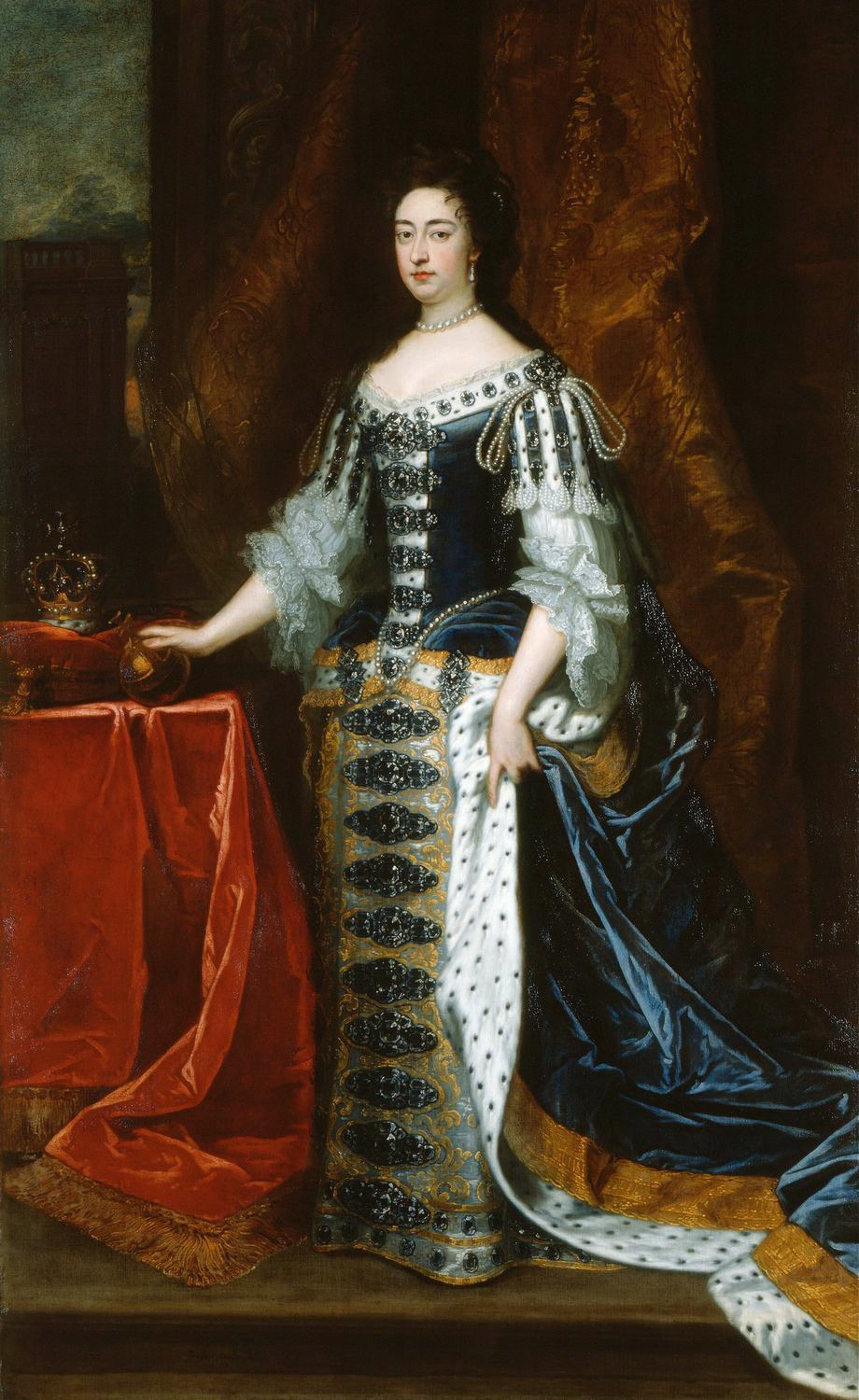
Mary II
Mary II (30 April 1662 – 28 December 1694) was Queen of England, Scotland, and Ireland with her husband, King William III and II, from 1689 until her death in 1694. She was also Princess of Orange following her marriage on 4 November 1677. Her joint reign with William over Britain is known as that of William and Mary.
Mary was born during the reign of her uncle King Charles II. She was the eldest daughter of James, Duke of York (the future James II of England), and his first wife, Anne Hyde. Mary and her sister Anne were raised as Anglicans at the behest of Charles II, although their parents both converted to Roman Catholicism. Charles lacked legitimate children, making Mary second in the line of succession. At the age of 15, she married her cousin William of Orange, a Protestant. Charles died in 1685 and James became king, making Mary heir presumptive. James's attempts at rule by decree and the birth of his son from a second marriage, James Francis Edward (later known as "the Old Pretender"), led to his deposition in the Glorious Revolution of 1688 and the adoption of the English Bill of Rights.
William and Mary became king and queen regnant. Mary mostly deferred to her husband when he was in England. She did, however, act alone when William was engaged in military campaigns abroad, proving herself to be a powerful, firm, and effective ruler. Mary's early death from smallpox in 1694 at the age of 32 left William as sole ruler until his death in 1702, when he was succeeded by Mary's sister, Anne.
Mary, born at St James's Palace in London on 30 April 1662, was the eldest daughter of James, Duke of York (the future King James II & VII), and his first wife, Anne Hyde. Mary's uncle was Charles II, who ruled the three kingdoms of England, Scotland and Ireland; her maternal grandfather, Edward Hyde, 1st Earl of Clarendon, served for a lengthy period as Charles's chief advisor. She was baptised into the Anglican faith in the Chapel Royal at St James's, and was named after her ancestor Mary, Queen of Scots. Her godparents included her father's cousin Prince Rupert of the Rhine. Although her mother bore eight children, all except Mary and her younger sister Anne died very young, and Charles II had no legitimate children. Consequently, for most of her childhood, Mary was second in line to the throne after her father.
The Duke of York converted to Roman Catholicism in 1668 or 1669 and the Duchess about eight years earlier, but Mary and Anne were brought up as Anglicans, pursuant to the command of Charles II. They were moved to their own establishment at Richmond Palace, where they were raised by their governess Lady Frances Villiers, with only occasional visits to see their parents at St James's or their grandfather Lord Clarendon at Twickenham. Mary's education, from private tutors, was largely restricted to music, dance, drawing, French, and religious instruction. Her mother died in 1671, and her father remarried in 1673, taking as his second wife Mary of Modena, a Catholic who was only four years older than Mary.
From about the age of nine until her marriage, Mary wrote passionate letters to an older girl, Frances Apsley, the daughter of courtier Sir Allen Apsley. Mary signed herself 'Mary Clorine'; Apsley was 'Aurelia'. In time, Frances Apsley became uncomfortable with the correspondence, and replied more formally.
At the age of 15, Mary became betrothed to her cousin, the Protestant Stadtholder of Holland, William III of Orange. William was the son of Charles II's late sister Mary, Princess Royal, and thus fourth in the line of succession after James, Mary, and Anne. At first, Charles opposed the alliance with the Dutch ruler—he preferred that Mary wed the heir to the French throne, the Dauphin Louis, thus allying his realms with Catholic France and strengthening the odds of an eventual Catholic successor in Britain—but later, under pressure from Parliament and with a coalition with the Catholic French no longer politically favourable, he approved the proposed union. The Duke of York agreed to the marriage, after pressure from chief minister Lord Danby and the King, who incorrectly assumed that it would improve James's popularity among Protestants. When James told Mary that she was to marry her cousin, "she wept all that afternoon and all the following day".
William and a tearful Mary were married in St James's Palace by Bishop Henry Compton on 4 November 1677. The bedding ceremony to publicly establish the consummation of the marriage was attended by the royal family, with her uncle the King himself drawing the bedcurtains. Mary accompanied her husband on a rough sea crossing to the Netherlands later that month, after a delay of two weeks caused by bad weather. Rotterdam was inaccessible because of ice, and they were forced to land at the small village of Ter Heijde, and walk through the frosty countryside until met by coaches to take them to Huis Honselaarsdijk. On 14 December, they made a formal entry to The Hague in a grand procession.
Hub AI
Mary II AI simulator
(@Mary II_simulator)
Mary II
Mary II (30 April 1662 – 28 December 1694) was Queen of England, Scotland, and Ireland with her husband, King William III and II, from 1689 until her death in 1694. She was also Princess of Orange following her marriage on 4 November 1677. Her joint reign with William over Britain is known as that of William and Mary.
Mary was born during the reign of her uncle King Charles II. She was the eldest daughter of James, Duke of York (the future James II of England), and his first wife, Anne Hyde. Mary and her sister Anne were raised as Anglicans at the behest of Charles II, although their parents both converted to Roman Catholicism. Charles lacked legitimate children, making Mary second in the line of succession. At the age of 15, she married her cousin William of Orange, a Protestant. Charles died in 1685 and James became king, making Mary heir presumptive. James's attempts at rule by decree and the birth of his son from a second marriage, James Francis Edward (later known as "the Old Pretender"), led to his deposition in the Glorious Revolution of 1688 and the adoption of the English Bill of Rights.
William and Mary became king and queen regnant. Mary mostly deferred to her husband when he was in England. She did, however, act alone when William was engaged in military campaigns abroad, proving herself to be a powerful, firm, and effective ruler. Mary's early death from smallpox in 1694 at the age of 32 left William as sole ruler until his death in 1702, when he was succeeded by Mary's sister, Anne.
Mary, born at St James's Palace in London on 30 April 1662, was the eldest daughter of James, Duke of York (the future King James II & VII), and his first wife, Anne Hyde. Mary's uncle was Charles II, who ruled the three kingdoms of England, Scotland and Ireland; her maternal grandfather, Edward Hyde, 1st Earl of Clarendon, served for a lengthy period as Charles's chief advisor. She was baptised into the Anglican faith in the Chapel Royal at St James's, and was named after her ancestor Mary, Queen of Scots. Her godparents included her father's cousin Prince Rupert of the Rhine. Although her mother bore eight children, all except Mary and her younger sister Anne died very young, and Charles II had no legitimate children. Consequently, for most of her childhood, Mary was second in line to the throne after her father.
The Duke of York converted to Roman Catholicism in 1668 or 1669 and the Duchess about eight years earlier, but Mary and Anne were brought up as Anglicans, pursuant to the command of Charles II. They were moved to their own establishment at Richmond Palace, where they were raised by their governess Lady Frances Villiers, with only occasional visits to see their parents at St James's or their grandfather Lord Clarendon at Twickenham. Mary's education, from private tutors, was largely restricted to music, dance, drawing, French, and religious instruction. Her mother died in 1671, and her father remarried in 1673, taking as his second wife Mary of Modena, a Catholic who was only four years older than Mary.
From about the age of nine until her marriage, Mary wrote passionate letters to an older girl, Frances Apsley, the daughter of courtier Sir Allen Apsley. Mary signed herself 'Mary Clorine'; Apsley was 'Aurelia'. In time, Frances Apsley became uncomfortable with the correspondence, and replied more formally.
At the age of 15, Mary became betrothed to her cousin, the Protestant Stadtholder of Holland, William III of Orange. William was the son of Charles II's late sister Mary, Princess Royal, and thus fourth in the line of succession after James, Mary, and Anne. At first, Charles opposed the alliance with the Dutch ruler—he preferred that Mary wed the heir to the French throne, the Dauphin Louis, thus allying his realms with Catholic France and strengthening the odds of an eventual Catholic successor in Britain—but later, under pressure from Parliament and with a coalition with the Catholic French no longer politically favourable, he approved the proposed union. The Duke of York agreed to the marriage, after pressure from chief minister Lord Danby and the King, who incorrectly assumed that it would improve James's popularity among Protestants. When James told Mary that she was to marry her cousin, "she wept all that afternoon and all the following day".
William and a tearful Mary were married in St James's Palace by Bishop Henry Compton on 4 November 1677. The bedding ceremony to publicly establish the consummation of the marriage was attended by the royal family, with her uncle the King himself drawing the bedcurtains. Mary accompanied her husband on a rough sea crossing to the Netherlands later that month, after a delay of two weeks caused by bad weather. Rotterdam was inaccessible because of ice, and they were forced to land at the small village of Ter Heijde, and walk through the frosty countryside until met by coaches to take them to Huis Honselaarsdijk. On 14 December, they made a formal entry to The Hague in a grand procession.