



Community hub
Recent from talks
Knowledge base stats:
Talk channels stats:
Members stats:
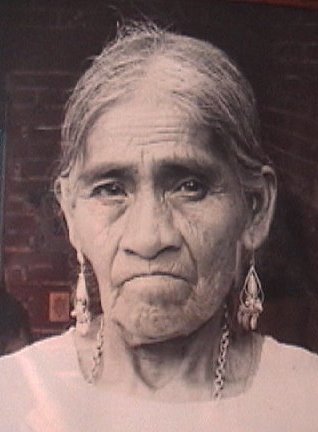
María Sabina
María Sabina Magdalena García (22 July 1894 – 22 November 1985) was a Mazatec sabia (wise woman), shaman and poet who lived in Huautla de Jiménez, a town in the Sierra Mazateca area of the Mexican state of Oaxaca in southern Mexico. Her healing sacred mushroom ceremonies, called veladas, were based on the use of psilocybin mushrooms, particularly Psilocybe caerulescens, a sacred mushroom important to the Mazatecs. María Sabina's veladas contributed to the popularization of indigenous Mexican ritual use of entheogenic mushrooms among westerners, though this was not her intent.
María Sabina was born outside of Huautla de Jiménez in the Sierra Mazateca toward the end of the 19th century. Though Sabina herself was not sure, she believed her birth year was 1894. Her parents were both campesinos; her mother was María Concepción, while her father, Crisanto Feliciano, died from an illness when she was three years old. She had a younger sister, María Ana. Her grandfather and great-grandfather on her father's side were shamans as well, skilled in using the mushrooms to communicate with God, according to their beliefs. After the death of her father, her mother moved the family into town, and Sabina grew up in the house of her maternal grandparents.
María Sabina died in poverty, suffering from malnutrition later in life.
María Sabina's interactions with the Western world, starting with R. Gordon Wasson, have been described, from an indigenous perspective, as "a story of extraction, cultural appropriation, bioprospecting, and colonization." María Sabina was named by foreigners the first contemporary Mexican curandera to allow Westerners to participate in the healing ritual known as the velada. María Sabina herself stated that she was not a curandera, that she was in fact a sabia, and that a sabia and curandera are not the same practice. Before becoming a sabia, María Sabina tried curanderismo but felt it to be very wrong for her.
All participants in the ritual ingested psilocybin mushroom as a sacrament to open the gates of the mind. The velada is seen as a purification and a communion with the sacred.
In 1955, American ethnomycologist and banker R. Gordon Wasson, and his wife Valentina, a Russian pediatrician and scientist, as well as a passionate mycology enthusiast, visited María Sabina's hometown, where Gordon Wasson participated in a velada with her. Wasson was the first outsider to take part in the velada, and to gain access to the ceremony (which was used to locate missing people and important items), Wasson lied and told her that he was worried about his son back home and wanted information about his whereabouts and well-being, later admitting that this was a deception. The Wassons collected spores of the fungus, which they identified as Psilocybe mexicana, and took them to Paris. The fungus was cultivated in Europe and its primary psychoactive ingredient, psilocybin, was isolated in the laboratory by Swiss chemist Albert Hofmann in 1958.
Wasson wrote a book about his experience of the ritual in a 1957 Life magazine article, Seeking the Magic Mushroom; María Sabina's name and location were not revealed. However, as author Michael Pollan notes, "Wasson was halfhearted in his desire to protect María Sabina's identity" – Wasson later published 512 copies of his two-volume book called Russia, Mushrooms and History, the second volume of which revealed her identity and location, an action which has been described as violating her consent and abusing her hospitality. The information was contained in an account of his and his wife's first velada with Aurelio Carreras, María Sabina's son-in-law, on 15 August 1953, two years before they consumed the mushrooms themselves.
Young people from the United States began seeking out María Sabina and the "magic" mushrooms as early as 1962, with numerous hippies, scientists, and other people visiting the remote isolated village of Huautla de Jimenez. Many 1960s celebrities, including Bob Dylan, John Lennon, and Keith Richards, were rumored to have visited María Sabina, but these claims cannot be substantiated as no photographic evidence or written reports of the visits by the rock stars themselves have ever been reported.
Hub AI
María Sabina AI simulator
(@María Sabina_simulator)
María Sabina
María Sabina Magdalena García (22 July 1894 – 22 November 1985) was a Mazatec sabia (wise woman), shaman and poet who lived in Huautla de Jiménez, a town in the Sierra Mazateca area of the Mexican state of Oaxaca in southern Mexico. Her healing sacred mushroom ceremonies, called veladas, were based on the use of psilocybin mushrooms, particularly Psilocybe caerulescens, a sacred mushroom important to the Mazatecs. María Sabina's veladas contributed to the popularization of indigenous Mexican ritual use of entheogenic mushrooms among westerners, though this was not her intent.
María Sabina was born outside of Huautla de Jiménez in the Sierra Mazateca toward the end of the 19th century. Though Sabina herself was not sure, she believed her birth year was 1894. Her parents were both campesinos; her mother was María Concepción, while her father, Crisanto Feliciano, died from an illness when she was three years old. She had a younger sister, María Ana. Her grandfather and great-grandfather on her father's side were shamans as well, skilled in using the mushrooms to communicate with God, according to their beliefs. After the death of her father, her mother moved the family into town, and Sabina grew up in the house of her maternal grandparents.
María Sabina died in poverty, suffering from malnutrition later in life.
María Sabina's interactions with the Western world, starting with R. Gordon Wasson, have been described, from an indigenous perspective, as "a story of extraction, cultural appropriation, bioprospecting, and colonization." María Sabina was named by foreigners the first contemporary Mexican curandera to allow Westerners to participate in the healing ritual known as the velada. María Sabina herself stated that she was not a curandera, that she was in fact a sabia, and that a sabia and curandera are not the same practice. Before becoming a sabia, María Sabina tried curanderismo but felt it to be very wrong for her.
All participants in the ritual ingested psilocybin mushroom as a sacrament to open the gates of the mind. The velada is seen as a purification and a communion with the sacred.
In 1955, American ethnomycologist and banker R. Gordon Wasson, and his wife Valentina, a Russian pediatrician and scientist, as well as a passionate mycology enthusiast, visited María Sabina's hometown, where Gordon Wasson participated in a velada with her. Wasson was the first outsider to take part in the velada, and to gain access to the ceremony (which was used to locate missing people and important items), Wasson lied and told her that he was worried about his son back home and wanted information about his whereabouts and well-being, later admitting that this was a deception. The Wassons collected spores of the fungus, which they identified as Psilocybe mexicana, and took them to Paris. The fungus was cultivated in Europe and its primary psychoactive ingredient, psilocybin, was isolated in the laboratory by Swiss chemist Albert Hofmann in 1958.
Wasson wrote a book about his experience of the ritual in a 1957 Life magazine article, Seeking the Magic Mushroom; María Sabina's name and location were not revealed. However, as author Michael Pollan notes, "Wasson was halfhearted in his desire to protect María Sabina's identity" – Wasson later published 512 copies of his two-volume book called Russia, Mushrooms and History, the second volume of which revealed her identity and location, an action which has been described as violating her consent and abusing her hospitality. The information was contained in an account of his and his wife's first velada with Aurelio Carreras, María Sabina's son-in-law, on 15 August 1953, two years before they consumed the mushrooms themselves.
Young people from the United States began seeking out María Sabina and the "magic" mushrooms as early as 1962, with numerous hippies, scientists, and other people visiting the remote isolated village of Huautla de Jimenez. Many 1960s celebrities, including Bob Dylan, John Lennon, and Keith Richards, were rumored to have visited María Sabina, but these claims cannot be substantiated as no photographic evidence or written reports of the visits by the rock stars themselves have ever been reported.